
Miwa Tei places Osaka’s Chinese dining culture in a compact Fukushima room rather than a hotel dining room or luxury tasting-menu frame. Its Tabelog Chinese WEST 100 selection in 2026, small seating footprint, and focus on Chinese, tantan-men, and seafood make it a practical, tightly run counterpoint to Osaka’s higher-spend destination restaurants.
Pearl is the En Primeur Club membership app — saves, bookings, and concierge access live there. Same editors, same standards.
- Address
- Japan, 〒553-0003 Osaka, Fukushima Ward, Fukushima, 6 Chome−14−5 福島民放ビル 4階
- Phone
- +81 6-6454-6522
- Website
- tabelog.com
 Saves & bookings on Pearl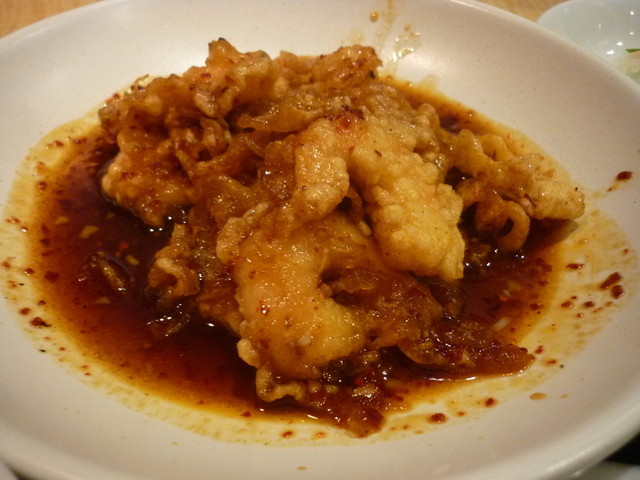
Fukushima’s restaurant streets work at a different frequency from central Umeda: narrower approaches, smaller rooms, fewer ceremonial entrances, and a dining public that moves quickly when a table has a local following. Miwa Tei belongs to that Osaka category, where Chinese cooking is treated less as banquet theatre and more as a compact, repeatable neighbourhood ritual. The room’s scale matters: a small restaurant changes the way a meal feels before the first order, compressing the distance between counter, tables, kitchen rhythm, and the decisions made by regulars.
Osaka has long understood Chinese food through everyday formats as much as formal ones. Gyoza counters, noodle shops, seafood-led kitchens, and family-run chuka rooms sit beside French, Italian, and izakaya addresses in the same evening economy. That mix is visible across the city’s broader dining map, from casual names such as 551 Horai (551蓬莱) to specialist bakeries and cafés such as 52CHO-ME BAKERY and .cafe. The point is not hierarchy; it is density. Osaka rewards diners who understand how many serious meals happen outside the grand-room template.
Fukushima's small-room Chinese cooking has its own booking logic
In Fukushima, the decision is often less about chasing ceremony than matching appetite to format. Miwa Tei’s registered categories, Chinese, tantan-men, and seafood, place it in a practical lane: cooking with enough range for a full dinner but with a noodle-shop signal that keeps the restaurant anchored in everyday Osaka rather than destination-only dining. Its 2026 selection for Tabelog 100 Chinese WEST gives it a public marker within western Japan’s Chinese category, but the stronger editorial signal is the combination of recognition and compact scale.
That matters for planning. A 22-seat restaurant, divided between counter and table seating, has a different pressure pattern from a large dining room. Small rooms absorb groups quickly, and the presence of counter seats usually makes solo or two-person dining more plausible than in banquet-oriented Chinese restaurants. Reservations are available, which should be treated as part of the experience rather than an administrative afterthought. In Osaka, many rewarding meals depend on matching the venue’s scale to the timing of the evening.
The comparison set around Osaka is instructive. French addresses such as a canto (Italian) and 99 Pizza Napoletana Gourmet speak to a city comfortable with imported culinary languages, while in-city peers such as Michino Le Tourbillon and Izakaya Tokitame occupy different price-and-format lanes. Miwa Tei’s value lies in another register: a Chinese category restaurant where recognition, affordability, and limited seating intersect without turning the meal into a luxury performance.
Tabelog recognition without the luxury-restaurant script
Tabelog’s Hyakumeiten lists are useful in Japan because they often capture restaurants that do not fit cleanly into Western award shorthand. A Michelin star can push expectations toward tasting-menu choreography; a Tabelog 100 selection can point instead to category authority, local demand, and accumulated diner confidence. The restaurant’s 2026 Chinese WEST selection, alongside a Tabelog score of 3.51, positions it in that second framework. It is a signal to take the restaurant seriously, not a cue to expect hushed formality.
That distinction is particularly relevant in Osaka, where strong dining is often transactional in the positive sense: the guest knows what the room is for, orders with purpose, and does not require a long explanatory arc. Chinese restaurants in Japan also occupy several identities at once. Some are banquet rooms, some are Sichuan-leaning spice specialists, some are ramen-adjacent, and some are seafood-driven neighbourhood restaurants. The restaurant’s category mix suggests a kitchen sitting between noodle comfort and broader Chinese cooking, which is exactly the kind of middle register that can be missed by travellers who only scan for tasting menus.
The drinks listing adds another small but useful clue. Shochu, wine, and cocktails are available, a range that fits Osaka’s flexible dinner culture rather than a rigid pairing model. The absence of private rooms and private-use availability also keeps the emphasis on the public room. This is not the place to construct a sealed-off occasion; it is better understood as a compact restaurant where the room’s shared energy is part of the format.
How to place it within an Osaka dining itinerary
The restaurant makes sense when the evening calls for a serious but unfussy meal in Fukushima, especially for diners who already have one or two high-structure meals elsewhere in the city. Osaka itineraries often lean too heavily on obvious categories: sushi, kaiseki, okonomiyaki, and late-night bars. Chinese cooking deserves a larger role in that plan because it shows another side of the city’s appetite, one built around speed, heat, noodles, shared plates, and neighbourhood loyalty.
For travellers mapping the wider city, the useful move is to treat Fukushima as part of a larger Osaka circuit rather than a single-purpose stop. The neighbourhood can pair naturally with bar-led evenings, hotel stays around Umeda, or daytime grazing across central Osaka. Broader planning belongs in Our full Osaka restaurants guide, with parallel context in Our full Osaka hotels guide, Our full Osaka bars guide, Our full Osaka wineries guide, and Our full Osaka experiences guide.
Readers building a wider Japan food route can also use the restaurant as a reminder that category breadth matters more than chasing a single dining style. Regional contrasts sharpen the itinerary: beef-focused dining at -Grilled beef Sukiyaki- KAMAKURA TANUKIAN 鎌倉 たぬき庵 in Kamakura, charcoal-and-tuna casual dining at. 鮪と炭火焼き うお炭 秋葉原店 in Tokyo, contemporary regional cooking at.know in Kumamoto, Vietnamese cooking at (Shoku) Vietnam in Kawasaki, curry specialization at [Curry Senmon Ten] Maruyama Kyoju. in Sapporo, and Kyoto’s smaller-format dining at [ki:] in Kyoto. Even outside Japan, Japanese casual formats travel in revealing ways, from Jōdo Saké Bar in Los Angeles to Onigiri Time in Pasadena.
The editorial case is simple: this is not a trophy reservation, and that is the reason to pay attention. Osaka’s dining intelligence often sits in rooms where recognition has arrived without erasing the local rhythm. The restaurant fits that pattern, giving the city’s Chinese category a compact, practical, award-noted address in Fukushima.
The Essentials
Comparable venues at similar price and category levels.
| Venue | Cuisine | Price | Notes |
|---|---|---|---|
| Miwa TeiThis venue — the venue you are viewing | Not listed | $$ | Not listed |
| Az/ Bifun Azuma Oosaka ten | Kita, Chinese Bistro | $$ | Not listed |
| Lime Light | Modern Chinese and wine bar | $$ | Not listed |
| Bakabon | Kita, Ramen & Sichuan Chinese | $$ | Not listed |
| Kuro Hitsuji Youniku Kushiten BLACK SHEEP | Not listed | $$ | Kita, Charcoal-grilled lamb Chinese with natural wine |
| Tenshin Kobo Kowloon | Higashisumiyoshi, Dim sum & Yum cha | $$ | Not listed |
Recognition history
Dated appearances from independent guides and award organizations, with the underlying list record or original source where available.
Tabelog 100 #26 · No. 26
Tabelog · Tabelog 100 - Chinese cuisine - WEST - 2026
Continue exploring
More in Osaka
Restaurants in Osaka
Browse all →




Bars in Osaka
Browse all →




Hotels in Osaka
Browse all →



Wineries in Osaka
Browse all →
At a Glance
- Cozy
- Lively
- Casual Hangout
- After Work
- Group Dining
- Solo
- Standalone
Current opening hours
- Monday
- 11:30 AM–2 PM, 5–10 PM
- Tuesday
- 11:30 AM–2 PM, 5–10 PM
- Wednesday
- 11:30 AM–2 PM, 5–10 PM
- Thursday
- 11:30 AM–2 PM, 5–10 PM
- Friday
- 11:30 AM–2 PM, 5–10 PM
- Saturday
- 5–10 PM
- Sunday
- Closed
Hours can change for holidays and private events. Last verified .
A compact, non‑smoking Chinese eatery with counter and table seating, simple relaxed decor, and a laid‑back, cozy atmosphere suited to casual meals with friends.