Missu House Fushimi
Our verdict
Missu House Fushimi sits within Sapporo's dining scene, where Hokkaido's exceptional primary produce — dairy, seafood, and cold-climate vegetables — underpins some of Japan's most ingredient-driven cooking. The Fushimi district offers a quieter register than central Susukino, and the restaurant draws on that neighbourhood character. Detailed booking and menu information should be confirmed directly with the venue.

Pearl is the En Primeur Club membership app — saves, bookings, and concierge access live there. Same editors, same standards.
- Address
- Hokkaido (Sapporo), Japan
- Directions
- Get directions
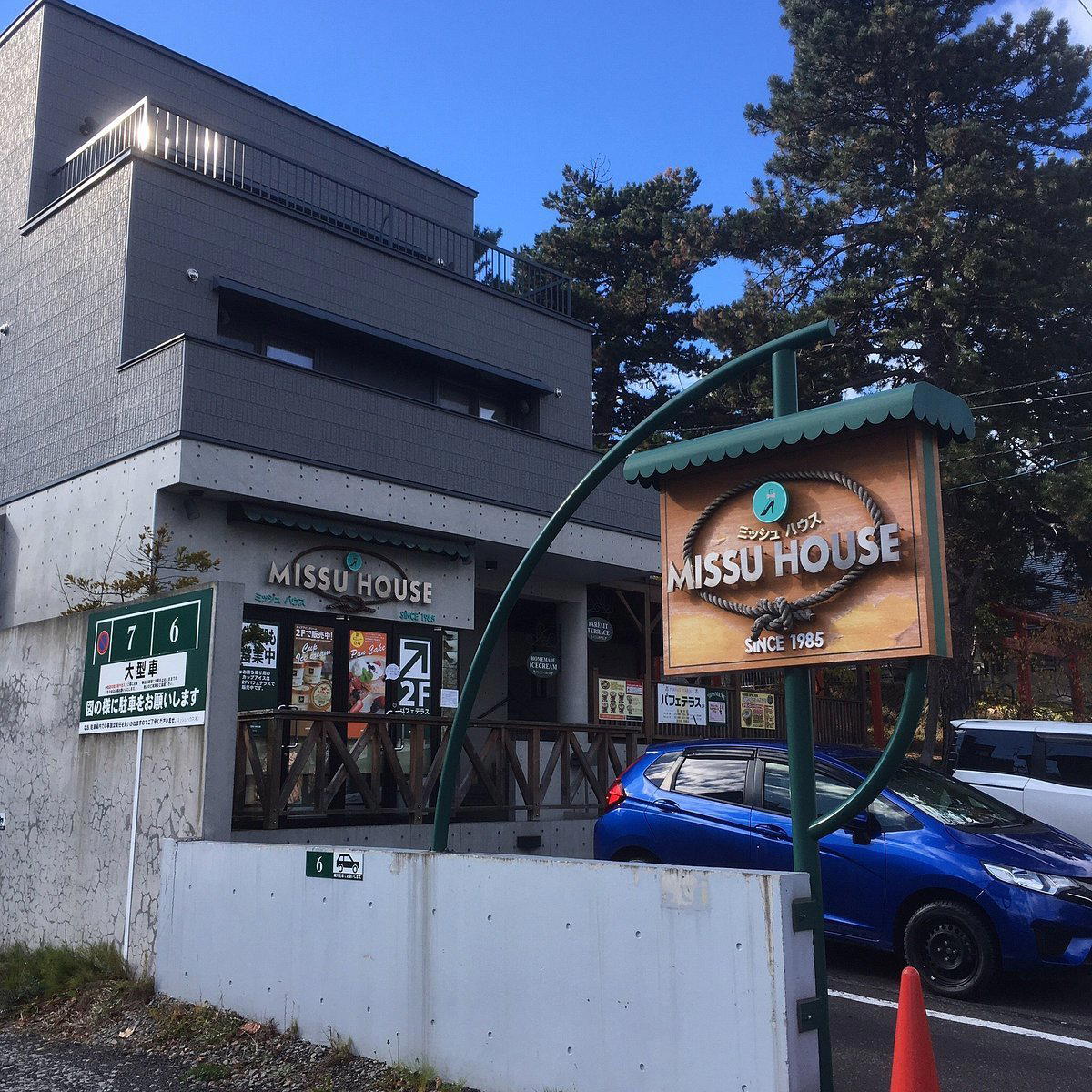
The menu
What to order
- Kichigo no Yogurt Parfait
- Matcha Parfait
Where Hokkaido's Produce Tradition Meets the Fushimi Table
Sapporo occupies a particular position in Japan's dining hierarchy that has less to do with Michelin density and more to do with raw material advantage. The island of Hokkaido produces a disproportionate share of Japan's dairy, wheat, and cold-water seafood — snow crab, uni, scallops, and ikura among them — and restaurants across the city have built identities around translating that supply chain advantage into finished cooking. Missu House Fushimi sits within that broader context, operating in the Fushimi district south of central Sapporo, an area that trades the high-volume foot traffic of Susukino for a residential register and a more local dining rhythm.
That neighbourhood distinction matters when reading what a restaurant like this is doing. Fushimi is not a destination dining corridor in the way that Ginza or Nishiki-Koji in Kyoto function, it draws people who already know where they are going, not foot traffic converting to reservations at the door. For diners mapping the city's options, that positioning signals something specific: a venue built around regulars and word-of-mouth rather than tourist volume. See our full Hokkaido (Sapporo) restaurants guide for broader neighbourhood-by-neighbourhood coverage across the city.
The Cultural Logic of Hokkaido Dining
To understand what any serious Sapporo table is attempting, it helps to understand the island's culinary identity at a structural level. Hokkaido cooking does not operate in the same aesthetic register as Kyoto kaiseki or Tokyo's hyper-refined counter formats. The influence runs through a different lineage: the island was settled relatively late in Japanese history, and its food culture absorbed northern and continental influences that mainland Japan's more codified traditions did not. The result is a regional cuisine that prizes directness, large-format seafood, dairy-enriched preparations, and cold-climate vegetables used with less ceremony than their southern counterparts might apply.
That directness is not a lack of sophistication. Venues such as Menya Nanabee in the city demonstrate that Sapporo's dining culture can operate at high levels of craft without defaulting to Tokyo-style formality. The comparison point matters: Sapporo's premium dining tends to express itself through product intensity rather than through the elaborate multi-course structures that define kaiseki houses elsewhere in Japan, such as Gion Sasaki in Kyoto or the rigorous seasonal architecture at HAJIME in Osaka.
Japan's Regional Dining Geography and Where Sapporo Fits
Positioning Missu House Fushimi against Japan's broader dining map requires acknowledging the structural gap between Tokyo and Osaka's Michelin-dense circuits and what the rest of the country produces. Venues in secondary cities and regional centres operate with different economics and different supply chains, and the best of them turn those constraints into advantages. The hyper-seasonal sushi tradition that Harutaka in Tokyo represents, or the innovation-led format at Goh in Fukuoka, illustrates how regional identity can be a shaping force rather than a limitation.
Hokkaido's case is specific: the island's cold waters and short growing season produce ingredients with a concentration of flavour that chefs in Tokyo and Osaka import at significant cost. A Sapporo venue with serious sourcing has a geographic advantage that a comparable Tokyo counter cannot replicate. That context shapes expectations for any serious table operating in the city.
For reference across Japan's more extensively documented dining scenes, akordu in Nara illustrates how a European-trained perspective can integrate into Japanese regional produce traditions, while the omakase format at Harutaka remains a useful benchmark for understanding where Tokyo's top-tier sushi counters set the bar on product quality. Further afield, the comparison with international seafood-led fine dining, Le Bernardin in New York City being the clearest Western equivalent for ingredient-led ocean produce cooking, helps frame what the upper register of product-focused cuisine can achieve.
The Fushimi District: Reading the Room
Fushimi's character as a neighbourhood is shaped by its function as a transit and residential zone connecting central Sapporo to the southern wards. The Namboku subway line stops here, making it accessible without being tourist-facing. Restaurants in this part of the city tend to be smaller in format, more dependent on repeat business, and less likely to operate the high-capacity production model that Susukino's entertainment district requires. That structural difference in how the neighbourhood functions shapes how any given venue there builds its audience.
Across Japan's provincial capitals, this dynamic repeats: the quieter residential districts often support the cooking that requires the most sustained attention, because the economics favour depth over volume. 夕仙山乃 in Sapporo offers another reference point within the city's own dining geography for understanding how different neighbourhood contexts produce different dining registers.
Planning a Visit: What to Know Before You Go
As with many smaller Japanese venues operating outside the main Michelin-surveyed circuits, information is leading obtained directly through the venue. Japanese restaurant booking platforms such as Tabelog carry listings for Sapporo venues and provide verified operational details including seat counts and reservation windows; cross-referencing with Google Maps is the most reliable approach for current hours and contact information.
Visitors to Sapporo planning a broader dining itinerary should note that the city's premium venues, particularly those focused on seasonal seafood, tend to reward advance research. The Hokkaido crab season (roughly November through March for kegani, or horseshoe crab) and the uni season (peaking in summer for the island's most prized varieties) are the two periods when local sourcing reaches its clearest expression. Timing a visit around those windows is the clearest way to ensure the ingredient advantage that defines Hokkaido cooking is fully in play.
For those assembling a broader Japan itinerary that extends beyond Sapporo, the contrast between Hokkaido's produce-intensity and the more structured kaiseki tradition of central Japan is worth building into the plan. 一本木 古川製 in Nanao and 湖辺庵 in Takashima offer regional reference points along that axis, while Atomix in New York City demonstrates how Korean-inflected fine dining at the highest international level approaches the same challenge of translating regional produce identity into a contemporary counter format.
Frequently asked questions
How does Missu House Fushimi fit into Sapporo's broader dining scene compared to the city centre?
Missu House Fushimi operates in the Fushimi district, which sits between central Sapporo and the southern residential wards — a location that places it outside the densest concentration of the city's commercial dining. That geography tends to favour venues built around repeat local custom rather than tourist volume. Sapporo as a whole carries a strong culinary reputation rooted in Hokkaido's agricultural and maritime supply, giving neighbourhood addresses like this access to the same raw materials as the city's more prominently placed restaurants.
Do they take walk-ins at Missu House Fushimi?
No booking policy is confirmed in public records for Missu House Fushimi. In Sapporo's Fushimi district, which functions partly as a residential and transit zone rather than a high-footfall dining strip, smaller venues often operate with some walk-in capacity outside peak hours. Calling ahead is the practical approach until direct contact details are publicly listed.
What's the signature at Missu House Fushimi?
Sapporo restaurants with serious ambitions tend to let Hokkaido's produce do the defining work — the island supplies roughly a quarter of Japan's agricultural output, which sets a high ceiling for what a kitchen can anchor its identity around. More detail would require confirmation from the venue itself.
Can Missu House Fushimi accommodate dietary restrictions?
In Sapporo, where many restaurant formats are structured around fixed or semi-fixed menus tied to seasonal Hokkaido produce, communicating restrictions in advance is standard practice rather than an exception. Reaching out directly before your visit is the safest course.
Cost Snapshot
| Venue | Cuisine | Price | Awards | Notes |
|---|---|---|---|---|
| Missu House FushimiThis venue — the venue you are viewing | Handmade Hokkaido Ice Cream & Parfaits | $10–20 | Not listed | Not listed |
| HAJIME | Avant-Garde Japanese Fine Dining | $300–500 | 3 Michelin Stars · World's 50 Best #83 | French, Innovative |
| Harutaka | Edo-Style Omakase Sushi | $200–300 | 3 Michelin Stars · World's 50 Best #76 | Sushi |
| L'Effervescence | Modern French with Japanese Influences | $200–300 | 3 Michelin Stars · World's 50 Best #69 | French |
| RyuGin | Modern Kaiseki | $500+ | 3 Michelin Stars · World's 50 Best #41 | Kaiseki, Japanese |
| Crony | Modern French with Japanese Influences | $150–200 | 2 Michelin Stars · World's 50 Best #34 | Innovative, French |
Continue exploring
More in Hokkaido (Sapporo)
Restaurants in Hokkaido (Sapporo)
Browse all →
Bars in Hokkaido (Sapporo)
Browse all →
Details
- Cozy
- Casual Hangout
- Family
- Standalone
- Local Sourcing
- Mountain
- A La Carte
Charming and cozy old-fashioned atmosphere in a hilly neighborhood near Mount Moiwa.