



Michelin Plate · World's 50 Best #56 · The Best Chef One Knife
Our verdict
Metzi brings Mexican cooking into dialogue with Brazilian ingredients on Rua João Moura in Pinheiros, the work of a former Cosme duo who hold consecutive Michelin Plates for 2024 and 2025. The menu moves between mushroom quesadillas and fish a la talla reframed through local technique, sitting at the $$$ tier where São Paulo's most considered cross-cultural restaurants compete.

Pearl is the En Primeur Club membership app, where members save venues, book tables and use the concierge.
The menu
What to order
- Signature_mole
- Hake_tostada
- Lamb_barbacoa
Where Two Kitchens Meet in Pinheiros
São Paulo's most interesting dining conversations in recent years have happened at cultural fault lines: the places where a non-Brazilian tradition collides with the country's extraordinary larder and its deeply layered techniques. Pinheiros has become the neighbourhood where that conversation is loudest. The streets around Rua João Moura carry a concentration of restaurants that operate outside Brazil's own culinary canon, not in a spirit of rejection but of recombination. Metzi sits on that street and belongs to that tendency, offering Mexican cuisine filtered through Brazilian ingredients and method in a way that produces something neither tradition would arrive at independently.
The address puts it in good company. Pinheiros has long attracted the kind of restaurant that requires a clear point of view: a neighbourhood where a mixed-price dining public and a relatively dense creative community support restaurants willing to take a position. At the $$$ tier, Metzi competes directly with places like Maní, which occupies a comparable price bracket while pursuing its own Brazilian-international synthesis. It sits a tier below Evvai and D.O.M., both $$$$, which signals something deliberate: Metzi is not trying to be a tasting-menu destination. It is trying to be a restaurant you return to.
The Collaboration at Its Centre
The kitchen runs under Eduardo Ortiz and Luana Sabino, a pairing whose shared history at Cosme in New York matters as context rather than biography. Cosme, under Enrique Olvera, spent years demonstrating that Mexican cooking could hold its own in a high-scrutiny, high-expectation environment by committing to ingredient quality and formal discipline without sacrificing flavour directness. That is the tradition Ortiz and Sabino bring to São Paulo, and the city is a more receptive host than many: Brazil's Portuguese-language food culture has historically been open to Mexican influence in a way that, say, Paris or Tokyo has not.
What defines a kitchen run by two chefs rather than one is the negotiation visible in the food itself. At Metzi, that negotiation appears to run between Mexican form and Brazilian substance: the quesadilla as a vehicle but with mushroom varieties and preparation logic drawn from a Brazilian context; the fish a la talla, a Guerrero coastal preparation traditionally defined by achiote and chilli paste, recalibrated against local fish species and the acidity structures available in Brazilian produce. This is not fusion in the diluted sense. It is two cooks working with the same seriousness toward a shared argument about what the combination can produce. Cross-cultural cooking of this kind requires a stable internal reference: the team dynamic at Metzi provides it.
That collaboration extends beyond the kitchen. The front-of-house at a restaurant operating at this price point and culinary ambition functions as an interpreter: the job is to make the cross-cultural logic legible to a São Paulo dining public that may arrive knowing one tradition well but not both. Explaining why a particular Brazilian ingredient appears inside a Mexican form, without lecturing, is a specific hospitality skill. Restaurants that manage it tend to hold their Michelin recognition; restaurants that don't tend to lose it. Metzi has held consecutive Michelin Plates in 2024 and 2025, which suggests the front-of-house is managing that translation effectively.
Reading the Michelin Plates in Context
A Michelin Plate is not a star, but in a São Paulo context it carries specific weight. The city's Michelin coverage has expanded steadily, and the Plate designation now functions as a reliable signal that a restaurant is cooking with seriousness and consistency at a defined level. Consecutive Plates for 2024 and 2025 indicate that the kitchen is not coasting on novelty: the food is holding up under repeat evaluation. For a concept as specific as Mexican-Brazilian synthesis, that consistency across two cycles suggests the team has moved past the experimental phase and into something more settled.
Among São Paulo's Michelin-recognised restaurants, Metzi occupies a distinct position. The starred houses, including Tuju, operate in a different tier of investment and ambition. But in the Plate category, very few restaurants are doing what Metzi does with a foreign cuisine and a local ingredient vocabulary simultaneously. That specificity is what gives the recognition meaning: it is not a participation award but an acknowledgement that the combination works.
For comparison across Brazil, restaurants pursuing a similarly serious engagement with regional ingredients and non-Brazilian culinary traditions include Manga in Salvador and Lasai in Rio de Janeiro, both of which demonstrate that the country's culinary conversation is now genuinely national rather than São Paulo-centric. Internationally, the closest reference points for the approach Metzi applies, where Mexican cooking is reframed through a non-Mexican ingredient context, include Pujol in Mexico City, which has spent two decades demonstrating how far that tradition can travel when handled rigorously, and Alma Fonda Fina in Denver, which applies a similar logic in a North American context.
The Menu's Structural Logic
Mexican cooking has a well-established grammar of masa, chilli, smoke, acid, and fresh herb that functions almost independently of geography, provided the cook understands how to apply it. The Metzi approach uses that grammar as a frame and populates it with Brazilian content. The mushroom quesadilla illustrates the method: the tortilla and the fold and the cheese-pull are unmistakably Mexican in structure, but the mushroom selection and treatment draw on a Brazilian reference. The fish a la talla extends the logic further: a la talla is a technique with deep coastal Mexican roots, defined by paste application and charcoal cooking, and applying it to fish species native to or commonly sourced within Brazil produces a dish that exists nowhere else in exactly that form.
This is not a menu that asks you to choose between two cuisines. It is a menu that assumes you are already curious about both and wants to show you what they produce together. A score of 4.1 at that volume is not a sign of universal enthusiasm, but it is a sign of a consistent experience: the restaurant knows what it is doing and does it reliably.
Planning a Visit
Metzi is located at Rua João Moura, 861 in Pinheiros, one of São Paulo's most walkable dining neighbourhoods and well-served by the city's metro network. The $$$ price positioning places it in a bracket where a considered dinner for two sits below the major tasting-menu houses without compromising on kitchen seriousness. Booking is advisable; the combination of Michelin recognition and a defined concept with limited competition means the restaurant draws a purposeful crowd rather than a casual one. For those building a longer São Paulo itinerary, our full São Paulo restaurants guide covers the city's range in detail, and our São Paulo hotels guide identifies properties well-positioned for Pinheiros access. If drinks before or after are part of the plan, our São Paulo bars guide covers the neighbourhood's options with the same level of editorial specificity. For those travelling more widely in Brazil, Mina in Campos do Jordão, Primrose in Gramado, Castelo Saint Andrews in Gramado, and Orixás North Restaurant in Itacaré represent further points on a broader Brazilian dining map worth constructing around any serious trip to the country.
Also worth considering alongside Metzi in the context of São Paulo's Italian-leaning creative scene is Fame Osteria, which operates at a comparable level of kitchen seriousness in a different tradition, and for those completing a broader São Paulo picture, our São Paulo wineries guide and our São Paulo experiences guide round out what the city offers beyond the dining room.
Frequently asked questions
What do people recommend at Metzi?
Order around the kitchen's cross-cultural logic rather than defaulting to the familiar. The mushroom quesadilla and fish a la talla are the dishes that most clearly demonstrate what Eduardo Ortiz and Luana Sabino are working toward: Mexican form populated with Brazilian content. Both have earned Michelin Plate recognition across 2024 and 2025, which confirms the kitchen's consistency on exactly those preparations. In a $$$ Mexican restaurant in São Paulo, these are the dishes that justify the specific argument the chefs are making.
Is Metzi better for a quiet night or a lively one?
Pinheiros as a neighbourhood runs warm rather than quiet on most evenings, and a Michelin-recognised restaurant at the $$$ tier in that area tends to attract a purposeful, engaged crowd rather than a subdued one. Metzi's cross-cultural concept, the kind that prompts table conversation about what you're eating and why, lends itself to a social rather than contemplative setting. It is not the right choice if you are after the silence of a high-formality tasting room; it sits closer to the register of São Paulo's more animated creative dining rooms, without the volume of a casual neighbourhood spot.
Can I bring kids to Metzi?
At the $$$ price point in a Pinheiros restaurant with Michelin recognition, the atmosphere skews toward adult diners with a specific interest in the menu's concept. That does not make it off-limits for older children who eat adventurously, but the Mexican-Brazilian synthesis format, with dishes structured around technique and ingredient dialogue rather than familiar comfort categories, is not a natural fit for younger or unadventurous eaters. Families with teenagers comfortable eating across cuisines will find the experience more accessible than those with younger children.
Cuisine and Recognition
Comparable options at a glance, pulled from our tracked venues.
| Venue | Cuisine | Price | Awards | Notes |
|---|---|---|---|---|
| MetziThis venue (the venue you are viewing) | Modern Mexican-Brazilian Fusion | $30–50 | Michelin Plate · World's 50 Best #56 | Not listed |
| Evvai | Modern Italian-Brazilian Fusion | $200–300 | 3 Michelin Stars · World's 50 Best #95 | Contemporary Italian, Modern Cuisine |
| D.O.M. | Modern Brazilian Amazonian Fine Dining | $150–200 | 2 Michelin Stars · World's 50 Best #74 | Modern Brazilian, Creative |
| Maní | Modern Creative Brazilian | $50–100 | 1 Michelin Star · World's 50 Best #67 | Brazilian - International, Creative |
| Jun Sakamoto | Japanese Omakase | $100–150 | 1 Michelin Star · La Liste Top Restaurants | Sushi, Japanese |
| A Casa do Porco | Modern Brazilian Pork-Centric | $30–50 | Michelin Bib Gourmand · World's 50 Best #25 | Regional Brazilian, Brazilian |
Recognition history
Dated appearances from independent guides and award organizations, with the underlying list record or original source where available.
Michelin Plate
Michelin
World's 50 Best Latin America's Best Restaurants #56
World's 50 Best
Opinionated About Dining Top Restaurants in South America Ranked #59
Opinionated About Dining
The Best Chef One Knife
The Best Chef
Full recognition history (6 entries)
Michelin Plate
Michelin
Michelin Plate
Michelin
Continue exploring
More in São Paulo
Restaurants in São Paulo
All restaurants in São Paulo →
Bars in São Paulo
All bars in São Paulo →
Details
- Modern
- Elegant
- Intimate
- Sophisticated
- Minimalist
- Date Night
- Special Occasion
- Open Kitchen
- Craft Cocktails
- Local Sourcing
- Tasting Menu
- A La Carte
- Small Plates
- Mezcal Margarita
- Vegetarian Friendly
- Vegan Options
Current opening hours
- Monday
- Closed
- Tuesday
- 7–11 PM
- Wednesday
- 7–11 PM
- Thursday
- 7–11 PM
- Friday
- 12–3 PM, 7–11 PM
- Saturday
- 12–3 PM, 7–11 PM
- Sunday
- Closed
Hours can change for holidays and private events. Hours as of .
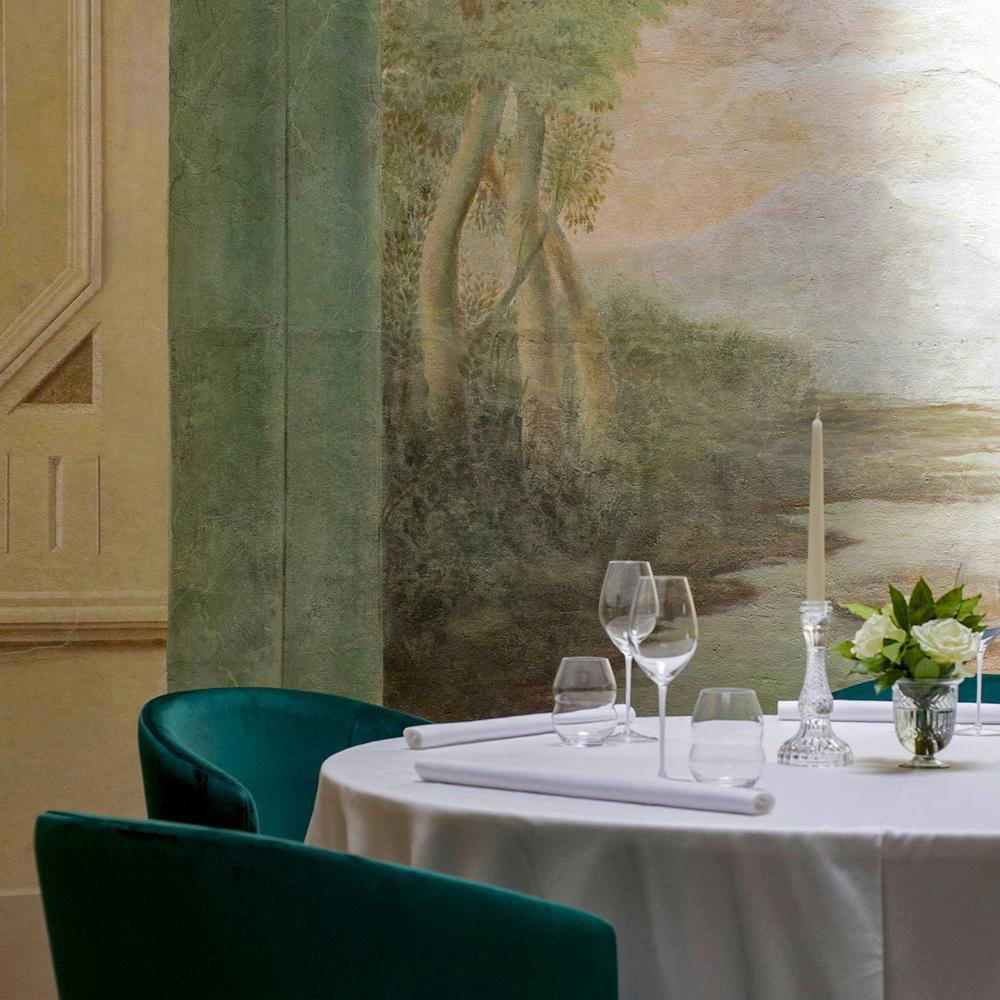
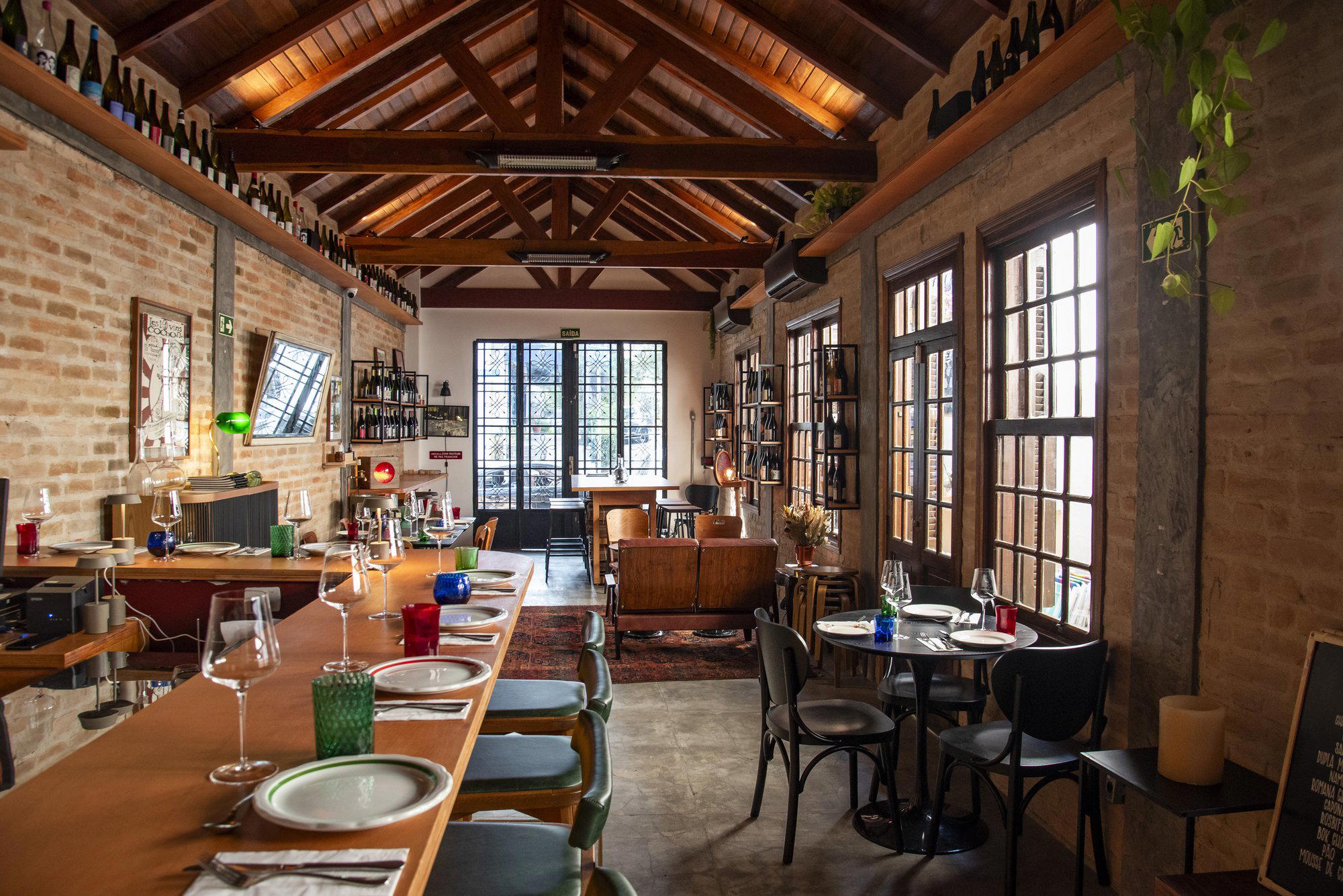
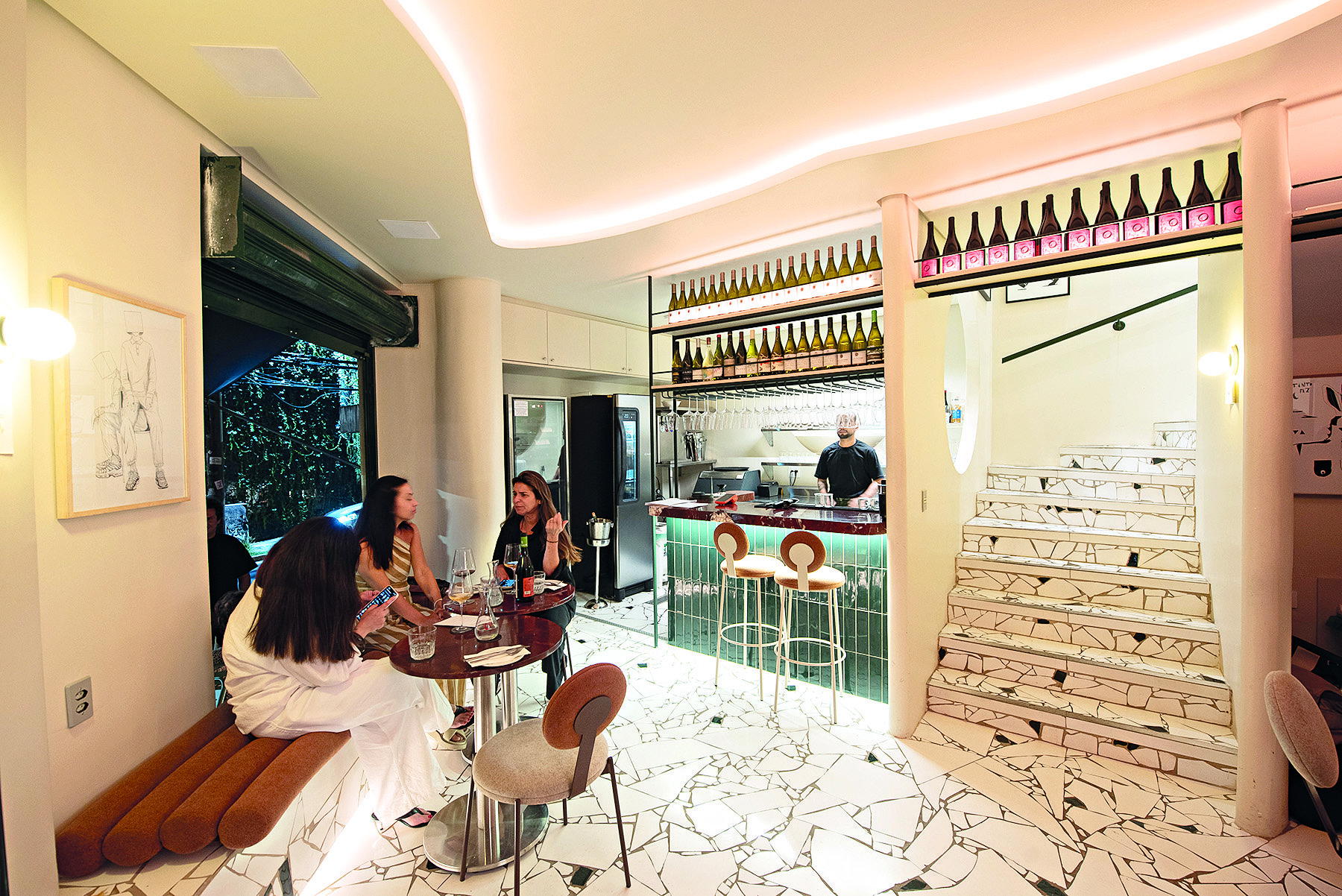
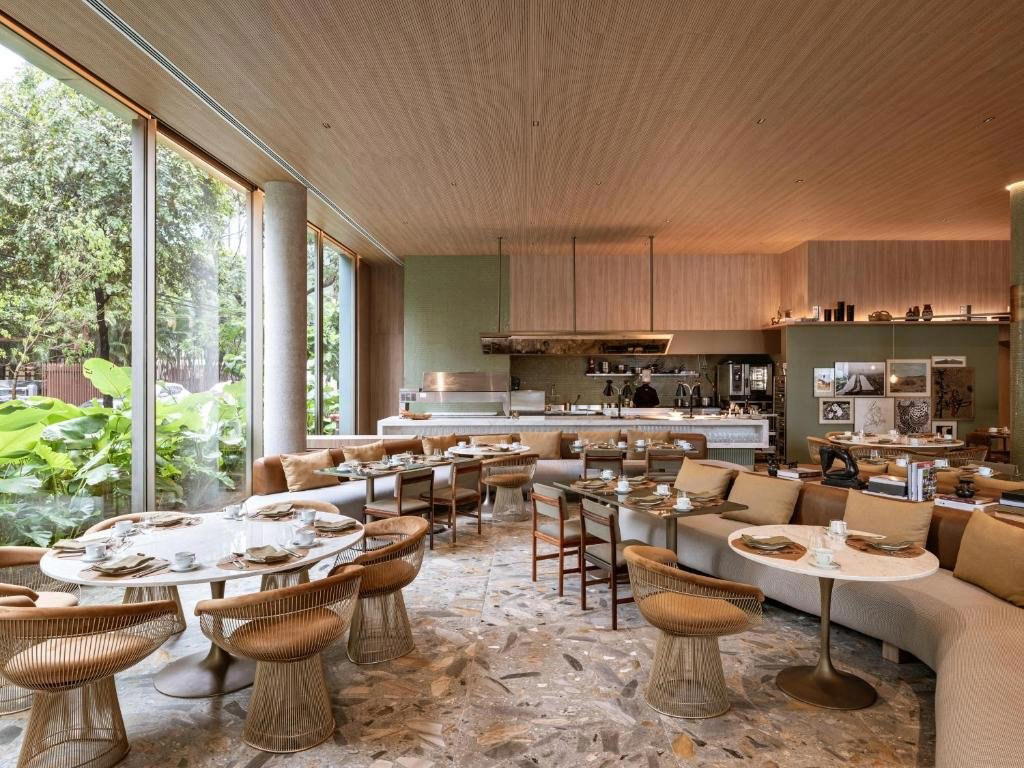
Precise minimalism with precise plating resembling sculpture, relaxed and intimate atmosphere.