




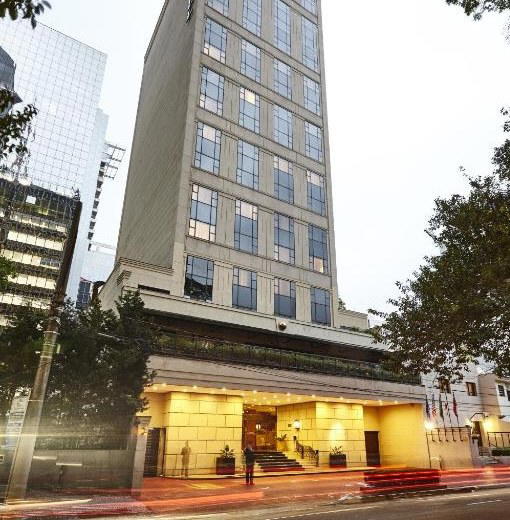
A narrow mirrored tower on Rua Oscar Freire, Emiliano São Paulo sits in the Jardins district where São Paulo's premium retail and dining concentrate. With 56 rooms, a Champagne and Caviar Bar stocked with over 75 labels, and a La Liste Top Hotels score of 92 points in 2026, it occupies the design-led, low-key-luxury end of a city that also hosts the Rosewood São Paulo and Hotel Fasano São Paulo.
Pearl is the En Primeur Club membership app — saves, bookings, and concierge access live there. Same editors, same standards.
- Address
- R. Oscar Freire, 384 - Jardim Paulista, São Paulo - SP, 01426-000
- Phone
- +55 11 3728-2000
- Website
- emiliano.com.br
- Directions
- Get directions
 Saves & bookings on Pearl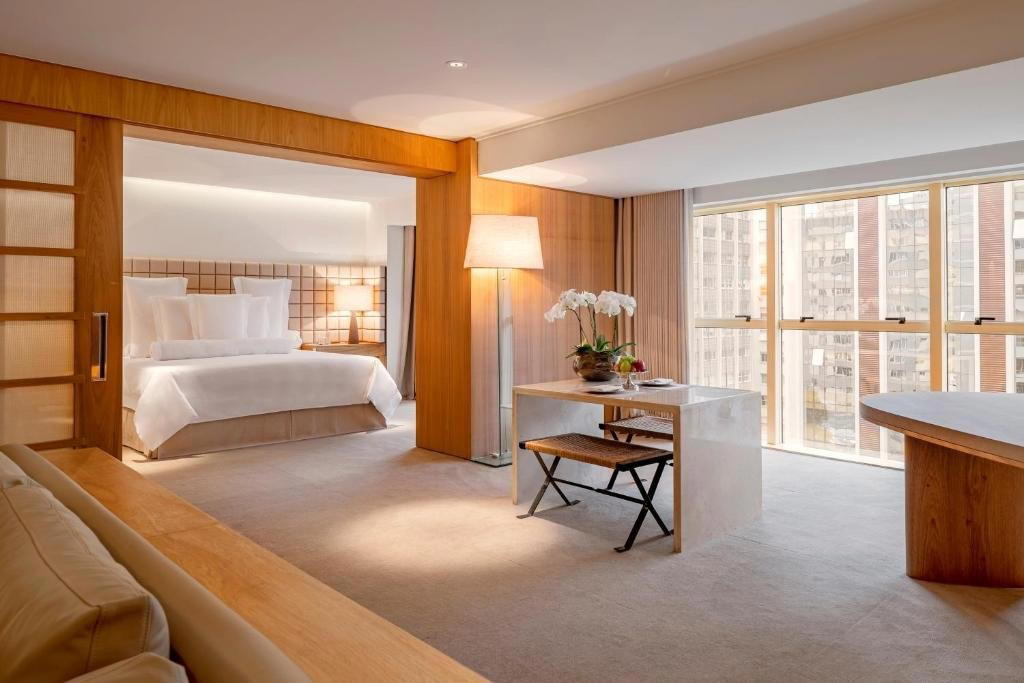
Glass, Geometry, and the Jardins Address
On Rua Oscar Freire, São Paulo's answer to a European luxury shopping corridor, the built environment does much of the communicating. Architect facades compete quietly with one another along a street lined with designer boutiques and the kind of restaurants that require some forward planning. Into this context, Emiliano São Paulo arrives as a narrow mirrored tower, its thin glass profile cutting vertically above the roofline of its neighbours, topped by a cantilevered helipad that reads less as amenity and more as architectural statement.
São Paulo's luxury hotel set is genuinely competitive. Properties such as Hotel Fasano São Paulo, Rosewood São Paulo, and Palácio Tangará each occupy distinct design registers, from Fasano's mid-century Italian restraint to Tangará's park-facing seclusion. Emiliano's register is Brazilian modernism expressed through precision detailing: a building that prioritises verticality and reflection over bulk or grandeur. La Liste placed it at 92 points in its 2026 Leading Hotels ranking, one of the hotel’s six listed awards.
The Lobby as Editorial Statement
The lobby runs ten metres high, which in most hotels produces an intimidating void. Here the scale is counterbalanced by material warmth. Crisp white marble floors anchor the space while blonde woods and custom furnishings pull the temperature back toward the human. The centrepiece is a hanging sculpture by Brazilian artist Siron Franco, a large black cocoon suspended above the floor, which functions simultaneously as art object and spatial anchor. A sixteen-foot vertical garden on the wall reinforces the sense that the interior is doing active curatorial work rather than simply filling space.
That curatorial instinct runs through the furniture programme. The Champagne and Caviar Bar's armchairs were made by the Campana Brothers, the São Paulo design duo whose rope-wrapped and reclaimed-material pieces have appeared in permanent collections internationally. Each chair uses hundreds of feet of beige rope in its construction. The choice of the Campana Brothers is not decorative coincidence; it is a positioning signal that places Emiliano inside a conversation about Brazilian design culture rather than generic international luxury.
56 Rooms, Two Per Floor
The hotel counts 56 rooms in total, with just two per floor. That ratio produces a corridor quietness that larger properties cannot replicate regardless of soundproofing. Brazilian hospitality at this price point has historically traded in warmth over efficiency, and the low-density floor plan supports service that reads as attentive rather than transactional.
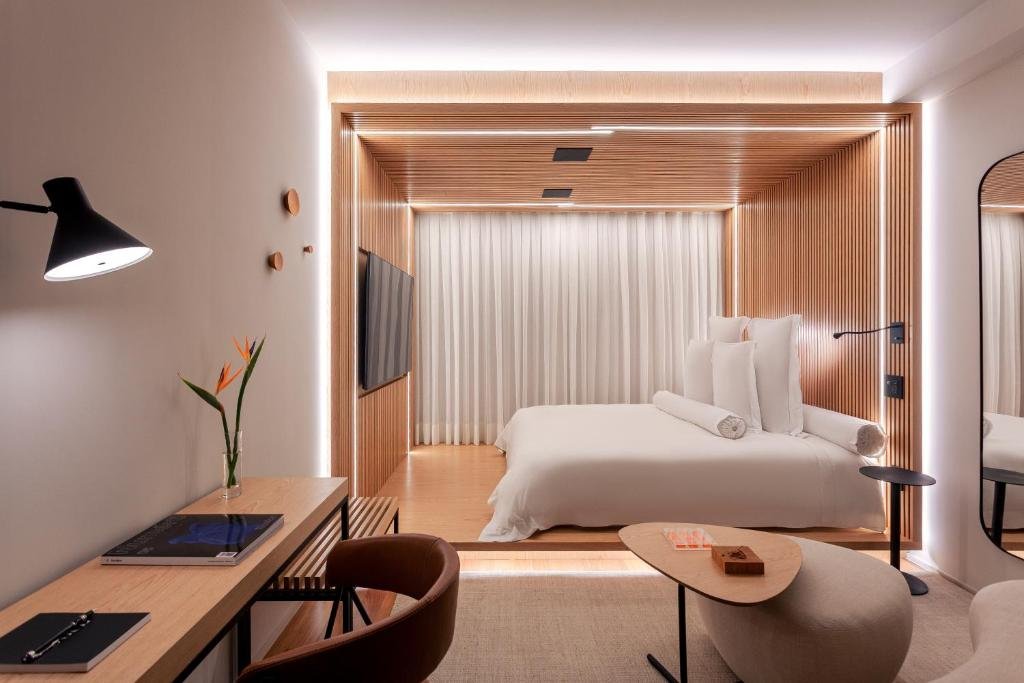
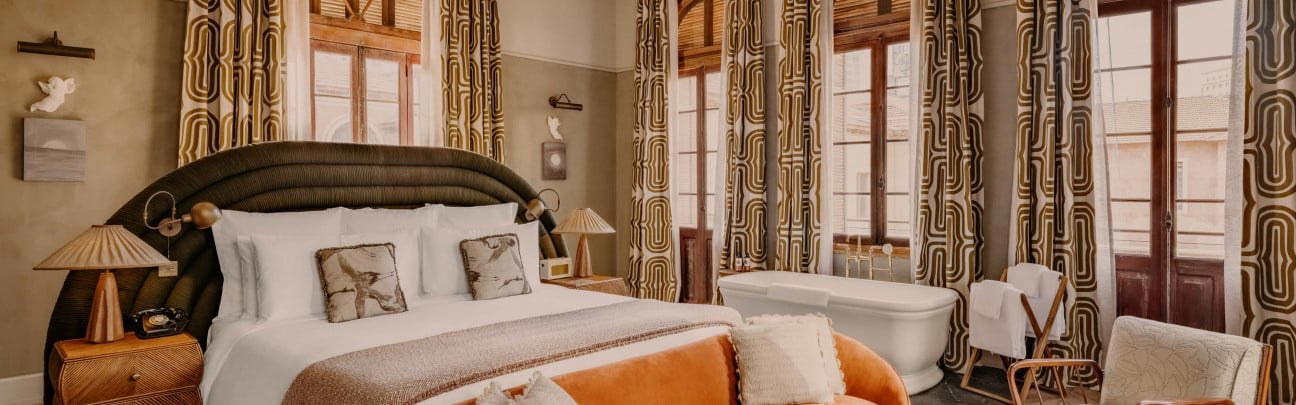
Rooms follow the building's tonal logic: neutral palette, blonde wood panelling, beige leather accents, and soft lighting calibrated to avoid the harsh brightness that undermines so many technically accomplished hotel interiors. King beds are dressed in Egyptian cotton sheets and goose-down pillows, and bathrooms include hydro-massage showers and high-specification sanitary fixtures. The technology loadout, flat screens and DVD players alongside gadget-heavy bathroom controls, sits at the heavier end of integration, something worth factoring in if you prefer analogue sleeping environments.
Suites are double the footprint of the deluxe rooms and include small kitchens, which shifts the use case from overnight stop to extended-stay base. Translucent sliding glass doors act as interior room dividers, maintaining the building's glass-forward language at the room scale. For guests willing to reach stronger examples from the room hierarchy, the Cubo Suite occupies a glass cube format at the penthouse level, with an indoor heated plunge pool, a freestanding bathtub positioned for 180-degree city views, a five-seat sofa, and a dining table. It is the hotel's most concentrated expression of the architectural idea the building proposes from the street.
The Rooftop and the Spa
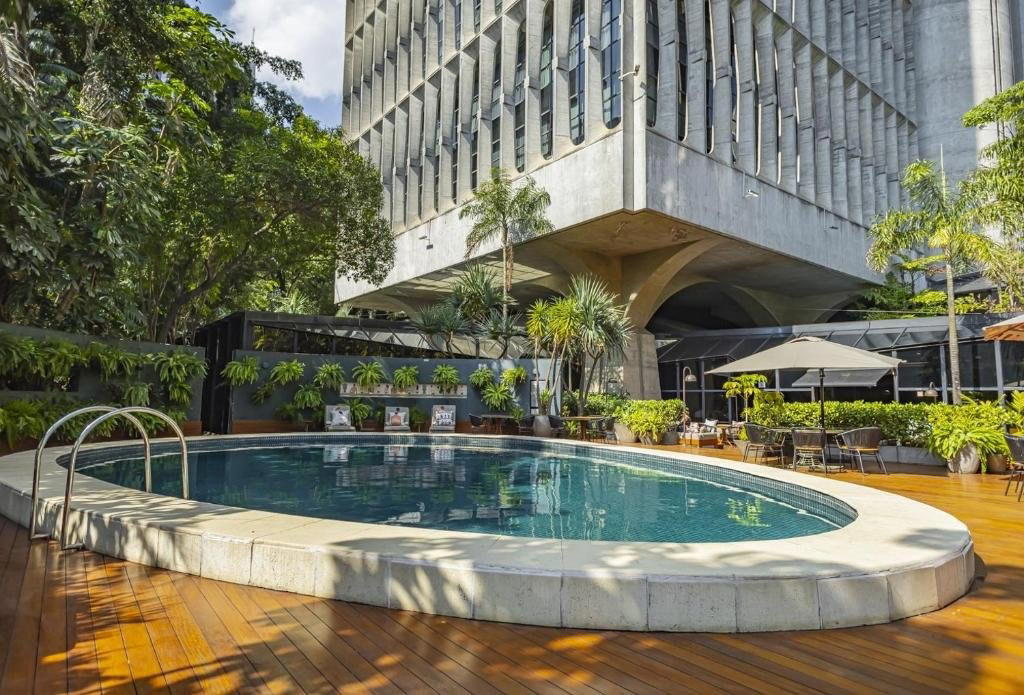
Above the rooms, the rooftop gym delivers wraparound views across the São Paulo skyline, with the hotel's helipad visible overhead. The gym's position in the hotel's vertical stack means that exercise here comes with a panoramic reward that most urban hotel gyms cannot offer. The Santapele Spa operates on an urban retreat model, with two Japanese baths, a vertical garden wall, and an outdoor relaxation terrace, a configuration designed for decompression in a city that runs at high energy from early morning through late night.
São Paulo's density and pace make in-hotel recovery infrastructure more valuable than at resort destinations where landscape does the restorative work. The spa's Japanese bath inclusion is a specific design choice that aligns with the broader Brazilian wellness interest in heat-based bathing rituals, a category that has grown considerably across the city's premium hospitality in recent years.
The Rua Oscar Freire Address
The hotel's street, Rua Oscar Freire, is one of the few places in São Paulo where high-end retail operates at street level rather than inside a shopping centre. That distinction matters practically: the pedestrian experience is legible and walkable, which is not always the case in a city whose premium commercial life is often concentrated behind mall facades. Santo Grão, a café directly opposite the hotel with a reputation as one of the area's better spots for coffee and people-watching, provides an immediate off-site option. Several of the city's more discussed restaurants are within walking range, making the Jardins location a functional anchor for a food-focused visit.
The São Paulo luxury hotel market has expanded significantly over the past decade. Grand Hyatt São Paulo and JW Marriott Hotel São Paulo occupy the large-footprint international brand tier. Hotel Fasano São Paulo Itaim and Hotel Unique, with its curved copper hull, represent the local design-led cohort. Pulso Hotel Faria Lima operates in the newer boutique tier oriented toward the Faria Lima financial district.
For travellers extending a Brazil itinerary beyond São Paulo, the country's hotel range spans environments as different as Copacabana Palace in Rio, Hotel das Cataratas at Iguassu Falls, the eco-focused Cristalino Lodge in Alta Floresta, the wetland base of Caiman Pantanal, and coastal options including Carmel Charme Resort and Barracuda Hotel and Villas in Itacaré. Mountain escapes include Botanique Hotel Experience in Campos do Jordão. Southern Brazil adds options such as Awasi Santa Catarina, Buona Vitta Gramado, and Castelo Saint Andrews in the Vale do Bosque. For island stays, Atlantica Jungle Lodge on Ilha Grande and Casas Brancas in Búzios cover the coastal alternative. Carmel Taíba Exclusive Resort in Taíba rounds out the northeast options. For international comparisons in the same design-led category, Aman New York, The Fifth Avenue Hotel, and Aman Venice occupy adjacent positions in their respective cities.
Comparable Spots, Quickly
Comparable venues nearby, for context on price, style, and recognition.
| Venue | Cuisine | Price | Awards | Notes |
|---|---|---|---|---|
| Emiliano São Paulo | Hotel | Not listed | Michelin 1 Key | Jardim Paulista |
| Hotel Fasano Sao Paulo Itaim | Contemporary luxury with Italian heritage; architect Marcio Kogan's design blends classic Fasano brand elements with modern Brazilian sensibilities across 20 floors. | $$$$ | 5-Star | Pinheiros |
| Tivoli Mofarrej | Five-star urban luxury hotel | $$$$ | 5-Star | Vila Bela Vista |
| Grand Hyatt São Paulo | Contemporary luxury business hotel with modern infrastructure and upscale amenities positioned for corporate and leisure travelers. | $$$$ | 5-Star | Itaim Bibi |
| JW Marriott Hotel São Paulo | Contemporary luxury urban retreat | $$$$ | 5-Star | Santo Amaro |
| Sheraton Sao Paulo WTC Hotel | High-rise hotel in the World Trade Center complex with renovated luxury accommodations | $$$$ | 5-Star | Itaim Bibi |
Recognition history
Dated appearances from independent guides and award organizations, with the underlying list record or original source where available.
Forbes 4-Star
Forbes
La Liste Top Hotels
La Liste
Virtuoso Luxury Hotel Partner
Virtuoso
Forbes 4-Star
Forbes
Michelin 1 Key
Michelin
Small Luxury Hotels of the World Member
Small Luxury Hotels of the World
Continue exploring
More in São Paulo
Hotels in São Paulo
Browse all →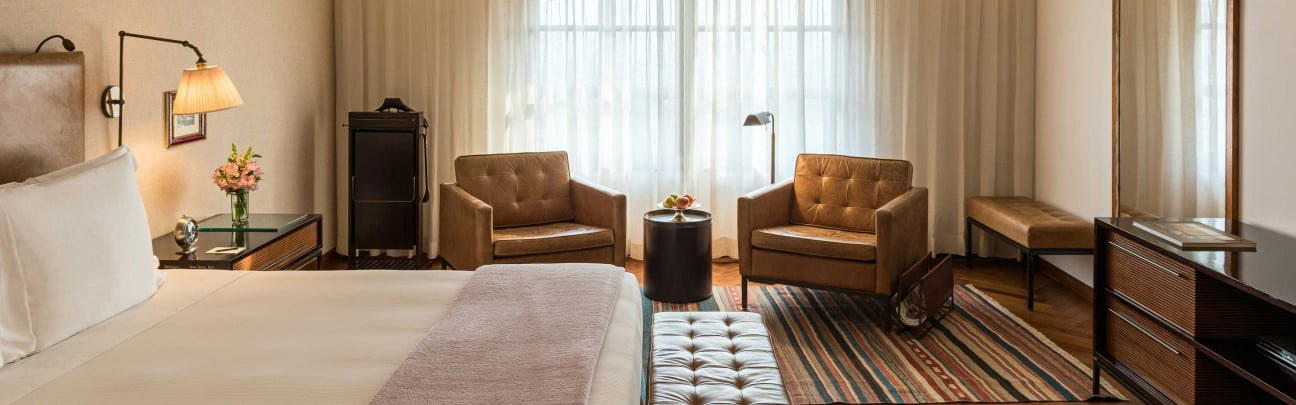
Bars in São Paulo
Browse all →
Restaurants in São Paulo
Browse all →
At a Glance
- Sophisticated
- Elegant
- Modern
- Intimate
- Quiet
- Business Trip
- Romantic Getaway
- Wellness Retreat
- Anniversary
- Weekend Escape
- Destination Spa
- Design Destination
- Panoramic View
- Spa
- Concierge
- Business Center
- Room Service
- Valet Parking
- Skyline
- Street Scene
- Spa
- Concierge
- Business Center
- Room Service
- Valet Parking
Bright, minimalist, and sophisticated, with a contemporary Brazilian design feel, art-led public spaces, and a calm, discreet atmosphere.