
Michelin Plate
Our verdict
A Michelin Plate-recognised address in Vilalba's old quarter, Mesón do Campo has spent more than 35 years working a seasonal à la carte rooted in Galicia's hunting and foraging traditions. Wild mushrooms, game birds, venison, and wild boar anchor the menu, while the owner's personal wine cellar adds an unusually direct dimension to the drinking side of the meal. At €€€, it prices within the upper range of provincial Galician dining.

Pearl is the En Primeur Club membership app, where members save venues, book tables and use the concierge.
The menu
What to order
- Cocochas de merluza al pilpil
- Capón de Vilalba
- Puerritos baby a la brasa
Stone Walls, Seasonal Game, and a Wine Cellar Worth Entering
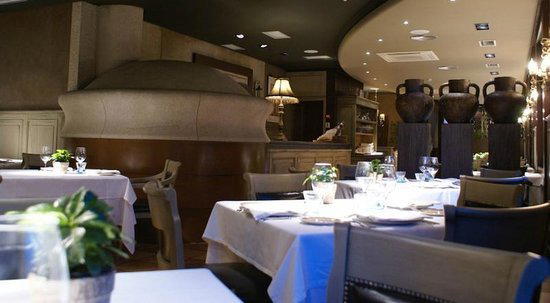
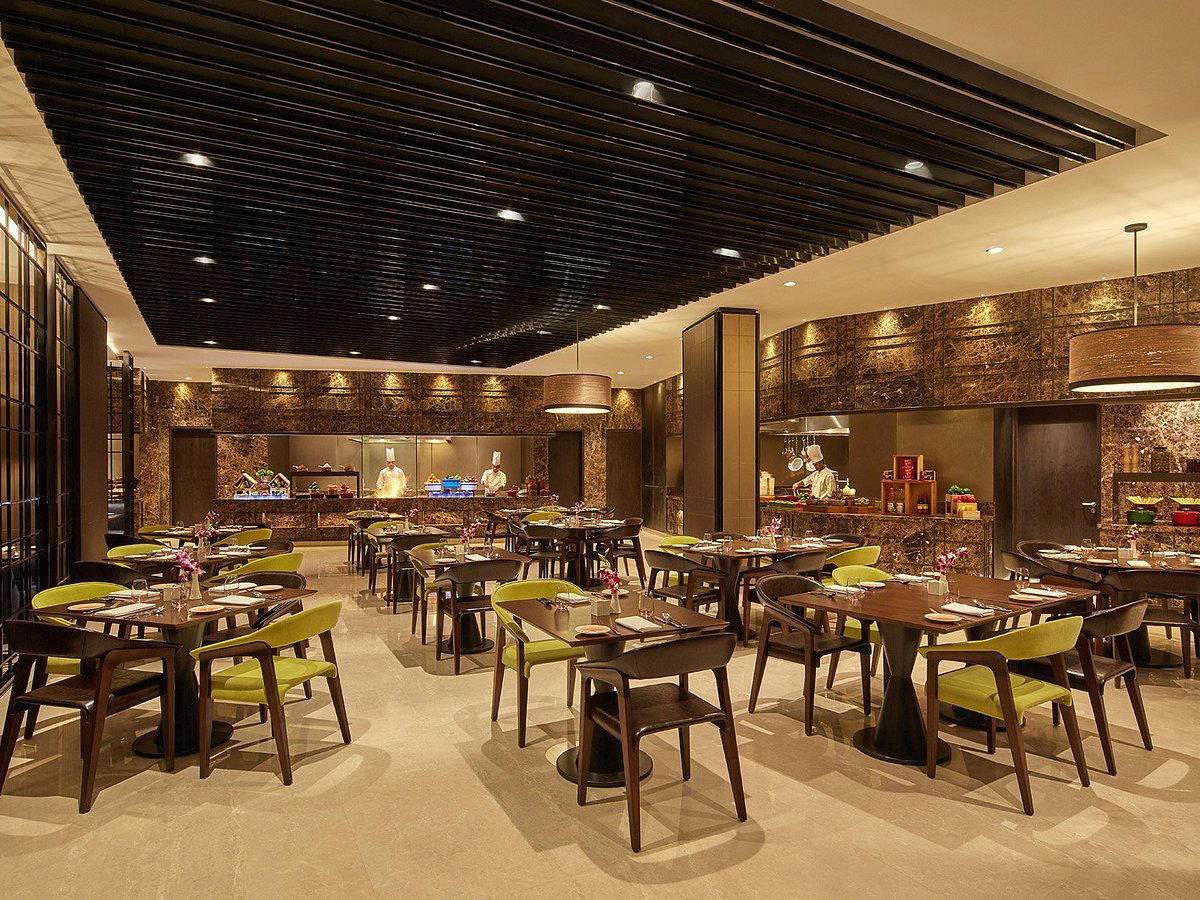
The ground floor of Mesón do Campo presents itself in the mode that rural Galicia has long favoured for serious eating: a bar and wine cellar occupying the street-level space, with the dining room held upstairs, away from the foot traffic of Pl. San Juan. The building is a typical Galician stone house, the kind that in this corner of Lugo province tends to absorb decades of use without showing them as wear. The upstairs dining room sits somewhere between rustic and contemporary, exposed stone and timber registers set against a more considered layout, which is a tonal balance that has become a signature of the region's better provincial restaurants rather than anything contrived for the tourist market.
Vilalba sits at the interior of Lugo province, far enough from the Galician coast that the kitchen's identity leans into the land rather than the sea. That geographic position shapes what the menu is about. Game and wild mushrooms are not accent ingredients here; they are the structure around which the seasonal à la carte is organised. Partridge, venison, and wild boar appear as recurring centrepieces, sourced from hunting traditions that remain active in this part of inland Galicia. The broader Galician interior, less photographed than the rías or the Camino routes, but agriculturally specific, produces the kind of raw material that a kitchen with 35-plus years of supplier relationships can put to consistent use.
What the Sourcing Argument Actually Means in Galicia's Interior
Spanish gastronomy's most celebrated addresses, Arzak in San Sebastián, El Celler de Can Roca in Girona, Disfrutar in Barcelona, DiverXO in Madrid, Azurmendi in Larrabetzu, Mugaritz in Errenteria, Quique Dacosta in Dénia, Aponiente in El Puerto de Santa María, Martin Berasategui in Lasarte-Oria, and Ricard Camarena in València, operate at the creative end of sourcing, treating ingredients as raw material for transformation. The case for a kitchen like Mesón do Campo is different and in some ways harder to make to an audience primed by that tradition: it rests on the premise that traditional preparation, applied consistently over decades to ingredients drawn from a specific territory, constitutes its own form of culinary argument.
In the case of Galicia's interior, that argument has particular force because the ingredients in question are not widely available outside the region. Wild mushrooms from the Lugo hills, partridge and wild boar from local estates, these are not commodities that travel well or appear reliably on supply chains beyond the province. A kitchen positioned to receive them, with the supplier relationships to access them in season and the institutional knowledge to handle them well, occupies a narrower niche than its modest provincial address might suggest. For comparison, Auga in Gijón and Atrio in Cáceres represent adjacent traditions in the broader Iberian northwest, serious regional cooking that draws its authority from place rather than from technical spectacle. Auberge Grand'Maison in Mûr-de-Bretagne offers a useful French parallel: a deeply rooted provincial address where the sourcing story and the setting are inseparable from the proposition.
The Wine Cellar as Dining Experience
The drinking dimension at Mesón do Campo is less standard than the food side. The owner's engagement with wine extends to an offer that does not often appear in restaurants at this tier: guests are invited into the wine cellar to select their own bottle. This is not a theatrical gesture, it is a practical expression of what happens when a restaurant has been accumulating a cellar for more than three decades. The selection available for personal inspection is the product of sustained acquisition rather than a list assembled for commercial positioning.
For those who prefer not to choose, two wine pairing options are available alongside the extended set menu. That format, with a fixed menu tied to a pairing structure, has become common at the higher end of Spanish provincial dining, but the cellar-selection offer distinguishes the experience here from what most restaurants in the €€€ bracket provide. It also positions the wine service as something closer to a conversation than a transaction, relevant context when the food being paired is game-driven and seasonally variable.
Michelin Recognition and What It Signals at This Level
Mesón do Campo holds a Michelin Plate in both the 2024 and 2025 editions of the guide. The Plate designation, awarded for good cooking that does not yet meet the threshold for a star, functions as a quality signal within the regional dining tier rather than as a claim to national prominence. Across the Iberian northwest, Plate recognition tends to attach to restaurants that cook with consistent technical competence, use quality sourcing, and maintain service standards above the casual end of the market. At Mesón do Campo, that recognition spans consecutive years, which reflects a stable kitchen operation rather than a single strong performance.
Planning a Visit
Vilalba is accessible by road from Lugo city, roughly 35 kilometres to the south, and sits along the A-8 corridor that connects the Galician interior to the northern coast. The restaurant is located on Pl. San Juan in the town centre, within the footprint of an old stone house that announces its character from the street. Pricing at €€€ places it in the upper range of provincial Galician dining without reaching the €€€€ tier associated with Spain's destination restaurant circuit.
For those planning a broader visit to the area, our full Vilalba restaurants guide maps the wider dining options, and our Vilalba hotels guide covers accommodation for an overnight stay. The town also has a bar and drinking culture worth considering: our Vilalba bars guide provides that picture, alongside our Vilalba wineries guide for those with an interest in regional production, and our Vilalba experiences guide for broader activities in the area.
Game season in Galicia runs through the autumn and winter months, which is when the menu's strongest sourcing is in play. A visit timed to that window, roughly October through February, aligns most closely with what Mesón do Campo does at full capacity.
Frequently asked questions
Is Mesón do Campo more mid-range or high-end?
Pricing at Mesón do Campo is listed as €€€.
Comparison Snapshot
| Venue | Cuisine | Price | Awards | Notes |
|---|---|---|---|---|
| Mesón do CampoThis venue (the venue you are viewing) | Traditional Galician Cuisine | $30–50 | Michelin Plate | Not listed |
| Aponiente | Avant-Garde Marine Seafood | $200–300 | 3 Michelin Stars · World's 50 Best #84 | Progressive - Seafood, Creative |
| Arzak | Contemporary Basque Fine Dining | $300–500 | 3 Michelin Stars · World's 50 Best #31 | Modern Basque, Creative |
| DiverXO | Avant-Garde Spanish Tasting Menu | $300–500 | 3 Michelin Stars · World's 50 Best #4 | Progressive - Asian, Creative |
| El Celler de Can Roca | Creative Catalan Fine Dining | $300–500 | 3 Michelin Stars · World's 50 Best #2 | Progressive Spanish, Creative |
| Quique Dacosta | Avant-Garde Spanish Fine Dining | $300–500 | 3 Michelin Stars · World's 50 Best #65 | Creative |
Recognition history
Dated appearances from independent guides and award organizations, with the underlying list record or original source where available.
Michelin Plate
Michelin
Full recognition history (3 entries)
Michelin Plate
Michelin
Michelin Plate
Michelin
Continue exploring
More in Vilalba
Mesón do Campo
The wine
- Wine program
- Deep wine list
- Extensive wine list
Details
- Rustic
- Cozy
- Classic
- Date Night
- Special Occasion
- Historic Building
- Wine Cellar
- Terrace
- Extensive Wine List
- Local Sourcing
- Street Scene
- Garden
- A La Carte
- Set Menu
- Wine
- Vegetarian Friendly
- Vegan Options
- Gluten Free Options
Current opening hours
- Monday
- 12–4 PM
- Tuesday
- Closed
- Wednesday
- Closed
- Thursday
- 12–4 PM
- Friday
- 12–4 PM, 7:30–11:30 PM
- Saturday
- 12–4 PM, 7:30–11:30 PM
- Sunday
- 12–4 PM, 7:30–11:30 PM
Hours can change for holidays and private events. Hours as of .
Warm rustic-contemporary dining room in a typical Galician house with cozy terrace, good background music, and welcoming atmosphere.