Mercato della Pescheria Miami Beach
Our verdict
Mercato della Pescheria brings an Italian fish-market tradition to Española Way, one of Miami Beach's most architecturally idiosyncratic streets. The format leans into seafood as a sequence rather than a selection, with a progression that mirrors the rhythm of a coastal Italian meal. It occupies a different register from the Ocean Drive spectacle scene, closer in spirit to the neighbourhood trattorias that line the Adriatic than to South Beach's louder dining rooms.

Pearl is the En Primeur Club membership app — saves, bookings, and concierge access live there. Same editors, same standards.
The menu
What to order
- Seafood pasta
- Crispy calamari
- Rigatoni alla Bolognese
Española Way and the Case for Slowing Down
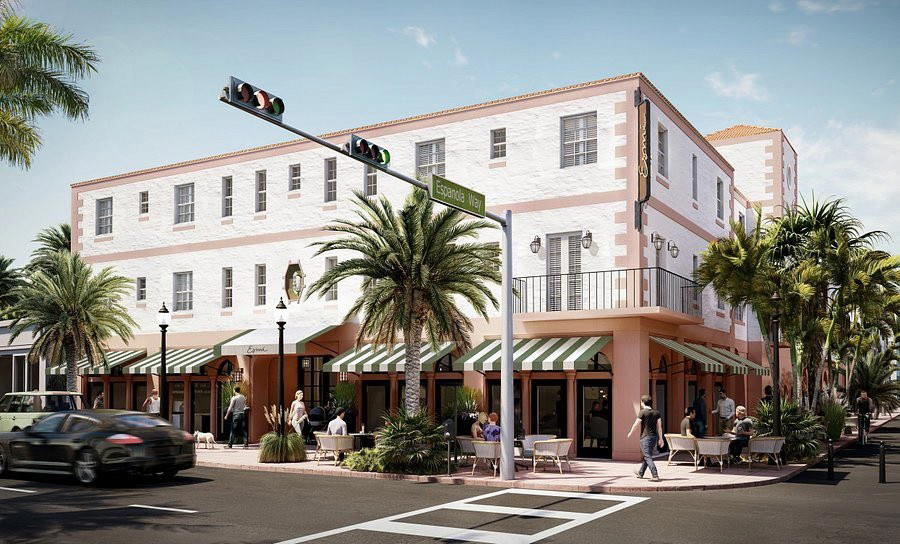
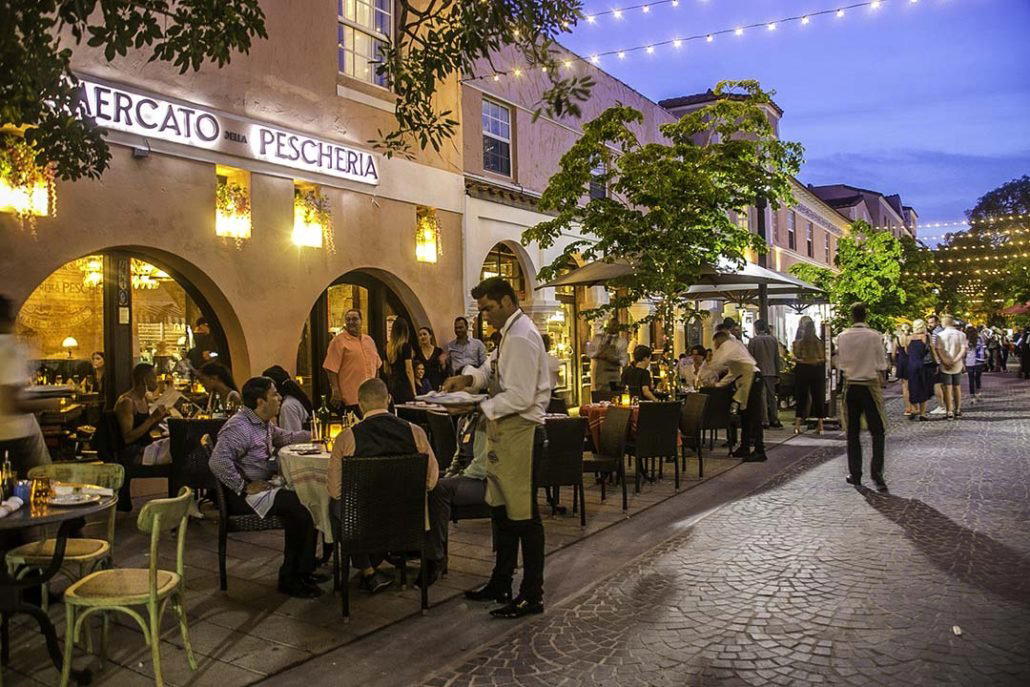
Española Way is one of Miami Beach's more deliberately unhurried streets. Built in the 1920s as a Mediterranean Revival artists' colony, its low-rise ochre facades and wrought-iron details have resisted the glass-and-neon pressure that reshaped much of the surrounding neighbourhood. Restaurants here tend to draw foot traffic that has already decided to linger rather than perform. Mercato della Pescheria sits within that rhythm, and the environment matters to understanding what kind of meal you are walking into. The name signals a specific Italian tradition: the pescheria, or fish market, as a place of daily commerce and seasonal logic, where what is good today determines what appears on the table tonight.
That market-to-table logic is increasingly rare in Miami Beach's mid-to-upper dining tier, where menus often fix themselves around crowd-pleasers and the consistent-throughput demands of high-volume rooms. The Italian fish-market tradition operates on a different premise: the seafood dictates the menu, not the other way around. For diners accustomed to that European coastal cadence, it reads as familiar. For those arriving from the Ocean Drive side of the beach, where the visual spectacle of the room is often as much the product as the food, it can feel like a minor recalibration.
How the Meal Moves
The strongest framing for a meal at Mercato della Pescheria is sequential rather than selective. Italian pescheria dining is structured around a progression that the Italian coastline has refined over generations: something raw or lightly cured at the start, a pasta course built on a seafood base, a main of whole fish or crustacean, and a light finish. That arc is not about theatrical presentation or a chef's narrative imposed on the diner. It is about letting the quality and freshness of the fish carry the work across several courses, each one using a different technique to show the same material in a different register.
In American dining contexts, the Italian multi-course seafood format sits in an interesting position relative to its peers. The tasting-menu form at venues like Le Bernardin in New York City or Providence in Los Angeles applies French technique and fine-dining architecture to seafood at a high price point and high formality level. The Italian pescheria tradition is structurally similar in its commitment to progression, but the register is more casual, the technique more restrained, and the expectation is that the fish, not the kitchen's ambition, is the centre of gravity. Mercato della Pescheria operates closer to that Italian model than to the American tasting-menu tier.
Seafood and the Miami Beach Context
Miami Beach has a substantial seafood dining scene, but it splits in ways worth understanding before booking. The waterfront-facing rooms on Ocean Drive and Collins Avenue tend to prioritise setting and accessibility. The mid-range market is dense with Italian-inflected seafood concepts that blur the line between casual and semi-formal. Above that sits a smaller group of venues, including A Fish Called Avalon, that apply more discipline to sourcing and preparation. Mercato della Pescheria's Italian fish-market positioning places it in that more disciplined group, though without the formal fine-dining structure of, say, a'Riva, which occupies a different price tier and format entirely.
The broader Miami Beach dining neighbourhood around Española Way is worth mapping before you arrive. Alma Cubana and Amalia are nearby options with distinct cuisine profiles, and the diner-format anchor of 11th Street Diner a few blocks away illustrates how varied the immediate neighbourhood's register can be. Española Way itself tends to attract a slower evening crowd than the beach-facing strips, which tends to suit the pescheria format: this is not a meal that benefits from a table turned in ninety minutes.
Where This Format Sits Nationally
The Italian coastal multi-course seafood format is underrepresented in American dining relative to its French and Japanese equivalents. The venues that have built serious reputations around sequenced tasting menus in the United States tend toward French technique (The French Laundry in Napa, Addison in San Diego), ingredient-driven American formats (Blue Hill at Stone Barns in Tarrytown, Single Thread Farm in Healdsburg), or avant-garde conceptual cooking (Alinea in Chicago, Lazy Bear in San Francisco). Italian seafood progression at this level of specificity is rarer, which is part of what makes the pescheria format interesting in a market like Miami Beach, where the raw ingredient access from nearby Gulf and Atlantic waters is genuinely strong.
For international reference points, the format shares more with venues like 8 1/2 Otto e Mezzo Bombana (Hong Kong) in Hong Kong, which applies Italian fine-dining logic to a non-Italian market, than with the event-dining model of Atomix in New York City or the farm-narrative model of The Inn at Little Washington. The through-line is commitment to a specific culinary tradition rather than a cross-genre synthesis.
Planning Your Visit
Española Way's pedestrian character and relatively compact block length make arrival on foot from the central South Beach hotel corridor direct, though parking in the immediate area is limited on weekend evenings and advance planning pays off. Miami Beach's peak season runs from November through April, when temperatures drop to a range that makes outdoor dining genuinely comfortable rather than a commitment. Summer evenings are humid and can involve afternoon thunderstorms, though the later dinner hour, common in this part of the city, typically clears that window. For venues following the pescheria model, where the day's catch shapes the menu, mid-week visits can offer more flexibility in what's available and a quieter room than Friday or Saturday service.
Given the format's dependence on sequenced courses and the neighbourhood's tendency to attract guests who are staying rather than moving on, it is worth treating this as a full evening rather than a first stop on a multi-venue night. The meal structure is designed for that. See our full Miami Beach restaurants guide for broader context on where this venue fits within the city's dining geography.
Frequently asked questions
Where is Mercato della Pescheria Miami Beach located?
Mercato della Pescheria Miami Beach is located at 412 Española Wy, Miami Beach, FL 33139, Miami Beach.
How does Mercato della Pescheria's Italian pescheria format differ from a standard Miami Beach seafood restaurant?
Where most Miami Beach seafood rooms on Ocean Drive or the waterfront operate on a single-plate, à la carte model, the Italian pescheria tradition structures the meal as a sequential series of courses centered entirely on fish and shellfish — closer in logic to an omakase than a conventional menu. That format is underrepresented in American dining, which makes Española Way's Mediterranean Revival block a meaningful context: the street's deliberately slow pace suits a meal designed to move through courses rather than turn tables quickly. The venue sits at 412 Española Way, Miami Beach.
What's the best thing to order at Mercato della Pescheria Miami Beach?
The pescheria format is built around sequential seafood courses rather than à la carte selection, so the meal works best when treated as a progression rather than a single standout dish. Italian coastal dining of this structure typically moves from crudi and raw preparations through cooked fish and pasta before reaching a final seafood main, so committing to the full sequence yields the most coherent result. Situated at 412 Española Way, the setting reinforces a paced, course-by-course approach rather than a quick drop-in.
Should I book Mercato della Pescheria Miami Beach in advance?
Española Way draws consistent foot traffic from the surrounding South Beach hotel corridor, and Italian seafood restaurants running a structured multi-course format tend to seat by reservation rather than walk-in. Securing a table ahead of your visit is advisable, particularly on weekends or during Miami Beach's peak season from November through April. The restaurant is located at 412 Española Way, Miami Beach, FL 33139.
Just the Basics
Comparable venues nearby, for context on price, style, and recognition.
| Venue | Cuisine | Price | Awards | Notes |
|---|---|---|---|---|
| Mercato della Pescheria Miami BeachThis venue — the venue you are viewing | Authentic Italian Seafood Market | $50–100 | Not listed | Not listed |
| Osteria Positano | Amalfi Coast Italian Trattoria | $50–100 | Not listed | South Beach, Amalfi Coast Italian Trattoria |
| Mister01 | Extraordinary Italian Star-Shaped Pizza | $30–50 | Michelin Plate | South Beach, Extraordinary Italian Star-Shaped Pizza |
| Via Emilia 9 | Authentic Emilia Romagna Italian | $50–100 | Not listed | South Beach, Authentic Emilia Romagna Italian |
| Osteria del Mar | Italian Coastal with American Influences | $50–100 | Not listed | South Beach, Italian Coastal with American Influences |
| Mercato Di Mare - Ocean Drive | Art Deco Italian Seafood | $50–100 | Not listed | South Beach, Art Deco Italian Seafood |