Mercat a la Planxa
Our verdict
Mercat a la Planxa occupies a distinctive position on South Michigan Avenue inside the historic Blackstone Hotel, bringing Spanish-influenced cooking to one of Chicago's most architecturally charged dining rooms. The restaurant has moved through several identity shifts since the Blackstone's restoration, and its current direction reflects a broader pattern of hotel dining reinvention playing out across the city's Grant Park corridor.

Pearl is the En Primeur Club membership app, where members save venues, book tables and use the concierge.
The menu
What to order
- Pulpo a La Planxa
- Paella de Mariscos
- Croquetas
- Pan con Tomate
South Michigan Avenue and the Hotel Dining Question
The stretch of South Michigan Avenue running parallel to Grant Park has always attracted a particular kind of restaurant: one that must simultaneously serve hotel guests, pre-symphony diners heading to Orchestra Hall, and locals who have made a deliberate choice to cross the threshold. That triangulation of audiences is harder to manage than it appears, and most hotel dining rooms in this zip code resolve it by collapsing toward the middle, producing menus that offend no one and excite no one. Mercat a la Planxa, operating inside The Blackstone Hotel at 638 S Michigan Ave, has spent years working against that gravitational pull, with results that reward the visitor who approaches it as a restaurant rather than a hotel amenity.
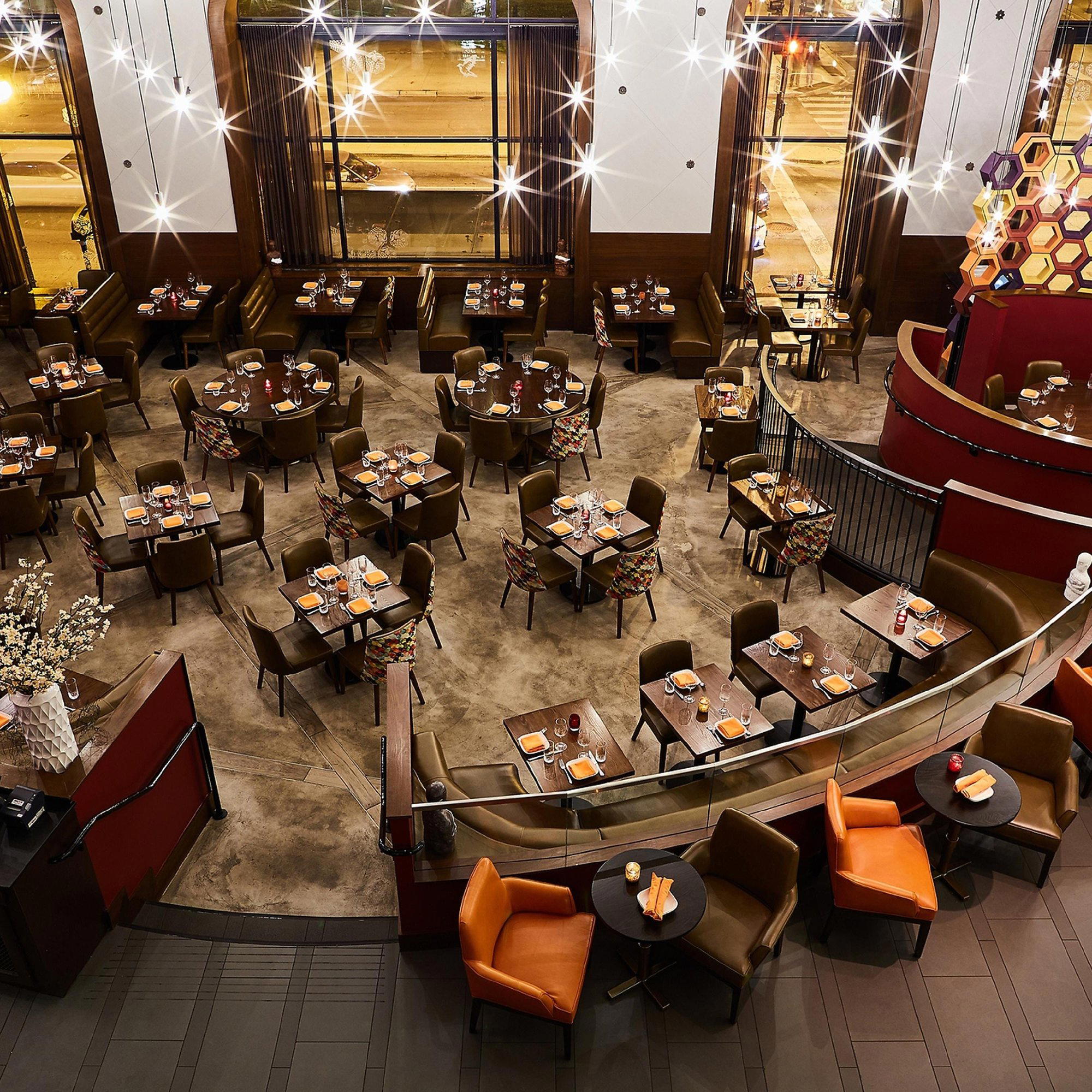
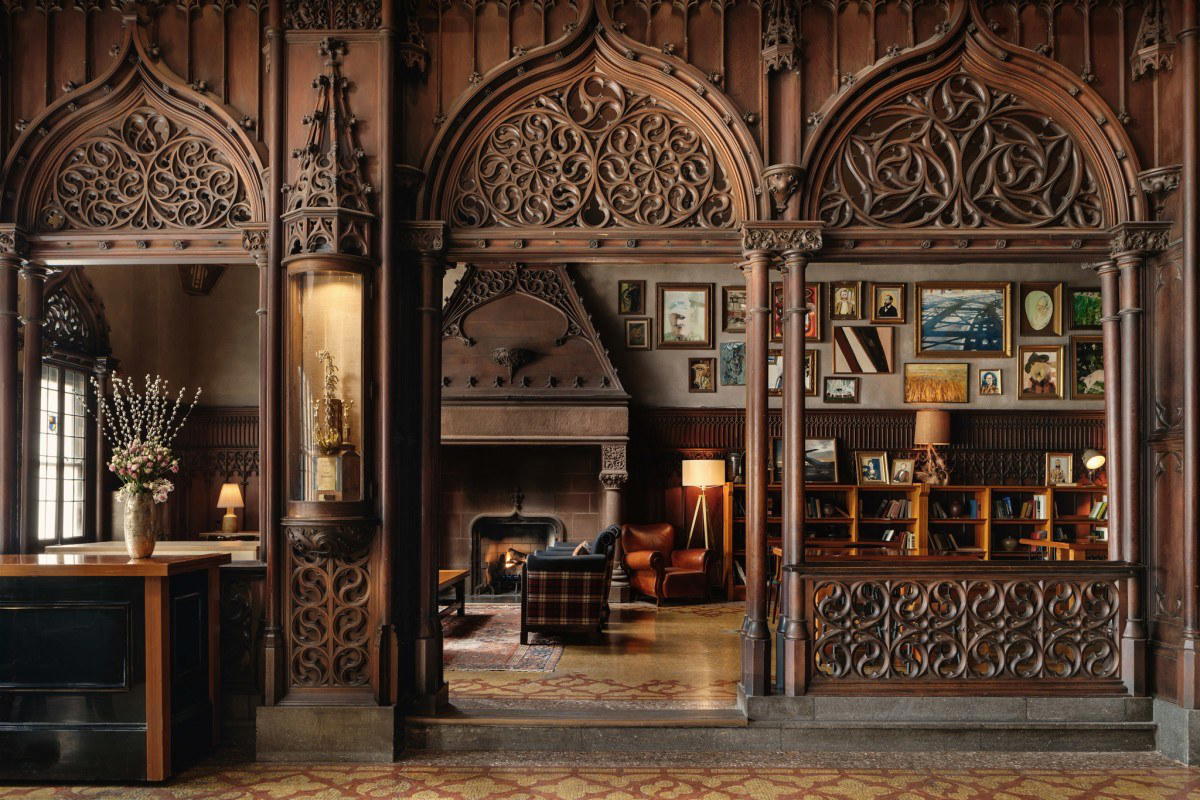
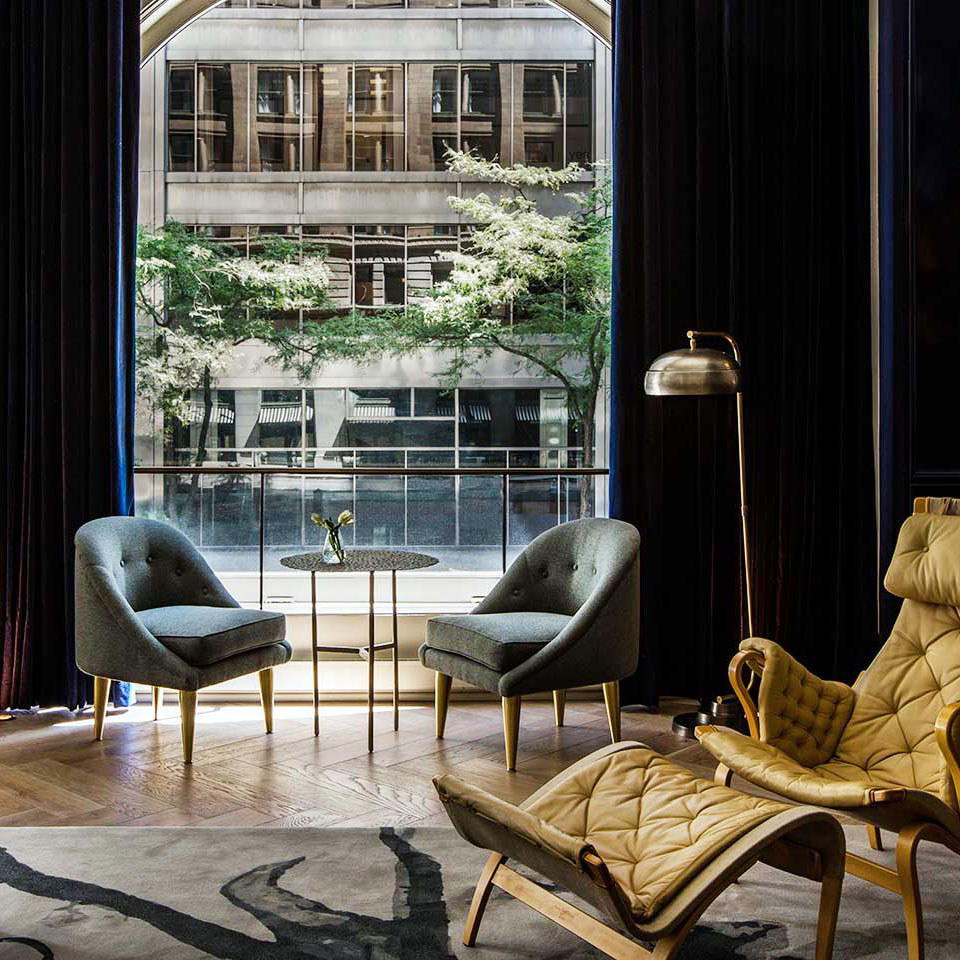
The Blackstone itself provides context that no amount of interior design could manufacture. The building dates to 1910, a Beaux-Arts property whose guest list over the century has included sitting presidents and visiting dignitaries. The dining room inherits that physical weight: high ceilings, architectural detailing, and a sense that the space was built to be inhabited seriously. Hotel dining rooms in Chicago occupy a spectrum that runs from afterthought to destination, and the Blackstone's room has the bones to anchor the latter category. Whether the kitchen matches the architecture in ambition has shifted considerably over the restaurant's lifespan.
From Spanish Blueprint to Current Direction
Mercat a la Planxa opened with an explicit Spanish identity, the planxa in the name referring to the flat iron griddle common in Catalan cooking. That framing placed it within a wave of Spanish-influenced restaurant openings that swept American cities in the mid-2000s, following the international attention on avant-garde Catalan cuisine. Chicago's dining scene absorbed that influence alongside its own progressive American momentum, visible today in destinations like Alinea, Smyth, and Oriole, all of which represent a different trajectory: tasting-menu formats, chef-driven narratives, and minimal hotel infrastructure.
Mercat chose a different path. Where those restaurants built identity through tight editorial control over the dining format, Mercat leaned into the accessibility that a hotel address and a large dining room both demand and permit. That is not a criticism of the model; it describes a genuine strategic split in how ambitious restaurants position themselves. Next Restaurant and Kasama represent Chicago's more format-disciplined end of that spectrum. Mercat occupies the zone where volume, occasion dining, and a broader menu range coexist.
The evolution question for any restaurant operating inside a historic hotel is whether reinvention tracks changes in the kitchen or changes in the ownership and management layer above it. At Mercat, both forces have been in play. The Spanish anchor in the name has remained, functioning as a brand commitment even as the menu's interpretation of that commitment has broadened. The planxa cooking method, which uses dry, intense heat to produce clean sears on proteins and vegetables, remains a technically sound organizing principle for a menu that needs to work across multiple dayparts and guest profiles.
The Grant Park Setting as Competitive Advantage
Location functions differently here than it does for destination restaurants in the West Loop or River North. The Grant Park corridor draws visitors to Chicago from the Museum Campus, Millennium Park, and the lakefront, creating a diner profile that skews toward first-time and infrequent visitors to the city. That audience often books where they sleep, which gives Mercat a structural advantage in occupancy that most neighborhood restaurants would trade significant critical recognition to have.
The counterweight is that proximity to major Chicago institutions means the restaurant competes, on any given evening, against the decision to walk a few blocks to something with more street-level narrative. Chicago's dining scene at the upper-middle and fine-dining tiers has deepened considerably, and the city's most discussed kitchens, including those flagged in our full Chicago restaurants guide, operate with a specificity of identity that hotel restaurants have historically struggled to match. The comparable challenge plays out in other American cities: Emeril's in New Orleans and Le Bernardin in New York City both demonstrate that high-volume, location-advantaged restaurants can sustain critical credibility, but the effort required is consistent and the margins for drift are narrow.
What the Spanish Framework Delivers
Planxa-style cooking, as a tradition, favors speed and precision over slow braise or elaborate sauce work. The technique works well in high-volume hotel kitchens because it is replicable and the result is immediate: the char, the crust, the clean finish. Spanish-influenced dining in American cities has also proven durable across trend cycles in ways that, say, mid-2000s molecular presentations have not. The tapa format, when executed with reasonable restraint, allows a table to graze through several price points and risk tolerances simultaneously, which suits the mixed-party hotel dining room well.
Restaurants with a similar geographic logic but higher critical profiles, including Lazy Bear in San Francisco, Single Thread Farm in Healdsburg, and The French Laundry in Napa, operate with format control and ticket prices that entirely remove the hotel-amenity tension. Mercat does not attempt that removal. It manages the tension instead, which is a different and arguably more difficult task. The same challenge applies to Providence in Los Angeles, Blue Hill at Stone Barns in Tarrytown, Addison in San Diego, The Inn at Little Washington, Bacchanalia in Atlanta, Atomix in New York City, and 8 1/2 Otto e Mezzo Bombana in Hong Kong, all of which move through the expectations gap between institutional settings and destination dining.
Timing and Occasion
The restaurant's position on the South Loop's cultural corridor makes seasonal timing relevant. Spring and summer bring the outdoor programming in Grant Park, including the city's major festivals on the lakefront, which push pedestrian traffic past the Blackstone's entrance and increase walk-in volume. Autumn, when the Chicago Symphony Orchestra season is in full swing at Symphony Center a short walk north, produces the pre-concert dining pattern that suits a menu with enough range to accommodate a ninety-minute dinner. Winter draw is quieter, and the interior architecture earns its keep when there is nothing competing with it outside.
Know Before You Go
- Address: 638 S Michigan Ave, Chicago, IL 60605 (inside The Blackstone Hotel)
- Neighbourhood: South Loop / Grant Park corridor
- Leading for: Pre-concert dinners, hotel guests, occasion meals with mixed-party groups
- Seasonal note: Lakefront festival season (June to August) increases walk-in volume; book ahead during peak summer weekends and major Grant Park events
- Getting there: Steps from the Roosevelt CTA Red/Green/Orange Line stop; street parking limited on Michigan Ave
Frequently asked questions
at Mercat a la Planxa?
The restaurant's Spanish-influenced framework centers on planxa cooking, so dishes that showcase the flat-iron griddle technique, typically proteins and vegetables with a clean, direct sear, are where the kitchen's organizing principle is most visible. Because the menu has broadened over time, the most consistent editorial advice is to anchor a meal in the planxa-forward sections rather than treating the menu as a general American hotel kitchen. Chicago's dining scene at the tasting-menu tier, represented by venues like Alinea and Oriole, operates on a different format entirely; Mercat's strength is range and occasion flexibility, not single-dish precision.
Is Mercat a la Planxa reservation-only?
Mercat a la Planxa accepts walk-in diners, particularly at the bar, though reservations are advisable during Chicago's peak summer festival season and on evenings aligned with Symphony Center programming. The Grant Park address and Blackstone Hotel foot traffic create variable walk-in demand that makes booking ahead the lower-risk choice for parties of three or more. Chicago's tighter-format destination restaurants, including Kasama and Smyth, operate on reservation-only or ticketed models; Mercat's more flexible format is part of what distinguishes its position in the city's dining tier.
How does dining at Mercat a la Planxa fit into a broader Chicago cultural itinerary?
The Blackstone Hotel address places Mercat within easy walking distance of the Art Institute of Chicago, Millennium Park, and the Museum Campus, making it a practical anchor for days built around Grant Park's cultural institutions. For visitors structuring a multi-day Chicago dining itinerary, Mercat works well as a lower-friction entry point before or after major museum visits, with the Spanish-influenced menu offering enough range to suit varied tastes across a travel group. Pairing it with a reservation at one of Chicago's more format-driven restaurants, such as Next Restaurant, gives a trip meaningful contrast between the city's hotel-dining and destination-kitchen registers.
City Peers
Comparable venues nearby, for context on price, style, and recognition.
| Venue | Cuisine | Price | Awards | Notes |
|---|---|---|---|---|
| Mercat a la PlanxaThis venue (the venue you are viewing) | Modern Catalan Tapas | $50–100 | Not listed | Not listed |
| Azucar Tapas & Cocktails | Spanish Tapas | Not listed | Not listed | Logan Square |
| Roanoke | Upscale American Gastropub | $30–50 | Not listed | Loop |
| STK Chicago | Modern Steakhouse | $50–100 | Wine Spectator Award of Excellence | River North |
| Crying Tiger | Modern Southeast Asian | $30–50 | Not listed | River North |
| Nic + Junior's | Italian-Brazilian Fusion | Not listed | James Beard Award Semi Finalist | River North |
Continue exploring
More in Chicago
Restaurants in Chicago
All restaurants in Chicago →

Bars in Chicago
All bars in Chicago →
Details
- Lively
- Trendy
- Elegant
- Energetic
- Date Night
- Group Dining
- Special Occasion
- Open Kitchen
- Hotel Restaurant
- Craft Cocktails
- Local Sourcing
- Skyline
- Small Plates
- A La Carte
- Vegetarian Friendly
- Vegan Options
- Gluten Free Options
Current opening hours
- Monday
- 4–10 PM
- Tuesday
- 4–10 PM
- Wednesday
- 4–10 PM
- Thursday
- 4–10 PM
- Friday
- 4–10 PM
- Saturday
- 4–10 PM
- Sunday
- 7 AM–1:30 PM, 4–10 PM
Hours can change for holidays and private events. Hours as of .
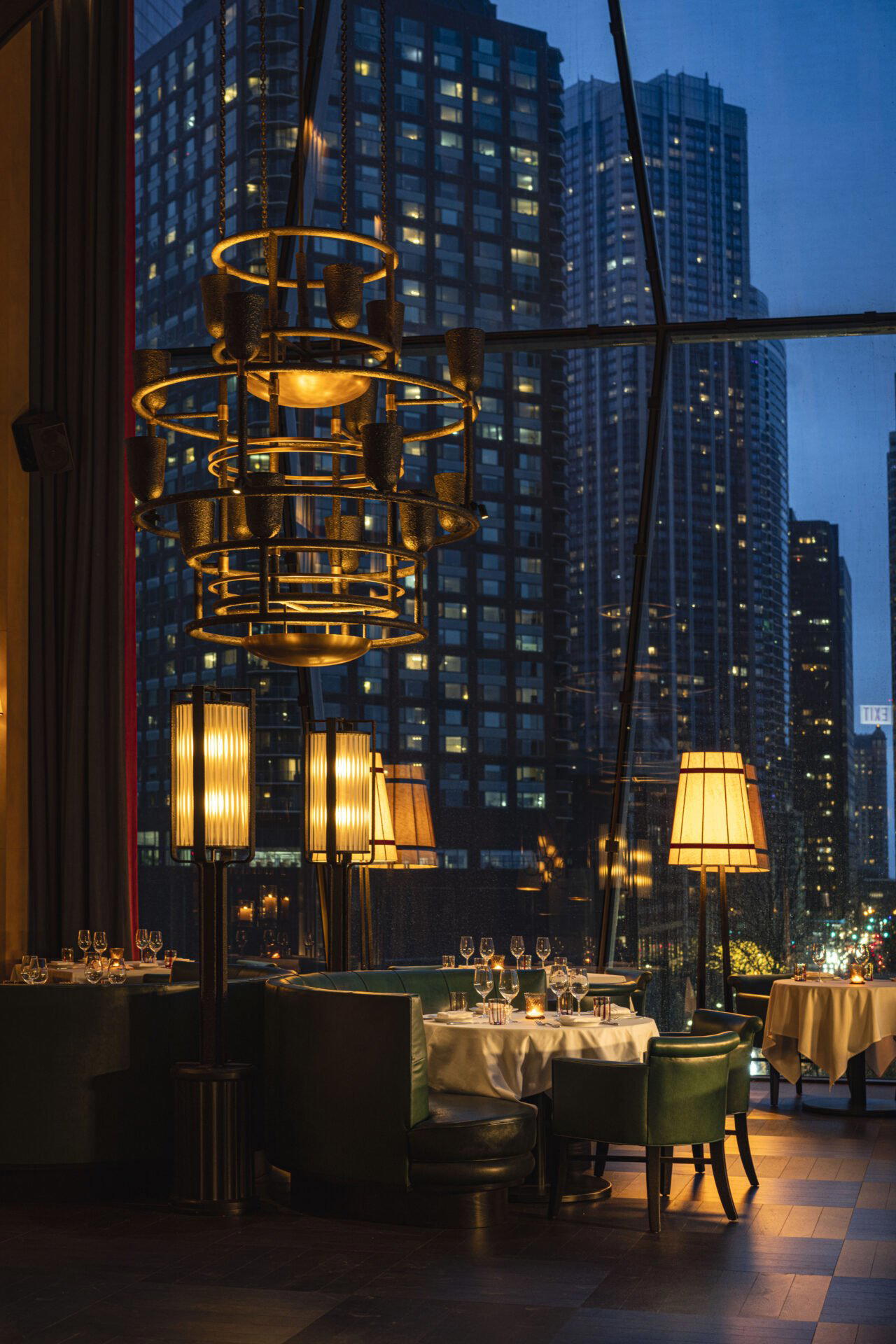
Dynamic and swanky atmosphere overlooking Grant Park with lively energy.