Kimpton Gray Hotel

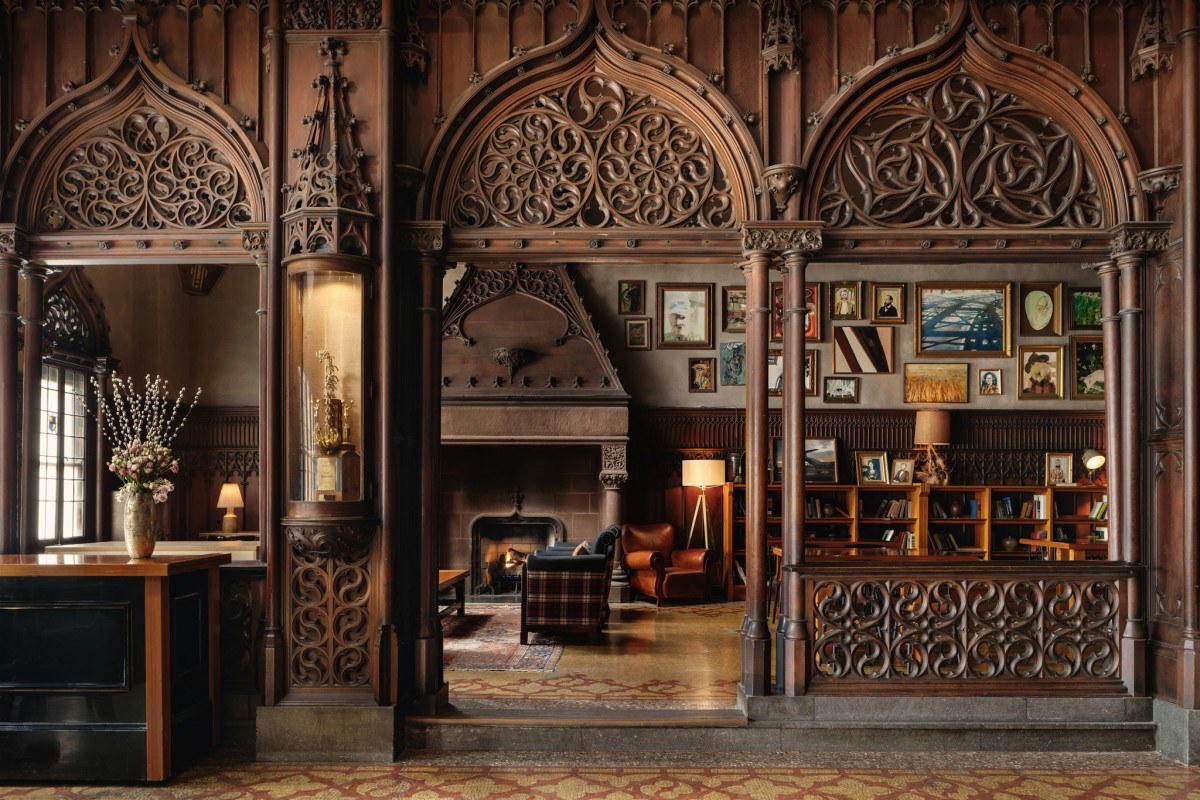
A Michelin Selected hotel occupying a 1914 neoclassical tower in Chicago's Loop, the Kimpton Gray Hotel places guests in one of the city's most architecturally significant addresses. The building's century-old bones, marble lobbies, ornate plasterwork, soaring ceilings, set a tone that most purpose-built hotel blocks cannot replicate. For Loop-focused itineraries, it competes on heritage character as much as location.
Pearl is the En Primeur Club membership app — saves, bookings, and concierge access live there. Same editors, same standards.
- Address
- 122 W Monroe St, Chicago, IL 60603
- Phone
- (312) 750-9012
- Website
- grayhotelchicago.com
- Directions
- Get directions
 Saves & bookings on Pearl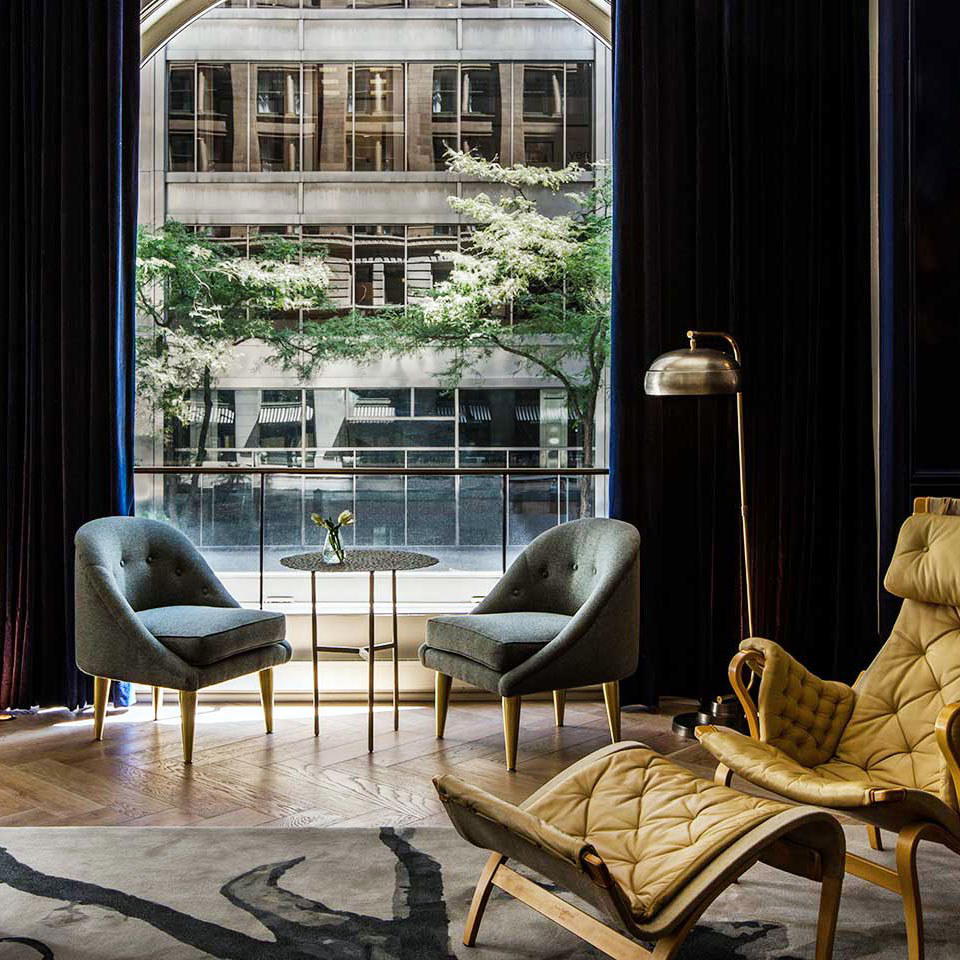
A Loop Address with a Century of Precedent
Monroe Street in Chicago's Loop has a particular quality in the early morning: the canyons of steel and stone hold the cold Lake Michigan air longer than anywhere else downtown, and the pedestrian traffic moves with the purposeful rhythm of a city that genuinely works for a living. Arriving at 122 W Monroe, the building that houses the Kimpton Gray Hotel announces itself through mass and proportion rather than signage. The structure dates to 1914, originally built as the New York Life Insurance Building, a Beaux-Arts neoclassical tower designed at a moment when American commercial architecture was actively competing with European precedent. That ambition is still readable in the facade.
Inside, the transition from Loop sidewalk to hotel lobby crosses a century of accumulated material decisions, marble floors, carved plasterwork, ceiling heights that belong to an era before cost-per-square-foot rationalized everything downward. That address places it within easy reach of the Loop's core business and cultural districts.
What a 1914 Tower Does That a New Build Cannot
Heritage hotel conversions split into two broad categories: those that preserve the shell while gutting the interior, and those that maintain a meaningful dialogue between the building's history and its current function. The Loop's commercial core has produced several of the former, where historic facades front interiors that could belong to any decade. The Kimpton Gray Hotel operates more in the second mode. The building's structural logic, deep floor plates, thick masonry walls, the particular scale of its public spaces, shapes the guest experience in ways that cannot be specified into a new construction brief.
This matters most in Chicago, where architectural heritage is taken seriously as a civic matter rather than merely a tourism talking point. The city's Loop contains a higher concentration of early-twentieth-century commercial architecture than almost any other American downtown, and guests who book into buildings like the Gray are, consciously or not, choosing to sleep inside that argument. The Chicago Athletic Association, another Loop conversion with a comparable architectural pedigree, draws a similar audience for similar reasons.
The comparison with Pendry Chicago is instructive in a different way. Pendry operates from a position of design-forward new luxury, where every surface is intentional and contemporary. The Gray occupies a complementary rather than competing position: it is not trying to deliver the same experience, and guests who understand the difference tend to self-select accurately. Neither approach is categorically superior; the question is which register of experience a given trip requires.
The Loop as a Base of Operations
A hotel's neighbourhood positioning is often underweighted in booking decisions, then overweighted during the stay itself. The Loop address at 122 W Monroe places guests within walking distance of the Art Institute, Millennium Park, the Chicago Riverwalk, and the city's main transit interchange. For business travelers, the concentration of financial and legal institutions in the surrounding blocks means that working in-person with Loop-based counterparts involves no commute at all. For leisure guests, the location compresses the geography of the city's central cultural district into a navigable radius.
That said, the Loop thins out at night in ways that River North, the Gold Coast, or the West Loop do not. Guests looking for a hotel that functions as a social hub in its immediate surroundings, where leaving the front door at ten in the evening puts you into active streetlife, may find the Gray's neighbourhood quieter than comparable hotels in denser evening districts. Nobu Hotel Chicago and Viceroy Chicago both operate in neighbourhoods with heavier after-dark energy. The trade is simple: Loop proximity against evening atmosphere.
Kimpton's Operating Model in Context
Kimpton as a group occupies a specific position in the American boutique-hotel market. Founded in San Francisco in 1981, the brand built its identity on personality-led properties in historic or architecturally significant buildings, positioning against the uniform experience of chain hotels without abandoning service infrastructure. That model has been tested since IHG's 2015 acquisition, with questions about whether group ownership dilutes the independent character that made individual Kimpton properties worth seeking out. The Gray is a useful data point in that ongoing argument: the building's architectural weight is strong enough that its character does not depend entirely on the brand's programming decisions.
For the broader context of how the Gray sits within Chicago's Michelin Selected hotel cohort, it is worth noting that the designation spans a wide range of properties. The Gwen, a Luxury Collection Hotel, Michigan Avenue Chicago and Waldorf Astoria Chicago occupy different positions within the same recognised tier, and comparing them reveals how much variation the Michelin Selected category contains. The Gray competes on building character; the Waldorf competes on scale and amenity depth; The Gwen competes on address and brand recognition. Each is a different answer to the question of what premium Chicago accommodation should feel like.
Planning Your Stay
The Loop is most atmospheric between late spring and early autumn, when the Riverwalk activates and outdoor events fill Millennium Park's calendar. Winter stays are viable, the architecture reads particularly well against grey skies and light snow, but guests should account for the genuine severity of Chicago winters when planning itineraries that involve significant walking. The hotel's Monroe Street address is a short walk from the Blue and Red Line stations at Washington, and the Metra electric lines at Millennium Station serve guests arriving from O'Hare or Midway by way of connecting transit. Booking should be approached with standard Loop hotel lead times in mind: major convention weeks and summer weekends fill the competitive set across all price points, and the Gray is not exempt from that pressure.
Elsewhere in the EP Club network, heritage hotel conversions in comparable urban positions include Raffles Boston and The Fifth Avenue Hotel in New York City, both of which move through the same tension between architectural legacy and contemporary hotel operation. For a different register entirely, properties like Aman Venice and Hôtel de Paris Monte-Carlo demonstrate what historic building conversions look like when operating budget and brand prestige are significantly higher.
Peers Worth Knowing
Comparable venues nearby, for context on price, style, and recognition.
| Venue | Cuisine | Price | Notes |
|---|---|---|---|
| Kimpton Gray HotelThis venue — the venue you are viewing | Historic landmark converted into modern luxury boutique hotel | $$$$ | Not listed |
| The Royal Sonesta Chicago River North | Contemporary boutique hotel blending artistic flair with urban sophistication | $$$$ | River North |
| Eurostars Magnificent Mile | Sleek contemporary boutique hotel with natural elements and cutting-edge technology. | $$$ | River North |
| Soho House Chicago | rustic-chic industrial members' club | $$$$ | Fulton Market District |
| Sable Kitchen & Bar | hip boutique hotel | $$$ | River North |
| The Guesthouse Hotel | Apartment-style boutique hotel in historic red-brick building | $$$ | Andersonville |
Recognition history
Dated appearances from independent guides and award organizations, with the underlying list record or original source where available.
Michelin Selected
Michelin
Continue exploring
More in Chicago
Hotels in Chicago
Browse all →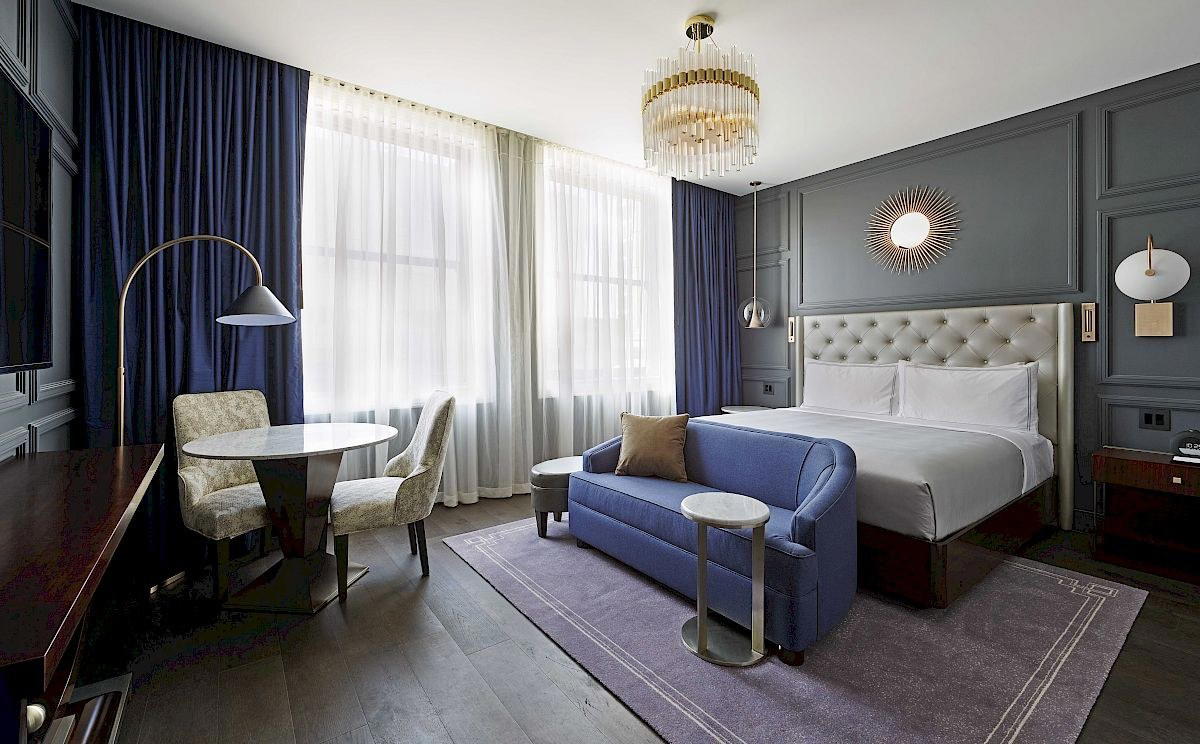
Bars in Chicago
Browse all →

Restaurants in Chicago
Browse all →
At a Glance
- Elegant
- Sophisticated
- Modern
- Historic
- Romantic Getaway
- Business Trip
- Weekend Escape
- Historic Building
- Rooftop
- Design Destination
- Fitness Center
- Room Service
- Concierge
- Valet Parking
- Skyline
- Fitness Center
- Room Service
- Concierge
- Valet Parking
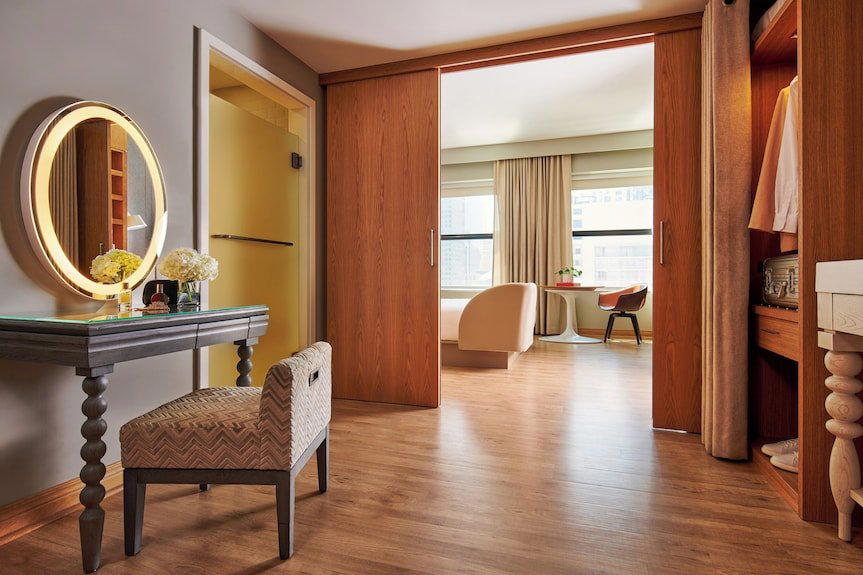
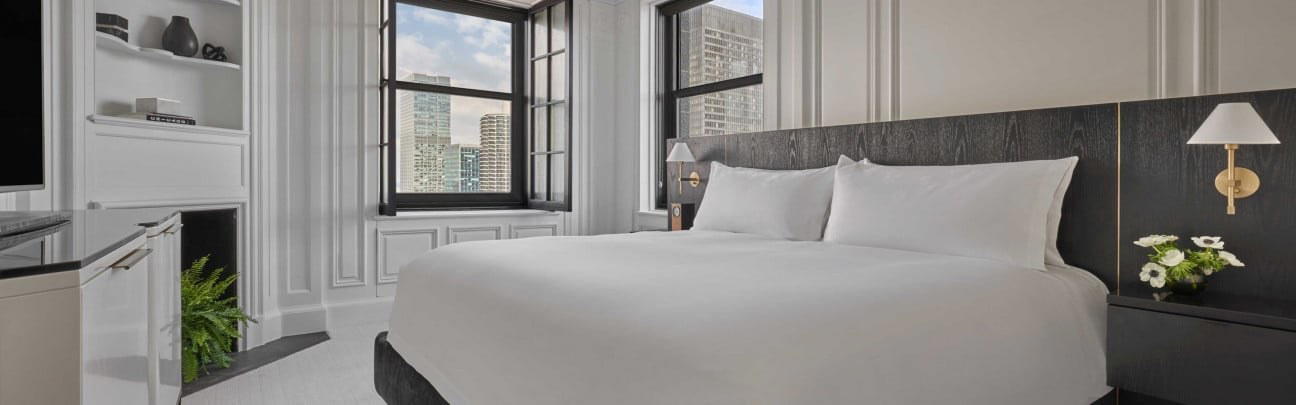
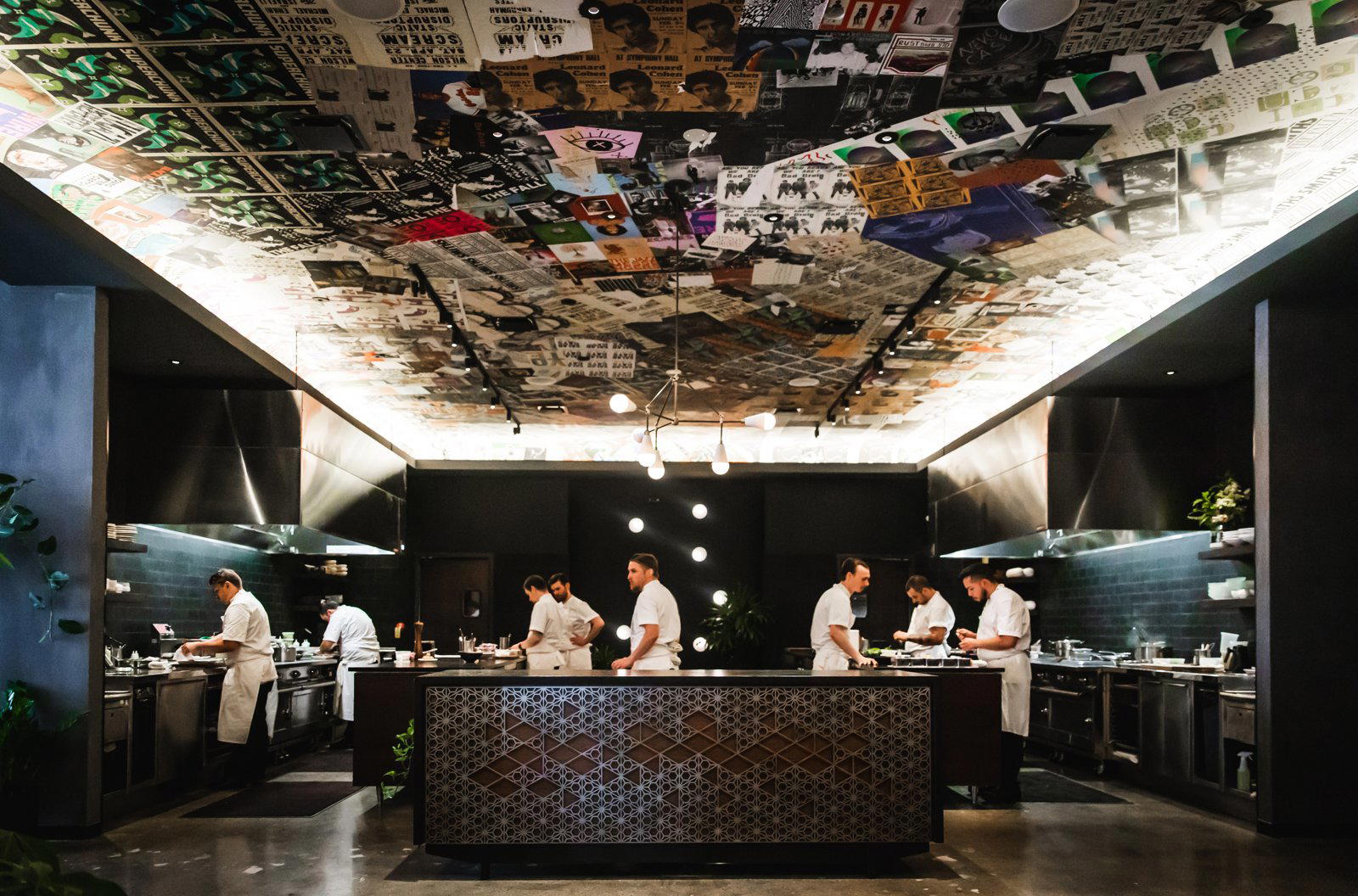
Sophisticated atmosphere with ornate marble lobby, Art Deco fixtures, and contemporary rooms featuring a blend of historic charm and mid-century modern design.