
Tabelog 100 #21
Our verdict
Paris Ogawa Ken Shimbashi ten belongs to Tokyo’s serious sweets circuit rather than the city’s luxury dining theatre. Its Tabelog 100 Sweets Tokyo 2023 selection, compact 12-seat format and take-out orientation place it in the small-patisserie category where reputation is built through repeat local custom, not long tasting menus.

Pearl is the En Primeur Club membership app, where members save venues, book tables and use the concierge.
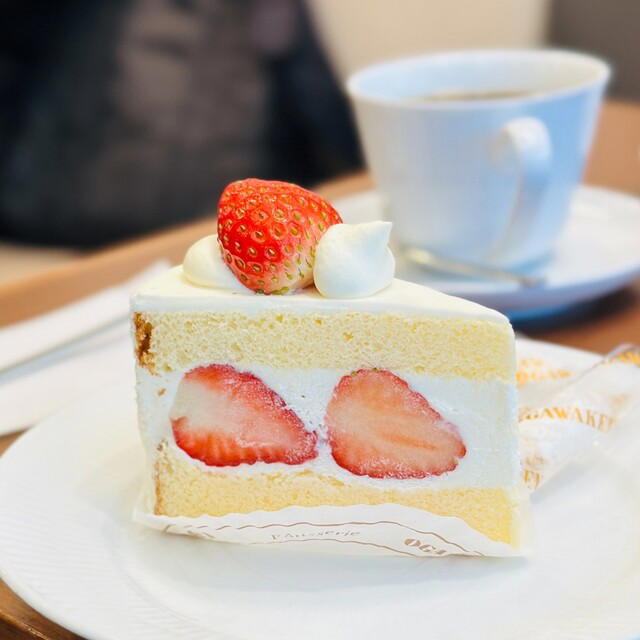
The menu
What to order
- Raisin Wich
- Ogawaken Roll
- Strawberry Shortcake
- Chocolate Soufflé
Tokyo’s busiest food districts are not always soft-focus dessert settings. The city often runs on commuter tempo, railway concourses, office blocks and quick decisions: curry before a meeting, ramen after work, cake carried home in a box rather than lingered over for ceremony. That setting matters. Tokyo’s sweets culture is often judged through polished salons and hotel patisseries, but a quieter and more useful tradition lives around transport nodes, where pastry has to travel well, hold its shape and justify repeat purchase from people who know exactly what they want.
Paris Ogawa Ken Shimbashi ten sits inside that second tradition. Its recognition in Tabelog 100 Sweets Tokyo 2023 gives it a measurable place in the city’s dessert conversation, but the format is closer to a compact everyday cake shop than a destination dining room. The category is Western-style sweets and cake, a Japanese genre with its own grammar: European technique filtered through gifting culture, office omiyage habits and the precision of small-format retail.
Tokyo sweets reputation, measured in repeatable craft rather than spectacle
Tokyo does not lack elaborate dessert counters, but the stronger test for patisserie here is consistency across everyday use. A cake shop in a business-oriented city must serve several audiences at once: the office worker buying a gift, the family picking up something for home, the solo customer taking a short pause, and the visitor who has learned that a Tabelog sweets selection can be a more revealing signal than a glossy dining-room award. Selection for Tabelog’s Tokyo sweets list in 2023 places the shop among venues judged inside a local review culture that rewards reliability, value and category fluency.
The compact format sharpens the point. The experience is not built around elaborate service choreography. The better way to read the place is through the expectations of Tokyo patisserie itself: portability, neatness and repeatability are not secondary; they are central to how sweets circulate through the city. Cakes are often bought for someone else, carried through train stations, opened at home or at an office table. A shop that performs in that context competes on structure, freshness and the discipline of restraint rather than plated drama.
The pricing tier also separates this from luxury hotel pastry and chef-led dessert bars. The listed budget sits at Dinner: JPY 1,000 - JPY 1,999; Lunch: JPY 1,000 - JPY 1,999, an everyday-premium band for Tokyo sweets where quality is expected but extravagance is not the argument. That makes the Tabelog selection more meaningful: recognition at this level tends to reflect repeat confidence rather than novelty. In a city where dessert can become either theatrical or anonymous, this is the middle lane that serious travellers often miss.
Tokyo's useful contrast: cake beside curry, ramen and office dining
Tokyo gives the shop its editorial frame. This is a city where value and speed do not automatically mean compromise. Nearby eating patterns across central dining areas often lean pragmatic: station-adjacent counters, specialist curry rooms, after-work meals, and lunch formats built for office density. In that context, a recognised sweets address reads less like a detour and more like part of the city’s daily rhythm.
The comparison is instructive. A Tokyo visitor chasing only tasting menus will misread the city; one of its strengths is the concentration of specialised, narrow-format places. Calical Shimbashi honten operates in a similar everyday-price spirit, but through curry rather than sweets. HARU CHAN Ramen belongs to another familiar Tokyo pattern: a focused ramen shop where the category itself drives the decision. Tenchaya Nanakura, also positioned in an accessible spend range, reinforces how much of Tokyo’s serious eating happens outside luxury signals. Against that field, Paris Ogawa Ken Shimbashi ten is the dessert answer to the same urban logic: concise, specific, locally legible.
This is also where Tokyo’s broader range becomes clear. The same city can support a high-price contemporary dining room such as TOKi, a spice-driven address like KHAN KEBAB BIRYANI, and sweets shops selected for local recognition. For travellers building a day around Tokyo, the smarter move is not to force every stop into the same register. Let the city do what it does well: lunch somewhere direct, save the formal meal for elsewhere, and treat sweets as a separate category with its own standards.
How to place it within a Tokyo food itinerary
The shop is better understood as a targeted stop than as the anchor for an entire day. Its appeal lies in inserting a precise sweets purchase into a route that already passes through Tokyo. The traveller who expects a long dessert tasting will be using the wrong lens; the traveller who understands omiyage culture, compact patisserie formats and Tabelog’s category-specific recognition will read it correctly.
For broader planning, use it as one node in a city where category hopping pays off. Tokyo hotels, Tokyo bars, Tokyo wineries and Tokyo experiences help place sweets within a fuller trip rather than a single-meal itinerary.
Tokyo’s range is easier to understand through contrasts. Some travellers will build a day around curry, others around ramen, counter dining, casual sweets, contemporary tasting menus or late-night meals. The useful point is not to chase every famous category at once, but to let each stop do one thing clearly. Paris Ogawa Ken Shimbashi ten belongs in that specialist map: a sweets-and-cake address recognised within Tokyo’s local review culture, best read beside other focused dining in Tokyo rather than through the expectations of a formal restaurant.
The verdict is simple: this is not Tokyo dessert as theatre. It is Tokyo dessert as habit, craft and reputation, the sort of stop that makes sense because the city treats a cake shop with the same category seriousness it gives ramen, curry or other focused everyday formats.
A Lean Comparison
Side-by-side context: comparable cuisine and price.
| Venue | Cuisine | Price | Awards | Notes |
|---|---|---|---|---|
| Paris Ogawa Ken Shimbashi tenThis venue (the venue you are viewing) | Japanese Bakery Café | $10–20 | Tabelog 100 #21 | Not listed |
| HARU CHAN Ramen | Shio Ramen | $10–20 | Michelin Bib Gourmand | Ramen |
| Tenchaya Nanakura | Inaniwa udon & creative lunch sets | $10–20 | Tabelog 100 #95 | JPY 1,000 - JPY 1,999 |
| Calical Shimbashi honten | Indian Curry | $1–10 | Tabelog 100 #51 | JPY 1,000 - JPY 1,999 |
| TOKi | Modern Japanese ramen shop | $10–20 | Tabelog 100 #58 | Contemporary, Spanish Contemporary |
| KHAN KEBAB BIRYANI | Halal Indian & Pakistani Curries, Kebabs and Biryani | $20–30 | Tabelog 100 #96 | JPY 3,000 - JPY 3,999 - JPY 999 |
Recognition history
Dated appearances from independent guides and award organizations, with the underlying list record or original source where available.
Tabelog 100 #21 · No. 21
Tabelog · Tabelog 100 - Sweets - TOKYO - 2023
Continue exploring
More in Tokyo
Restaurants in Tokyo
All restaurants in Tokyo →

Bars in Tokyo
All bars in Tokyo →
Details
- Classic
- Cozy
- Quiet
- Solo
- Casual Hangout
- Family
- Standalone
- Street Scene
- Counter Dining
- A La Carte
Current opening hours
- Monday
- 10 AM–6:30 PM
- Tuesday
- 10 AM–6:30 PM
- Wednesday
- 10 AM–6:30 PM
- Thursday
- 10 AM–6:30 PM
- Friday
- 10 AM–6:30 PM
- Saturday
- 10 AM–5 PM
- Sunday
- Closed
Hours can change for holidays and private events. Hours as of .
A compact, old-school sweets shop with a relaxed atmosphere and an open terrace; the overall feel is traditional and unhurried.