
Tabelog 100 #67
Our verdict
Menya Sonidori gives Yokkaichi a serious ramen address in the Horiki area, with ramen and tsukemen framed by repeat Tabelog Ramen WEST 100 selections. The appeal is not ceremony but discipline: a small, counter-led room, modest pricing, no reservations, and a format that rewards diners who understand how ingredient-driven ramen shops operate outside Japan’s larger dining capitals.

Pearl is the En Primeur Club membership app, where members save venues, book tables and use the concierge.
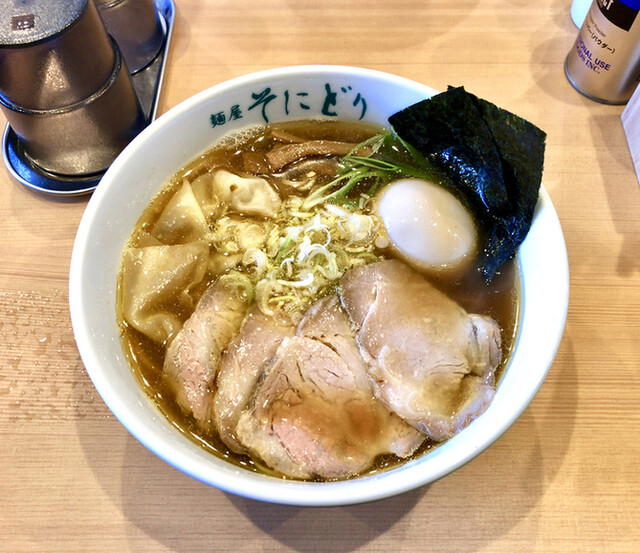
The menu
What to order
- Shoyu ramen
- White shoyu ramen
- Tsukemen
- Shiro shoyu tsukemen
- Cold white shoyu ramen
Approaching a serious regional ramen shop in Japan is rarely theatrical. The cues are practical: a focused menu, a steady rhythm of arrivals and departures, and the quiet calculation of diners deciding whether to settle in quickly or wait their turn. In Yokkaichi, that stripped-back grammar matters. Menya Sonidori sits in Yokkaichi, away from the tourist shorthand of Nagoya or Kyoto, and its place in the city’s dining conversation comes from ramen and tsukemen rather than a broader restaurant performance.
That distinction is useful. Yokkaichi’s better-known food culture often tilts toward local comfort cooking and drinking-friendly formats, from casual neighborhood rooms to evening stops such as Oki No and Spanish Bar Bosque. Ramen works differently. It compresses the meal into broth, noodles, tare, fat, timing, and turnover. A bowl has little room to hide weak sourcing or loose preparation, which is why 2025 Tabelog Hyakumeiten recognition carries more weight here than a decorative accolade would in a larger, more internationally visible city.
Ramen and tsukemen as a sourcing test, not a luxury signal
The useful way to read Menya Sonidori is through ingredients rather than price. Ramen at this level is not expensive in the language of fine dining, but it is exacting. Broth structure depends on extraction, seasoning balance, and the relationship between noodle texture and soup weight. Tsukemen adds another test: concentrated dipping broth has to hold attention without turning blunt, while noodles need enough presence to justify being eaten partly on their own terms.
The restaurant is categorized around ramen and tsukemen, which places it in one of Japan’s most competitive everyday formats. This is a category where diners compare shops by repeatability, not spectacle. Tabelog Hyakumeiten recognition in 2025 signals a level of attention beyond ordinary local visibility. For a focused room in Yokkaichi, that recognition is the story.
Ingredient sourcing is also why the format attracts serious diners who might otherwise focus on higher-spend counters. A ramen shop cannot charge its way out of weak fundamentals. The stock, seasoning base, noodles, toppings, and cooking cadence all need to land within minutes. That makes regional ramen one of Japan’s sharper value propositions: modest spend, high technical exposure, and a direct line between procurement and the bowl.
Yokkaichi has other restaurant modes worth mapping around it, including more composed dining rooms and other casual noodle-focused stops. Menya Sonidori belongs to the tighter, faster category: a meal built for concentration rather than lingering.
A focused ramen stop changes how the meal feels
The shop’s focus is part of the experience, with the mechanics of ramen service shaping how the meal feels. That arrangement matters more than décor. Immediacy and quick turnover keep timing central, while the broader setting remains practical rather than ceremonial.
The genre itself tends to reward timing and patience. In ramen culture, access is often governed less by elaborate booking rituals than by the rhythm of the shop and the day’s preparation. Better ramen shops are often production-minded: the meal depends on prepared components with finite daily volume, and the point is to arrive when the bowl can be served at its best.
For travelers, this makes Menya Sonidori a different kind of plan from a longer meal elsewhere in Yokkaichi, including nights built around Oki No or Spanish Bar Bosque. It is better treated as a focused stop in the day rather than the anchor of a long evening. The listed budget keeps both lunch and dinner in the JPY 1,000 to JPY 1,999 range, so the logistics feel everyday even if the recognition is current.
The location also suits local movement rather than destination theatrics. Menya Sonidori is in Yokkaichi, which makes it part of the city’s serious casual dining map rather than a restaurant built around grand-arrival drama. That combination is typical of regional Japan’s stronger everyday dining: practical access, focused cooking, and a narrow margin for those arriving at peak meal times.
How to place it in a Yokkaichi eating day
Menya Sonidori works because it does not try to behave like a destination restaurant in the international sense. Its credibility comes from category discipline: 2025 Tabelog Hyakumeiten recognition, ramen and tsukemen specialization, a Tabelog score listed at 3.73, and a price band that keeps the meal in everyday territory. The result is a useful correction to the idea that serious dining always announces itself through long menus, wine service, or chef biography.
In Yokkaichi, that makes the shop especially valuable for travelers who want to understand how the city eats outside formal rooms. Pair it mentally with a broader local crawl rather than with fine dining ceremony. Use our full Yokkaichi restaurants guide to build around it, then look beyond the table through our full Yokkaichi hotels guide, our full Yokkaichi bars guide, our full Yokkaichi wineries guide, and our full Yokkaichi experiences guide.
For wider Japanese context, EP Club’s restaurant coverage ranges from regional specialists to city formats across Japan and beyond. Internationally, Japanese formats can travel in many directions, but Yokkaichi’s ramen shops remain tied to the local rhythm of bowls, stock, and timing.
Frequently asked questions
Would Menya Sonidori be comfortable with kids?
Menya Sonidori is best approached as a casual ramen and tsukemen stop in Yokkaichi. Check the venue's official channels for the latest details before visiting with children.
Is Menya Sonidori formal or casual?
Casual. It is listed as a ramen and tsukemen shop, with prices from JPY 1,000 to JPY 1,999. The setting is closer to an everyday noodle house than a formal dining room.
What's the price range at Menya Sonidori?
Pricing at Menya Sonidori is listed as JPY 1,000 - JPY 1,999 JPY 1,000 - JPY 1,999 View spending breakdown.
What time does Menya Sonidori open and close?
Check Menya Sonidori's official channels for current opening hours before visiting.
Where is Menya Sonidori in Yokkaichi?
Yokkaichi.
At-a-Glance Comparison
Comparable venues by cuisine and price in the same metro.
| Venue | Cuisine | Price | Awards | Notes |
|---|---|---|---|---|
| Menya SonidoriThis venue (the venue you are viewing) | Ramen shop with house-made noodles and shoyu-focused broth | $1–10 | Tabelog 100 #67 | Not listed |
| Honetsuki Dori Kamon | Japanese Chicken Dishes / Yakitori | Not listed | Tabelog 100 #15 | Kintetsu Yokkaichi |
| Spanish Bar Bosque | Spanish Tapas Bar | Not listed | Tabelog 100 #87 | Yokkaichi |
| Oki No | Seasonal Japanese Izakaya & Kappo | $20–30 | Tabelog 100 #42 | Suwa Sakaemachi |
| ターヴォラカルダ オオノ | Italian Trattoria | $50–100 | Not listed | Motomachi |
| 割烹 西むら | Kappou Kaiseki | $150–200 | Not listed | 西新地 |
Recognition history
Dated appearances from independent guides and award organizations, with the underlying list record or original source where available.
Tabelog 100 #67 · No. 67
Tabelog · Tabelog 100 - Ramen - WEST - 2025
Continue exploring
More in Yokkaichi




Details
- Cozy
- Lively
- Solo
- Casual Hangout
- After Work
- Chefs Counter
- Standalone
- Local Sourcing
- A La Carte
- Counter Dining
Current opening hours
- Monday
- 11 AM–3 PM
- Tuesday
- Closed
- Wednesday
- 11 AM–2 PM, 6–8 PM
- Thursday
- 11 AM–2 PM, 6–8 PM
- Friday
- 11 AM–2 PM, 6–8 PM
- Saturday
- 11 AM–3 PM, 6–8 PM
- Sunday
- 11 AM–3 PM, 6–8 PM
Hours can change for holidays and private events. Hours as of .
A compact, no-frills neighborhood ramen shop with a warm, casual atmosphere focused on the counter-and-table dining experience rather than decor, often busy with ramen enthusiasts drawn by its reputation and limited specials.