Tabelog 100 #55
Our verdict
Menya Seiryu belongs to Osaka’s serious ramen culture rather than its tourist-district snack circuit: a small Nagase shop working in ramen and tsukemen, with Tabelog Ramen OSAKA 100 selections in 2023, 2024, and 2025. Its value is partly cultural, showing how far Osaka’s noodle scene extends beyond Namba and Umeda into local railway neighborhoods.

Pearl is the En Primeur Club membership app, where members save venues, book tables and use the concierge.
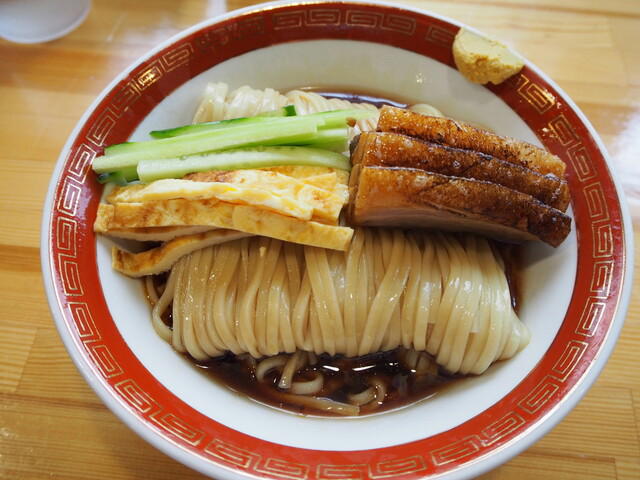
Approaching a ramen shop in Osaka changes the rhythm of Osaka dining. The city’s louder food mythology points visitors to bright signs, takoyaki griddles, kushikatsu counters, and department-store basement grazing. Menya Seiryu sits in a more local register: a straightforward noodle shop where the focused format matters more than spectacle. Menya Seiryu fits that grammar: direct category, accessible pricing, and a ramen-and-tsukemen draw in a city where noodle shops earn serious attention without acting like formal restaurants.
Osaka ramen culture is often misread from outside Japan. Tokyo gets the international taxonomy narrative, and Fukuoka owns tonkotsu shorthand, but Osaka’s strength is breadth: many styles of ramen, dipping noodles, and local shops competing on repeat use rather than destination theatrics. Menya Seiryu’s inclusion in Tabelog Ramen OSAKA 100 in 2025 places it in that local quality conversation. Its 3.70 Tabelog score matters because Japanese ramen ratings are crowded, granular, and driven by diners comparing shops against narrow technical expectations.
Osaka ramen culture, away from the visitor circuit
The setting is part of the point. Osaka is not only its obvious first-stop dining itinerary; the city’s ramen map is strongest when read beyond the easiest visitor circuit. Menya Seiryu gives the meal a local frame: quick, focused meals make more sense here than tasting-menu tourism. This is a shop for understanding Osaka’s everyday noodle discipline, not occasion dining.
Ramen and tsukemen also carry different social cues from kaiseki, sushi, or modern counter dining. Value is compressed into a short meal, controlled menu, and pace. Menya Seiryu’s ramen and tsukemen format aligns with the Japanese noodle-shop model, where the dining experience is tied closely to the kitchen’s rhythm. That rewards diners who know the etiquette: decide efficiently, do not linger after eating, and treat the meal as part of a compact service flow.
For travelers mapping Osaka by category, it contrasts usefully with other casual institutions. Snack counters, bakeries, cafés, and independent dining rooms show the city’s everyday range. Ramen belongs in that conversation: in Japan it is not merely quick food but a competitive craft category with recognition culture, regional vocabulary, and specific diner expectations.
Why the Tabelog Ramen OSAKA 100 signal matters
Tabelog’s Ramen OSAKA 100 is a useful trust signal because it comes from the Japanese restaurant-rating ecosystem rather than an overseas travel lens. Menya Seiryu’s 2025 appearance suggests local relevance in a volatile category where new shops, limited bowls, and queue-driven openings can quickly shift attention. The recognition does not make the meal formal; it places the shop as an accessible ramen address with enough local traction to be read beside other Osaka noodle specialists.
The comparison set is telling. Teramae, Chuka Soba Fukuhara, Gokuju Bimen umami, and Sanukiya Masajiro sit in a similar noodle conversation, while Toriyaki Shogun Eiwa shows how casual Osaka dining can branch into another format. The spread reminds diners that serious Osaka eating is not confined to luxury budgets. Some of the city’s strongest decisions happen at accessible prices, especially where specialization beats décor.
Tsukemen deserves separate attention. Dipping noodles ask for different engagement than standard ramen: noodles and broth are encountered in sequence, with texture carrying more of the meal. Without treating any bowl as a fixed signature, the presence of both ramen and tsukemen places the shop in the broader Japanese noodle conversation, where diners compare noodle texture, broth concentration, temperature, and finish with the seriousness wine drinkers bring to appellations. The appeal is not novelty; it is participation in a detailed, democratic food culture.
How to fit it into an Osaka food itinerary
Menya Seiryu makes most sense for travelers already moving beyond the most obvious central loop. It pairs naturally with an Osaka day built around specialist meals rather than a tight nightlife plan, and suits diners comfortable with ramen-shop pacing. Treat it as a timing decision, not a luxury booking project. The accessible budget and focused noodle format keep it closer to the classic ramen model than the internationally smoothed version of Japanese dining.
The Osaka location also clarifies a larger city strategy: use central districts for density, late-night options, and bar-hopping, then broader city exploring for specialist meals that show how locals eat. For broader planning, Our full Osaka restaurants guide gives the restaurant context, while Our full Osaka hotels guide, Our full Osaka bars guide, Our full Osaka wineries guide, and Our full Osaka experiences guide place the meal inside a wider trip.
Readers extending the same logic across Japan will find parallels in other focused casual formats: the point is not a particular famous room, but the way compact restaurants can express local habits through a narrow specialty. Across Japan, and outside it, the same specialist-casual lens applies when focused Japanese formats travel well because they keep their structure intact.
The editorial case for Menya Seiryu is not excess or rarity. It is discipline at an accessible price, recognized within Osaka’s ramen field, in a city that asks diners to leave the easiest tourist axis. For visitors who want Osaka to mean more than neon and snack crawls, that is a useful correction.
Frequently asked questions
What's the price range at Menya Seiryu?
Pricing at Menya Seiryu is listed as - JPY 999 - JPY 999.
What days is Menya Seiryu closed?
Current opening-day details should be checked directly before visiting Menya Seiryu.
Where do I go for Menya Seiryu?
Osaka.
What do critics highlight about Menya Seiryu?
The main signal is the 2025 Tabelog Ramen OSAKA 100 selection, which places Menya Seiryu among Osaka’s tracked ramen addresses. Critics also notice the format: ramen and tsukemen at an accessible price in Osaka.
Is Menya Seiryu good for vegetarians?
It is a ramen and tsukemen shop in Osaka. Vegetarian diners should check ingredients carefully before going.
Style and Standing
Comparable venues by cuisine and category.
| Venue | Cuisine | Price | Awards | Notes |
|---|---|---|---|---|
| Menya SeiryuThis venue (the venue you are viewing) | Ramen & Tsukemen Shop | $10–20 | Tabelog 100 #55 | Not listed |
| ラーメン チョンマゲ 大阪天六店 | Japanese Ramen | $10–20 | Not listed | Tenjinbashi |
| Teramae | Okonomiyaki / Teppanyaki | Not listed | Tabelog 100 #38 | Kowakae |
| Udon Jojo | Casual Udon Noodle Shop | $1–10 | Tabelog 100 #71 | Higashinari |
| Kotikaze | Japanese cafe with traditional sweets | $10–20 | Tabelog 100 #96 | Tennōji |
| Yuai Tei | Traditional soy sauce ramen shop | $10–20 | Tabelog 100 #82 | Naniwa |
Recognition history
Dated appearances from independent guides and award organizations, with the underlying list record or original source where available.
Tabelog 100 #55 · No. 55
Tabelog · Tabelog 100 - Ramen - OSAKA - 2025