Tabelog 100 #96
Our verdict
Kotikaze is a small Tennoji Ward cafe where Osaka’s everyday sweets-and-tea culture carries more weight than spectacle. Its Tabelog 100 Cafe WEST 2025 selection, earlier Cafe and Sweets 100 appearances, take-out option, private-room setup, and breakfast availability place it in a useful category for travelers who want quality without committing to a formal dining slot.

Pearl is the En Primeur Club membership app, where members save venues, book tables and use the concierge.
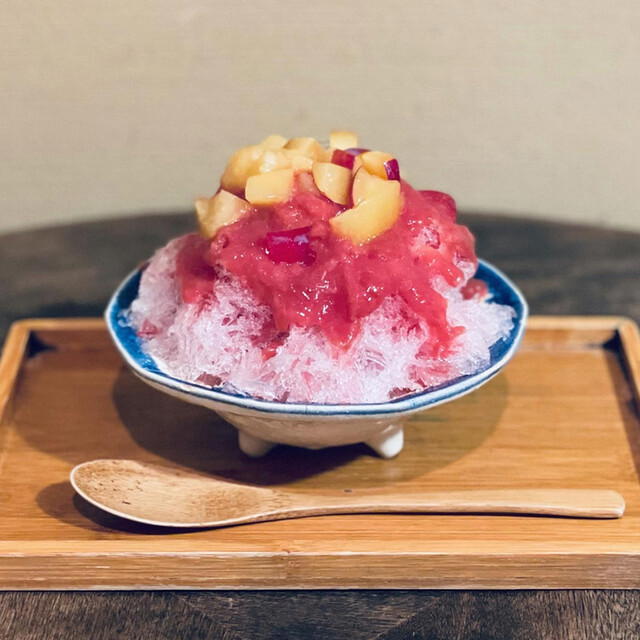
Osaka shifts quickly between residential calm, everyday neighborhood texture, and the faster appetite of the city’s central dining scene. In that in-between rhythm, the serious cafe has a different role from a destination counter or a hotel lounge: it gives structure to the day without asking the guest to surrender the day. Kotikaze belongs to that quieter Osaka category, where Japanese traditional sweets, cafe habits, and Japanese cuisine sit close together rather than in separate lanes.
That matters in a city often reduced to louder shorthand: takoyaki, okonomiyaki, late-night drinking, queue culture. Osaka’s more useful dining map is broader. A compact cafe with Japanese traditional sweets can be a better reading of the city than another high-ticket dinner, especially when the spend remains in the everyday range and the recognition is external rather than self-declared. Selection for Tabelog Hyakumeiten in 2025, alongside a listed Tabelog score of 3.68, gives Kotikaze a trust signal that fits the format: not luxury theatre, but repeatable craft in a modest category.
Japanese sweets and cafe culture, priced for repeat visits
The value proposition here is not abundance. It is the chance to fold a recognized Osaka cafe into a day of eating without distorting the rest of the itinerary. In Japan, cafe culture often carries a precision that visitors mistakenly reserve for restaurants: seasonality, plating restraint, careful tea or coffee service, and a slower tempo than the surrounding streets. When a cafe also works with Japanese traditional sweets, the meal can read closer to a small cultural format than a casual pause.
Kotikaze’s category mix, cafe, Japanese cuisine, and Japanese traditional sweets, explains why it has relevance beyond a snack stop. It sits apart from Osaka venues built around a single specialist lane, whether that means bread, takeaway comfort food, or imported craft through an Osaka lens. The comparison is useful because it shows what kind of decision this is: not a hunt for novelty, but a choice to use cafe time as a softer meal.
Against higher-spend Osaka restaurants in the comparison set, including Nagahori and Kiyo Suke, this is a different calculation entirely. Those meals compete for dinner priority and budget. A cafe like this competes for timing, mood, and whether the traveler wants a lighter Japanese register between larger reservations. The closest value peers are lower-ticket everyday specialists such as Yamaguchi Kudamono or Men Factory Jaws, though the sweets-and-cafe recognition gives Kotikaze a more leisurely shape.
A small-room format in a city that rewards compact meals
Osaka rewards compact formats because movement is part of the pleasure. A day can run from coffee to market grazing to a serious evening reservation without any one stop needing to dominate. Kotikaze’s format supports that style. With its modest listed spend and cafe-led category, the experience is built less like a grand dining room and more like a controlled pause.
The Osaka setting also helps frame the visit. It is not only the city’s neon shorthand or its hotel-polished version of dining. Osaka has a more lived-in tempo, and that makes a recognized cafe feel less performative. For travelers using Our full Osaka restaurants guide to balance premium reservations with smaller local anchors, this is the kind of stop that keeps the itinerary from becoming a sequence of heavy meals.
The broader Osaka edit should be built across categories rather than meals alone. Pairing a daytime cafe with a considered hotel base from Our full Osaka hotels guide, a nightcap from Our full Osaka bars guide, or a culture-led booking from Our full Osaka experiences guide produces a more accurate city read. Even Our full Osaka wineries guide has its place for travelers thinking beyond the default dining circuit.
Where it fits in a sharper Japan itinerary
Japan’s stronger food itineraries are built on contrast. A sweets-led cafe in Osaka can sit beside more formal counters, specialist grills, seafood-led rooms, or regional contemporary stops elsewhere in the country. The point is not to make every booking formal. It is to understand how different Japanese formats carry different kinds of value.
That same logic applies outside Japan. Specialist sake bars and compact rice-focused addresses abroad often translate narrow Japanese formats for another audience. In Osaka, the original context is less explanatory and more matter-of-fact: sweets, cafe service, and modest Japanese cuisine can be the plan, not the filler between plans.
For travelers building a Kansai route, Kotikaze pairs naturally with a wider mix of lower-pressure specialist meals, including other category-led addresses in Osaka and further afield. Within Osaka itself, it also offers a counterpoint to Italian-leaning dining, noodle specialists, fruit-focused stops, and other cafe peers such as Être à l'aise.
The cleanest verdict is practical: this is a recognized, small-format Osaka cafe for travelers who care about Japanese sweets and measured daytime eating, not a replacement for the city’s major dinner reservations. Its appeal is strongest when the itinerary needs restraint, locality, and credible recognition without the weight of a long meal.
Frequently asked questions
What are the opening hours for Kotikaze?
Current opening hours for Kotikaze should be confirmed directly with the venue before visiting.
Is Kotikaze expensive?
Pricing at Kotikaze is listed as JPY 1,000 - JPY 1,999 View spending breakdown.
Where is Kotikaze in Osaka?
Osaka.
What is Kotikaze known for?
Kotikaze is known as a cafe in Osaka with Japanese Cuisine and Japanese traditional sweets. It is listed with Tabelog Hyakumeiten recognition for 2025, a score of 3.68, and a lunch budget of JPY 1,000 - JPY 1,999.
City Peers
Comparable venues to anchor price and recognition.
| Venue | Cuisine | Price | Awards | Notes |
|---|---|---|---|---|
| KotikazeThis venue (the venue you are viewing) | Japanese cafe with traditional sweets | $10–20 | Tabelog 100 #96 | Not listed |
| Nagahori | Michelin-starred Japanese Izakaya Omakase | $50–100 | Tabelog 100 #20 | JPY 10,000 - JPY 14,999 JPY 10,000 - JPY 14,999 View spending breakdown |
| Yamaguchi Kudamono | Seasonal Fruit Parlor & Café | $10–20 | Tabelog 100 #65 | JPY 1,000 - JPY 1,999 |
| Men Factory Jaws | Japanese Ramen & Tsukemen | $1–10 | Tabelog 100 #66 | JPY 1,000 - JPY 1,999 JPY 1,000 - JPY 1,999 View spending breakdown |
| Être à l'aise | Authentic French Bistro | Not listed | Michelin Plate | French |
| Kiyo Suke | Traditional Sukiyaki & Shabu-shabu | $50–100 | Tabelog 100 #87 | JPY 10,000 - JPY 14,999 JPY 2,000 - JPY 2,999 View spending breakdown |
Recognition history
Dated appearances from independent guides and award organizations, with the underlying list record or original source where available.
Tabelog 100 #96 · No. 96
Tabelog · Tabelog 100 - Cafe - WEST - 2025