
Menno Haru places Kasugai ramen in the value-driven, craft-focused side of Aichi dining: small-room, counter-led, and recognized in Tabelog 100 Ramen AICHI 2025. The draw is less about luxury signalling than about how regional ramen culture rewards precision, repeat visits, solo dining, and tightly run neighborhood formats.
Pearl is the En Primeur Club membership app — saves, bookings, and concierge access live there. Same editors, same standards.
- Address
- 1 Chome-6 Fujigaoka, Kasugai, Aichi 487-0023, Japan
- Phone
- +81 568-37-2991
- Website
- instagram.com
- Directions
- Get directions
 Saves & bookings on Pearl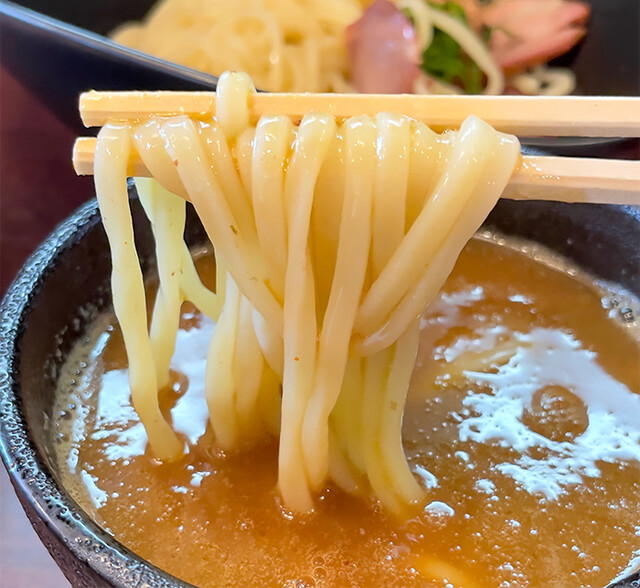
Approaching a serious ramen shop in suburban Aichi is rarely theatrical. The cues are practical: a modest frontage, the quiet compression of a small room, counter seats doing more work than décor, and a dining rhythm built for people who know what they came for. In Kasugai, that format matters. Ramen here is not a detour from the city’s dining culture; it is one of its clearest expressions, a low-price, high-scrutiny category where regulars judge seasoning, noodle texture, pacing, and consistency with a severity usually reserved for far more expensive counters.
Menno Haru belongs to that tradition. Its selection for Tabelog 100 Ramen AICHI 2025 places it inside a prefectural conversation rather than a purely local one, and its 13-seat layout keeps the experience close to the classic ramen grammar: quick turnover, counter focus, and a room calibrated for individual bowls rather than lingering courses. That distinction is useful for travelers. Kasugai dining has higher-spend options, including hape, but the city’s ramen addresses compete on a different axis: repeatability, price discipline, and whether a bowl can justify attention without ceremony.
Kasugai ramen culture rewards discipline over spectacle
Aichi ramen does not have a single global shorthand in the way Sapporo has miso or Hakata has tonkotsu, which makes its strongest shops harder to reduce to a postcard. The region’s advantage is breadth: commuter towns, car access, independent shops, and diners who treat ramen as everyday food while still ranking it with obsessive precision. Menno Haru’s place in the Tabelog 100 Ramen AICHI list signals that it has moved beyond neighborhood usefulness into a more selective category of regional recognition.
The pricing reinforces the point. Ramen at this tier can remain affordable while being judged by demanding standards, a combination that explains why Japanese ramen culture resists neat luxury logic. Menja Sugure and Haruki sit in a similar low-price Kasugai bracket, while Ramen Kobou Arigataya moves slightly higher depending on spend. For a traveler mapping the city, that creates a sharper decision than “cheap versus expensive.” The better question is whether lunch should be built around a ramen counter or saved for a longer-format restaurant such as Cheval Banc. Kasugai’s answer is often to do both across separate meals.
The format also explains the audience. Counter seating and solo-dining suitability are not minor conveniences in Japan; they are part of ramen’s social architecture. A bowl can be a focused meal between errands, a weekend destination, or a quiet personal ritual. Family friendliness adds another layer, because suburban ramen shops must serve regular life as much as culinary tourism. This is where the category differs from tasting-menu dining: the measure is not how dramatically a kitchen announces itself, but how often diners want to return.
The bowl is the argument, not the biography
Ramen writing often leans too heavily on origin stories, but the useful lens here is the idea of the shop itself. Menno Haru is listed under ramen, with a health-and-wellness menu note, no private rooms, and a compact counter-led setup. Those details point to a specific style of meal: direct, controlled, and resistant to overcomplication. Without a named chef narrative or published signature dish to lean on, the critical reading should stay with the category. In ramen, the bowl carries the thesis.
That matters because the modern ramen scene is crowded with visual excess: loaded toppings, maximal broths, and online-friendly specials. A small Aichi shop gaining prefectural recognition at a low price point suggests a different kind of seriousness. It asks diners to pay attention to balance rather than abundance. In cultural terms, this is ramen as craft habit, not performance dining. The room’s 11 counter seats and 2 table seats underline that hierarchy. The kitchen-to-diner exchange is close, but it is not intimate in the luxury-counter sense; it is efficient, concentrated, and built around the moment a bowl is served.
For travelers building a Kasugai itinerary, it helps to compare across category rather than chase a single “essential” meal. Menja Sugure and Haruki give the city multiple low-spend ramen reference points, while Lightning Fire broadens the local casual-dining map. hape sits in another price conversation altogether. Reading these together is more revealing than treating any single address in isolation: Kasugai’s dining identity is built from everyday specialization, not only destination dining.
How to place it in a wider Japan itinerary
The restaurant makes sense for travelers already moving through Aichi rather than those forcing a long detour for one meal. That is not a slight; it is how much serious ramen works. The reward lies in finding regional depth outside the major international dining circuits. Tokyo and Osaka provide scale, but smaller cities and suburbs often show how Japanese food culture functions when it is priced for regulars and evaluated by locals. Kasugai’s ramen shops belong to that ecosystem.
Use Our full Kasugai restaurants guide to place the meal beside other local tables, then decide whether the day needs more than food: Our full Kasugai hotels guide, Our full Kasugai bars guide, Our full Kasugai wineries guide, and Our full Kasugai experiences guide broaden the planning frame. Travelers comparing Japanese casual formats can also look at -Grilled beef Sukiyaki- KAMAKURA TANUKIAN 鎌倉 たぬき庵 in Kamakura. 鮪と炭火焼き うお炭 秋葉原店 in Tokyo.cafe in Osaka.know in Kumamoto, (Shoku) Vietnam in Kawasaki, and [Curry Senmon Ten] Maruyama Kyoju. in Sapporo. For a transpacific contrast in Japanese comfort formats, Jōdo Saké Bar in Los Angeles and Onigiri Time in Pasadena show how Japanese drinking and rice-ball cultures translate abroad.
The editorial case is clear: this is a small-seat-count ramen address with regional recognition, low spend, and a format that fits solo diners as naturally as families. The restaurant is not trying to behave like fine dining, and that is the point. In Kasugai, ramen earns attention by compressing craft into an everyday meal.
Cost and Credentials
Nearby venues at a similar price tier for orientation.
| Venue | Cuisine | Price |
|---|---|---|
| Menno Haru | Ramen | $ |
| Ramen Kobou Arigataya | Kachigawa, Ramen shop | $ |
| らぁ麺 飛鶏 | 御幸町, 鶏そば専門ラーメン | $$ |
| Lightning Fire | Kachigawa, Ramen & Mazesoba Shop | $ |
| Menja Sugure | Kasugai, Tsukemen and ramen shop | $ |
| Ramen Asuka | Ajima, Ramen & Tsukemen Shop | $ |
Recognition history
Dated appearances from independent guides and award organizations, with the underlying list record or original source where available.
Tabelog 100 #4 · No. 4
Tabelog · Tabelog 100 - Ramen - AICHI - 2025
At a Glance
- Solo
- Casual Hangout
- After Work
- Late Night
- Standalone
Current opening hours
- Monday
- 10:30 AM–3:30 PM
- Tuesday
- Closed
- Wednesday
- 10:30 AM–3:30 PM
- Thursday
- 10:30 AM–3:30 PM
- Friday
- 10:30 AM–3:30 PM
- Saturday
- 10:30 AM–3:30 PM
- Sunday
- 10:30 AM–3:30 PM
Hours can change for holidays and private events. Last verified .