
Lightning Fire puts Kasugai’s ramen culture in a compact, counter-led frame: ramen, Taiwanese mixed noodles, and soupless tantan-men in a room built for quick decisions rather than long ceremony. Its 2025 Tabelog 100 Ramen Aichi selection gives it a clear signal for travelers comparing suburban noodle shops beyond Nagoya’s central dining circuit.
Pearl is the En Primeur Club membership app — saves, bookings, and concierge access live there. Same editors, same standards.
- Address
- 1 Chome-45 Asahimachi, Kasugai, Aichi 486-0929, Japan
- Phone
- +81 568-34-2600
- Website
- lightningfire-kasugai.com
- Directions
- Get directions
 Saves & bookings on Pearl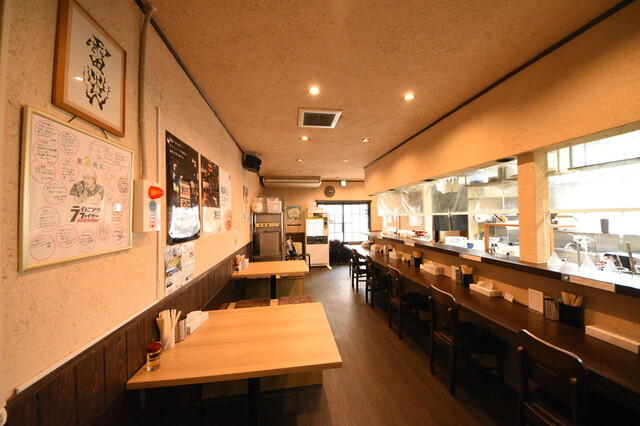
Approaching a small ramen shop in Kasugai, the cues are usually immediate: counter seats, fast turnover, a short menu, and a room that tells diners to decide before the steam has cleared. Lightning Fire belongs to that practical Aichi tradition, where noodle shops compete less through luxury signals than through broth discipline, noodle texture, seasoning balance, and the ability to serve solo diners, families, and regulars without slowing the room.
Kasugai sits close enough to Nagoya to share its appetite for punchy, seasoning-forward bowls, but far enough from the city center that the dining rhythm changes. Here, ramen is not a late-night trophy meal or a chef’s counter performance. It is weekday infrastructure, weekend family food, and a local test of consistency. That context matters: a Tabelog 100 Ramen Aichi 2025 selection places Lightning Fire inside a prefectural field where small shops are judged against many other noodle specialists, not against fine-dining restaurants.
Aichi ramen, read through noodles, spice, and mixed-bowl culture
The useful way to read this kitchen is through category rather than biography. Its listed range covers ramen, Taiwanese mixed noodles, and soupless tantan-men, three formats that say a great deal about Aichi’s taste for concentrated seasoning. Taiwanese mixed noodles, closely associated with Nagoya’s mazesoba culture, shifts attention away from broth and toward minced seasoning, oil, heat, and the way noodles carry sauce. Soupless tantan-men works in a similar register: sesame, spice, and texture become the structure rather than a supporting act.
That emphasis connects directly to ingredient sourcing, even when a shop does not publish a manifesto. In ramen, sourcing is not only about prestige produce; it is about repeatable inputs. Flour choice affects chew. Minced meat, aromatics, chili, sesame, tare, and oil determine whether a mixed bowl feels precise or heavy. A suburban ramen shop has to make those choices at volume and at speed, which is why consistency carries more weight here than decorative plating.
Lightning Fire’s recognition by Tabelog in 2025 is useful because it places a modest-format shop inside a selective Aichi ramen list. The signal is not luxury. It is that the shop has enough local and category traction to be sorted among ramen specialists in a prefecture with a serious noodle audience. For travelers, that is the right lens: this is a Kasugai noodle stop with documented local recognition, not a destination tasting-menu restaurant wearing casual clothes.
Within Kasugai, the comparison is revealing. Haruki occupies a similar low-price ramen bracket, while Ramen Kobou Arigataya and Ramen Asuka sit in a slightly higher everyday range. Cheval Banc and hape point to a different side of the city’s restaurant map, where the meal is less about noodle turnover and more about broader dining format. That split is useful for planning: Kasugai is not a single dining mood, and ramen is one of its clearest expressions.
The room rewards decisiveness rather than ceremony
The format is compact, with counter seating at its core and a small number of table seats broadening the audience beyond solo diners. That arrangement suits the food. Ramen and mixed noodles arrive as complete compositions, and the diner’s role is to engage quickly before texture changes. A long, lingering meal would work against the genre. The room’s discipline is part of the experience, not a lack of hospitality.
For visitors used to Tokyo’s high-demand ramen culture, Kasugai offers a different kind of clarity. The pressure is lower, the neighborhood function is stronger, and the value equation is sharper. The absence of reservations reinforces the everyday character of the meal. A small counter shop lives by rhythm: arrive, queue if necessary, eat, clear space for the next party. That is not a compromise; it is how this category keeps its focus.
Family friendliness also changes the tone. Many serious ramen counters in Japan feel built primarily for individuals moving through a tight lunch window. This one has signals that work for children and groups as well as solo diners, which broadens its role in the city. The important distinction is that family-friendly does not mean diluted. In Aichi ramen culture, spice, oil, and seasoning intensity can sit comfortably beside practical hospitality.
Travelers building a Kasugai food day should treat ramen as the anchor rather than the add-on. The city’s noodle addresses, including Menja Sugure and Menno Haru, show how much of the local conversation happens in compact, category-specific rooms. For a wider map, use Our full Kasugai restaurants guide, then check adjacent planning pages such as Our full Kasugai hotels guide, Our full Kasugai bars guide, Our full Kasugai wineries guide, and Our full Kasugai experiences guide.
How it fits a wider Japan dining itinerary
The restaurant makes sense for travelers who value regional food habits over trophy dining. Japan’s restaurant culture is full of small-format specialists, and the better ones often reveal more about local taste than a formal meal designed for visitors. In Kasugai, that means paying attention to ramen, mixed noodles, and the city’s relationship with Nagoya’s bolder seasoning traditions.
For contrast across Japan, the EP Club map ranges from regional specialists such as -Grilled beef Sukiyaki- KAMAKURA TANUKIAN 鎌倉 たぬき庵 in Kamakura. 鮪と炭火焼き うお炭 秋葉原店 in Tokyo.cafe in Osaka.know in Kumamoto, (Shoku) Vietnam in Kawasaki, and [Curry Senmon Ten] Maruyama Kyoju. in Sapporo to Japanese-influenced addresses abroad such as Jōdo Saké Bar in Los Angeles and Onigiri Time in Pasadena. Against that broader field, this Kasugai shop is valuable because it keeps the frame narrow: noodles, seasoning, speed, and local appetite.
The editorial case is simple. Choose it when the meal needs to explain Kasugai rather than impress through scale. Its appeal lies in the small-shop mechanics of Aichi ramen: concise categories, counter energy, accessible pricing, and enough recognition to justify a detour within the city’s dining map.
In Context: Similar Options
Comparable venues by cuisine and price in the same metro.
| Venue | Cuisine | Price | Notes |
|---|---|---|---|
| Lightning Fire | Ramen & Mazesoba Shop | $ | Kachigawa |
| Ramen Kobou Arigataya | Ramen shop | $ | Kachigawa |
| Menja Sugure | Tsukemen and ramen shop | $ | Kasugai |
| らぁ麺 飛鶏 | 鶏そば専門ラーメン | $$ | 御幸町 |
| Menno Haru | Ramen | $ | Kasugai |
| Ramen Asuka | Ramen & Tsukemen Shop | $ | Ajima |
Recognition history
Dated appearances from independent guides and award organizations, with the underlying list record or original source where available.
Tabelog 100 #97 · No. 97
Tabelog · Tabelog 100 - Ramen - AICHI - 2025
At a Glance
- Lively
- Cozy
- Casual
- Solo
- Family
- Casual Hangout
- After Work
- Late Night
- Standalone
- Street Scene
Current opening hours
- Monday
- 11:30 AM–2 PM, 6–10 PM
- Tuesday
- 11:30 AM–2 PM, 6–10 PM
- Wednesday
- Closed
- Thursday
- 11:30 AM–2 PM, 6–10 PM
- Friday
- 11:30 AM–2 PM, 6–10 PM
- Saturday
- 11:30 AM–2 PM, 6–10 PM
- Sunday
- 11:30 AM–2 PM, 6–10 PM
Hours can change for holidays and private events. Last verified .