
Haruki is a Kasugai ramen counter built around Takayama-style chuka soba, with tsukemen and dumplings sitting alongside the core noodle identity. Its selection for Tabelog 100 - Ramen - AICHI - 2025 places it inside Aichi’s serious ramen conversation, while the counter-only format keeps the experience closer to everyday Japanese noodle culture than destination tasting-menu theatre.
Pearl is the En Primeur Club membership app — saves, bookings, and concierge access live there. Same editors, same standards.
- Address
- Japan, 〒486-0913 Aichi, Kasugai, Kashiharacho, 5 Chome−312 ベルメゾンカスガイ
- Phone
- +81568568301
- Website
- kasugai-haruki.com
- Directions
- Get directions
 Saves & bookings on Pearl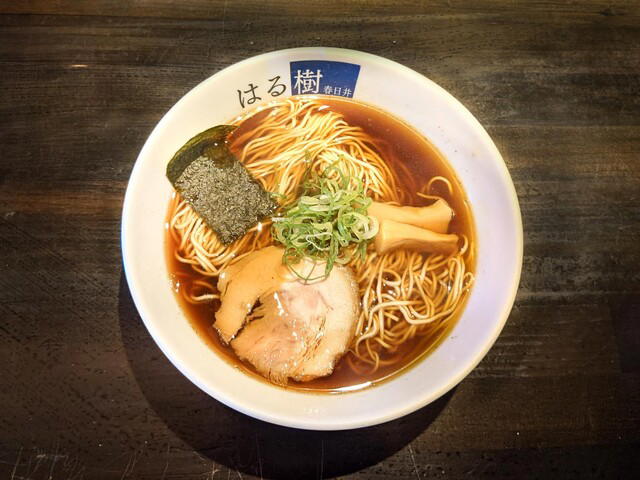
Kasugai’s ramen rooms often announce themselves without ceremony: a shopfront, ticket machine, short counter, and rhythm built around bowls rather than table choreography. In Japan, ramen has never needed luxury architecture to carry status; the signal is a narrow room, fast turnover, house-made noodles, and a local following that treats lunch seriously. Haruki belongs to that tradition, where the counter is the natural stage for noodles, broth, and timing.
Kasugai is not Nagoya’s central dining grid. It is a commuter city with its own appetite, and its ramen culture rewards shops that become part of weekly life rather than single-pilgrimage destinations. In that setting, recognition on Tabelog 100 - Ramen - AICHI - 2025 carries specific weight: it places a suburban counter in the same prefectural conversation as more visible urban noodle addresses, without changing the basic contract between diner and bowl.
Takayama chuka soba gives the counter its spine
The defining idea is Takayama-style chuka soba, a regional ramen tradition associated with Gifu’s mountain city of Takayama. The style is read through restraint: soy-led broth, noodles with character, and a structure favouring clarity over the fat-heavy impact common in some contemporary ramen formats. Haruki’s identity is tied to that lineage, while the menu also reaches into tsukemen and dumplings, keeping the shop within central Japan’s everyday ramen grammar.
Aichi’s ramen scene is not one style category. Nagoya and surrounding cities absorb influences from miso culture, Chinese-style noodle shops, pork-bone houses, fish-based broths, and dipping-noodle specialists. A Takayama chuka soba specialist in Kasugai reads as a regional counterpoint rather than another standard metropolitan entry. The pleasure is not novelty, but a mountain-town noodle idiom carried into suburban Aichi with enough consistency to earn prefecture-level notice.
Haruki’s Tabelog score of 3.62 and inclusion in the 2025 Aichi ramen selection give it a measurable public signal, but the operational details tell more. A counter-only room with 12 seats forces focus. The ticket-vending machine keeps the meal in the ramen-shop register rather than restaurant-service register. This is the world of solo diners, quick decisions, and close attention to noodle texture, not long-form social dining.
Aichi ramen is strongest when it leaves room for specialists
Kasugai’s ramen map is dense enough to reward comparison. Menja Sugure and Lightning Fire sit in the same low-price ramen band, making differences more about style, consistency, and format than spending tier. Cheval Banc points to another side of Kasugai dining, while hape and Menno Haru broaden the city’s casual-food field. One address does not replace another; Kasugai is a cluster of small, format-specific rooms where regulars choose by mood and style.
Within that cluster, Haruki’s Takayama chuka soba anchor gives it a clear editorial position. Ramen obsessives often chase intensity: thicker broths, heavier oil, stronger tare, larger toppings. A regional chuka soba counter asks for balance, noodle-broth fit, and whether the bowl can sustain attention without size or spectacle. This style often appeals to diners past the beginner’s thrill of maximal ramen and more interested in proportion.
The 2007 opening date adds another signal. In a trend-driven category, longevity is not decoration; it suggests survival through changing ramen fashions, social-media waves, and small-counter economics. A suburban ramen room cannot keep its place through tourist traffic alone. It needs repeat use, lunch habits, and local credibility beyond one award cycle.
How to read the meal in Kasugai's wider dining circuit
For travellers building time in Kasugai, Haruki works better as a precise ramen stop than a long evening plan. The compact format suits solo dining and small parties, and the absence of private rooms keeps the experience aligned with the Japanese noodle-counter norm. It also reminds diners that not every serious meal in Japan uses luxury cues. Some sharp dining decisions happen under fluorescent light, with a bowl, counter seat, and ticket stub.
The cultural value of this kind of shop is easy to underrate from outside Japan. Ramen is popular food, but also one of the country’s most competitive craft categories, with regional dialects, obsessive customers, and an unforgiving review culture. Aichi’s Tabelog 100 ramen selection filters that crowded field. Haruki’s presence there does not make it a formal destination restaurant; it confirms that a modest Kasugai counter has earned attention where small differences are heavily scrutinised.
Travellers comparing categories in the city can use our full Kasugai restaurants guide as the practical anchor, then branch into our full Kasugai hotels guide, our full Kasugai bars guide, our full Kasugai wineries guide, and our full Kasugai experiences guide when planning the rest of the day. For wider Japan and Japanese-adjacent dining references, the same archive ranges from -Grilled beef Sukiyaki- KAMAKURA TANUKIAN 鎌倉 たぬき庵 in Kamakura and. 鮪と炭火焼き うお炭 秋葉原店 in Tokyo to.cafe in Osaka.know in Kumamoto, (Shoku) Vietnam in Kawasaki, [Curry Senmon Ten] Maruyama Kyoju. in Sapporo, Jōdo Saké Bar in Los Angeles, and Onigiri Time in Pasadena.
The verdict is simple: this is a ramen counter to read through regional noodle culture rather than luxury dining language. Its case rests on Takayama chuka soba, compact counter discipline, and 2025 prefectural recognition from Tabelog. In Kasugai, that combination makes Haruki a serious stop for diners who care how local Japanese ramen traditions travel, settle, and endure.
A Pricing-First Comparison
Nearby venues at a similar price tier for orientation.
| Venue | Cuisine | Price | Notes |
|---|---|---|---|
| Haruki | Not listed | $ | .null, Traditional Japanese Ramen (Chuka Soba) |
| Ramen Asuka | Ajima, Ramen & Tsukemen Shop | $ | Not listed |
| Menja Sugure | Kasugai, Tsukemen and ramen shop | $ | Not listed |
| らぁ麺 飛鶏 | 御幸町, 鶏そば専門ラーメン | $$ | Not listed |
| Menno Haru | Ramen | $ | Not listed |
| Lightning Fire | Kachigawa, Ramen & Mazesoba Shop | $ | Not listed |
Recognition history
Dated appearances from independent guides and award organizations, with the underlying list record or original source where available.
Tabelog 100 #44 · No. 44
Tabelog · Tabelog 100 - Ramen - AICHI - 2025
At a Glance
- Cozy
- Lively
- Classic
- Solo
- Casual Hangout
- After Work
- Family
- Standalone
Current opening hours
- Monday
- 11:30 AM–2:30 PM, 5:30–9 PM
- Tuesday
- 11:30 AM–2:30 PM, 5:30–9 PM
- Wednesday
- 11:30 AM–2:30 PM, 5:30–9 PM
- Thursday
- 11:30 AM–2:30 PM, 5:30–9 PM
- Friday
- 11:30 AM–2:30 PM, 5:30–9 PM
- Saturday
- 11:30 AM–2:30 PM, 5:30–9 PM
- Sunday
- 11:30 AM–2:30 PM, 5:30–9 PM
Hours can change for holidays and private events. Last verified .
Compact and unpretentious with counter-focused seating, Haruki feels like a classic local ramen shop: bright but simple interior, bustling during meal times, and a relaxed, everyday atmosphere suited to solo diners and nearby workers.