
Menkyo Kaiden belongs to Fujiyoshida’s udon culture, where thick wheat noodles, local routine, and low-cost lunches matter more than ceremony. Its Tabelog Udon EAST “Tabelog 100” selections in 2020, 2022, and 2024 place it among the region’s recognized specialists, with a format that rewards patience, appetite, and a tolerance for daytime queues.
Pearl is the En Primeur Club membership app — saves, bookings, and concierge access live there. Same editors, same standards.
- Address
- 1-chome-4-58 Kamiyoshidahigashi, Fujiyoshida, Yamanashi 403-0032, Japan
- Phone
- +81 555-23-8806
- Website
- menkyokaiden.client.jp
 Saves & bookings on Pearl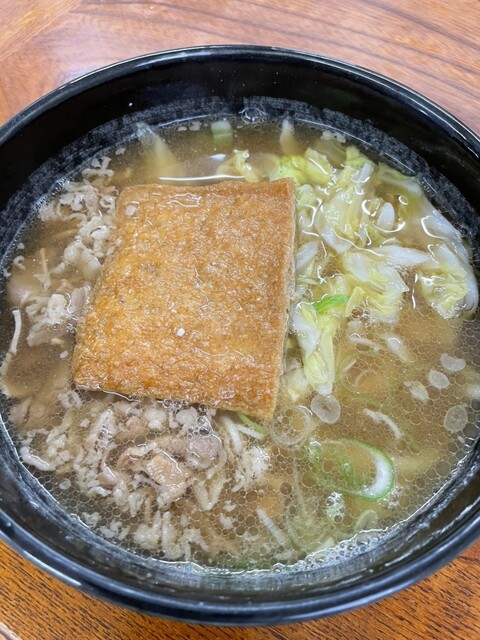
Approach a serious Fujiyoshida udon shop and the first signal is not a polished dining room. It is the line before opening, the compact rhythm of a lunch-only operation, and the sense that the meal belongs to local habit before it belongs to travel planning. Around Mount Fuji, udon is not a soft, anonymous noodle category. Yoshida udon is built around firmness, wheat character, and a direct style of service that leaves little space for theatrical plating.
Menkyo Kaiden sits inside that tradition rather than above it. The useful comparison is not with Japan’s tasting-menu circuit, but with everyday regional specialists that become destination meals because they compress place, price, and repetition into one narrow service window. In Yamanashi, that is a meaningful category: a bowl can say more about local food culture than a longer, more expensive dinner designed for visitors.
Fujiyoshida udon is about wheat, structure, and local momentum
Yoshida udon developed as a local staple in Fujiyoshida, where wheat noodles became part of the city’s working-day food identity. The defining trait is chew. Compared with softer, smoother styles associated with parts of western Japan, this regional form tends to be firmer and more rustic in character. That texture changes the meal’s center of gravity: broth, toppings, and seasoning matter, but the noodle itself carries the argument.
That is why ingredient sourcing matters here in a different way than it does at a luxury counter. The question is less about rare products and more about the integrity of a local staple: wheat handled for bite, cabbage or other everyday accompaniments used for contrast, and a format designed for quick turnover without erasing the food’s regional identity. Menkyo Kaiden’s recognition by Tabelog Udon EAST “Tabelog 100” in 2020, 2022, and 2024 is useful because it places the shop within a specialist noodle category, not a general restaurant popularity contest.
The wider Yamanashi dining map now has two speeds. On one side are destination rooms such as nôtori, where pricing and format belong to a high-end auberge model. On the other are low-cost udon addresses such as Teuchi Udon Musashi, Sakurai Udon, Miura Udon, and Menkyo Kaiden, where the competitive set is defined by lunch discipline, noodle texture, and local repeat traffic. That second group is easier to underestimate from outside Japan because the price ceiling is low. It should not be read as a lack of seriousness.
For travelers building a broader Yamanashi food itinerary, this is the counterweight to reservation-led dining. Pairing a regional udon lunch with a more formal dinner gives a clearer reading of the prefecture than chasing only expensive rooms. For nearby context, TSUSHIMI and Our full Yamanashi restaurants guide help map the local restaurant field, while Our full Yamanashi hotels guide, Our full Yamanashi bars guide, Our full Yamanashi wineries guide, and Our full Yamanashi experiences guide place the meal inside a wider trip.
The experience is closer to a regional lunch ritual than a chef-led showcase
The room’s appeal comes from efficiency and repetition: counter seating, tatami space, and tables that support solo diners, families, and small groups rather than a hushed special-occasion script. Orders are handled by slip at the seat, a small detail that says plenty about the format. The shop is built for volume, but not in the anonymous chain-restaurant sense. It is a local udon house whose discipline comes from doing one category with little distraction.
This is also where the sourcing angle becomes practical. Regional noodle shops depend on consistency. A traveler may arrive looking for a famous bowl; locals return because the fundamentals hold steady enough to justify another wait. The restaurant’s Tabelog score of 3.66 and its repeat appearances on the Udon EAST “Tabelog 100” list give outside diners a reason to take that local momentum seriously, but the better reading is cultural rather than numerical. Fujiyoshida udon is a city food, and the city’s relationship to the noodle is the point.
There is no need to frame the meal as a grand dining event. The sharper decision is whether the itinerary has room for a queue-driven lunch built around regional wheat noodles. If the answer is yes, the payoff is specificity: a Yamanashi meal that could not be swapped easily into Tokyo, Osaka, or Kyoto without losing its local meaning.
How to place it in a Japan itinerary
Yamanashi rewards travelers who leave space between Mount Fuji logistics and dining plans. A noodle shop with a short daytime rhythm asks for a different mindset than a late reservation in a metropolitan dining room. Build the day around lunch rather than treating it as an afterthought, especially because recognized udon shops in Fujiyoshida often draw lines before service begins.
That makes the restaurant especially useful for travelers comparing regional food forms across Japan. It belongs in the same mental file as other focused, category-specific addresses: beef-centered dining such as -Grilled beef Sukiyaki- KAMAKURA TANUKIAN 鎌倉 たぬき庵 in Kamakura, tuna and charcoal formats like . 鮪と炭火焼き うお炭 秋葉原店 in Tokyo, everyday cafe culture at .cafe in Osaka, regional modern dining such as .know in Kumamoto, or casual immigrant cooking at (Shoku) Vietnam in Kawasaki. The point is not similarity. The point is how single-category restaurants explain a city faster than a long menu can.
That same lens applies across the country: curry specialization at [Curry Senmon Ten] Maruyama Kyoju. in Sapporo, Kyoto minimalism at [ki:] in Kyoto, beef-focused dining at #肉といえば松田 奈良本店 in Kashihara, burger culture at 1/3 HAMBURGER FACTORY in Kanazawa, and compact bar or casual formats from 1000 in Yokohama to Jōdo Saké Bar in Los Angeles and Onigiri Time in Pasadena. The restaurant’s value is its refusal to blur into a generalized Japan-dining checklist: it is a Fujiyoshida udon stop, and that specificity is the reason to plan around it.
Snapshot
Comparable venues by cuisine and price in the same metro.
| Venue | Cuisine | Price | Notes |
|---|---|---|---|
| Menkyo KaidenThis venue — the venue you are viewing | Yoshida Udon Noodle Shop | $ | Not listed |
| Drive-in Ippei (ドライブイン一平) | Japanese Curry & Tonkatsu Diner | $ | 小城市 |
| Tsurukamedo Zenzai | Okinawan Shaved Ice (Zenzai) | $ | Yomitan Village |
| ラーメン にっこう 本店 | Chicken Pottage Ramen | $ | 宇尾町 |
| Tonjinchi (貪瞋癡) | Traditional Himi Niboshi Ramen | $ | Himi |
| Gyoza no Fukuho (餃子の福包) | Traditional Japanese Gyoza | $ | Shinjuku |
Recognition history
Dated appearances from independent guides and award organizations, with the underlying list record or original source where available.
Tabelog 100 #51 · No. 51
Tabelog · Tabelog 100 - Udon - EAST - 2024
Continue exploring
More in Yamanashi
Restaurants in Yamanashi
Browse all →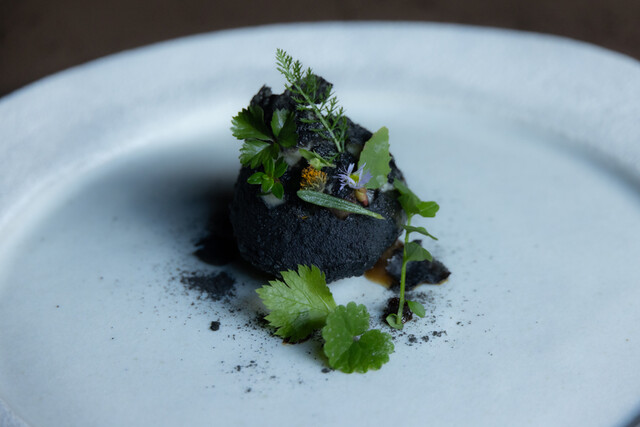
Hotels in Yamanashi
Browse all →
Wineries in Yamanashi
Browse all →
At a Glance
- Lively
- Cozy
- Classic
- Solo
- Family
- Casual Hangout
- Group Dining
- After Work
- Standalone
Current opening hours
- Monday
- 11 AM–2 PM
- Tuesday
- 11 AM–2 PM
- Wednesday
- 11 AM–2 PM
- Thursday
- 11 AM–2 PM
- Friday
- 11 AM–2 PM
- Saturday
- 11 AM–2 PM
- Sunday
- Closed
Hours can change for holidays and private events. Last verified .
Casual, bustling noodle shop atmosphere with simple seating, quick turnover at lunch, and a warm, down-to-earth local feel typical of regional udon eateries.