On a quieter block of Ontario Street in Toronto's St. Lawrence neighbourhood, Mengrai Thai occupies a category that the city's Thai dining scene handles unevenly: the mid-register where technique and atmosphere do more work than price point alone. Named for the 13th-century king credited with founding Chiang Mai, the restaurant signals a northern Thai orientation from the outset.
Pearl is the En Primeur Club membership app — saves, bookings, and concierge access live there. Same editors, same standards.
- Address
- 82 Ontario St, Toronto, ON M5A 2V3, Canada
- Phone
- +14168402754
- Website
- mengraithai.ca
- Directions
- Get directions
 Saves & bookings on Pearl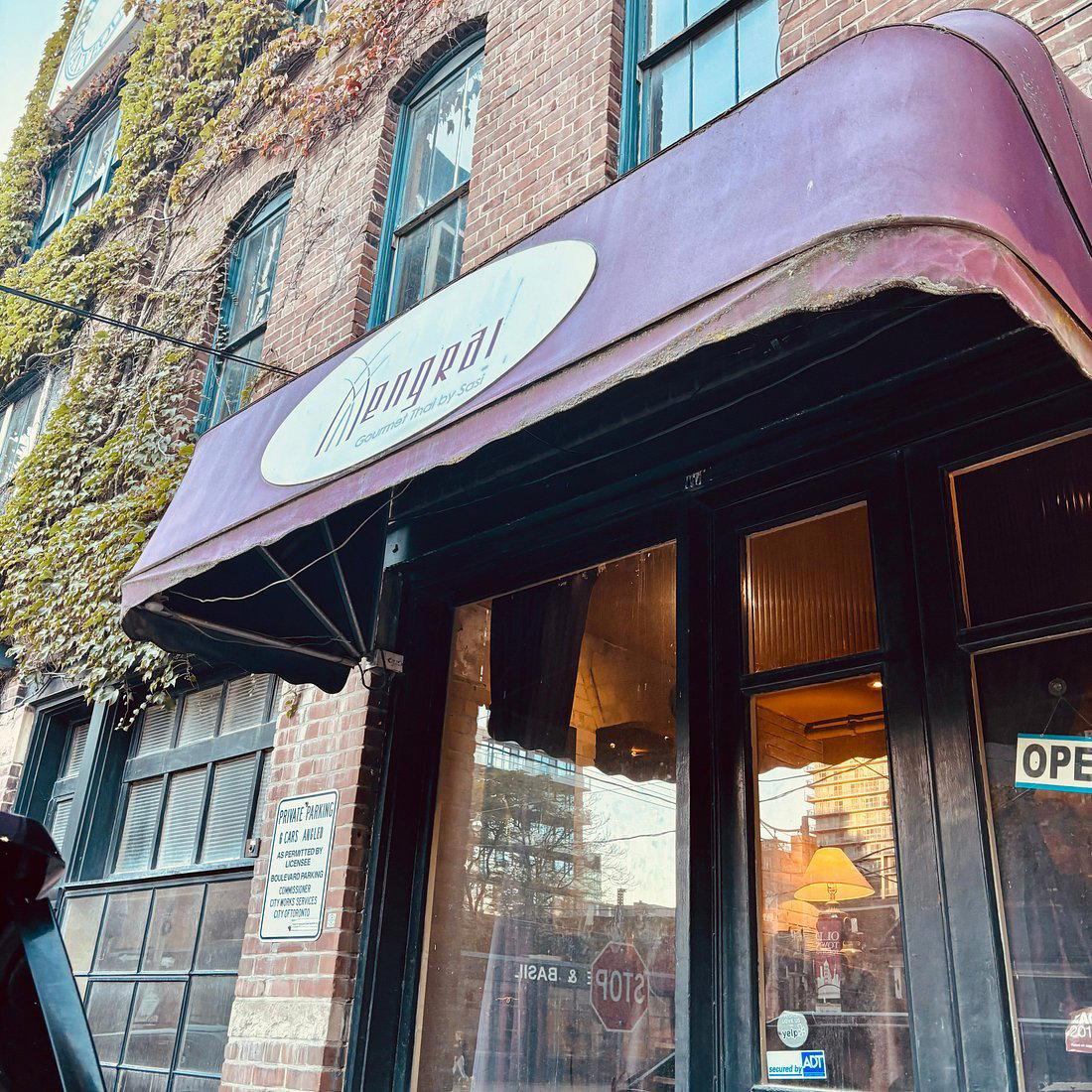
Ontario Street and the Atmosphere It Sets
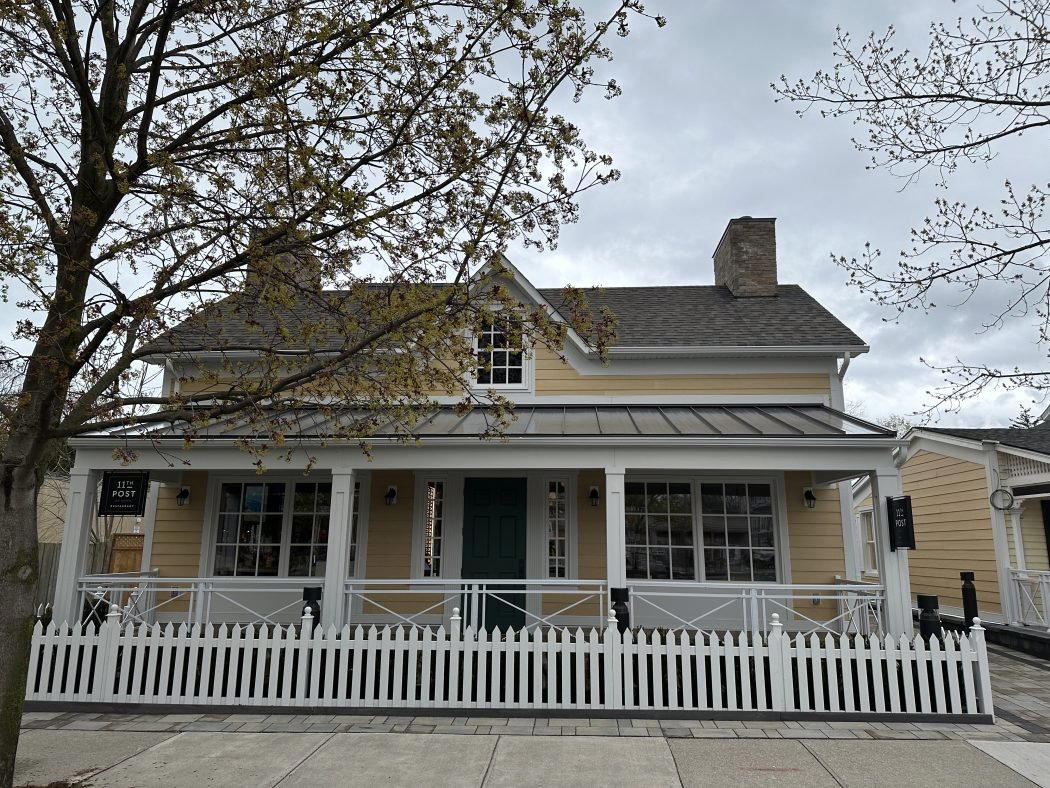
The stretch of Ontario Street between King and Front runs quieter than the surrounding St. Lawrence grid, which means that arriving at Mengrai Thai feels like stepping out of the neighbourhood's weekend momentum rather than into it. That contrast does something useful: it focuses attention on the room itself rather than the street. Toronto's Thai dining scene has historically clustered around Dundas West and the Annex, so a Thai restaurant anchored in St. Lawrence already sits in a different part of the city.
The name Mengrai references the 13th-century king credited with founding Chiang Mai, which signals a northern Thai orientation before the menu arrives. Northern Thai cooking differs from the central and southern traditions that dominate most North American Thai restaurants. The herb profiles lean toward lemongrass and galangal rather than coconut-heavy bases; the heat is often drier and more aromatic; fermented elements appear with more regularity. Its northern Thai focus gives the room a clear point of view.
The Sensory Register: What a Room Like This Asks of the Food
Toronto's mid-market dining rooms have bifurcated over the past decade. One cohort has moved toward industrial minimalism, exposed brick, and ambient playlists calibrated for background noise. A second cohort has held onto warmth, closer seating, and a sensory density that makes the food the event rather than the context. Mengrai Thai operates closer to the second category. The intimacy of a smaller room in a residential-adjacent block of St. Lawrence means that smell arrives before sight does: Thai cooking at any meaningful level of technique produces aromatic signatures that travel, and a room that allows those signals to settle rather than dissipate through high ceilings or aggressive ventilation is making an editorial choice about what the experience prioritises.
This matters because the competition in Toronto's premium dining tier, anchored by counters like Sushi Masaki Saito and Aburi Hana at the Japanese end, or format-driven rooms like Alo and DaNico in the contemporary bracket, is defined by sensory precision. Those rooms have made deliberate choices about light, sound, and spacing. A Thai restaurant asking to be evaluated in that company needs its atmosphere to do equivalent work, and the Ontario Street address gives Mengrai Thai the physical conditions to attempt it.
Northern Thai in a City That Defaults to Central
Canada's Southeast Asian dining scene has developed unevenly by region. Vancouver has a broader Thai offering shaped by its Pacific Rim demographics. Toronto's Thai restaurants have historically emphasised the central Thai canon: pad thai, green curry, tom yum, dishes that translate efficiently across a wide dining public. The northern tradition, with its emphasis on khao soi (the Chiang Mai curry noodle), sai oua (herb-heavy pork sausage), and laab meuang (a minced meat salad distinct from the Isaan version), reaches far fewer rooms in the city.
This places the restaurant in a smaller, more specific niche. The comparison set for northern Thai cooking in Toronto is thin enough that the restaurant operates with relatively little direct competition at the cuisine level, even if it faces significant competition at the neighbourhood and price-point level. That position is an opportunity and a constraint simultaneously: there is no established local benchmark against which diners can triangulate quality, which means the kitchen's fidelity to northern Thai technique carries more interpretive weight than it would in a city with deeper Thai representation.
For context on how regional specificity drives premium positioning in Canadian dining more broadly, the pattern recurs across the country: Tanière³ in Quebec City built a destination reputation on hyper-regional Quebec ingredients, while AnnaLena in Vancouver has used Pacific Northwest specificity as a competitive anchor. Specificity, in the current Canadian dining moment, is a credible differentiator.
Where Mengrai Thai Sits Among Toronto's Dining Tiers
Toronto's restaurant spectrum in 2024 runs from the $$$$ tasting menu tier, where Don Alfonso 1890 and its Italian-formal peers operate, through a mid-market where technique and value coexist more pragmatically. The restaurant occupies the mid-register, where the expectations are different but not lower. Diners in this tier are often more attuned to cuisine-specific accuracy than to production values; they will notice whether the khao soi broth carries the right balance of coconut, dried spice, and fermented soybean, even if they are sitting on direct chairs under modest lighting.
That makes the mid-market audience attentive to detail. At the restaurant, the food has to do most of the persuasion on its own terms. The broader Canadian dining scene offers useful reference points: Restaurant Pearl Morissette in Lincoln and Eigensinn Farm in Singhampton have demonstrated that regional conviction, even outside major urban centres, can sustain serious dining reputations. The principle applies at the restaurant's scale: cuisine accuracy is the differentiator, not decor spend.
Elsewhere in Canada, readers tracking the premium dining circuit might cross-reference Jérôme Ferrer's Europea in Montreal or Narval in Rimouski for a sense of how regional ambition operates outside Toronto's frame. Beyond Canada, Le Bernardin in New York City and Atomix represent the ceiling of what cuisine-specific technical ambition produces at the international level.
Planning Your Visit
The restaurant is located at 82 Ontario Street in Toronto's St. Lawrence neighbourhood, a short distance from the St. Lawrence Market and accessible by TTC along King Street. The address sits outside the densest concentration of Toronto's restaurant corridors, which typically makes walk-in availability more realistic than at comparable rooms on King West or in Yorkville. Reservations are recommended.
| Venue | Cuisine | Price Tier | Neighbourhood |
|---|---|---|---|
| The restaurant | Northern Thai | Mid-range | St. Lawrence |
| Alo | Contemporary | $$$$ | Spadina Ave |
| DaNico | Italian | $$$$ | King West |
| Don Alfonso 1890 | Contemporary Italian | $$$$ | Downtown |
| Barra Fion | Wine Bar | Mid-range | Burlington |
Awards and Standing
Comparable venues nearby, for context on price, style, and recognition.
| Venue | Cuisine | Price | Notes |
|---|---|---|---|
| Mengrai ThaiThis venue — the venue you are viewing | Gourmet Northern Thai | $$ | Not listed |
| Tha Phae Tavern | Northern Thai Fusion Bar | $$ | Queen West |
| Thairoomgrand York Mills | Authentic Thai | $$ | Don Mills |
| PAI Northern Thai Kitchen | Northern Thai Kitchen | $$ | Mount Pleasant West |
| Queen Mother Cafe | Global Comfort Food with Lao-Thai Influence | $$ | Queen West |
| La Piazza | Casual Italian Pizza & Shareables | $$ | Yorkville |
Continue exploring
More in Toronto
Restaurants in Toronto
Browse all →
Bars in Toronto
Browse all →
Hotels in Toronto
Browse all →

At a Glance
- Cozy
- Whimsical
- Date Night
- Casual Hangout
Current opening hours
- Monday
- Closed
- Tuesday
- 4:45–9:30 PM
- Wednesday
- 4:45–9:30 PM
- Thursday
- 4:45–9:45 PM
- Friday
- 4:30–10 PM
- Saturday
- 4:15–10:15 PM
- Sunday
- 4–9:45 PM
Hours can change for holidays and private events. Last verified .
Cozy with quirky decor, exposed brick, and tablecloths creating an intimate first-date atmosphere.