
Tabelog 100 #85
Our verdict
Mendokoro Bigiya Gakugei daigaku honten belongs to Tokyo’s serious neighborhood ramen tier: small-format, low-priced, and judged by repeat local attention rather than hotel-dining polish. Its Tabelog Ramen TOKYO 100 selections from 2017 through 2025, compact 11-seat setup, and ramen-tsukemen focus make it a useful marker for how Meguro’s everyday dining culture can carry national-level scrutiny.

Pearl is the En Primeur Club membership app, where members save venues, book tables and use the concierge.
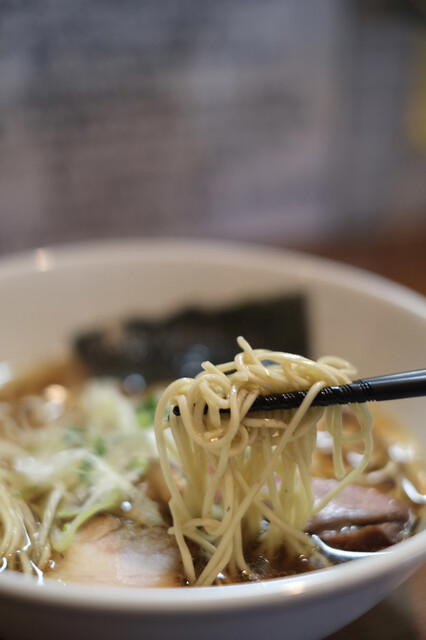
The menu
What to order
- Yuzu shoyu ramen
- Special shoyu ramen
- Tsukemen
Mendokoro Bigiya Gakugei daigaku honten is not Tokyo hotel-lobby dining or choreographed tasting-menu theater. Its appeal sits in a more everyday register: focused food, compact decisions, and the commuter rhythm of a city where a specialist stop can matter as much as a formal reservation. The listed budget places it in Tokyo’s accessible ramen economy, with dinner at JPY 1,000 - JPY 1,999 and lunch listed up to JPY 999, not premium omakase.
That matters because Tokyo ramen culture is built on repetition: broth, noodles, tare, toppings, timing, queue behavior, and making the same weekday decision worthwhile. Recognition from Tabelog’s Hyakumeiten carries weight because it places a shop among a narrow slice of specialist addresses. For 2025, Mendokoro Bigiya Gakugei daigaku honten is listed with a 3.78 score, a concrete signal within the city’s competitive ramen field.
Tokyo ramen with the discipline of a small-room format
Tokyo’s ramen hierarchy is not driven by luxury signals. A low-price shop can still be treated with the seriousness reserved for costlier counters. Evaluation happens in the bowl and format: whether the kitchen holds focus through service, whether the experience supports efficient turnover without feeling careless, and whether the menu stays close enough to its identity to build repeat attention.
Here, the category is ramen and tsukemen, one of Tokyo’s densest competitive fields. Tsukemen puts more structural burden on noodles; dipping broth must hold concentration, and temperature matters. Ramen asks for balance in one bowl. Without theatrical plating or luxury framing, both expose preparation quickly, so small ramen rooms can be judged as closely as restaurants charging far more.
Sourcing is not producer-name display. In ramen, it shows through flour quality, treatment of bases, seasoning, aromatic oils, and toppings that do not collapse under hot broth. Shops in the Tabelog Hyakumeiten conversation are generally not rewarded for novelty alone; they last because base materials and calibration hold under repeat scrutiny. Mendokoro Bigiya Gakugei daigaku honten’s 2025 listing is the evidence available here.
Price context is revealing. M Size sits in a sub-¥999 bracket, OVERWHELM HAMBURGER & BAR STAND in ¥2,000 to ¥2,999 casual dining, and Spice Kurashi at ¥3,000 to ¥3,999. Ramen at this level has a sharper value equation: modest spend, high technical expectations. At the other end of Tokyo counter culture, Yakitori Uu. operates at ¥10,000 to ¥14,999, showing how far specialist casual food can travel critically without becoming high-ticket.
Why Tokyo changes the read
Setting matters in Tokyo ramen. Some meals are planned as destinations; others work because they fit into the city’s daily routes and reward repeat visits. The strength here is not spectacle but a specialist restaurant embedded in Tokyo’s everyday dining logic, where regulars and visitors alike notice when precision slips.
The useful way to read Mendokoro Bigiya Gakugei daigaku honten is through consistency rather than novelty. Longevity, opening stories, and ownership details are less important than what can be verified: it is listed for ramen and tsukemen, sits in an accessible budget band, and appears in Tabelog’s 2025 Hyakumeiten data with a 3.78 score. In a city that constantly refreshes its food trends, those facts are enough to frame it seriously.
The physical setup should be understood as a focused ramen-shop format rather than a privacy-led restaurant experience. For ramen, that is practical: preparation-to-eating distance matters, pacing matters, and the meal usually centers on timing rather than ceremony. The value of the visit is not a private-room promise; it is the directness of a specialist Tokyo counter-style meal.
Payment, seating, and operating details should be checked through current official or booking sources before visiting, because small Tokyo restaurants can change practical policies. That does not make the experience less local; it simply means the best plan is flexible. Treat Mendokoro Bigiya Gakugei daigaku honten as a focused stop in a broader Tokyo dining day, not as a heavily staged destination dinner.
How to place it in a Tokyo food itinerary
This is not a long, wine-paired evening. Its value is sharper: a compact ramen or tsukemen stop in Tokyo showing how the city treats low-cost specialist food. Pair it with a day of casual eating rather than forcing it into a luxury-restaurant schedule. The point is not geographic trophy-hunting; it is seeing how much technical attention Tokyo can pack into an accessible bowl.
Because specific hours, closing days, seating policies, and reservation rules can change, plan for a flexible window rather than assuming a secured table or all-day availability. Lunch and dinner budgets are listed separately, with dinner at JPY 1,000 - JPY 1,999 and lunch up to JPY 999. Check current operating updates before committing a route.
For a broader Tokyo dining map, this sits between specialist casual shops and higher-spend counters. Browse Our full Tokyo restaurants guide for that spread, then compare other city moods through Our full Tokyo hotels guide, Our full Tokyo bars guide, Our full Tokyo wineries guide, and Our full Tokyo experiences guide. Nearby and cross-category references can sharpen an itinerary without needing to over-name the city: other Tokyo dining rooms, casual counters, cafes, curry shops, and bar formats show how broad the city’s everyday food culture becomes.
Japan-wide context adds another layer, but the comparison should stay general unless a specific venue is being verified. A traveler tracing value-led dining beyond Tokyo could compare the broader idea with casual specialist meals in other Japanese cities. For an international contrast, Japanese-inspired casual formats abroad show how much changes once the food leaves the station-neighborhood logic defining much of Tokyo.
The editorial case for Mendokoro Bigiya Gakugei daigaku honten is not that it turns ramen into luxury. It is that Tokyo does not need luxury to make a meal worth scrutiny. A ramen and tsukemen specialist, an accessible budget band, a 2025 Tabelog Hyakumeiten listing, and a 3.78 score say something precise: technical food culture often hides in plain sight, priced for regular use and judged with uncommon severity.
Frequently asked questions
What should I budget for a meal at Mendokoro Bigiya Gakugei daigaku honten?
Pricing at Mendokoro Bigiya Gakugei daigaku honten is listed as Dinner: JPY 1,000 - JPY 1,999; Lunch: - JPY 999.
What time does Mendokoro Bigiya Gakugei daigaku honten open and close?
Current opening hours for Mendokoro Bigiya Gakugei daigaku honten should be checked before visiting.
Where is Mendokoro Bigiya Gakugei daigaku honten located?
Tokyo.
What is Mendokoro Bigiya Gakugei daigaku honten known for?
Mendokoro Bigiya Gakugei daigaku honten is known for ramen and tsukemen in Tokyo, and is listed in the 2025 Tabelog Hyakumeiten data with a 3.78 score.
At a Glance
Nearby venues at a similar price tier for orientation.
| Venue | Cuisine | Price | Awards | Notes |
|---|---|---|---|---|
| Mendokoro Bigiya Gakugei daigaku hontenThis venue (the venue you are viewing) | Classic Tokyo shoyu ramen shop | $10–20 | Tabelog 100 #85 | Not listed |
| M Size | Neighborhood bakery | $1–10 | Tabelog 100 #55 | JPY 999 |
| OVERWHELM HAMBURGER & BAR STAND | Gourmet Hamburger & Bar | $10–20 | Tabelog 100 #28 | JPY 2,000 - JPY 2,999 JPY 2,000 - JPY 2,999 |
| スタンドバインミー | Modern French-Vietnamese Banh Mi | $20–30 | Not listed | Not listed |
| Yakitori Uu. | Yakitori | $50–100 | Tabelog 100 #76 | JPY 10,000 - JPY 14,999 |
| Spice Kurashi | Creative spice-driven Asian & Indian curry bar | $30–50 | Tabelog 100 #4 | JPY 3,000 - JPY 3,999 |
Recognition history
Dated appearances from independent guides and award organizations, with the underlying list record or original source where available.
Tabelog 100 #85 · No. 85
Tabelog · Tabelog 100 - Ramen - TOKYO - 2025
Continue exploring
More in Tokyo
Restaurants in Tokyo
All restaurants in Tokyo →




Bars in Tokyo
All bars in Tokyo →







Details
- Cozy
- Lively
- Solo
- Casual Hangout
- After Work
- Late Night
- Chefs Counter
- Standalone
- A La Carte
- Counter Dining
- Soft Drinks
Current opening hours
- Monday
- 11:30 AM–2:45 PM, 6–9 PM
- Tuesday
- 11:30 AM–2:45 PM, 6–9 PM
- Wednesday
- 11:30 AM–2:45 PM, 6–9 PM
- Thursday
- 11:30 AM–2:45 PM, 6–9 PM
- Friday
- 11:30 AM–2:45 PM, 6–9 PM
- Saturday
- 11:30 AM–2:45 PM, 6–9 PM
- Sunday
- 11:30 AM–2:45 PM, 6–9 PM
Hours can change for holidays and private events. Hours as of .
Compact, non-smoking neighborhood ramen shop with just 11 seats, centered on a counter facing the open kitchen; atmosphere is casual and bustling at peak times, with a focus on quick, serious ramen rather than lingering.