
Tabelog 100 #4
Our verdict
Spice Kurashi belongs to Tokyo’s small-counter spice cooking tier rather than the city’s familiar curry-shop lane. Its Tabelog 100 selection for Asian and ethnic cuisine in Tokyo, repeated across 2022, 2023, and 2024, places it in a critical conversation where compact format, creative spicing, and neighborhood scale carry more weight than spectacle.

Pearl is the En Primeur Club membership app, where members save venues, book tables and use the concierge.
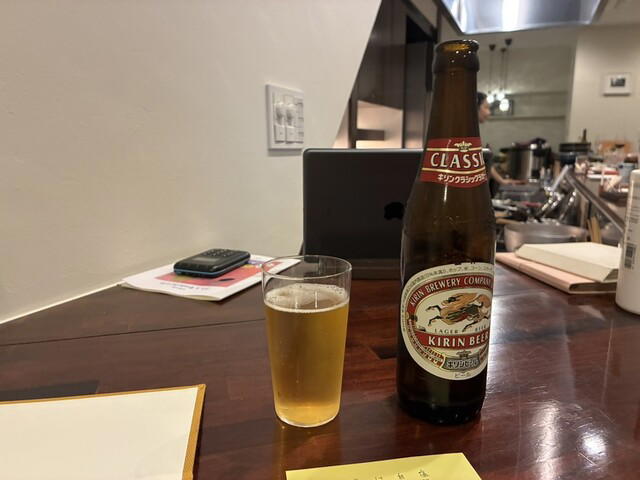
Tokyo’s side streets move to a different rhythm from the city’s destination dining corridors: lower buildings, quick turns off the main routes, and small rooms that make diners pay attention before sitting down. Here, spice cooking reads less like a genre label than a local language. The counter-style meal, where applicable, compresses dinner into a close-range exchange between heat, aroma, vegetables, grain, and drink: a register larger Tokyo restaurant culture may file under “ethnic,” while regulars read more precisely.
Spice Kurashi sits between Indian curry, Asian cooking, and creative Tokyo dining. Its scale suits a city where serious meals no longer need a long tasting-menu script to earn attention. Tabelog’s Asian and ethnic cuisine Tokyo 100 list has become a clear signal for this category, gathering restaurants that rarely fit the old hierarchy of sushi, tempura, kaiseki, French, and Italian. A 2024 selection gives Spice Kurashi a reputation built on recognition within a category that is still too often flattened from the outside.
Tokyo spice cooking has moved beyond the curry-shop template
Tokyo’s curry culture has always been plural: Japanese curry, South Asian cooking, Sri Lankan plates, Nepalese set meals, spice bars, and newer hybrid counters that borrow freely without fusion theater. Spice Kurashi belongs in that broader conversation. Asian, ethnic, Indian curry, and creative categories overlap here, but the emphasis is less on a single fixed label than on how spice-led cooking can sit naturally inside Tokyo’s contemporary dining map.
That combination says plenty about contemporary Tokyo dining. Spice is no longer only comfort food or lunch economy; it has become a dinner language alongside sake, wine, craft beer, and Japanese whisky. The format moves the restaurant away from the quick curry-stop model and toward the small evening meal, where heat and acidity can carry attention as surely as a charcoal grill or sushi case.
Within Tokyo, the distinction is useful. Yakitori Uu. works in a different grammar, centered on skewers and charcoal. TRASPARENTE Gakugei daigaku ten, MATTERHORN, and M Size sit in an everyday bakery and sweets rhythm. スタンドバインミー points to casual Vietnamese street-food influence. Spice Kurashi occupies a narrower lane: spice-led cooking with enough critical recognition to draw diners beyond the most obvious central dining routes.
Recognition counts more when the category is hard to classify
Awards matter differently for restaurants outside established luxury categories. Michelin stars and formal tasting menus tell one story; Tabelog’s 100 selections tell another, especially in Japan, where user attention and category-specific lists surface places international visitors might miss. For Asian and ethnic cuisine in Tokyo, the list gives shape to a scattered scene where a compact spice-focused restaurant can be judged alongside better-known specialist kitchens across the city.
Spice Kurashi’s 3.65 Tabelog score is useful only with Japanese rating culture in mind. Scores above the mid-threes can signal serious local traction, particularly where smaller restaurants and regulars drive demand. The stronger signal is its 2024 Tabelog 100 placement in the Asian and ethnic category. In a city with deep competition for curry and spice cooking, that recognition shows the restaurant has held attention within a crowded field.
It also shows Tokyo’s dining reputation widening. The international narrative still leans on omakase counters and French-influenced tasting rooms, but local recognition keeps pointing to smaller, less formal formats. The city’s culinary intelligence often appears in places that compress ambition rather than announce it. A modest room can carry the seriousness of a larger dining room if the cooking has focus and the audience understands the code.
How to read it within a Tokyo itinerary
This is not the Tokyo restaurant to choose for ceremony. Choose it when the interest lies in how spices behave in a compact Japanese urban setting: not a hotel dining room, chain curry counter, or nostalgic kissaten plate. Tokyo is practical enough to make the meal part of an evening rather than a standalone trophy booking, especially when the rest of the itinerary is built around transit and timing.
The practical read is simple: treat it as a dinner plan, not an afterthought. The published dinner budget sits at JPY 3,000 - JPY 3,999, which places it below Tokyo’s prestige counters and makes the recognition more interesting. The reputation is not propped up by luxury signaling; it comes from a category-specific list and a local rating culture that can reward small, focused restaurants.
For readers mapping the wider city, this address belongs on the same research path as Tokyo’s specialist casual and counter restaurants, not its grand dining rooms. For broader planning, use Our full Tokyo restaurants guide, then cross-check drinking and overnight choices through Our full Tokyo bars guide and Our full Tokyo hotels guide. Tokyo rewards that clustering: a small dinner room, a serious bar, and a hotel chosen for transport rather than postcard views.
Useful adjacent reading should stay within the same city conversation: other Tokyo curry counters for spice reference points, yakitori rooms for counter-format contrast, casual dining rooms for another urban register, fish and charcoal specialists for a different kind of heat, and visually driven cafes for a separate slice of Tokyo culture. Beyond restaurants, the city files continue through broader Tokyo planning, drinking, and experience guides.
Keep Japan and diaspora comparisons loose rather than literal. Across Japan and abroad, small formats can travel between cities without sharing cuisine, price point, or audience. Japanese dining categories also shift once they leave Japan, where familiar formats are often translated for new neighborhoods and new expectations. Spice Kurashi keeps the conversation local: compact, spice-forward, and recognized by a Tokyo list that understands the category on its own terms.
The Short List
Side-by-side context: comparable cuisine and price.
| Venue | Cuisine | Price | Awards | Notes |
|---|---|---|---|---|
| Spice KurashiThis venue (the venue you are viewing) | Creative spice-driven Asian & Indian curry bar | $30–50 | Tabelog 100 #4 | Not listed |
| Yakitori Uu. | Yakitori | $50–100 | Tabelog 100 #76 | JPY 10,000 - JPY 14,999 |
| TRASPARENTE Gakugei daigaku ten | Japanese Bakery-Cafe | $10–20 | Tabelog 100 #91 | JPY 999 - JPY 999 View spending breakdown |
| スタンドバインミー | Modern French-Vietnamese Banh Mi | $20–30 | Not listed | Not listed |
| MATTERHORN | Japanese-Western Pâtisserie | $10–20 | Tabelog 100 #28 | JPY 999 |
| M Size | Neighborhood bakery | $1–10 | Tabelog 100 #55 | JPY 999 |
Recognition history
Dated appearances from independent guides and award organizations, with the underlying list record or original source where available.
Tabelog 100 #4 · No. 4
Tabelog · Tabelog 100 - Asian cuisine / Ethnic cuisine - TOKYO - 2024
Continue exploring
More in Tokyo
Restaurants in Tokyo
All restaurants in Tokyo →



Bars in Tokyo
All bars in Tokyo →








Details
- Cozy
- Trendy
- Intimate
- Solo
- Date Night
- After Work
- Casual Hangout
- Special Occasion
- Chefs Counter
- Standalone
- Design Destination
- Beer Program
- Natural Wine
- Organic
- Natural Wine
- Local Sourcing
- A La Carte
- Small Plates
- Counter Dining
- Beer
- Wine
- Spirits
- Vegetarian Friendly
- Organic Focus