
Men Tokoro To Ichi gives Kashihara a serious ramen counter with the discipline of a small specialist shop rather than the sprawl of a station-front chain. The draw is ramen and tsukemen in a nine-seat, counter-only format, backed by repeated selection in Tabelog’s Ramen WEST 100 and a price point that keeps the experience grounded in everyday Japan.
Pearl is the En Primeur Club membership app — saves, bookings, and concierge access live there. Same editors, same standards.
- Address
- 奈良県橿原市十市町1213
- Website
- ameblo.jp
 Saves & bookings on Pearl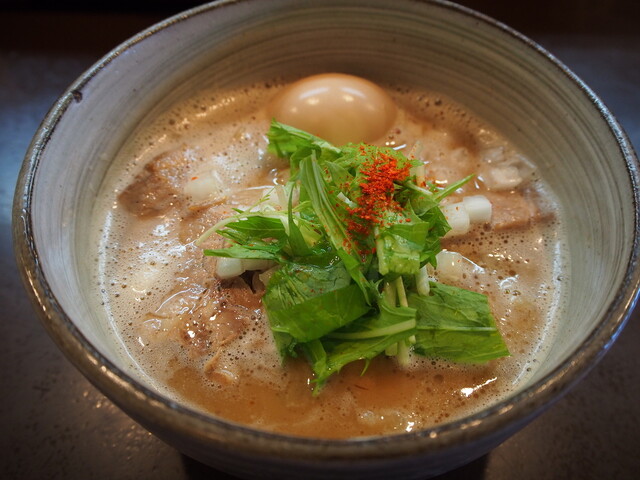
Approach Kashihara’s ramen scene away from the main tourist axis and the room tells the story before the bowl does: a short counter, a small number of seats, and the quiet efficiency of a shop built around turnover, timing, and broth discipline. In Nara Prefecture, ramen often sits between two identities. It is everyday food, priced for repeat local use, yet the stronger counters operate with the focus of much smaller craft kitchens. Men Tokoro To Ichi belongs to that second camp, where the scale is narrow and the margin for error is smaller.
The useful frame here is not luxury. It is sourcing pressure. Ramen and tsukemen shops with serious followings depend on stock construction, noodle texture, tare balance, and the freshness of components that rarely announce themselves in theatrical ways. The format rewards restraint: if the soup base lacks depth, if the noodles lose snap, if the seasoning sits out of line, the whole meal has nowhere to hide. That is why a modestly priced ramen counter can carry more critical weight than a longer menu with more expensive ingredients.
A small counter in Kashihara's specialist ramen tier
Kashihara is not Osaka or Tokyo, where ramen tourism can become a full itinerary by itself. That matters. A local counter selected for Tabelog’s Ramen WEST 100 in 2025, with earlier selections recorded across multiple years, signals a different kind of durability: not a flash of opening-year attention, but continued relevance inside western Japan’s crowded ramen category. The Tabelog score of 3.68 reinforces the point without needing to inflate it. This is a compact, specialist address in a city better known to many travellers for history and access than for destination dining.
The nine-seat, counter-only layout is part of the editorial argument. Ramen at this level is not improved by excess hospitality choreography. It benefits from proximity: guests see the rhythm of bowls moving, noodles being timed, and portions being sent out in a sequence that keeps temperature and texture under control. Counter ramen also strips away the usual hierarchy of dining. Solo diners and small groups occupy the same line of sight, and the meal’s tempo is set by the kitchen rather than by lingering table service.
The category listing covers ramen and tsukemen, a pairing that reveals two different tests of a shop’s ingredient logic. Ramen asks whether broth, tare, oil, and noodles can stay integrated from first sip to last. Tsukemen separates the noodle more clearly from the dipping broth, making texture and concentration harder to disguise. In western Japan, where regional ramen styles compete with Osaka’s density and Kyoto’s long-running noodle culture, a Kashihara shop earning repeat recognition has to persuade beyond local convenience.
Why ingredient discipline matters more than menu theatre
Ramen criticism often gets trapped in toppings, but the deeper question is structural. A bowl is built from extraction, seasoning, fat, and noodle choice, and the sourcing behind those elements determines whether the result feels coherent. The available public details do not name suppliers or a chef, so the better reading comes from format and recognition rather than biography. A small counter with a focused ramen and tsukemen identity is usually judged by repeatability: the same balance at opening, the same control as service progresses, the same logic across bowls.
That makes Men Tokoro To Ichi a useful stop for travellers who want a grounded view of Nara dining beyond temples, sweets, and formal restaurants. Kashihara’s dining map includes beef-led rooms such as #肉といえば松田 奈良本店, local casual addresses such as Nikuzo, polished wine-and-meat formats like steak&wine Lamp, yakiniku specialists including Yakiniku Mikazuki, and old-school sweet culture represented by Dango Sho Honten. Ramen sits differently from all of them: faster, cheaper, less ceremonial, and often more revealing of daily local appetite.
Compared with out-of-metro Japanese dining rooms such as Kappo Risuke or French-leaning Pinot Noir, the ramen counter operates with fewer signals of formality. The comparison is not about ambition, but about how value is expressed. A kappo room may communicate quality through courses and pacing; a ramen counter has one main opportunity to make the case. That economy is why repeat selection in a ramen-specific award list carries weight. The category is brutally competitive because entry barriers for diners are low, while critical tolerance for inconsistency is limited.
How to read the experience before committing a meal slot
The decision is simple: choose this for a focused ramen or tsukemen stop, not for a long social meal. The counter-only setup suits solo dining and pairs well with a day moving through Kashihara rather than a destination dinner built around ceremony. Cash planning matters because cards, electronic money, and QR payments are not accepted. The shop also operates on a narrow service rhythm, and temporary changes are directed through its blog or social channels, so timing is part of the meal’s realism rather than an afterthought.
For broader city planning, Our full Kashihara restaurants guide gives the stronger local dining context, while Our full Kashihara hotels guide, Our full Kashihara bars guide, Our full Kashihara wineries guide, and Our full Kashihara experiences guide help place the meal inside a longer stay. Readers comparing Japanese casual formats beyond Nara can also look at -Grilled beef Sukiyaki- KAMAKURA TANUKIAN 鎌倉 たぬき庵 in Kamakura. 鮪と炭火焼き うお炭 秋葉原店 in Tokyo.cafe in Osaka.know in Kumamoto, (Shoku) Vietnam in Kawasaki, [Curry Senmon Ten] Maruyama Kyoju. in Sapporo, Jōdo Saké Bar in Los Angeles, and Onigiri Time in Pasadena.
The verdict is practical and narrow in the right way. Men Tokoro To Ichi is for travellers who understand that a serious Japanese food stop does not need a long menu, a named chef, or a high bill to be worth attention. Its strength lies in the disciplined ramen-counter format: small scale, repeated category recognition, and a city setting that makes the meal feel tied to local routine rather than spectacle.
Snapshot
Comparable venues by cuisine and price in the same metro.
| Venue | Cuisine | Price | Notes |
|---|---|---|---|
| Men Tokoro To Ichi | Ramen and tsukemen | $ | Kashihara |
| Yakiniku Mikazuki | Yakiniku / Japanese BBQ | $$ | Unebi |
| Dango Sho Honten | Japanese Traditional Sweets | $ | Bojo |
| Nikuzo | Premium Filletniku Yakiniku | $$$ | Kashihara |
| steak&wine Lamp | Yamato Beef Steakhouse | $$$ | Yagi Nishiguchi |
| #肉といえば松田 奈良本店 | Wagyu Kappo | $$$$ | Kashihara |
Recognition history
Dated appearances from independent guides and award organizations, with the underlying list record or original source where available.
Tabelog 100 #99 · No. 99
Tabelog · Tabelog 100 - Ramen - WEST - 2025
Continue exploring
More in Kashihara
Restaurants in Kashihara
Browse all →




Bars in Kashihara
Browse all →
Hotels in Kashihara
Browse all →



Wineries in Kashihara
Browse all →
At a Glance
- Solo
- Casual Hangout
- After Work
- Standalone
Simple counter-only ramen shop with a casual, no-frills atmosphere focused on efficient daytime service rather than lingered dining.