
Men Shokudo 88 places Tenri inside the Kansai ramen conversation without leaving the everyday price tier. The 10-counter-seat format, no-reservation policy, and Tabelog Ramen WEST “Tabelog 100” selections for 2023, 2024, and 2025 make it a compact, queue-minded stop for ramen, abura-soba, maze-soba, and tsukemen.
Pearl is the En Primeur Club membership app — saves, bookings, and concierge access live there. Same editors, same standards.
- Address
- 奈良県天理市蔵之庄町442-1
- Website
- ameblo.jp
 Saves & bookings on Pearl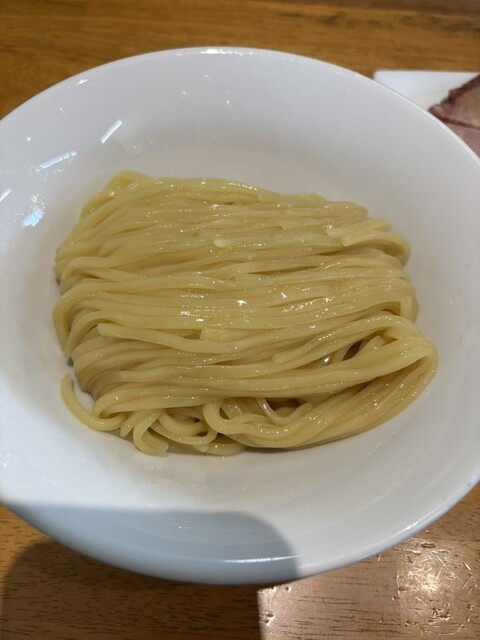
Approaching a small ramen counter in Tenri is not like arriving at a temple-town restaurant built for lingering. The signals are practical: counter seats, quick turnover, steam, ticket-machine logic in spirit even when systems vary, and a room where the bowl matters more than ceremony. Men Shokudo 88 belongs to Nara’s plainspoken dining side, where pleasure comes from concentration, not theatrics.
Tenri sits outside the Kyoto-Osaka dining corridor that often absorbs Kansai attention, so its ramen addresses are useful differently. They show serious noodle culture in secondary cities: smaller rooms, lower average spend, less tolerance for excess, and menus built around broth, tare, noodles, and fat rather than luxury cues. Recognition on Tabelog Ramen WEST “Tabelog 100” in 2023, 2024, and 2025 places this counter in a competitive western Japan category, not just a local convenience bracket.
Ten seats, four noodle formats, and the Kansai ramen discipline
The format is compact: 10 counter seats, no private rooms, and a non-smoking room. Ramen at this level depends on rhythm. Small counters narrow the gap between kitchen timing and the bowl reaching the diner, keeping the experience closer to a workshop than a dining room. The listed categories, ramen, abura-soba, maze-soba, and tsukemen, show a shop interested in noodles from several angles rather than a single soup-only identity.
Those formats reflect a broader Kansai pattern. Ramen is less one dish than a structure: soup noodles, brothless dressed noodles, mixed noodles, and dipping noodles each test a kitchen differently. Ramen asks for broth integration; abura-soba and maze-soba expose seasoning balance without soup as cover; tsukemen puts noodle texture and dipping concentration under sharper scrutiny. A counter working across those categories gives diners a clear read on technique, even before awards.
Ingredient sourcing in ramen is rarely announced through luxury-produce language. It appears through extraction, seasoning, noodle selection, and the choice to let fats and tare carry detail without overloading the bowl. In cities like Tenri, that discipline can feel more persuasive than a premium-product narrative. The price band, JPY 1,000 to JPY 1,999 for lunch and dinner, keeps the experience in ramen’s democratic lane, while repeated Tabelog selections signal scrutiny beyond an ordinary neighbourhood stop.
For readers mapping Tenri’s noodle scene, the comparison is not high-end tasting menus but nearby ramen counters at similar spend. Menba Rikiou sits in the same Tenri price band, while Menya Ittoku and Ramen Senichi frame the city as a place where noodle specialists carry more weight than the map suggests. Beyond ramen, Yoshoku Katsui shows another side of Tenri’s everyday dining register.
Why the recognition matters in a low-price ramen city
Tabelog’s Hyakumeiten lists are useful for ramen because the category is crowded and price does not separate serious shops from routine ones. Men Shokudo 88’s selection for the 2025 Ramen WEST list, after selections in 2023 and 2024, gives it repeat recognition across multiple cycles. That matters more than one burst of attention, especially where queues and social media can distort reputation.
The shop opened on 29 October 2019, after a pre-opening period from 21 to 23 October. It entered shortly before pandemic-era disruptions changed how small counters managed capacity, hours, and customer flow. A 10-seat ramen shop surviving into repeated western Japan recognition suggests a format that found its audience without moving into a higher-spend category.
Compared with out-of-metro peers in the same ramen orbit, such as Gamushara Nara and Menya Eguchi, the price signal remains restrained. Against broader Nara-area dining, the gap is clearer: Yakiniku Hachina moves into a higher dinner band, while Kiyosuminosato AWA belongs to a different Japanese-restaurant mode entirely. This is not a value alternative to luxury dining, but a serious example of a category where seriousness and low spend coexist.
That distinction is central to Japanese ramen culture. The bowl is judged by repeatability, speed, calibration, and whether the kitchen holds its line through service. A counter with no reservations and limited seats pressures execution; there is little room for a weak course, long beverage list, or atmosphere to compensate. Evaluation happens quickly, and the customer leaves with a clear answer.
How to place it in a Tenri itinerary
Tenri rewards compact planning. The address is in Kuranoshocho, with Obitoke listed as the nearest station and transport noted at 868 meters from the station. Parking adds practical appeal: 14 spaces are available, with two paid lots nearby listed at 100 yen for two hours. For travelers building a food day rather than a single stop, the city’s restaurants work best as short, purposeful visits, not long-form dining sessions.
The no-reservation policy makes timing part of the meal. Lunch and weekend windows carry more pressure because the room is small, and listed closures mean the calendar deserves a check before travel. Payment is another old-school signal: credit cards, electronic money, and QR code payments are not accepted, so cash is the safe assumption. These are category reminders: the ramen counter is designed around the bowl, not hospitality padding.
Families can make it work when children are comfortable with counter seating and a quick meal, but this is not a private-room restaurant. The format suits solo diners, pairs, and ramen-focused groups who do not need a long table. For a broader city plan, the practical rails are split by category: Our full Tenri restaurants guide, Our full Tenri hotels guide, Our full Tenri bars guide, Our full Tenri wineries guide, and Our full Tenri experiences guide give the surrounding structure.
Readers extending the same ingredient-led lens across Japan and beyond can compare how casual formats behave in other cities: -Grilled beef Sukiyaki- KAMAKURA TANUKIAN 鎌倉 たぬき庵 in Kamakura. 鮪と炭火焼き うお炭 秋葉原店 in Tokyo.cafe in Osaka.know in Kumamoto, (Shoku) Vietnam in Kawasaki, [Curry Senmon Ten] Maruyama Kyoju. in Sapporo, [ki:] in Kyoto, Jōdo Saké Bar in Los Angeles, and Onigiri Time in Pasadena. The thread is not luxury, but whether a narrow format can express place, sourcing, and technique without becoming a larger production.
At-a-Glance Comparison
Comparable venues by cuisine and price in the same metro.
| Venue | Cuisine | Price | Notes |
|---|---|---|---|
| Men Shokudo 88This venue — the venue you are viewing | Japanese Ramen / Tsukemen | $ | Not listed |
| Menba Rikiou | Ramen shop | $ | Not listed |
| Menya Ittoku | Classic Japanese Ramen Shop | $ | .null |
| Yoshoku Katsui | Yoshoku (Japanese-style Western) comfort food | $$ | Yamanobe-no-michi / Tenri City Trail Center |
| Ramen Senichi | Modern ramen & abura-soba shop | $ | Tenri |
| Seiko Udoku | Soupless Tantanmen Ramen | $ | Uji |
Recognition history
Dated appearances from independent guides and award organizations, with the underlying list record or original source where available.
Tabelog 100 #62 · No. 62
Tabelog · Tabelog 100 - Ramen - WEST - 2025
Continue exploring
More in Tenri
Restaurants in Tenri
Browse all →




Bars in Tenri
Browse all →

Hotels in Tenri
Browse all →



Wineries in Tenri
Browse all →
At a Glance
- Cozy
- Classic
- Solo
- Casual Hangout
- Standalone
Casual, compact noodle-shop atmosphere with a limited counter-seat setup and a no-frills, everyday shokudo feel.