
Ramen Senichi brings Tenri’s small-city ramen culture into sharper focus: compact, counter-led, and serious enough to earn selection in Tabelog’s Ramen WEST 100 for 2025. The draw is not luxury gloss but ingredient discipline across ramen, abura-soba, and maze-soba, with a room scaled for close attention rather than long, leisurely dining.
Pearl is the En Primeur Club membership app — saves, bookings, and concierge access live there. Same editors, same standards.
- Address
- 奈良県天理市川原城町801 辻村ビルD
- Website
- tabelog.com
 Saves & bookings on Pearl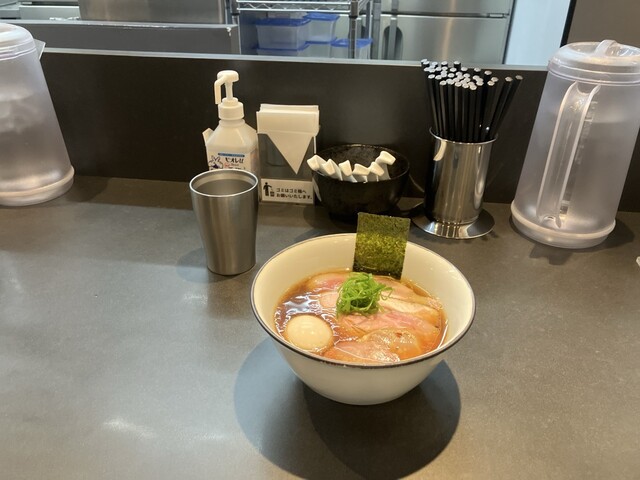
Tenri’s station-side dining scene has a particular rhythm: quick foot traffic, compact rooms, and shops built around a single bowl rather than a long menu. In that context, Ramen Senichi reads as part of a precise local grammar. The room is small, the format is direct, and the experience belongs to Japan’s counter culture, where the credibility of a ramen shop is measured less by ceremony than by how tightly it controls broth, noodles, seasoning, and pace.
That matters in Nara Prefecture, where ramen does not carry the same international shorthand as Tokyo’s queue-heavy shops or Kyoto’s polished tourist corridors. Tenri has its own food identity, helped by a local taste for assertive, everyday bowls rather than luxury dining theater. Ramen Senichi’s selection for Tabelog’s Ramen WEST 100 in 2025 places it inside a regional conversation that stretches across western Japan, but its scale keeps the experience rooted in the local lunch-and-dinner circuit rather than destination tasting-menu culture.
Ramen, abura-soba, and maze-soba in a compact Tenri format
The useful way to read the menu is through three related forms. Ramen depends on the balance between soup, tare, aroma oil, and noodle texture. Abura-soba removes the soup from the equation and asks the seasoning and fat to carry the bowl. Maze-soba goes further into mixing, with noodles acting as the base for a more concentrated sauce-and-topping structure. A shop that works across all three categories has to think carefully about how wheat, seasoning, and temperature behave without hiding behind abundance.
Ingredient sourcing becomes visible here through restraint. No named farms, noodle producers, or broth components are publicly attached to the restaurant, so the better editorial point is structural: ramen at this level is an ingredient system, not a single recipe. The noodle has to hold its bite long enough for the bowl to make sense; the tare has to season without flattening the broth or sauce; the oil has to carry aroma without turning heavy. In a small shop, those choices are exposed. There is little room for garnish-as-distraction.
Tenri’s ramen map also rewards comparison by format rather than by hype. Menya Ittoku, Menba Rikiou, and Men Shokudo 88 sit in the same local ramen conversation, giving the city a tighter noodle circuit than its size might suggest. Ramen Senichi’s 2025 Tabelog Ramen WEST 100 selection gives it a clear external signal within that group, while the presence of abura-soba and maze-soba broadens the decision for diners who want something drier, more concentrated, or less broth-led.
What the recognition says about western Japan ramen
Tabelog’s Hyakumeiten lists are useful because they separate genre strength from broad fine-dining prestige. A ramen shop does not need white tablecloths, a chef biography, or a cellar to be taken seriously; it needs consistency, user attention, and enough regional pull to be noticed among hundreds of casual counters. Selection for the 2025 Ramen WEST 100 puts the restaurant in that category: not luxury by price posture, but serious within the ramen field.
Western Japan ramen has never been a single style. Osaka leans pragmatic and high-turnover, Kyoto often favors more polished bowls in dense dining districts, and Nara’s scene is more dispersed, with local shops carrying a stronger neighborhood function. Tenri adds another layer because its food culture is not only about visitors moving between temples and historic sites. It is a working city with station-area meals, family traffic, and inexpensive dining built into daily life. That makes a small ramen counter a stronger cultural signal than a grand restaurant would be.
The broader Tenri dining picture is not limited to noodles. Yoshoku Katsui points toward Japanese Western-style cooking, while the city’s ramen shops show how much of the local energy sits in casual, narrow-focus formats.
How to read the room before choosing a bowl
The room’s small capacity shapes the meal. Six counter seats and one family table create a format closer to a focused workshop than a lingering restaurant. That is not a drawback; ramen is built for immediacy. The counter suits solo diners and pairs who want to watch the rhythm of service, while the table makes the shop unusually practical for families within a category that often privileges speed and adult-only concentration.
Atmosphere-wise, expect a compact, functional ramen setting rather than a designed dining room. The no-smoking policy, children-welcome note, and family table change the mood from austere counter worship to accessible local specialist. The practical frictions also tell the truth about the place: reservations are not part of the format, cash matters because cards and electronic payments are not accepted, and photography is limited to served items while video recording is prohibited. Those rules keep attention on the bowl and the room’s flow.
For travelers building a wider Japan food itinerary, the useful comparison is not with high-end omakase or hotel dining but with other narrow specialists where format defines value. That can include casual Japanese dining far outside Nara, from -Grilled beef Sukiyaki- KAMAKURA TANUKIAN 鎌倉 たぬき庵 in Kamakura to. 鮪と炭火焼き うお炭 秋葉原店 in Tokyo.cafe in Osaka.know in Kumamoto, (Shoku) Vietnam in Kawasaki, [Curry Senmon Ten] Maruyama Kyoju. in Sapporo, and [ki:] in Kyoto. Outside Japan, the same narrow-format logic appears in places such as Jōdo Saké Bar in Los Angeles and Onigiri Time in Pasadena, where a tight category can say more than a sprawling menu.
The verdict is practical and clear: choose the restaurant for a compact Tenri ramen experience with regional recognition and a menu that lets broth-led, oil-dressed, and mixed-noodle styles sit side by side. It is a sharper choice for diners interested in how ingredient balance works inside everyday Japanese food than for anyone seeking a long, choreographed restaurant evening.
Quick Comparison
Comparable venues by cuisine and price in the same metro.
| Venue | Cuisine | Price | Notes |
|---|---|---|---|
| Ramen SenichiThis venue — the venue you are viewing | Modern ramen & abura-soba shop | $ | Not listed |
| Men Shokudo 88 | Japanese Ramen / Tsukemen | $ | Kawanishi-cho / Yuzaki |
| Menba Rikiou | Ramen shop | $ | Not listed |
| Menya Ittoku | Classic Japanese Ramen Shop | $ | .null |
| Yoshoku Katsui | Yoshoku (Japanese-style Western) comfort food | $$ | Yamanobe-no-michi / Tenri City Trail Center |
| レストハウス寺子屋 | Japanese Mountain Comfort Food | $ | 山ノ内町 |
Recognition history
Dated appearances from independent guides and award organizations, with the underlying list record or original source where available.
Tabelog 100 #15 · No. 15
Tabelog · Tabelog 100 - Ramen - WEST - 2025
Continue exploring
More in Tenri
Restaurants in Tenri
Browse all →




Bars in Tenri
Browse all →

Hotels in Tenri
Browse all →



Wineries in Tenri
Browse all →
At a Glance
- Modern
- Cozy
- Trendy
- Solo
- Family
- Casual Hangout
- After Work
- Group Dining
- Late Night
- Standalone
- Design Destination
A small, non-smoking ramen shop with about a dozen seats, described as simple and stylish with a modern, clean design; the atmosphere is casual and cozy, suited to solo diners and families alike rather than a loud, boisterous ramen-ya.