
Menba Rikiou puts Tenri’s ramen scene in the national conversation without dressing the experience up as ceremony. The draw is a compact ramen, dumpling, and tsukemen format with Tabelog Ramen WEST “Tabelog 100” selections in 2023, 2024, and 2025, placing it in a serious Kansai ramen bracket while keeping the spend in everyday territory.
Pearl is the En Primeur Club membership app — saves, bookings, and concierge access live there. Same editors, same standards.
- Address
- Japan, 〒632-0018 Nara, Tenri, Besshocho, 81-8 ヨシエビル 通眞 1階
- Phone
- +81 743-85-7200
- Website
- facebook.com
- Directions
- Get directions
 Saves & bookings on Pearl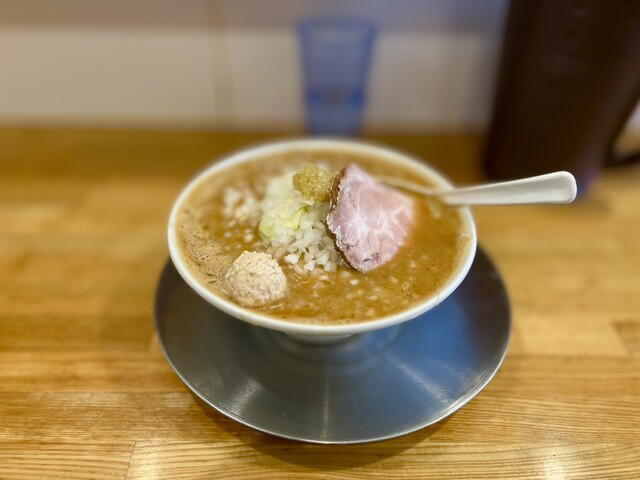
Tenri’s ramen rooms tend to announce themselves through rhythm rather than theatre: steam at the counter, quick turnover, bowls moving faster than conversation. Menba Rikiou belongs to that practical, high-focus strain of Japanese noodle culture, where the room is compact, the format is direct, and reputation is earned through repeatable execution rather than ceremony. Its place on Tabelog Ramen WEST “Tabelog 100” in 2023, 2024, and 2025 matters because ramen recognition in western Japan is crowded with specialists; inclusion across consecutive years signals consistency, not a passing spike.
The Tenri context is important. Nara’s dining identity is often read through temple-town restraint and day-trip logistics, but Tenri has its own everyday food gravity: station-area noodles, family-friendly counters, and shops that serve locals as much as culinary completists. For a wider read on the city’s dining patterns, Our full Tenri restaurants guide maps the field beyond ramen, while travel planning around the area sits in Our full Tenri hotels guide, Our full Tenri bars guide, Our full Tenri wineries guide, and Our full Tenri experiences guide.
Ramen, dumplings, and tsukemen in a city that rewards directness
The menu categories tell the story without needing ornament: ramen, dumpling, and tsukemen. That combination places the shop in a familiar but demanding Japanese format, where broth structure, noodle handling, and side dishes all have to carry their own weight. Tsukemen changes the tempo of a meal because dipping noodles put texture and temperature in sharper relief than a standard bowl; dumplings, by contrast, measure the kitchen’s ability to handle a second staple without diluting the main act.
Ingredient-sourcing question in ramen is not only where an item comes from; it is how the kitchen translates regional preference into a bowl. Western Japan ramen often has to balance richness with approachability, especially outside major urban dining districts. In Tenri, that balance matters because the audience is mixed: solo diners, families, and friends are all part of the use case. A 16-seat setup, split between counter seating and tables, reinforces the hybrid role. This is not a rarefied tasting-counter model; it is a small specialist shop operating inside everyday dining habits.
Among local comparisons, the price tier separates the field more clearly than style language. Menya Ittoku and Ramen Senichi sit in a lower listed budget band, while Men Shokudo 88 shares the JPY 1,000 to JPY 1,999 bracket. Menba Rikiou’s consecutive Tabelog 100 selections put it in a more scrutinized lane within that price range. The point is not luxury; the point is that a low-cost bowl can carry enough technical expectation to be judged against a regional award field.
Why the recognition matters more than the room
Ramen awards can distort expectations when read as fine-dining markers. Here, the recognition is better understood as a sorting device. Tabelog’s Ramen WEST “Tabelog 100” selection places a shop among notable ramen specialists across western Japan, a category where small differences in broth clarity, noodle bite, seasoning, and pacing separate serious addresses from convenient ones. Menba Rikiou’s score of 3.65 and repeated selection history provide the trust signal; the room itself remains casual, compact, and practical.
That is why the experience should be approached as a specialist meal, not as a destination restaurant trying to borrow fine-dining language. The counter seats frame ramen as craft in motion, while the table seats make room for groups and children. Non-smoking status and children-welcome positioning widen the appeal without changing the basic contract: order, eat while the bowl is at its intended temperature, and let the format do its work.
Tenri’s broader eating scene gives this kind of shop an edge. A city with daily-use noodle rooms does not reward empty spectacle for long. It rewards shops that can serve lunch and dinner crowds repeatedly, maintain a concise identity, and offer enough range for different appetites. Nearby alternatives such as Yoshoku Katsui show the city’s appetite for non-ramen comfort formats, but ramen remains a sharper test of repetition: the same bowl, judged again and again.
How to place it in a wider Japan itinerary
For travellers building a food-led route through Japan, the restaurant is useful because it shows how serious ramen culture functions outside Tokyo, Osaka, and Kyoto. The national dining map is full of hyper-specific formats, from beef sukiyaki at -Grilled beef Sukiyaki- KAMAKURA TANUKIAN 鎌倉 たぬき庵 in Kamakura to seafood-and-grill formats such as. 鮪と炭火焼き うお炭 秋葉原店 in Tokyo, café culture at.cafe in Osaka, and contemporary regional dining at.know in Kumamoto. Tenri’s ramen contribution is quieter, but its award record gives it a clear reason to be considered alongside larger-city addresses.
That wider frame also helps keep expectations accurate. This is not a chef-biography story; no named chef narrative is needed for the shop’s reputation to make sense. The evidence sits in category, consistency, and repeat recognition. In the same way that (Shoku) Vietnam in Kawasaki, [Curry Senmon Ten] Maruyama Kyoju. in Sapporo, and [ki:] in Kyoto each explain a different slice of Japan’s casual-specialist dining culture, the restaurant explains how a small ramen shop in Nara can gain regional attention without changing its basic everyday shape.
International comparisons are useful only at the level of format discipline. A place such as Jōdo Saké Bar in Los Angeles or Onigiri Time in Pasadena shows how Japanese food categories travel and become curated abroad. In Tenri, the category remains grounded in local use: accessible pricing, compact seating, and a menu built around noodles and dumplings rather than imported notions of occasion dining.
Fast Comparison
Comparable venues by cuisine and price in the same metro.
| Venue | Cuisine | Price | Notes |
|---|---|---|---|
| Menba Rikiou | Ramen shop | $ | Not listed |
| Men Shokudo 88 | Japanese Ramen / Tsukemen | $ | Kawanishi-cho / Yuzaki |
| Yoshoku Katsui | Yoshoku (Japanese-style Western) comfort food | $$ | Yamanobe-no-michi / Tenri City Trail Center |
| Ramen Senichi | Modern ramen & abura-soba shop | $ | Tenri |
| Menya Ittoku | Classic Japanese Ramen Shop | $ | .null |
| かつれつ軒 | Japanese Tonkatsu | $ | 神宮 |
Recognition history
Dated appearances from independent guides and award organizations, with the underlying list record or original source where available.
Tabelog 100 #30 · No. 30
Tabelog · Tabelog 100 - Ramen - WEST - 2025
Continue exploring
More in Tenri
Restaurants in Tenri
Browse all →




Bars in Tenri
Browse all →


Hotels in Tenri
Browse all →




Wineries in Tenri
Browse all →
At a Glance
- Lively
- Cozy
- Modern
- Solo
- Casual Hangout
- After Work
- Late Night
- Standalone
- Beer Program
Current opening hours
- Monday
- 11 AM–2:30 PM, 5–9:30 PM
- Tuesday
- 11 AM–2:30 PM, 5–9:30 PM
- Wednesday
- 11 AM–2:30 PM, 5–9:30 PM
- Thursday
- 11 AM–2:30 PM, 5–9:30 PM
- Friday
- 11 AM–2:30 PM, 5–9:30 PM
- Saturday
- 11 AM–2:30 PM, 5–9:30 PM
- Sunday
- Closed
Hours can change for holidays and private events. Last verified .
A compact, non-smoking ramen shop with a stylish, modern feel and counter seating that creates a lively yet cozy atmosphere typical of popular local noodle bars.