
Men Genso belongs to Osaka’s serious everyday ramen tier: low-ticket, counter-led, and judged by repeat performance rather than ceremony. Its Tabelog Ramen OSAKA 100 selection for 2025, 18-seat format, and Temma location make it better suited to a compact celebration or solo milestone bowl than a long-form occasion meal.
Pearl is the En Primeur Club membership app — saves, bookings, and concierge access live there. Same editors, same standards.
- Address
- 5 Chome-2-2-16 Tenjinbashi, Kita Ward, Osaka, 531-0041, Japan
- Phone
- +81 6-6351-8451
- Website
- instagram.com
 Saves & bookings on Pearl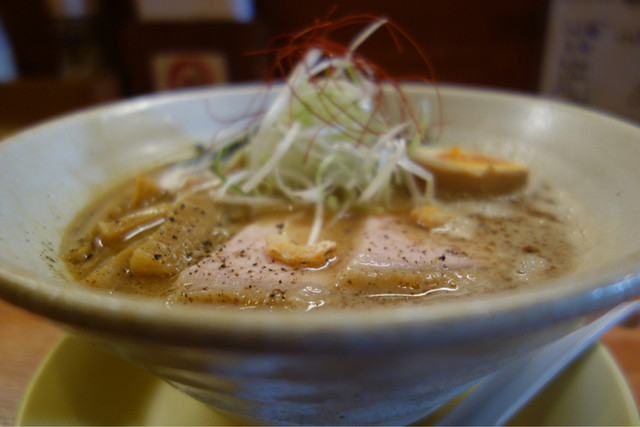
Temma’s ramen culture announces itself at street level: shopfronts close to the pavement, quick turns at counters, and the small theatre of diners deciding between ramen and tsukemen before the queue moves. In that setting, Men Genso reads as an Osaka answer to occasion dining without the usual trappings of occasion dining. The point is not linen, wine service, or a long tasting sequence. It is the focused pleasure of choosing one bowl, sitting close to the kitchen rhythm, and making a modest meal feel deliberate.
That matters in Osaka, where celebration does not always mean a high spend. The city’s food vocabulary has long made room for the quick, communal, and deeply specific: takoyaki, kushikatsu, butaman, udon, ramen, and late-night counter meals that can carry as much emotional weight as a reservation dinner. Men Genso sits in that category. Its selection for Tabelog Ramen OSAKA 100 in 2025 puts it inside a competitive ramen field, but its price band keeps the experience closer to a neighbourhood ritual than a trophy meal.
Temma ramen for small milestones, not long ceremonies
Ramen is often treated as convenience food by travellers and as a ranking sport by obsessives. Osaka complicates both readings. Around Temma and Tenjinbashi, the format works as a social equaliser: office workers, solo diners, families, and friends can share the same narrow room without changing the grammar of the meal. Men Genso’s listed categories, ramen and tsukemen, place it in the part of the scene where broth, noodle texture, and pacing carry the experience more than service theatre.
For a birthday lunch between errands, a first meal after arriving in Osaka, or a low-key anniversary that rejects formality, this kind of room has a clear advantage. The occasion stays intimate because the format is compressed. Eighteen seats, including counter seating and two four-seat tables, create a scale where a meal can feel intentional without becoming a production. That is different from Osaka’s higher-spend dinner rooms, where the event is often built around duration, course structure, and alcohol pairing.
The comparison is useful. Gochiso nene plays in a tempura category with a higher-ticket expectation; Sushidokoro Kaihara belongs to sushi’s more deliberate pacing; CHIKICHIKI Tenma ten and Kuro Hitsuji Youniku Kushiten BLACK SHEEP suggest the city’s broader appetite for grilled, shared, or evening-led formats. The restaurant is not competing for the same kind of night. It is stronger as a short-form meal with enough recognition to justify a detour within the neighbourhood, especially for diners who see ramen as a craft category rather than a filler stop.
Recognition gives the bowl context, while the room keeps it casual
Tabelog’s Hyakumeiten lists are useful because they separate durable local interest from transient hype. The restaurant has been selected across multiple ramen lists from 2020 through 2025, including the OSAKA 100 list in 2023, 2024, and 2025. That continuity is the trust signal here. It says less about spectacle than consistency inside a category where regular diners are unforgiving and small differences in noodle, soup, and temperature decide reputation.
The practical character of the room also shapes the right expectation. This is not a chef-biography restaurant, and the appeal does not depend on a named culinary persona. The useful reading is civic: Osaka supports places where an accessible price, a compact room, and a specialist format can carry status. In cities where premium dining is increasingly attached to scarcity and ceremony, ramen remains one of Japan’s sharpest reminders that seriousness does not require a high bill.
For travellers planning a food-led day, the restaurant fits neatly into a wider Osaka route rather than anchoring the whole day. Pairing it with coffee, bakeries, street snacks, or a later bar gives the meal the right frame. Nearby or citywide planning can pull in .cafe, 52CHO-ME BAKERY, 551 Horai (551蓬莱), 99 Pizza Napoletana Gourmet, and a canto (Italian). For a broader edit, use Our full Osaka restaurants guide, then cross-reference Our full Osaka hotels guide, Our full Osaka bars guide, Our full Osaka wineries guide, and Our full Osaka experiences guide.
Where it sits in a Japan-wide casual dining map
The restaurant also belongs to a wider Japanese pattern that rewards narrow formats done with discipline. The country’s casual dining strength is not only ramen; it extends from curry counters and onigiri shops to izakaya-adjacent seafood rooms and sake bars abroad interpreting Japanese drinking culture. That context helps explain why a low-ticket ramen shop can matter to a premium travel reader. The value is not luxury signalling. It is calibration: knowing when a small, specialist meal deserves attention.
Travellers building that calibration across Japan and beyond might compare the role of a focused ramen stop with -Grilled beef Sukiyaki- KAMAKURA TANUKIAN 鎌倉 たぬき庵 in Kamakura. 鮪と炭火焼き うお炭 秋葉原店 in Tokyo.know in Kumamoto, (Shoku) Vietnam in Kawasaki, [Curry Senmon Ten] Maruyama Kyoju. in Sapporo, [ki:] in Kyoto, Jōdo Saké Bar in Los Angeles, and Onigiri Time in Pasadena. The through-line is not cuisine type. It is the discipline of a limited format, where the decision is quick and the margin for error is small.
The editorial verdict is simple: choose the restaurant when the occasion calls for precision rather than ceremony. It suits solo dining, a casual celebration, or a small group that values ramen as a specialist craft. Diners seeking private rooms, a drawn-out evening, or a reservation-led milestone should choose another format. Diners who want Osaka’s everyday food culture with credible ramen recognition will understand the appeal within minutes of sitting down.
Where the Accolades Land
Comparable venues for context, by category and price tier.
| Venue | Cuisine | Price | Notes |
|---|---|---|---|
| Men GensoThis venue — the venue you are viewing | Ramen & Tsukemen | $ | Not listed |
| Sodaisho | Traditional Shoyu Ramen Shop | $ | Kita |
| umugi Hankyu sanbangai ten | Japanese Udon | $ | Kita |
| yobareya | Japanese Curry | $ | Nishi |
| Angetsu | Traditional Japanese Wagashi (Confectionery) | $ | Chūō |
| Daikoku | Traditional Osaka cafeteria (teishoku & obanzai) | $ | Chūō |
Recognition history
Dated appearances from independent guides and award organizations, with the underlying list record or original source where available.
Tabelog 100 #92 · No. 92
Tabelog · Tabelog 100 - Ramen - OSAKA - 2025
Continue exploring
More in Osaka
Restaurants in Osaka
Browse all →




Bars in Osaka
Browse all →

Hotels in Osaka
Browse all →



Wineries in Osaka
Browse all →
At a Glance
- Casual
- Cozy
- Solo
- Casual Hangout
- Late Night
- Standalone
- Beer Program
Current opening hours
- Monday
- 11 AM–11 PM
- Tuesday
- 11 AM–11 PM
- Wednesday
- 11 AM–11 PM
- Thursday
- 11 AM–11 PM
- Friday
- 11 AM–11 PM
- Saturday
- 11 AM–11 PM
- Sunday
- 11 AM–11 PM
Hours can change for holidays and private events. Last verified .
Simple, small-scale ramen-shop atmosphere focused on quick, casual noodle dining.