
A compact Umeda udon stop inside Hankyu Sanbangai’s basement dining zone, umugi Hankyu sanbangai ten sits in Osaka’s everyday-noodle tier rather than the ceremony of destination kaiseki. Its 2024 Tabelog 100 Udon WEST selection gives it a clear reputation signal for travellers comparing casual station dining with more specialist noodle counters.
Pearl is the En Primeur Club membership app — saves, bookings, and concierge access live there. Same editors, same standards.
- Address
- 大阪府大阪市北区芝田1-1-3 阪急三番街 B2F
- Phone
- +81663721813
- Website
- tabelog.com
 Saves & bookings on Pearl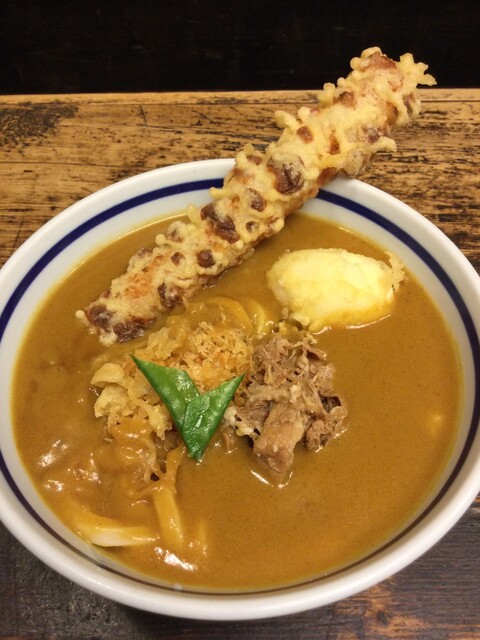
Under Umeda, the dining floor moves like a transit city: escalators feeding office workers, shopping bags brushing past counter seats, steam rising from bowls built for speed over ceremony. This is the practical Osaka station meal, but not anonymous. The noodle shops in these basement corridors compress local habit into a short sitting: wheat, broth, heat, and enough turnover to keep the room moving.
umugi Hankyu sanbangai ten fits that category. Its address in Hankyu Sanbangai, the underground commercial complex tied to Osaka Umeda Station, matters. Umeda’s food culture is not only late-night alleys and chef-led counters; it is railway-adjacent dining that must satisfy regulars who know convenience from compromise. Here, a Tabelog 100 Udon WEST 2024 selection is a meaningful filter, placing a station-basement udon shop in a regional conversation usually crowded with specialist rooms, old neighbourhood names, and destination noodle addresses.
Umeda udon judged against a serious regional list
Japan’s udon culture shifts quickly by region: Sanuki firmness, Kansai broth restraint, curry udon comfort, and local variations in flour, thickness, and serving temperature all carry expectations. Osaka’s role is pragmatic rather than doctrinaire. The city rewards food that reads instantly at the counter, then stands direct judgment: noodle texture, broth clarity, portion logic, and an honest price-to-satisfaction ratio.
The 2024 Tabelog 100 Udon WEST recognition is the key trust signal. Tabelog’s Hyakumeiten lists are not Michelin-style luxury endorsements; they are category lists that often capture high-performing everyday specialists. That suits udon. A bowl needs no tasting-menu frame to be critically legible. Selection alongside other western Japan udon names shows the shop is being assessed as a specialist noodle address, not just a useful station meal.
That reputation also reframes the room. Counter seating and a compact footprint suggest a quick, focused meal rather than a long social dinner. The listed categories, udon, curry udon, and Japanese cuisine, define the format: a wheat-noodle house with breadth for plain-broth traditionalists and curry-udon loyalists. The stated emphasis on house-made noodles and carefully prepared dashi gives the kitchen the two Kansai udon tests that matter: chew and broth balance. In this genre, those are not decorative claims; they are the argument.
Why the basement setting helps rather than hurts
Luxury travellers often underrate station dining in Japan because it looks too efficient to be serious. Osaka punishes that assumption. Department-store food halls, railway arcades, and underground restaurant streets are culinary infrastructure, not fallbacks when better plans fail. Hankyu Sanbangai fits that pattern: dense, convenient, and competitive enough that weak venues have little cover.
Umeda comparisons sharpen the point. CAFE BAHNHOF Sanbangai ten sits in the same broad station-commerce ecosystem at a lower everyday café spend. Kyoto Menya Takei Hankyuu umeda ten occupies a noodle-adjacent lane with a similar casual-budget profile. Okonomiyaki Kiji Honten represents another Osaka staple in the same accessible price band, while Tachinomiya Shiraishi shifts toward standing-drink informality at a higher evening spend. Against them, udon here is the cleaner, faster read: bowl craft rather than grill theatre, café pause, or drinking rhythm.
The setting suits how udon is consumed in Osaka. A 27-seat room rewards solo diners and small groups; counter seating matches noodle pace; a non-smoking policy keeps broth and wheat from being muddied by the room. Family-friendly positioning broadens the use case, though stroller restrictions make the space better for mobile children than bulky gear. None of this makes it an occasion restaurant. It makes a case for an intelligent stop in a high-traffic district where many visitors default to whatever is closest.
How to place it in an Osaka food itinerary
Osaka dining has a split personality. One side is celebratory: okonomiyaki, yakiniku, late drinks, and queues that become part of the night. The other is infrastructural: bakeries, cafés, counters, standing bars, and noodle shops that make the city usable between trains, hotel check-ins, and shopping routes. This udon shop belongs to the second side. It does not ask for an evening; it solves a precise dining problem with more credibility than a random station meal.
For planning, use it as a Umeda anchor rather than a citywide detour. Pair the district with Osaka’s casual daytime circuit, then save higher-commitment dining for another neighbourhood. EP Club’s city coverage gives context across categories: start with Our full Osaka restaurants guide, then cross-check sleep logistics through Our full Osaka hotels guide, drinking plans through Our full Osaka bars guide, regional wine context through Our full Osaka wineries guide, and cultural pacing through Our full Osaka experiences guide.
Nearby casual references define the city’s range..cafe, 52CHO-ME BAKERY, 551 Horai (551蓬莱), 99 Pizza Napoletana Gourmet, and a canto (Italian) show Osaka shifting from bakery and takeaway culture to imported formats and more composed dining. For Japan-wide contrasts, compare the casual-specialist logic with -Grilled beef Sukiyaki- KAMAKURA TANUKIAN 鎌倉 たぬき庵 in Kamakura. 鮪と炭火焼き うお炭 秋葉原店 in Tokyo.know in Kumamoto, (Shoku) Vietnam in Kawasaki, [Curry Senmon Ten] Maruyama Kyoju. in Sapporo, and [ki:] in Kyoto. The broader Japanese casual-food diaspora appears in Jōdo Saké Bar in Los Angeles and Onigiri Time in Pasadena, where format, speed, and specificity travel differently outside Japan.
The editorial read is simple: this is not the place for a grand Osaka dinner. It is the place to understand how a station complex can hold a category-recognised udon counter without making a performance of it. In a city where casual food is civic identity, that is a stronger reason to go than novelty.
A Pricing-First Comparison
Nearby venues at a similar price tier for orientation.
| Venue | Cuisine | Price | Notes |
|---|---|---|---|
| umugi Hankyu sanbangai tenThis venue — the venue you are viewing | Kita, Japanese Udon | $ | Not listed |
| Rika Shokudo Tenma honten | Kita, Japanese Curry House | $ | Not listed |
| Chuka Soba Kazura | Not listed | $ | Nishi, Modern chicken shoyu ramen counter |
| Toki Ya | Yodogawa, Tsukemen ramen shop | $ | Not listed |
| Yotsubashi Cafe | Not listed | $ | Nishi, Japanese yoshoku-style cafe specializing in hamburg steak |
| Chuka Soba Kokokara Sakie | Not listed | $ | Yodogawa, Ramen / Chuka Soba Shop |
Recognition history
Dated appearances from independent guides and award organizations, with the underlying list record or original source where available.
Tabelog 100 #98 · No. 98
Tabelog · Tabelog 100 - Udon - WEST - 2024
Continue exploring
More in Osaka
Restaurants in Osaka
Browse all →




Bars in Osaka
Browse all →




Hotels in Osaka
Browse all →



Wineries in Osaka
Browse all →
At a Glance
- Cozy
- Classic
- Well Known
- Solo
- Family
- Casual Hangout
- Group Dining
- Standalone
- Sake Program
A compact, popular basement-level udon shop with a casual, bustling, no-frills atmosphere and counter seating.