Memories of India Kensington
On Gloucester Road in South Kensington, Memories of India occupies a neighbourhood where international residents and museum-circuit visitors intersect. The restaurant draws on subcontinental cooking traditions that London has absorbed and refined over decades, placing it within a dining district known for practical quality rather than destination theatre. It reads as a dependable address in a part of the city that rewards those who know where to look.
Pearl is the En Primeur Club membership app — saves, bookings, and concierge access live there. Same editors, same standards.
- Address
- 18 Gloucester Rd, South Kensington, London SW7 4RB, United Kingdom
- Phone
- +442075896450
- Website
- memoriesofindia.com
- Directions
- Get directions
 Saves & bookings on Pearl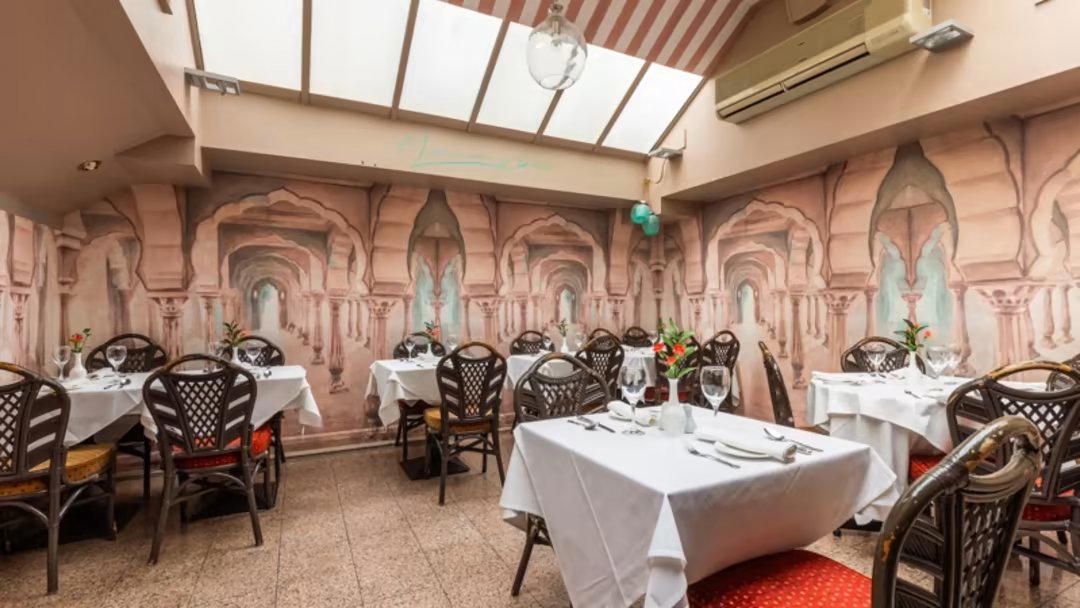
South Kensington and the Indian Restaurant Tradition in London
London's relationship with Indian cooking is longer and more structurally embedded than that of almost any other European capital. The first Indian restaurants opened in the East End in the early twentieth century, and by the postwar decades the cuisine had become part of the city's everyday eating culture in a way that French or Italian food never quite managed at the same democratic breadth. Today that tradition has split into distinct tiers. At one end, Michelin-starred addresses like Opheem in Birmingham are reframing subcontinental technique within a fine-dining framework. At the other, the neighbourhood Indian restaurant, reliable, familiar, keyed to a local clientele, remains a persistent feature of how Londoners actually eat across the week.
South Kensington sits at a particular intersection in this story. The SW7 postcode draws a dense international population: French lycée families, museum professionals, diplomatic households, and a rotating cast of long-stay visitors who treat the area as a residential base rather than a tourist zone. Gloucester Road, running south from the Underground station, is the commercial spine of this community, carrying the kind of mid-market restaurants, wine bars, and grocery shops that serve people who cook at home some nights and eat out on others without ceremony. Memories of India Kensington at number 18 is part of that fabric.
What the Neighbourhood Context Tells You About the Format
Understanding what Memories of India is requires understanding what South Kensington's restaurant culture rewards. This is not a neighbourhood that gravitates toward theatrical tasting menus or destination-dining credentials. The area's French population in particular brings expectations shaped by bistro culture: competent cooking, reasonable value, and a room where you can hear the person across the table. Indian restaurants that survive in this postcode tend to do so on consistency and on the trust of returning local customers rather than on review-cycle buzz.
That pattern distinguishes South Kensington's Indian dining from the more concentrated scene in Tooting or Southall, where cheaper rents and denser diaspora communities support a wider range of regional specificity and price points. It also distinguishes it from the prestige tier in Mayfair, where addresses like Benares have historically competed on wine lists and chef credentials alongside the food itself. The Gloucester Road address places Memories of India in a middle band: a restaurant for people who live nearby and want subcontinental cooking that doesn't require a special occasion to justify.
Indian Cooking's Cultural Roots and What London Reflects
The name "Memories of India" belongs to a naming tradition that has run through British-Indian restaurant culture for decades, evoking the subcontinent through nostalgia and emotional distance rather than regional specificity. That framing reflects something real about how Indian food arrived in Britain: carried by communities with roots in particular regions, but gradually standardised into a shared idiom that could serve a broader public. The balti, the tikka masala, the karahi, these dishes emerged or were refined in Britain, becoming what food historians call a British-Indian canon distinct from the cooking of any single Indian state.
More recently, the conversation has shifted. Restaurants and critics have pushed for greater regional granularity: Keralan seafood preparations, Chettinad spice profiles, Gujarati vegetarian traditions, Lucknawi dum cooking. London now has addresses across the quality spectrum that identify with a specific regional identity rather than a generalised subcontinental vocabulary. That shift sits as context for any Indian restaurant operating today, shaping what customers increasingly expect to find on a menu and how they read a restaurant's ambitions.
For a neighbourhood address on Gloucester Road, the relevant comparable set is not the destination tier represented by Opheem or the Michelin-decorated Modern British rooms in London like CORE by Clare Smyth, The Ledbury, or Dinner by Heston Blumenthal. Those rooms, alongside Restaurant Gordon Ramsay and Sketch, The Lecture Room and Library, compete in a different economy of prestige and price. Memories of India competes on proximity, familiarity, and the specific trust a local resident places in a restaurant they can walk to.
South Kensington as a Dining District
The broader London dining scene radiates outward from a few high-density clusters: the West End, Marylebone, Notting Hill and its southward extension into South Kensington. Within that southern band, the museum mile along Cromwell Road and Exhibition Road attracts tourist trade, while Gloucester Road itself functions more as a residential high street. Restaurants here compete less on footfall and more on the repeat visit, a customer who comes three times a year is more valuable than one who arrives once after a Google search.
That dynamic shapes what a well-run Indian restaurant on this street needs to be: warm in atmosphere, consistent in the kitchen, and priced to allow regulars to visit without it feeling like a commitment. The same logic applies to other neighbourhood restaurant formats across the city, from the gastropubs of Chiswick to the trattorias of Clerkenwell. South Kensington simply applies it to a cuisine that London has made its own over several generations.
Beyond London, the UK's broader restaurant culture is well represented by addresses including Waterside Inn in Bray, Le Manoir aux Quat'Saisons in Oxford, L'Enclume in Cartmel, Moor Hall in Aughton, Gidleigh Park in Chagford, Hand and Flowers in Marlow, hide and fox in Saltwood, Midsummer House in Cambridge, and Restaurant Andrew Fairlie in Auchterarder. For international comparison on what destination-tier cooking looks like at the highest level, Le Bernardin in New York City and Atomix in New York City offer useful reference points.
Where It Fits
Comparable venues nearby, for context on price, style, and recognition.
| Venue | Cuisine | Price | Notes |
|---|---|---|---|
| Memories of India KensingtonThis venue — the venue you are viewing | Traditional Indian Curry House | $$ | Not listed |
| Khans | Traditional Punjabi & South Indian Curry House | $$ | Battersea |
| Sagar | South Indian Vegetarian | $$ | Hammersmith Broadway |
| Potli | Indian Market Kitchen | $$ | Hammersmith Broadway |
| Swagat | Traditional Indian Curry House | $$ | Richmond |
| Grand Cholan | Authentic South Indian Tamil Cuisine | $$ | Cubitt Town |
Continue exploring
More in London
Restaurants in London
Browse all →
Bars in London
Browse all →
Hotels in London
Browse all →


At a Glance
- Classic
- Cozy
- Family
- Group Dining
- Casual Hangout
- Special Occasion
- Standalone
Current opening hours
- Monday
- 12–11 PM
- Tuesday
- 12–11 PM
- Wednesday
- 12–11 PM
- Thursday
- 12–11 PM
- Friday
- 2:30–11 PM
- Saturday
- 12–11 PM
- Sunday
- 12–10:30 PM
Hours can change for holidays and private events. Last verified .
Informal and relaxed with a charming, airy conservatory dining room at the back; welcoming and friendly atmosphere.