Meierei Dirk Luther




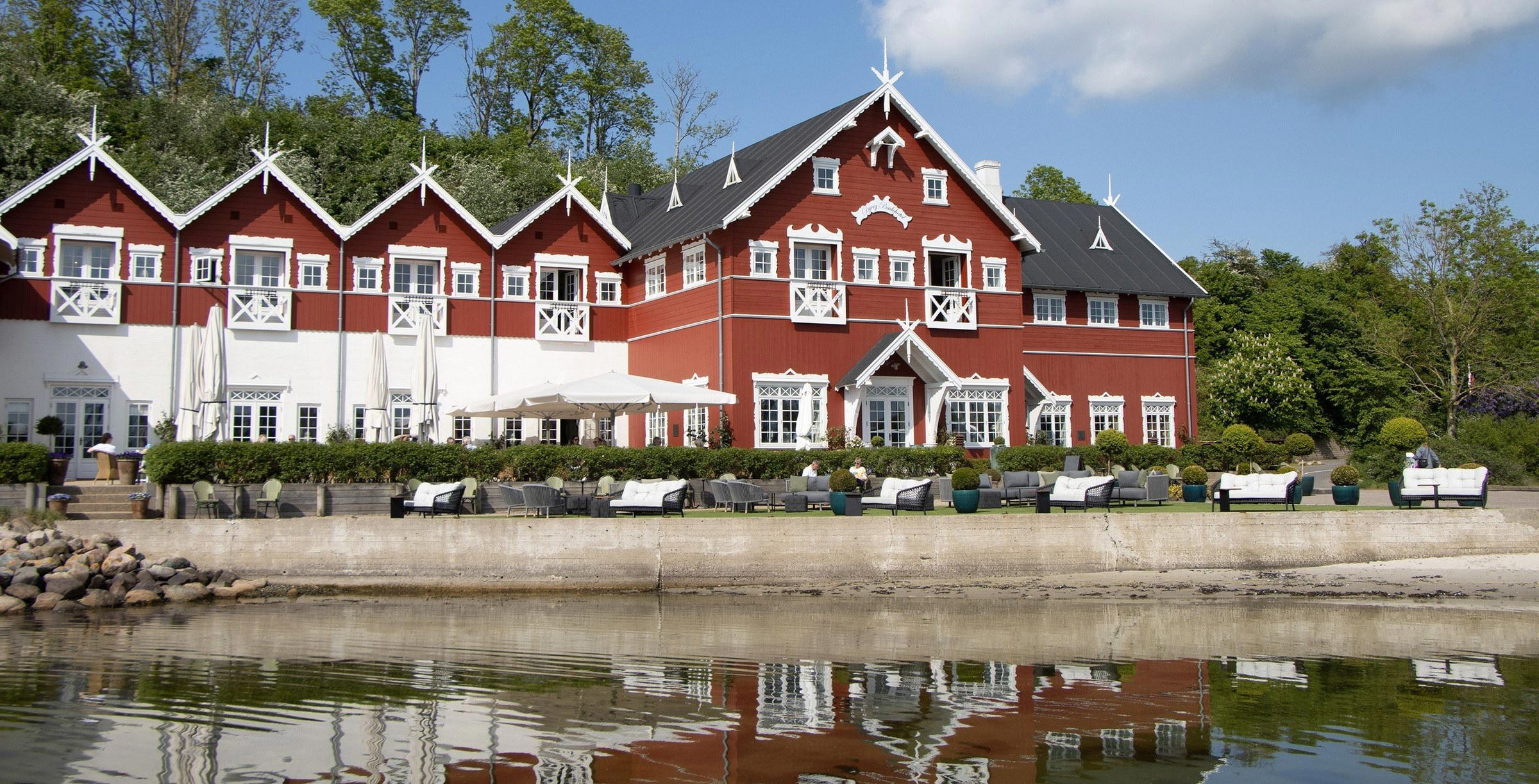
Meierei Dirk Luther holds two Michelin stars and a La Liste score of 92 points (2026) in the Baltic coastal town of Glücksburg, a signal that serious classic cuisine has planted itself well outside Germany's metropolitan dining centres.
Pearl is the En Primeur Club membership app — saves, bookings, and concierge access live there. Same editors, same standards.
- Address
- Uferstraße 1, 24960 Glücksburg (Ostsee), Germany
- Phone
- +49 4631 6199433
- Website
- alter-meierhof.de
- Directions
- Get directions
 Saves & bookings on Pearl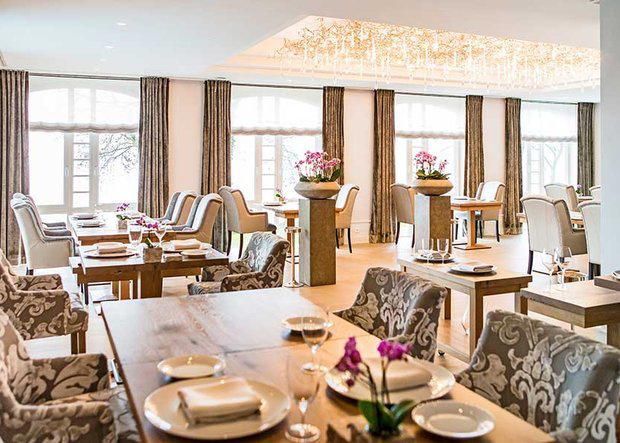
Where the Flensburg Fjord Shapes the Plate
The road into Glücksburg follows the western edge of the Flensburg Fjord, where the water sits flat and grey-green against a shoreline of beech and reed. Fine dining in coastal Schleswig-Holstein occupies a different register from the Michelin corridors of Munich or Hamburg: the distances between awarded restaurants are wider, the visitor traffic thinner, and the relationship between kitchen and immediate landscape far more direct. It is precisely this geography that gives Meierei Dirk Luther, at Uferstraße 1, its particular logic. Positioned on the fjord's edge in a town of roughly 6,000 residents, it represents a deliberate bet that provenance-driven classic cuisine can anchor an audience willing to travel north.
Two Stars in a Small Town: What the Awards Actually Signal
Germany's two-star tier is competitive and geographically diverse. It includes destinations such as Schwarzwaldstube in Baiersbronn, Aqua in Wolfsburg, and Vendôme in Bergisch Gladbach, kitchens operating far from city-centre footfall, each sustaining recognition through consistency rather than convenience. Meierei Dirk Luther has held two Michelin stars through both 2024 and 2025, a retention that indicates high-level, reliable execution rather than a single strong year. La Liste's independent scoring system places it at 90 points in 2025, rising to 92 points in its 2026 ranking, a trajectory that suggests the kitchen is not standing still. The Opinionated About Dining classical Europe list ranks it at number 384 in 2025, a position that contextualises it within a recognisably classical European tradition rather than the creative-disruptive current running through kitchens like CODA Dessert Dining in Berlin.
8 from 91 reviews is a small but meaningful data point at this price tier. The sample size is modest, as one would expect from a restaurant serving limited covers in a town of this scale, but the consistency of the score across guests spending at the €€€€ bracket points to service and kitchen standards that translate clearly to the room.
The Source Logic of Northern German Classic Cuisine
At a restaurant like Meierei Dirk Luther, the focus is where the food comes from. Classic cuisine in the northern German tradition draws on a specific larder: cold-water fish from the Baltic and North Sea, game from Schleswig-Holstein's managed forests, dairy from the flatland farms between the fjords, and root vegetables that reflect a short growing season. The Flensburg Fjord itself, navigating the boundary between German and Danish waters, provides access to particularly precisely characterised seafood in the region. Plaice, turbot, and various crustaceans caught in these colder, slower-warming waters carry a density of flavour that warmer-sea equivalents rarely match.
Chef Dirk Luther's kitchen operates within the classical idiom, a designation that in the current European fine dining context carries real meaning. Classical does not mean static. It means a kitchen that builds on the grammar of French and northern European haute cuisine, stocks reduced to clarity, sauces built over time, proteins treated with respect for texture, while allowing local ingredients to anchor each season's menu. The OAD ranking in the classical Europe category, alongside La Liste's assessment, places this kitchen in a comparable set that includes houses like Maison Rostang in Paris and KOMU in Munich, where technique is the primary evidence of intent rather than conceptual provocation.
The proximity to Denmark is not incidental. Schleswig-Holstein's food culture has historically moved between German and Danish influences, and that permeability is visible in kitchens that draw on both the Scandinavian emphasis on preservation and fermentation and the German classical appetite for richness and structure. A kitchen in Glücksburg is geographically closer to Copenhagen than to Frankfurt, and that position in the culinary map has consequences for both what arrives at the back door and what resonates with the guests at the table.
Glücksburg in the Context of Germany's Dispersed Fine Dining Map
Germany's fine dining geography has never concentrated as tightly as France's. The country has awarded restaurants in places as varied as Piesport on the Moselle (Schanz), Dreis in the Eifel (Waldhotel Sonnora), Perl on the Luxembourg border (Victor's Fine Dining by Christian Bau), and Grassau in the Bavarian foothills (ES:SENZ). Glücksburg fits this pattern: a small town with a single fine dining anchor that draws guests from Hamburg (roughly 120 kilometres to the south) and from the Danish side of the border. Restaurant Haerlin in Hamburg represents the nearest comparable metropolitan reference point, but the experience of arriving in Glücksburg is categorically different from arriving at a city-centre grand hotel restaurant. The journey is part of the transaction.
That journey matters particularly for a restaurant whose kitchen relies on local sourcing. A guest who travels from Hamburg through the Schleswig-Holstein countryside passes the same agricultural and coastal landscape that supplies the restaurant's larder. The meal, when it arrives, has a legibility that urban fine dining often lacks: you have seen where this food comes from. That connection is harder to manufacture than technique, and it represents one of the genuine advantages that a kitchen in Glücksburg holds over its metropolitan counterparts.
For nearby comparison dining, Brasserie (International) in Glücksburg offers a different register at a lower commitment level, useful for a longer stay in the area. JAN in Munich represents another classical-leaning kitchen operating outside the top tier, useful for those mapping the broader German classical scene.
Planning a Visit
The restaurant sits at Uferstraße 1, Glücksburg, directly on the fjord waterfront. At the €€€€ price tier, this is a destination meal: the cost of the meal itself, combined with travel from Hamburg or Copenhagen, makes it a considered itinerary decision rather than a spontaneous dinner. Guests driving from Hamburg should allow approximately 90 minutes; those coming from Copenhagen via the Øresund Bridge add an additional crossing. Given the restaurant's size and reputation, advance booking is advisable, particularly for weekend tables and during the summer months when coastal Schleswig-Holstein draws visitors from across northern Germany and southern Scandinavia.
Pricing, Compared
Comparable venues nearby, for context on price, style, and recognition.
| Venue | Cuisine | Price | Awards | Notes |
|---|---|---|---|---|
| Meierei Dirk LutherThis venue — the venue you are viewing | Glücksburg, Classic French Fine Dining | $$$$ | Michelin 2 Star | Not listed |
| Brasserie | Not listed | $$$$ | Michelin Plate | Glücksburg (Ostsee), French Brasserie |
| Felix | Not listed | $$$ | Not listed | Glucksburg, Modern German-European Fine Dining |
| Lorenz Adlon Esszimmer | Not listed | $$$$ | Michelin 2 Star | Mitte, Modern French Fine Dining with Asian Influences |
| Jante | Südstadt, Modern European Fine Dining | $$$$ | Michelin 2 Star | Not listed |
| Coeur D'Artichaut | Not listed | $$$$ | Michelin 2 Star | Old Town (Alter Fischmarkt), Modern French with Breton Influences |
Recognition history
Dated appearances from independent guides and award organizations, with the underlying list record or original source where available.
Falstaff Restaurant - 96 Falstaff Points
Falstaff
La Liste Top Restaurants
La Liste
Michelin 2 Stars
Michelin
La Liste Top Restaurants
La Liste
Michelin 2 Stars
Michelin
Opinionated About Dining Classical in Europe Ranked #384
Opinionated About Dining
Michelin 2 Stars
Michelin
Continue exploring
More in Glücksburg
Restaurants in Glücksburg
Browse all →
At a Glance
- Elegant
- Intimate
- Sophisticated
- Scenic
- Special Occasion
- Date Night
- Waterfront
- Open Kitchen
- Terrace
- Extensive Wine List
- Sommelier Led
- Local Sourcing
- Waterfront
Current opening hours
- Monday
- Closed
- Tuesday
- Closed
- Wednesday
- 6:30–9:30 PM
- Thursday
- 6:30–9:30 PM
- Friday
- 6:30–9:30 PM
- Saturday
- 6:30–9:30 PM
- Sunday
- Closed
Hours can change for holidays and private events. Last verified .
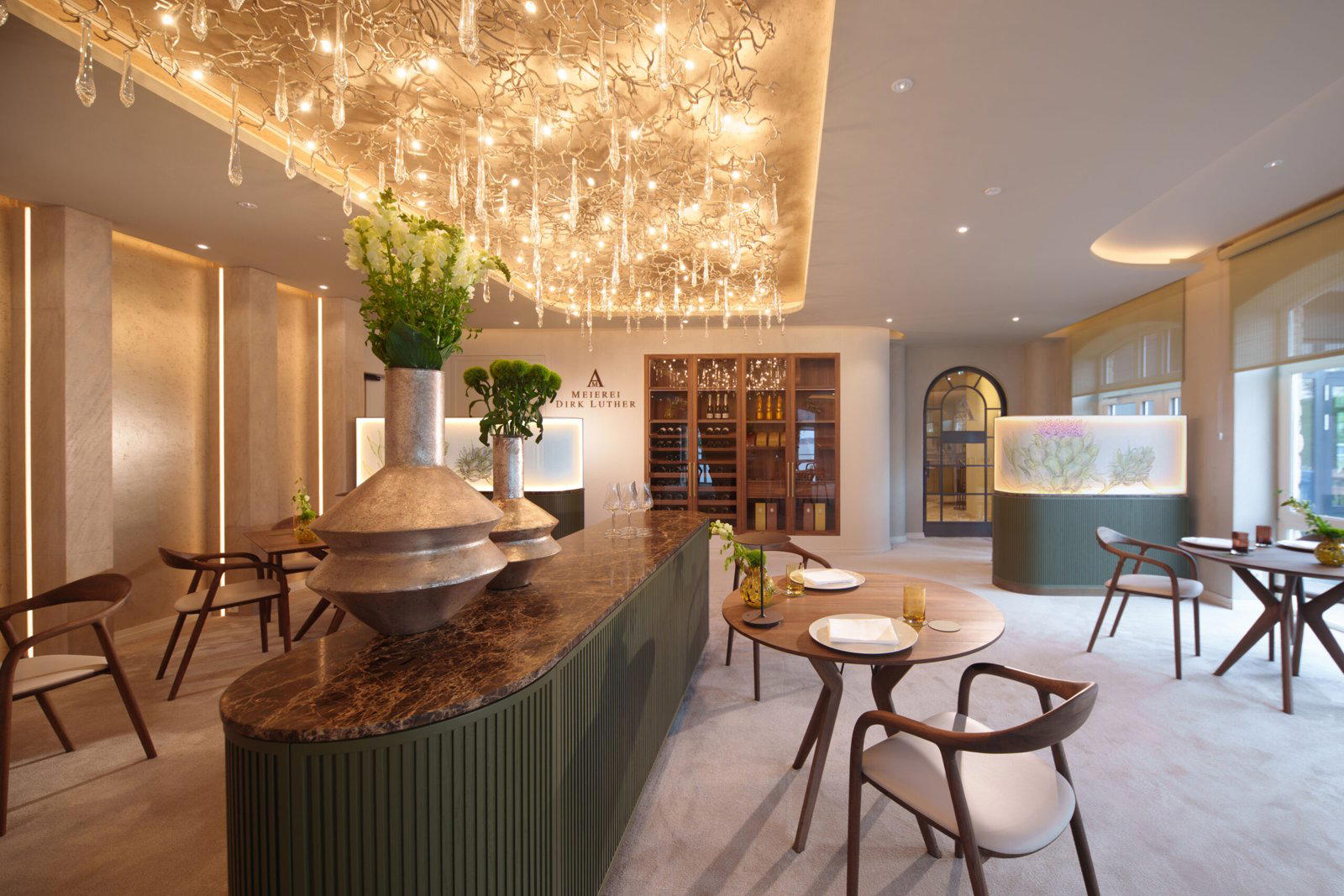
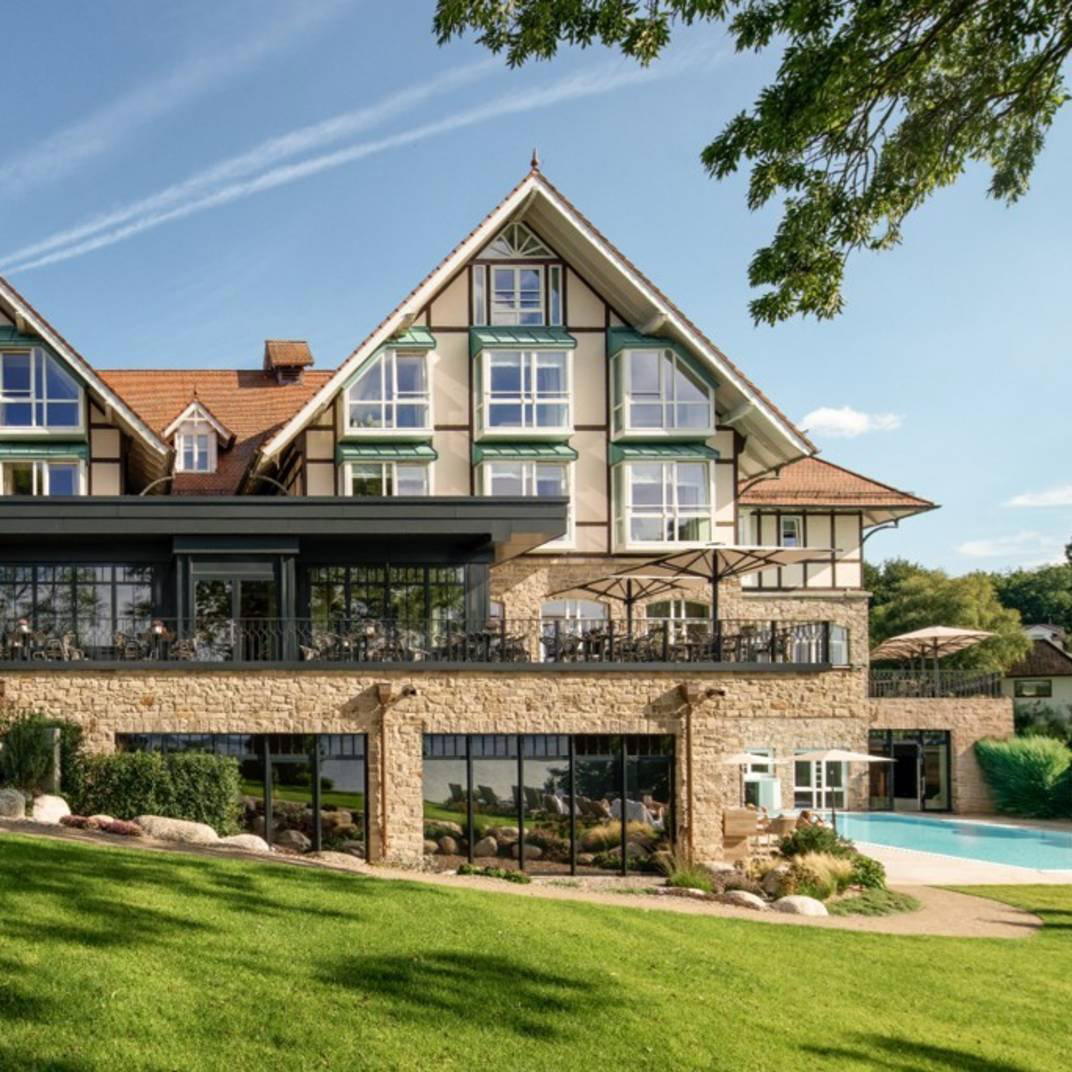
Elegant dining room with floor-to-ceiling windows offering fjord panoramas, natural tones inspired by the Danish coastline, and glimpses into the open kitchen.