Felix
Our verdict
Felix sits within the Strandhotel on the Flensburg Fjord in Glücksburg, one of Germany's quieter corners of the Baltic coast. The restaurant draws from the maritime and agricultural resources of Schleswig-Holstein, placing it within a regional dining tradition that prizes proximity and season over import culture. For northern Germany's fine dining circuit, it occupies an address worth tracking.

Pearl is the En Primeur Club membership app, where members save venues, book tables and use the concierge.
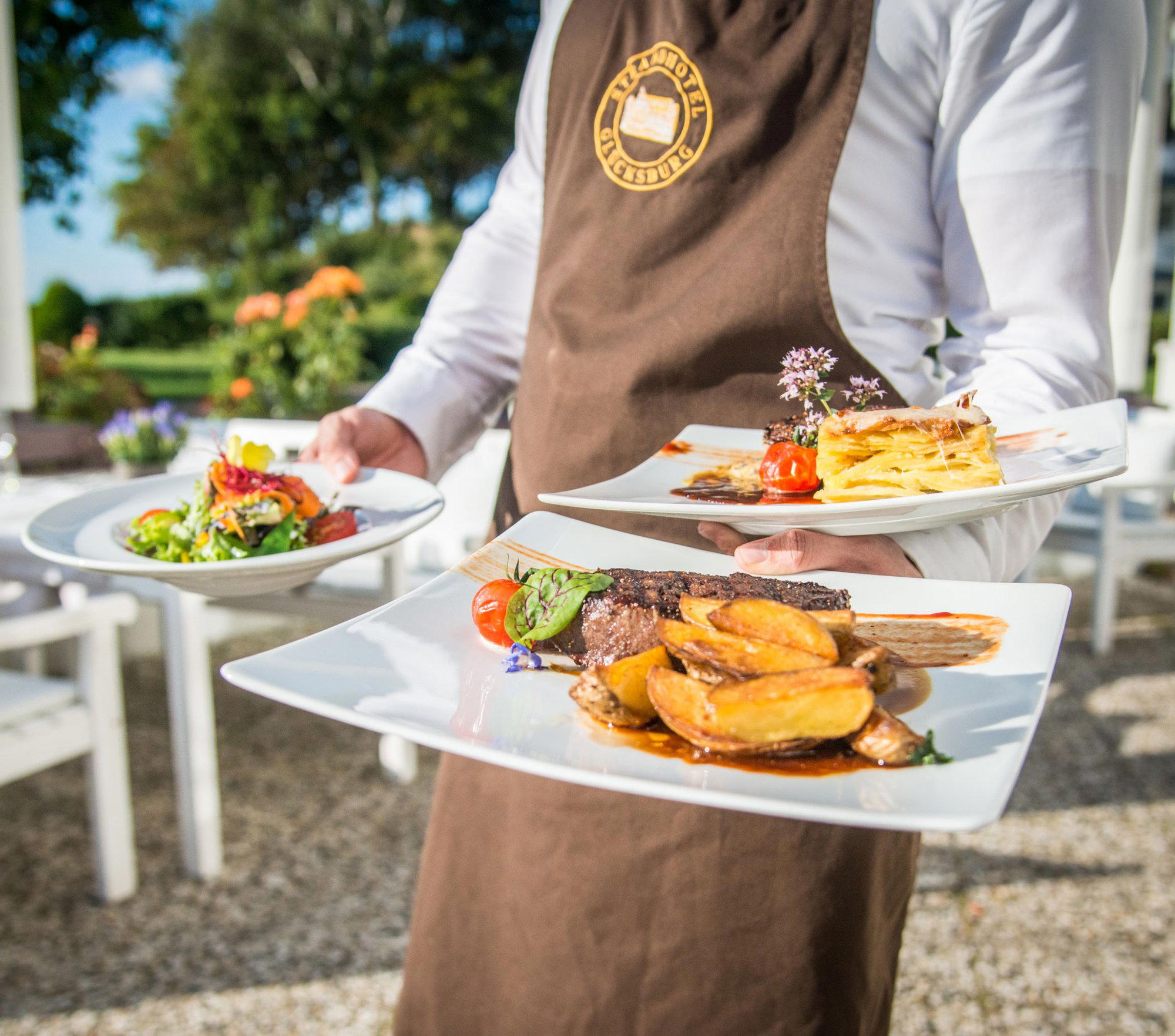
Where the Fjord Shapes What Arrives on the Plate
The Flensburg Fjord has a particular quality in the late afternoon: the light flattens, the water darkens, and Glücksburg's small-town stillness becomes something close to austere. The Strandhotel, which houses Felix, sits at the edge of that water on Kirstenstraße, and the physical setting is not incidental to how the restaurant operates. In coastal Schleswig-Holstein, geography has always functioned as a sourcing brief. The fjord, the farmland immediately inland, and the broader Baltic pantry define what serious kitchens here put on the table, not by default, but by conviction.
Felix belongs to a regional pattern that distinguishes Germany's northern fine dining from its southern and western counterparts. While restaurants like Schwarzwaldstube in Baiersbronn or Vendôme in Bergisch Gladbach operate within classical French frameworks, the kitchens of Schleswig-Holstein and the Baltic coast tend to anchor themselves in local produce hierarchies first and technique second. The proximity to Denmark reinforces this: Nordic influence has seeped south across the border for decades, and the result in this part of Germany is a cuisine that reads less Escoffier and more estuary.
The Sourcing Logic of the Baltic Coast
Ingredient sourcing in Schleswig-Holstein follows a logic that reflects the region's agricultural density. The state is among Germany's most productive for dairy, pork, and root vegetables, while its coastline, from the North Sea in the west to the Baltic in the east, delivers flatfish, shellfish, and cold-water species that have no equivalent further inland. Glücksburg sits at the Baltic end of that axis, with the fjord providing a micro-context: brackish water, cooler temperatures, and a seasonal rhythm that shifts what is available kitchen to kitchen, month to month.
For a restaurant in this position, the supply chain is short by European fine dining standards. That shortness carries both an advantage and a discipline: menus must respond to what is actually available, not what a distant supplier can approximate. Kitchens that commit to this approach tend to develop a forensic familiarity with their producers, knowing when the first asparagus arrives from the flatlands south of Flensburg, when herring runs peak in the fjord, when the autumn root harvest produces the varieties worth featuring. This is the operational reality that frames Felix's address, and it places the restaurant in a different competitive conversation from Aqua in Wolfsburg or JAN in Munich, both of which operate within urban supply networks of much greater reach and complexity.
Glücksburg in the Northern Germany Dining Circuit
Glücksburg is not a dining destination in the conventional sense. The town is renowned for its Renaissance Wasserschloss, the moated palace that sits on a lake a short walk from the Strandhotel, and for its position as a summer address for Danish and German families with access to the fjord. The restaurant infrastructure is sparse, which is precisely why a serious kitchen here carries more weight per square metre than it would in Hamburg or Munich. Restaurant Haerlin in Hamburg operates inside a saturated market where diners have fifteen alternatives at the same tier; Felix operates in a context where the choice is much simpler, and the commitment to being there at all signals something.
That context connects to a broader pattern in German fine dining: the hotel restaurant as regional anchor. Across the country, some of the most credentialed tables sit inside hotel properties in smaller cities and resort towns. Waldhotel Sonnora in Dreis, Schanz in Piesport, and ES:SENZ in Grassau all follow this model, restaurants that draw guests to the property itself, where the kitchen is the reason to stay, not an amenity inside a larger offer. The Strandhotel's relationship with Felix fits that template, even if the formal recognition data available for Felix remains limited at this stage.
Atmosphere and Format
A hotel restaurant on the Flensburg Fjord, in a town of fewer than 6,000 residents, operates under conditions that shape atmosphere more than interior design choices ever could. The dining room at Felix faces a body of water that connects, via the fjord, to the broader Baltic, a fact that becomes physically present in winter, when the light goes early and the water outside the window turns the colour of pewter, and in summer, when the Scandinavian proximity means evenings stretch past ten o'clock with residual light. Neither season is incidental to the meal.
The format, based on the hotel context and regional positioning, falls within the category of hotel fine dining that takes its food more seriously than its room count would suggest. This is not the CODA Dessert Dining model of radical format experimentation, nor the urban creative pressure of Jante in Hanover. It is, instead, the quieter ambition of a kitchen that has chosen a difficult address and works within the constraints and gifts that address provides.
Planning a Visit
Glücksburg is reached most directly from Flensburg, approximately ten kilometres to the south, which connects to Hamburg by rail in under two hours and to Copenhagen in roughly two and a half. The town has no train station of its own; buses run from Flensburg, or the journey is direct by car along the fjord road. The Strandhotel itself is the logical overnight base, the combination of hotel and restaurant simplifies the logistics of an evening that would otherwise require a return journey to Flensburg. For those building a wider northern Germany itinerary, Restaurant Haerlin and Bagatelle in Trier represent the kind of contrasting registers worth pairing across a longer trip. Consult our full Glücksburg restaurants guide for broader context on the town's dining options.
Contact the Strandhotel directly at the Kirstenstraße 6 address for reservations and current menu information.
Felix in the Wider German Fine Dining Conversation
What is confirmed is the address: a hotel kitchen on the Baltic fjord in one of Germany's quieter coastal towns, operating in a regional tradition that takes short-supply-chain sourcing seriously. That combination, in a European fine dining context where provenance has become a primary measure of credibility, is a meaningful starting position. The sourcing brief alone, fjord, farmland, Danish border proximity, puts Felix's kitchen in a conversation that well-resourced urban restaurants often simulate and rarely achieve by default. For readers tracking the geography of serious German cooking beyond the obvious metropolitan circuits, L.A. Jordan in Deidesheim and Lazy Bear in San Francisco offer instructive comparisons in how regional commitment and place-led format can define a kitchen's identity as decisively as any award tier.
Frequently asked questions
Is Felix good for families?
Felix sits within the Strandhotel on the Flensburg Fjord in Glücksburg, a town of fewer than 6,000 residents with a pace that suits unhurried meals. A hotel restaurant in this setting tends to accommodate a wider range of guests than a city-centre tasting counter would. Confirm current family seating arrangements directly with the hotel at Kirstenstraße 6, as the venue does not publish detailed booking policies online.
What is the atmosphere like at Felix?
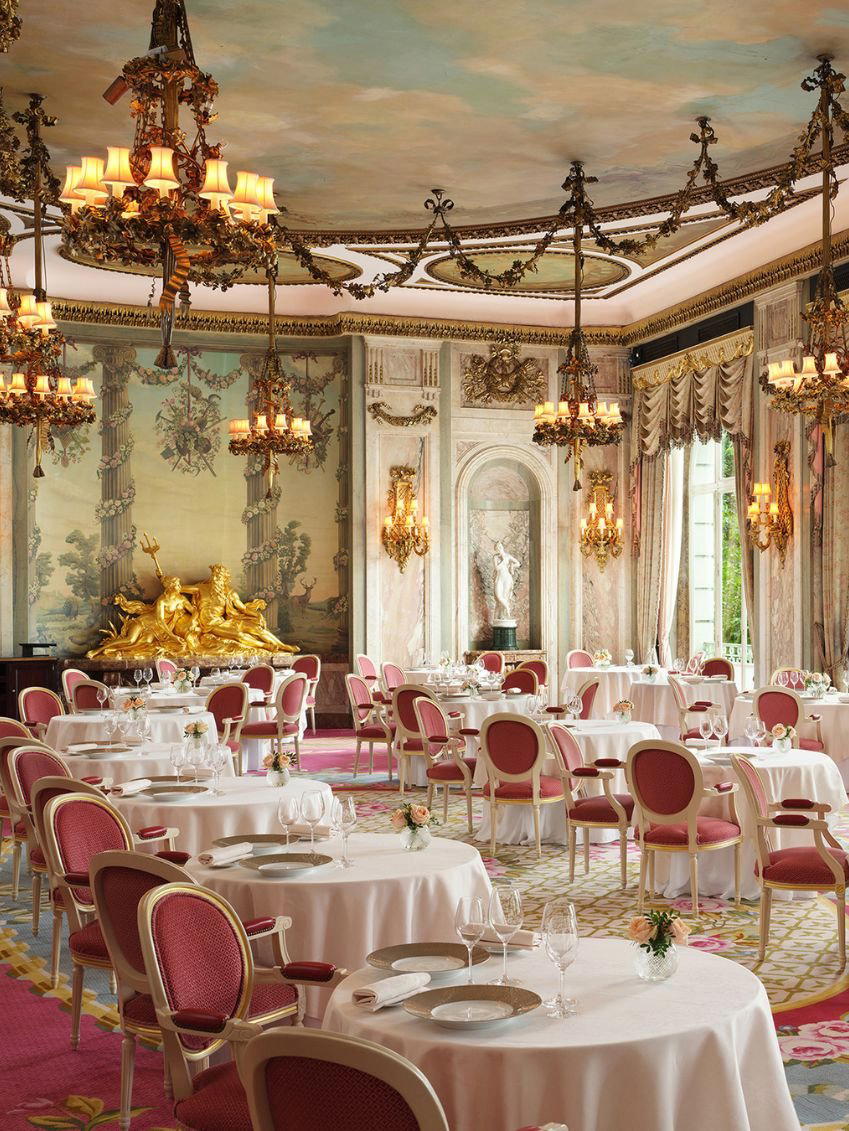
The dining room occupies a hotel positioned directly on the Flensburg Fjord, and in a town this size, under 6,000 residents, the surrounding quiet shapes the room more than any interior decision could. Expect a pace that reflects the Baltic coast: measured and tied to the light and water outside. It is a setting where the geography does most of the atmospheric work.
How does Felix relate to the broader dining scene along the Flensburg Fjord?
Glücksburg sits roughly ten kilometres north of Flensburg, a city with its own growing food culture, and Felix at the Strandhotel is among the few sit-down dining addresses in the town itself. The restaurant occupies a position that owes more to geography than to a concentrated restaurant district, it is the fjord-front option in a town known for its moated Wasserschloss rather than its dining circuit. That context makes Felix a natural stop for visitors based in Glücksburg rather than a destination reached independently from Hamburg or Kiel.
What's the signature dish at Felix?
Given the restaurant's location on the Flensburg Fjord and proximity to Schleswig-Holstein's agricultural output, one of Germany's most productive farming states, the kitchen is well-positioned to work with regional Baltic and land-sourced produce. For current dishes, contact the Strandhotel at Kirstenstraße 6, Glücksburg directly.
Where do I go for Felix?
Felix is located at Strandhotel, Kirstenstraße 6, 24960 Glücksburg (Ostsee), Germany, Glucksburg.
Should I book Felix in advance?
Glücksburg draws visitors primarily through its Renaissance Wasserschloss and Flensburg Fjord access, and the Strandhotel is the town's most prominent accommodation address. During summer and public holiday periods, hotel dining rooms in coastal Schleswig-Holstein fill earlier than their size might suggest. Booking ahead is advisable, particularly for weekend evenings and the warmer months.
What's the signature at Felix?
Felix does not currently publish a fixed signature format, no tasting menu structure or named centrepiece dish is documented in available venue data. What the Strandhotel's position on the Flensburg Fjord does establish is a clear geographic identity: a dining room where the Baltic coast and Schleswig-Holstein's farming hinterland set the sourcing frame. Contact the hotel at Kirstenstraße 6 for current menu direction.
How It Stacks Up
| Venue | Cuisine | Price | Awards | Notes |
|---|---|---|---|---|
| FelixThis venue (the venue you are viewing) | Modern German-European Fine Dining | Not listed | Not listed | Not listed |
| Schwarzwaldstube | Modern French Fine Dining | $150–200 | 3 Michelin Stars · World's 50 Best #47 | French, Classic French |
| Aqua | Contemporary German, Italian/Japanese, Creative | Not listed | Michelin 3 Star | Not listed |
| Vendôme | Modern German Haute Cuisine | $200–300 | 2 Michelin Stars · World's 50 Best #47 | Modern European, Creative |
| CODA Dessert Dining | Dessert-Inspired Fine Dining | $200–300 | 2 Michelin Stars · World's 50 Best #82 | Creative |
| Tantris | Modern French Fine Dining | $300–500 | 2 Michelin Stars · World's 50 Best #73 | Modern French, French Contemporary |
Continue exploring
More in Glücksburg
Restaurants in Glücksburg
All restaurants in Glücksburg →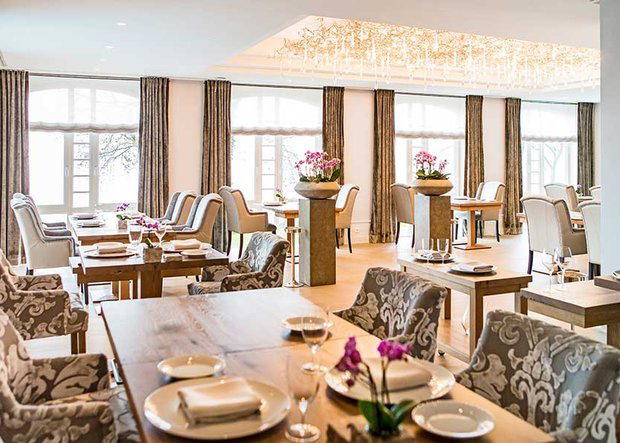
Bars in Glücksburg
Browse all →
Hotels in Glücksburg
All hotels in Glücksburg →
Wineries in Glücksburg
Browse all →
Details
- Cozy
- Elegant
- Scenic
- Date Night
- Special Occasion
- Brunch
- Hotel Restaurant
- Extensive Wine List
- Local Sourcing
- Waterfront
- A La Carte
- Vegetarian Friendly
- Vegan Options
Current opening hours
- Monday
- 7–10:30 AM
- Tuesday
- 7–10:30 AM, 5:30–9 PM
- Wednesday
- 7–10:30 AM, 5:30–9 PM
- Thursday
- 7–10:30 AM, 5:30–9 PM
- Friday
- 7–10:30 AM, 5–9 PM
- Saturday
- 7–11 AM, 2–4 PM, 5:30–9 PM
- Sunday
- 7–11 AM, 12–4 PM, 5:30–9 PM
Hours can change for holidays and private events. Hours as of .
Cozy atmosphere with friendly service, wonderful food, and great ambiance in a hotel setting by the Flensburg Fjord.