Masala Times
On Bleecker Street in Greenwich Village, Masala Times sits within one of New York's most competitive corridors for Indian cooking, where the question is no longer whether a kitchen can produce subcontinental flavors but how deliberately it sequences and contextualizes them. The address alone positions it inside a neighborhood with a long memory for both culinary ambition and quick turnover.
Pearl is the En Primeur Club membership app — saves, bookings, and concierge access live there. Same editors, same standards.
- Address
- 194 Bleecker St, New York, NY 10012
- Phone
- +12129955100
- Directions
- Get directions
 Saves & bookings on Pearl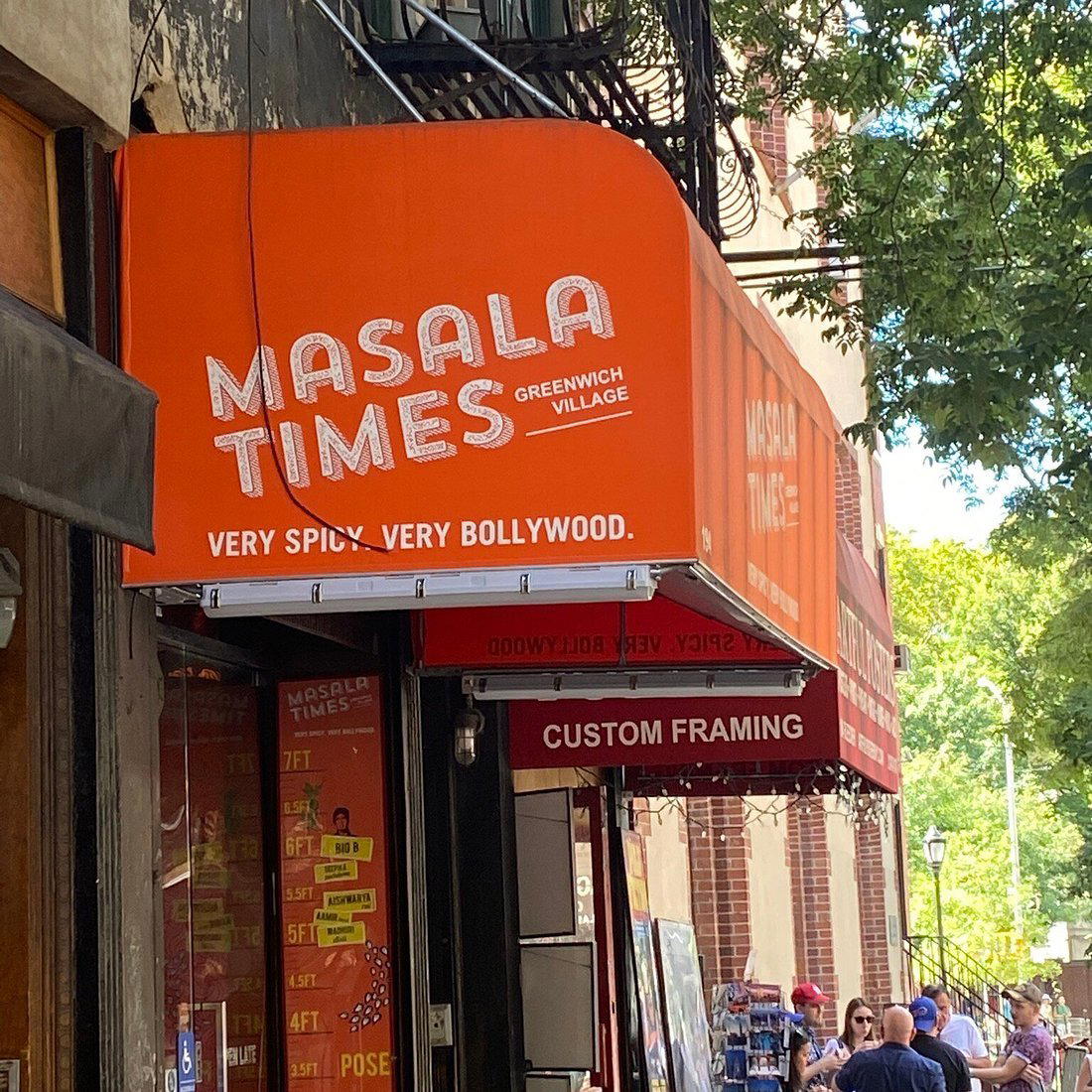
Bleecker Street and the Architecture of Indian Dining in New York
Greenwich Village has never been a neutral backdrop for restaurants. The neighborhood's dining history runs from 1960s bohemian canteens to the wave of serious independent kitchens that took root in the 1990s and early 2000s, when Bleecker Street became a proving ground for operators willing to bet on a food-literate, opinionated local clientele. Indian cooking arrived in New York in force during that same period, though its center of gravity landed elsewhere: Jackson Heights, the East Village's Curry Row, and later the more polished kitchens of Midtown and the Flatiron. Masala Times is an Indian street food restaurant at 194 Bleecker St, New York, NY 10012.
The broader category has shifted considerably. New York's Indian dining scene has split between fast-casual regional specialists, legacy banquet-format restaurants holding on through catering volume, and a smaller tier of kitchens interested in sequencing and composition rather than just coverage. That last group, though thin, is the one that draws comparison to what tasting-format restaurants in other cuisines have normalized at the summit of the market. Venues like Atomix (Modern Korean) and Jungsik New York have demonstrated that non-European cuisines can occupy the city's highest dining tier on their own terms, without apology or dilution. The question for any Indian kitchen with ambition is where it positions itself relative to that shift.
The Meal as Argument: Sequencing and Progression at Masala Times
The editorial angle most useful for understanding Masala Times is not the menu as a list but the meal as a progression. Indian cooking, across its regional traditions, has always contained the logic of sequencing: the movement from lighter, more acidic preparations toward richer, slower-cooked ones; the interplay of cooling dairy against heat-forward spice; the role of bread and rice as structural pivots rather than sides. What distinguishes kitchens that have thought carefully about this from those that simply plate the same dishes regardless of occasion is how that internal logic becomes visible to the diner.
At 194 Bleecker Street, the address in the Village positions the kitchen within walking distance of the kind of diner who has sat at the counter at Le Bernardin and understands what a composed tasting progression feels like from the French seafood tradition, or who has experienced the deliberate pacing of Per Se's service rhythm. That audience brings expectations about arc and intentionality. A meal that moves from a bright, acidic chaat-adjacent opener through textured mid-course preparations and into the long, oil-rich braises of a subcontinental main is not a different experience from a European tasting menu, it is the same structural conversation conducted in a different culinary language.
This framing matters because it repositions Indian cooking away from the default expectation that a table will order six dishes simultaneously and share without sequence. The kitchens generating one critical attention in the category, both in New York and in cities like London and Mumbai, are the ones treating progression as a design decision rather than an afterthought. For context, the same structural seriousness defines what separates Masa's omakase from a standard sushi menu: not the ingredient tier alone, but the deliberate ordering of experience.
Greenwich Village as a Dining Context
The Village's dining character in 2024 is different from what it was even a decade ago. Rents on Bleecker have cycled through several waves of boutique retail and restaurant casualties, and the addresses that survive tend to do so either through volume, neighborhood loyalty, or a combination of quality and differentiation that justifies the economics. Indian cooking at a serious register fits the differentiation model: it offers something that the French bistros, Italian trattorias, and American brasseries of the neighborhood do not.
The Village slot is not the obvious choice for Indian ambition, Midtown's density and the outer boroughs' diaspora communities both provide different kinds of support, but it is a choice that signals a specific audience and a specific price-tolerance assumption.
Placing Masala Times in a Wider American Context
American fine dining has spent the last decade interrogating what seriousness looks like outside French and Japanese traditions. The tasting-menu format has spread to kitchens working in Southern American, Korean, and increasingly South Asian registers. Restaurants like Alinea in Chicago, Lazy Bear in San Francisco, and Single Thread Farm in Healdsburg have each demonstrated in their respective cities that the format can carry almost any culinary tradition when the kitchen has the discipline to use it structurally rather than decoratively. On the East Coast, Blue Hill at Stone Barns has pushed the argument further by making ingredient provenance the organizing principle of the progression itself.
Indian cooking has the raw material for exactly this kind of seriousness: a spice vocabulary of genuine complexity, regional variation that rivals anything in European cuisine, and a long tradition of feast formats, the Bengali bhoj, the South Indian sadhya, the Mughal dastarkhwan, that are in their own terms highly sequenced multi-course experiences. The kitchens that translate that tradition credibly for a New York audience are doing something more interesting than fusion; they are making the structural logic of subcontinental cooking legible to diners trained on European tasting menus. For comparison points outside the United States, 8½ Otto e Mezzo Bombana in Hong Kong and Alain Ducasse at Louis XV in Monte Carlo show how deeply place-rooted culinary traditions can hold international relevance when the kitchen takes the formal structure seriously.
Domestically, Providence in Los Angeles, Emeril's in New Orleans, Addison in San Diego, The Inn at Little Washington, Bacchanalia in Atlanta, and The French Laundry in Napa all belong to the tier of American restaurants that have built reputations on the quality of the meal as a composed sequence rather than a collection of dishes. The Indian kitchen with the confidence to operate at that register, sequencing deliberately, editing the menu rather than expanding it, belongs in the same conversation.
Planning Your Visit
| Venue | Cuisine | Price Tier | Format | Booking Lead Time |
|---|---|---|---|---|
| The restaurant | Indian | Not published | Not confirmed | |
| Atomix | Modern Korean | $$$$ | Tasting menu | Several weeks to months |
| Jungsik New York | Progressive Korean | $$$$ | À la carte / tasting | 1-2 weeks typical |
| Per Se | French Contemporary | $$$$ | Tasting menu | 4-8 weeks |
| Masa | Japanese / Sushi | $$$$ | Omakase | 2-4 weeks |
The restaurant is located at 194 Bleecker Street, Greenwich Village, New York, NY 10012. Price is about $15 per person, and it is walk-in friendly with casual dress.
How It Stacks Up
Comparable venues nearby, for context on price, style, and recognition.
| Venue | Cuisine | Price | Notes |
|---|---|---|---|
| Masala TimesThis venue — the venue you are viewing | Indian Street Food | $ | Not listed |
| Sahib | Authentic Mughlai Indian | $$ | Murray Hill-Kips Bay |
| Curry Heights | Authentic Indian Cuisine | $$ | Brooklyn Heights |
| Jaz Indian Cuisine | Northern Indian | $$ | Hell's Kitchen |
| Spice Symphony | Indian and Indo-Chinese Fusion | $$ | East Midtown-Turtle Bay |
| Kabab King | 24/7 Pakistani & Indian kebab diner | $ | Jackson Heights |
Continue exploring
More in New York City
Restaurants in New York City
Browse all →
Bars in New York City
Browse all →
Hotels in New York City
Browse all →

Wineries in New York City
Browse all →


At a Glance
- Trendy
- Cozy
- Lively
- Late Night
- Casual Hangout
- After Work
Current opening hours
- Monday
- 11 AM–12 AM
- Tuesday
- 11 AM–12 AM
- Wednesday
- 11 AM–12 AM
- Thursday
- 11 AM–12 AM
- Friday
- 11 AM–4 AM
- Saturday
- 11 AM–4 AM
- Sunday
- 11 AM–12 AM
Hours can change for holidays and private events. Last verified .
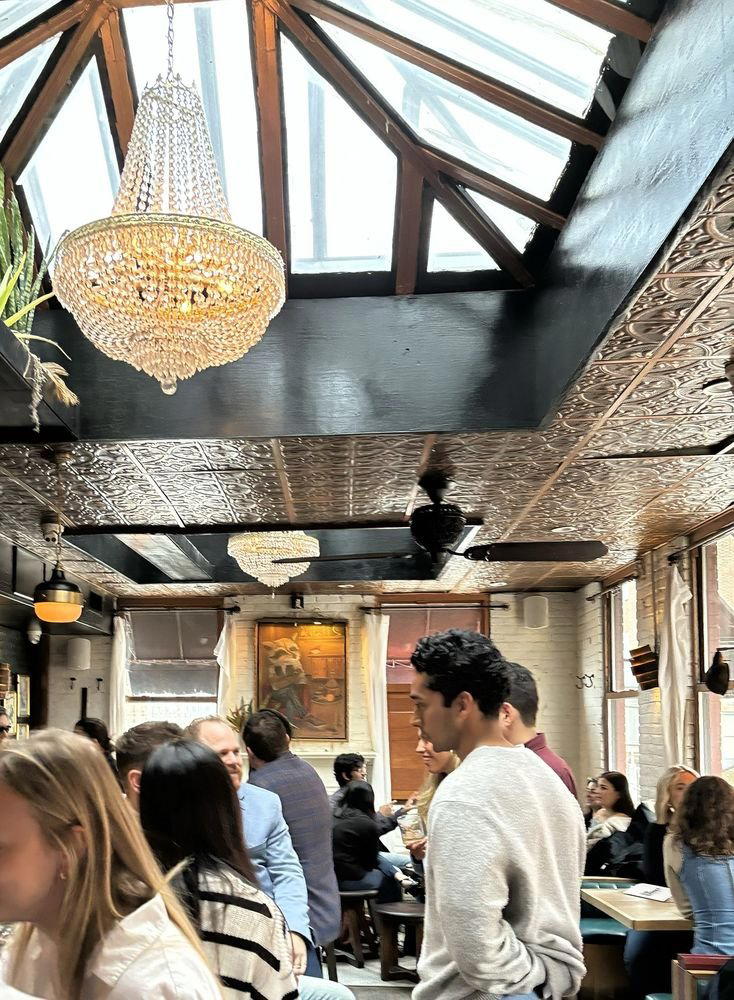
Lively and cozy with pink mirrored walls, Bollywood posters, and a bustling street food atmosphere.