Marijina Konoba
In the small fishing settlement of Prožurska Luka on the island of Mljet, Marijina Konoba represents the kind of Dalmatian dining that remains largely outside the international press circuit: ingredient-driven, unhurried, and rooted in what the surrounding sea and land actually produce. The konoba format positions it within a local tradition that predates modern restaurant culture along the Croatian coast.
Pearl is the En Primeur Club membership app — saves, bookings, and concierge access live there. Same editors, same standards.
- Address
- Prožurska Luka 2, 20224, Prožurska Luka, Croatia
- Phone
- +385 99 887 7951
- Website
- marijinakonoba.com
- Directions
- Get directions
 Saves & bookings on Pearl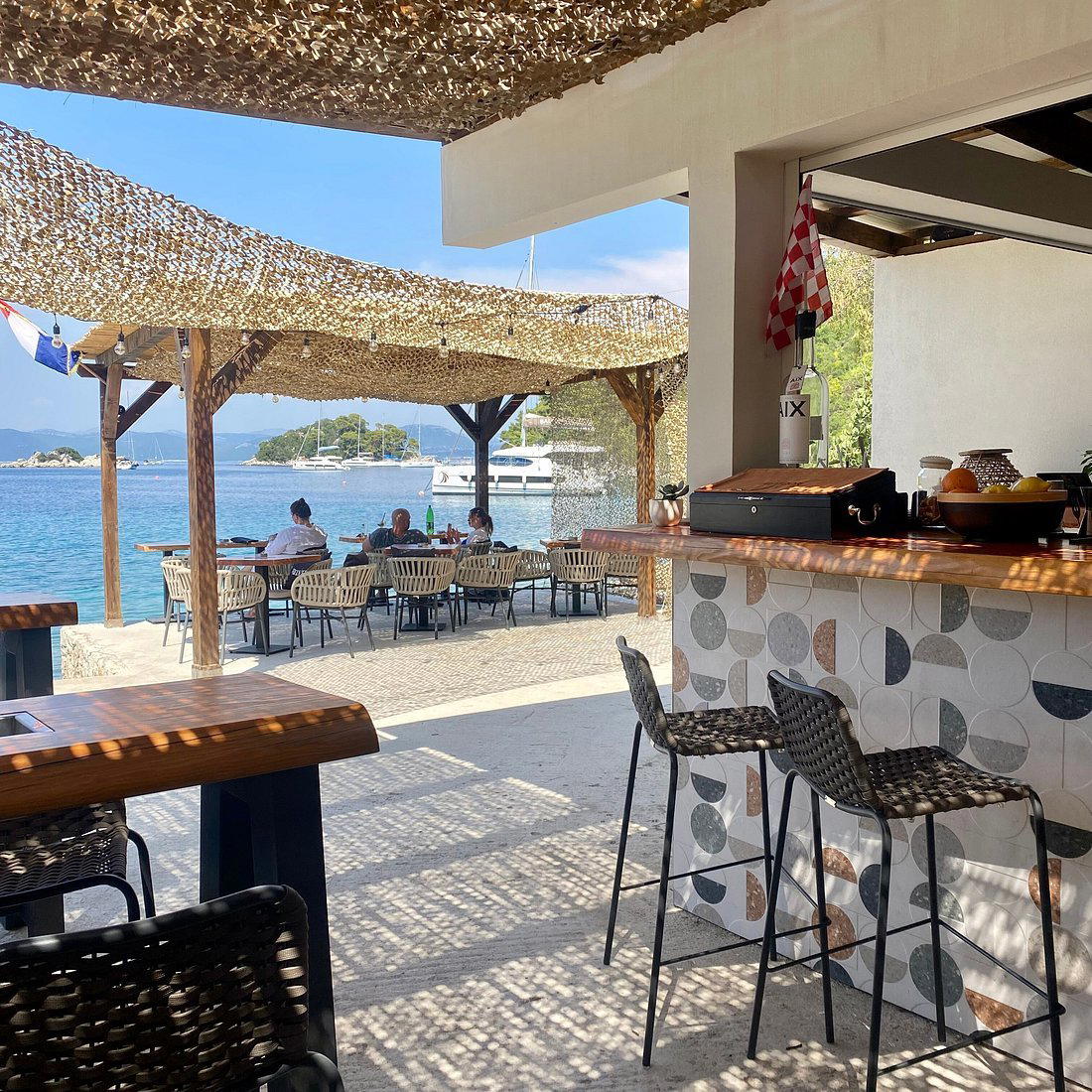
Where the Adriatic Sets the Table
Prožurska Luka sits on the southern coast of Mljet, an island that most Adriatic travelers reach only by deliberate effort. There is no airport, no cruise ship pier, and the ferry crossings from Dubrovnik or the Pelješac peninsula take long enough to filter out the casually curious. By the time you arrive in this small settlement, the pace has already adjusted itself. Marijina Konoba occupies that environment directly, the kind of place where the physical surroundings are not a backdrop but the actual operating condition of the kitchen.
Marijina Konoba is a Croatian Mediterranean seafood restaurant in Prožurska Luka, Croatia. Along the Dalmatian coast, the konoba sits at the base of a dining register that runs from casual family-run taverns up through modern tasting-menu restaurants like Pelegrini in Sibenik or Restaurant 360 in Dubrovnik. The konoba does not compete on that axis. Its claim is proximity: to the fisherman, to the garden, to the olive grove. At its most honest, a konoba functions as a short supply chain made visible on a plate. Marijina Konoba, operating in a village with no significant tourist infrastructure beyond the natural park, sits at a point on that register where sourcing pressure is low and proximity to raw material is high.
Sourcing at the Source
Mljet's geography shapes what is available to any kitchen on the island. The surrounding Adriatic produces the species that define Dalmatian seafood cooking: orada (sea bream), škarpina (scorpionfish), hobotnica (octopus), and whatever the morning catch yields. On an island of this scale, the supply chain is short by necessity rather than by design philosophy. The fish served in a settlement like Prožurska Luka has typically traveled a few kilometers from water to plate, a logistical reality that coastal restaurants in larger centers like Split or Dubrovnik spend considerable effort trying to replicate through sourcing relationships.
This is the structural advantage that small-settlement konobas hold over their urban counterparts, and it is worth stating plainly. When Krug in Split or a Dubrovnik restaurant sources Adriatic fish, there is a supply chain involved, even if a short one. In Prožurska Luka, the supply chain is often a conversation with a neighbor. That compression of distance changes the product in measurable ways: texture holds differently, freshness windows are wider, and the kitchen has less need to compensate with technique. Dalmatian cooking at its base level relies on this compression, which is why the peka (slow-cooking under an iron bell), grilled fish with olive oil and blitva, and octopus salad remain the reference dishes of the tradition. None of them require elaborate intervention when the ingredient is sound.
Croatia's island cooking traditions also draw on a land component that often gets less attention than the seafood. Mljet has cultivated olives for centuries, and the island's olive oil carries a regional character shaped by the combination of limestone soil, coastal salinity, and the island's specific microclimate. Herb-gathering, preserved vegetables, and home-cured meats are part of the broader island pantry that informs konoba cooking at this level. The ingredient sourcing story in a place like Prožurska Luka is not only maritime.
How This Fits the Croatian Coastal Register
Croatia's dining scene has stratified considerably over the past decade. At the high end, restaurants like Agli Amici Rovinj in Istria and Boskinac in Novalja operate with formal tasting menus, curated wine programs, and international recognition. Further along the coast, LD Restaurant in Korčula and Nebo by Deni Srdoč in Rijeka represent the modernizing middle tier. Island konobas like Marijina occupy a different position entirely, one that has more in common with the fishing village tavern traditions of the Greek islands or southern Italy than with anything happening in Zagreb or Dubrovnik's old town.
That positioning matters when setting expectations. The comparison set for the restaurant is not Dubravkin Put in Zagreb or the technically driven programs at Alfred Keller in Mali Lošinj. The meaningful comparison is with other island konobas, and on that axis, location specificity and ingredient directness are the primary measures. Proximity to Mljet National Park, which covers the western third of the island, means that tourism in this part of Mljet is relatively concentrated in the summer months, roughly June through September, which is the window when this type of establishment operates at full capacity.
Travelers comparing options across the Croatian islands might also consider BioMania Bistro Bol on Brač or Bodulo on Pag for a sense of how island dining varies between archipelagoes. Each reflects the specific geography of its island, which is precisely the point. For a broader view of where Dalmatian dining sits relative to the wider Croatian scene, the full Prozurska Luka restaurants guide provides useful orientation.
Planning a Visit
Reaching Prožurska Luka requires commitment to the journey. Regular ferry service from Dubrovnik connects to Sobra on Mljet's eastern side, with the drive or taxi transfer to Prožurska Luka covering the island's length. Alternatively, catamarans from Dubrovnik stop at Polače, closer to the national park entrance and a shorter transfer to the settlement. Neither approach is quick, and the scheduling reality is that a visit to the restaurant works well as part of a stay on the island rather than a day trip, since afternoon ferry departures require careful management against meal timing. Mljet has a small number of accommodation options in and around Prožurska Luka, and booking is recommended, especially in summer.
Booking is recommended, especially in summer. This is worth noting because it shapes the booking logic: travelers staying nearby are better positioned to confirm availability than those planning remotely from a distance.
How It Stacks Up
Comparable venues nearby, for context on price, style, and recognition.
| Venue | Cuisine | Price | Notes |
|---|---|---|---|
| Marijina KonobaThis venue — the venue you are viewing | Croatian Mediterranean Seafood | $$ | Not listed |
| BioMania Bistro Bol | Organic Vegan Mediterranean Bistro | $$ | Town centre |
| Kopačina | Authentic Dalmatian | $$ | Donji Humac |
| SOPARNIK.eu To Go - Tugare | Traditional Croatian Soparnik | $$ | Tugare |
| Konoba Vrisnik | Traditional Dalmatian | $$ | Vrisnik |
| Konoba Bačvara | Traditional Dalmatian Seafood | $$ | Lastovo Village |
Continue exploring
More in Prozurska Luka
Restaurants in Prozurska Luka
Browse all →
Bars in Prozurska Luka
Browse all →
Hotels in Prozurska Luka
Browse all →

Wineries in Prozurska Luka
Browse all →
At a Glance
- Rustic
- Scenic
- Cozy
- Family
- Celebration
- Casual Hangout
- Waterfront
- Terrace
- Local Sourcing
- Waterfront
Current opening hours
- Monday
- 1–11:30 PM
- Tuesday
- 1–11:30 PM
- Wednesday
- 1–11:30 PM
- Thursday
- 1–11:30 PM
- Friday
- 1–11:30 PM
- Saturday
- 1–11:30 PM
- Sunday
- 1–11:30 PM
Hours can change for holidays and private events. Last verified .
Relaxed coastal atmosphere with fresh air, natural beauty, and sea views from open terraces near the coast, enhanced by friendly family service.