Maria Pia
Maria Pia has held a quiet position on West 51st Street in Midtown Manhattan for decades, offering a setting that New Yorkers have long turned to for occasions that require more than a reservation. Italian in character, grounded in neighborhood loyalty, and removed from the promotional churn of the city's more visible dining circuit, it occupies a particular register of the New York dining scene.
Pearl is the En Primeur Club membership app — saves, bookings, and concierge access live there. Same editors, same standards.
- Address
- 319 W 51st St, New York, NY 10019
- Phone
- +12127656463
- Website
- nycrg.com
- Directions
- Get directions
 Saves & bookings on Pearl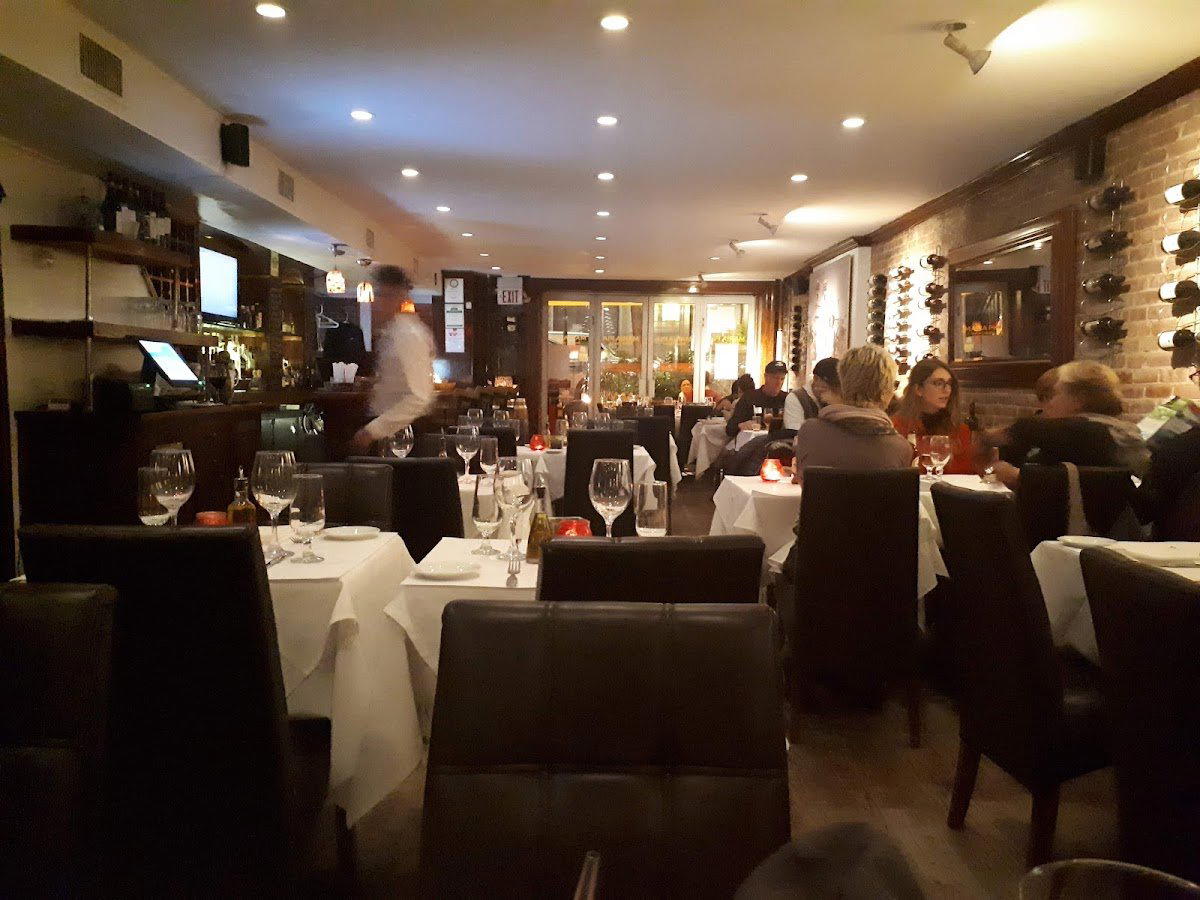
A Midtown Fixture for Meals That Matter
West 51st Street, one block from the Theater District's main corridor and within walking distance of Carnegie Hall, has never been a destination for trend-driven dining. The restaurants that survive here do so on repeat custom, on the kind of loyalty that comes from being the place a family returns to year after year for anniversaries, pre-theater dinners, and milestone celebrations. Maria Pia, at 319 W 51st St, is an Authentic Italian restaurant in New York City with a price tier of 2 and an average meal cost of about $27 per person. It has occupied that position in this stretch of Midtown for long enough that for many New Yorkers it functions less as a restaurant choice and more as a fixed point in the calendar.
The Italian dining tradition in New York has always maintained a parallel economy of places that operate outside the review cycle: neighborhood restaurants with regulars, occasion restaurants with institutional memory, spots where the maître d' knows which table a couple sat at on their first date. Maria Pia belongs to this category rather than to the one occupied by, say, Le Bernardin or Per Se, where a meal is framed explicitly by critical recognition and tasting-menu architecture.
Italian Dining in Midtown: The Occasion-First Category
New York's Italian restaurant spectrum runs from the red-sauce institution in outer boroughs to the white-tablecloth Northern Italian rooms that have traditionally served corporate Manhattan and theater crowds. The Midtown corridor between 8th Avenue and 7th Avenue, in particular, built its dining character around the needs of people with somewhere to be afterward: a curtain at 8pm, a conference dinner, a family gathering after a matinee. Restaurants in this bracket learned early that consistency matters more than innovation, that a wine list needs to be readable under low light, and that pacing has to accommodate a two-hour window without making guests feel managed.
This is a different operating model from the experiential fine dining now associated with addresses like Atomix or Jungsik New York, where the meal itself is the evening's event. At Maria Pia, the dinner is in service of the occasion surrounding it. That framing is not a limitation; for a significant share of New York diners, it is precisely what they are looking for.
Internationally, the Italian occasion-dining model has its clearest reference points in rooms like 8½ Otto e Mezzo Bombana in Hong Kong or Alain Ducasse at Louis XV in Monte Carlo, where European dining formality meets the needs of a cosmopolitan clientele marking significant moments. The restaurant operates at a different scale and register than either, but the underlying contract with the guest is recognizably similar: the restaurant takes the occasion seriously so the guest can focus on it.
The Theater District Context
The pre-theater dinner has its own rhythm that shapes everything a restaurant near the corridor has to do well. Service timing becomes structural, not incidental. The kitchen has to handle simultaneous early turns without the food showing the pressure. The room has to be lively enough to feel festive but quiet enough for conversation. These are not trivial operational requirements, and the restaurants that have built reputations in this stretch have done so by solving for them consistently over years.
For context, the broader category of American occasion dining has produced some of the country's most closely watched addresses: The Inn at Little Washington, Alinea in Chicago, Blue Hill at Stone Barns outside the city. Each has formalized the milestone-meal structure in a different way. The restaurant's version is quieter and less theatrically constructed, but the function it serves for its regulars is not dissimilar: it is where you go when the meal needs to mean something.
Other American cities have their own equivalents in this register. Bacchanalia in Atlanta, Emeril's in New Orleans, Providence in Los Angeles, and Addison in San Diego each occupy a version of the same position in their local dining ecosystems: the restaurant where you mark the significant moments. The comparable set for the restaurant is less about cuisine type and more about the role the restaurant plays in its guests' lives.
Planning a Visit
319 W 51st St places the restaurant within easy reach of the Theater District, accessible from multiple subway lines serving Times Square and 50th Street stations. For pre-theater timing, arriving early enough to allow for unhurried service is advisable; the neighborhood fills quickly on weekday evenings and on weekend matinee days. As with most Midtown restaurants in this bracket, reservations are the standard approach, particularly for groups or for dates that carry personal significance.
West Coast comparison points for similar occasion-dining decisions include Lazy Bear in San Francisco, Single Thread Farm in Healdsburg, and The French Laundry in Napa, each of which operates in the milestone-meal space with substantially different formats, price points, and booking requirements. Against that range, the restaurant represents the more accessible, less architecturally constructed end of the occasion-dining category.
Recognition, Side-by-Side
Comparable venues nearby, for context on price, style, and recognition.
| Venue | Cuisine | Price | Notes |
|---|---|---|---|
| Maria PiaThis venue — the venue you are viewing | Authentic Italian | $$ | Not listed |
| NORMA’S | Authentic Sicilian Gastronomia | $$ | Midtown-Times Square |
| Cibo | Northern Italian Pizza & Pasta | $$ | Murray Hill-Kips Bay |
| Cacio e Pepe | Authentic Roman Italian Pasta | $$ | East Village |
| Patrizia's Of Manhattan | Authentic Family-Style Italian | $$ | Murray Hill-Kips Bay |
| Motorino Pizza | Neapolitan Pizza | $$ | Upper West Side (Central) |
Continue exploring
More in New York City
Restaurants in New York City
Browse all →
Bars in New York City
Browse all →
Hotels in New York City
Browse all →




At a Glance
- Intimate
- Casual Hangout
Quiet and intimate atmosphere ideal for pre-show dining.