Marc Murphy
On Bedford Street in the West Village, Marc Murphy occupies a stretch of downtown New York where neighbourhood loyalty runs deeper than any reservation system. The restaurant draws a repeat clientele shaped by French-inflected cooking and a room that feels worn-in rather than designed. It sits in a different register from the tasting-menu circuit, but operates with the same seriousness about sourcing and execution.
- Address
- 29 Bedford St, New York, NY 10014
- Phone
- +1 212 633 0202
- Website
- marc-murphy.com
- Directions
- Get directions
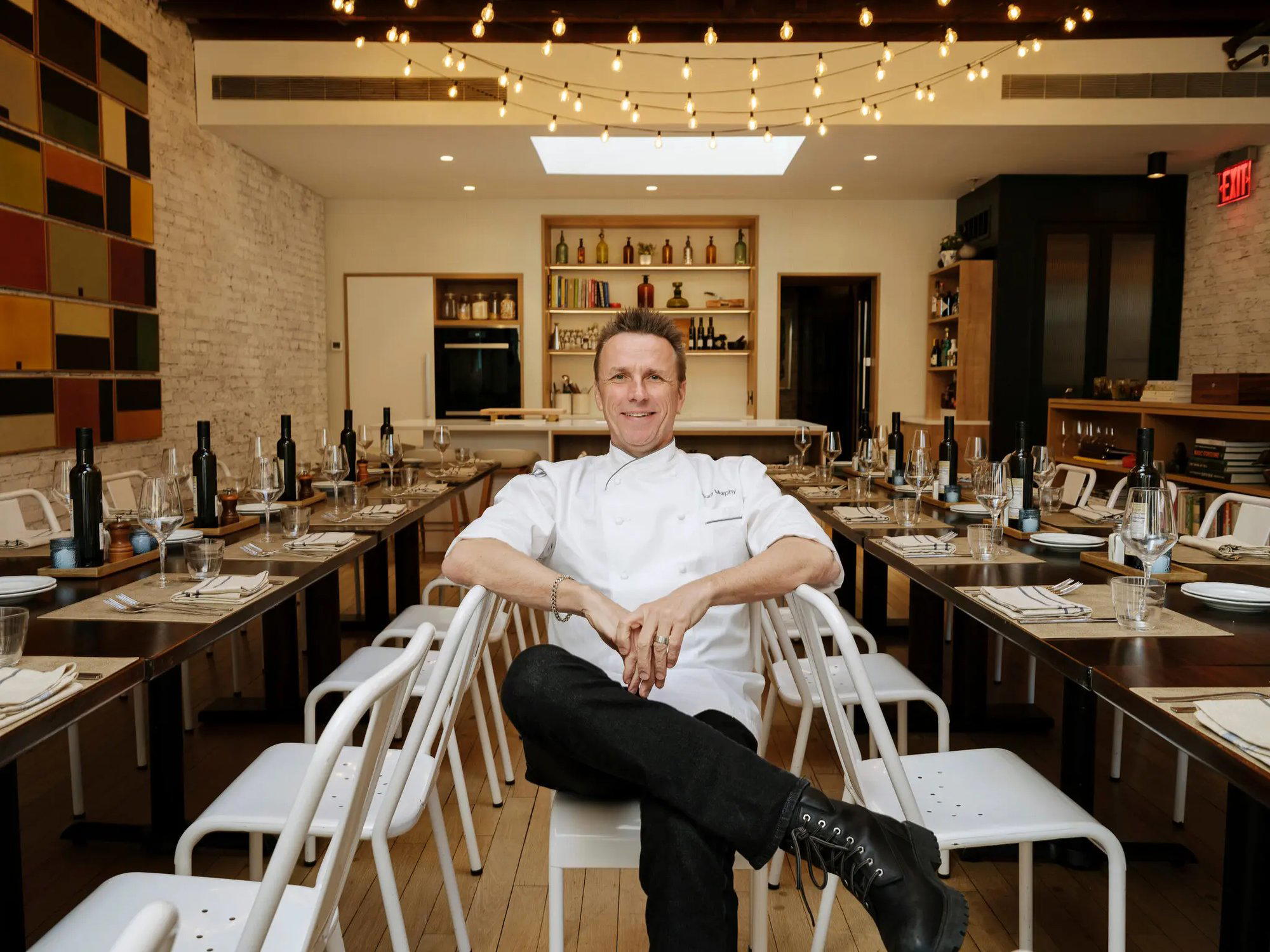
Bedford Street and the Logic of the Return Visit
The West Village has a particular relationship with its restaurants. Unlike the destination-dining corridors of Midtown or the rotating-concept blocks of the Meatpacking District, Bedford Street operates on a slower rhythm. Regulars here are not occasional visitors hunting a reservation months in advance; they are the kind of diners who know which corner of the room catches the late-afternoon light and which nights the kitchen is operating at full tilt. Marc Murphy at 29 Bedford St sits inside this logic, drawing a clientele that returns not because a reservation is hard to come by, but because the experience earns that return.
This is a meaningfully different position from the one occupied by New York's most-discussed fine-dining addresses. Le Bernardin, Atomix, Eleven Madison Park, Masa, and Per Se command their own orbits, defined by tasting menus, extended lead times, and a price point that frames each visit as an occasion. Marc Murphy operates on different terms: the kind of restaurant that earns its regulars through consistency and a room that feels like it belongs to the neighbourhood rather than to a portfolio.
What the Room Tells You Before the Menu Arrives
The physical character of a restaurant on Bedford Street signals something before a single dish appears. The West Village's low-rise scale, its pre-war brownstones and compressed streetfronts, means that a dining room here rarely reads as grand. Spaces feel proportional to the block, and that proportion tends to shape the dining register: more intimate, less performative. A room that fits that scale tends to attract diners who are not there to be seen arriving, but to settle in.
That settling-in quality is what regulars at this address describe as the draw. The unwritten menu at a restaurant like this is not a secret tasting supplement; it is the accumulated knowledge of what to order across seasons, which dishes hold up on a quiet Tuesday versus a full Friday service, and when to trust the kitchen's current direction. That kind of knowledge only accumulates through repetition, and repetition only follows when the baseline quality holds.
French-Inflected Cooking in a City That Has Moved in Many Directions
New York's dining scene has fragmented significantly over the past decade. The Michelin-starred French fine dining that once defined the upper tier has been joined, and in some cases displaced, by Korean, Japanese, and plant-forward formats drawing equal critical attention. Atomix's modern Korean tasting menu and the plant-forward direction of Eleven Madison Park both represent serious pivots in what New York considers prestige dining.
Against that backdrop, French-inflected cooking occupying a neighbourhood position rather than a trophy-restaurant slot is a specific and defensible choice. It speaks to a diner who finds the tasting-menu format less useful than a menu that can flex across a two-hour dinner with a bottle of wine and a conversation that doesn't have to pause for a procession of courses. The West Village has historically supported that kind of restaurant, and its restaurant culture, built on neighbourhood loyalty more than media attention, tends to sustain them across economic cycles that clear out less-rooted addresses.
This broader American tradition of chef-led neighbourhood restaurants with French technical grounding runs through many of the country's most durable dining institutions. Emeril's in New Orleans and Frasca Food and Wine in Boulder both represent versions of this format: technically serious, locally embedded, and sustained by repeat clientele rather than destination traffic alone. Lazy Bear in San Francisco and Smyth in Chicago occupy adjacent territory, though both lean further into the tasting-menu format that Bedford Street sidesteps.
The Regulars and What They Know
The repeat-visitor dynamic at a West Village address like this one tends to self-select for a particular kind of diner: someone with enough experience of the broader New York dining circuit to calibrate expectations accurately, and enough loyalty to a specific room to keep returning when newer openings elsewhere are pulling attention. That calibration matters. A diner who arrives expecting the technical precision of Per Se or the omakase discipline of Masa will read the room incorrectly. A diner who understands the neighbourhood-bistro register, French technique applied with a relaxed hand, an emphasis on the full evening rather than the individual dish, will find it correctly pitched.
The unwritten knowledge that regulars accumulate at a restaurant like this also extends to timing. West Village restaurants tend to fill early and often run at capacity by 7:30 on weeknights; a table held beyond 9pm carries a different energy, quieter and more conducive to extended conversation. Regulars know this. They know which seats in the room carry more noise from the kitchen pass and which offer more separation. That granular familiarity is only built through return visits, and it is one accurate measure of whether a restaurant is doing its job.
Context Across the American Dining Map
Placed against the wider American fine-dining circuit, a West Village neighbourhood address occupies a specific and sometimes underappreciated tier. The ambition of destination restaurants, The French Laundry in Napa, Blue Hill at Stone Barns in Tarrytown, The Inn at Little Washington, Single Thread Farm in Healdsburg, Providence in Los Angeles, or Addison in San Diego, is defined partly by their position as events rather than habits. Even internationally, restaurants like Atelier Moessmer Norbert Niederkofler in Brunico and Dal Pescatore in Runate operate as pilgrimage addresses rather than neighbourhood fixtures.
A restaurant that sustains a repeat clientele in a competitive urban neighbourhood is making a different argument: that the frequency of the experience matters as much as its peak intensity. That argument is harder to sustain than it appears, because it requires consistent execution across a high volume of service rather than the controlled conditions of a low-cover tasting-room format. The West Village tests this argument regularly, and the restaurants that pass the test over years rather than seasons earn a durable place in the neighbourhood's dining culture.
Planning Your Visit
Address: 29 Bedford St, New York, NY 10014. Reservations: Contact the restaurant directly; walk-ins are possible but the West Village fills quickly on weekends. Dress: Smart casual is the neighbourhood norm; the room does not enforce a code but reads as put-together rather than casual. Timing: Early seatings before 7pm and later seatings after 9pm tend to offer more room to settle; peak Friday and Saturday service fills the dining room to capacity.
A Minimal comparable set
Comparable venues nearby, for context on price, style, and recognition.
| Venue | Cuisine | Price | Notes |
|---|---|---|---|
| Marc MurphyThis venue — the venue you are viewing | West Village, French-Italian Bistro | $$$ | Not listed |
| Bobo | West Village, Classic French Country | $$$ | Not listed |
| The Golden Swan | West Village, French Mediterranean | $$$ | Not listed |
| Bacchus | Not listed | $$$ | Downtown Brooklyn-DUMBO-Boerum Hill, Authentic French Bistro |
| Le Rivage | Hell's Kitchen, Classic French Bistro | $$$ | Not listed |
| Cafe d'Alsace | Not listed | $$$ | Upper East Side-Yorkville, Alsatian Brasserie |
Continue exploring
More in New York City
Restaurants in New York City
Browse all →


Bars in New York City
Browse all →
Hotels in New York City
Browse all →








At a Glance
- Lively
- Cozy
- Date Night
- Special Occasion
- Open Kitchen
- Extensive Wine List
Lively bar atmosphere in a transformed landmark space with speakeasy-like neon sign.