On Bregenz's Seestraße, steps from the lakefront, Manga occupies a position in a city where the dining scene runs narrower than its Vorarlberg reputation might suggest. The address places it within easy reach of the Festspielhaus and the lake promenade, making it a practical anchor for visitors arriving during the festival season or outside it.
Pearl is the En Primeur Club membership app — saves, bookings, and concierge access live there. Same editors, same standards.
- Address
- Seestraße 6, 6900 Bregenz, Austria
- Phone
- +4355745280812
- Website
- mangabregenz.newasia.at
- Directions
- Get directions
 Saves & bookings on Pearl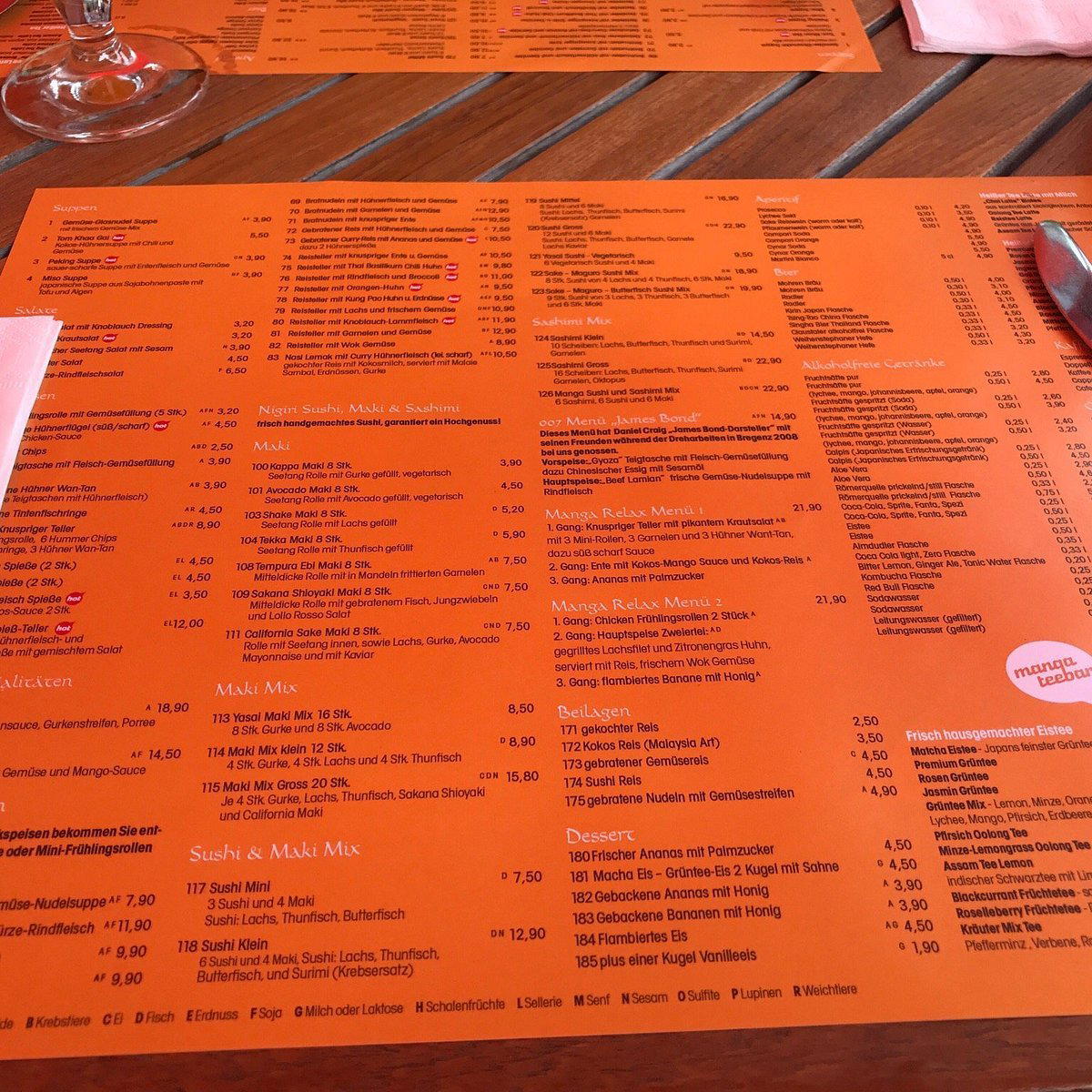
A Lakeside City With a Specific Appetite
Bregenz sits at the western edge of Austria where the country narrows to a point between Switzerland and Germany, its back against the Pfänder and its face toward the Bodensee. The city's dining character is shaped by two forces that rarely align so neatly elsewhere in the Alpine region: a year-round local economy that prizes direct cooking over spectacle, and a summer festival calendar, anchored by the Bregenzer Festspiele, that draws an international audience with higher expectations and deeper pockets. Restaurants that perform well across both audiences tend to be the ones that last. Manga, on Seestraße 6, is a restaurant serving Japanese & Thai Fusion in Bregenz, Austria, and it sits on a street that connects the lake promenade to the city's older core.
Vorarlberg's broader culinary identity sits closer to western European influences than to the Viennese tradition. The province shares a border and a certain sensibility with Alsace, Switzerland's German-speaking cantons, and Bavaria, and the cooking that has developed here reflects that triangulation: clean flavours, local dairy and produce, and a preference for precision over richness. Bregenz is not the province's most ambitious dining destination, that reputation sits further into the Bregenzerwald and along the mountain corridors toward Lech, but it holds a concentrated set of addresses that serve the city's particular audience well. For context on the broader Austrian dining conversation, properties like Steirereck im Stadtpark in Vienna or Ikarus in Salzburg represent the country's upper tier; Bregenz operates in a different register, more neighbourhood-focused and less destination-driven.
What the Address Tells You
Seestraße is not the kind of street where restaurants hide. The road runs parallel to the lake and catches pedestrian traffic moving between the ferry terminal, the Festspielhaus, and the central Altstadt. A venue at number 6 is in the path of people who are already oriented toward the water, festival-goers killing time before curtain, day-trippers from Lindau or Konstanz, and locals who use the promenade as a daily route. That footfall shapes what a restaurant on this street needs to do: it must be legible quickly, it must handle volume without losing composure, and it must read as inviting from the outside rather than exclusive.
The name Manga itself carries a specific cultural signal. In a city where most restaurant names gesture toward Alpine tradition or regional identity, a Japanese pop-culture reference sets a tone before a guest steps through the door. Whether that signal points toward a pan-Asian menu or something more oblique is part of what makes the venue worth examining in context. Bregenz's dining scene does include addresses that have moved away from the Vorarlberg-centric model; Buehnedrei and Falstaff each represent different approaches to what the city will support beyond conventional Austrian cooking.
Menu Architecture as a Frame
The way a restaurant structures its menu is often a more honest signal of its ambitions than its décor or its marketing. At one end of the spectrum, a tightly edited card with five or six mains and seasonal rotations signals confidence in the kitchen and respect for sourcing constraints. At the other, a broad international menu covering multiple categories and cuisines signals a different priority: maximum accessibility, minimal friction for the undecided guest. Both are legitimate strategies, but they imply entirely different things about the kitchen's organisation, the supply chain behind it, and the kind of repeat customer the restaurant is built around.
In cities like Bregenz, where the tourist season concentrates in summer and the local base is relatively thin, menus often tilt toward the accessible end of that spectrum without entirely abandoning craft. The challenge is to hold both without losing coherence. Restaurants that manage it tend to have a clear anchor dish or a dominant flavour logic that threads through the broader offering, something that gives the menu a reason to exist beyond simple convenience. Internationally inflected restaurants across the Alpine corridor, from casual Japanese-inspired formats to fusion brasseries, have found that specificity in sourcing or technique can substitute for category narrowness when the menu itself is wide. The strongest comparisons in the region, including tighter-format addresses like Griggeler Stuba in Lech or Gourmetrestaurant Tannenhof in Sankt Anton am Arlberg, demonstrate what happens when a kitchen commits fully to a single culinary logic.
The Bregenz comparable set
Within the city, Manga sits in a competitive field that ranges from hotel dining to casual lakeside formats. Babenwohl im Hotel Schwärzler represents the more formal hotel-anchored end of the market, while Burgrestaurant Gebhardsberg, on the hill above the city, pulls guests who are willing to make the trip for the view as much as the food. Der Speiseladen Werktags occupies the more daytime-casual end. A lakefront address at Seestraße positions Manga differently from all of these: it benefits from the promenade's natural traffic without requiring the destination logic that drives bookings at the hilltop or hotel-attached addresses.
For visitors building a wider Austrian itinerary, the regional context extends beyond Bregenz into the mountain towns. Döllerer in Golling an der Salzach, Obauer in Werfen, and Landhaus Bacher in Mautern an der Donau each represent the kind of destination-dining commitment that requires planning months in advance. Bregenz's lakefront addresses, by contrast, tend to be more accessible, which serves the festival audience well, since Festspiele tickets already represent enough advance commitment. See our full Bregenz restaurants guide for a complete picture of what the city currently offers across price points and formats.
Planning a Visit
Seestraße 6 is within walking distance of the main train station and the Festspielhaus, making Manga accessible without a car for festival visitors staying in the central hotel belt. The summer months, when the Bregenzer Festspiele runs through July and August, bring the highest footfall to the promenade strip. Visitors planning around a performance should factor in early reservations or flexible timing. Outside the festival window, the city operates at a quieter pace, and lakefront dining in September and early October carries its own appeal as the crowds thin and the light on the Bodensee shifts toward something harder and clearer than the summer haze.
For comparison on what premium Austrian and international dining currently looks like at the highest level, Kräuterreich by Vitus Winkler in Sankt Veit im Pongau, Ois in Neufelden, and Restaurant 141 by Joachim Jaud in Mieming each offer a reference point for the precision-led Alpine dining model. Further afield, the technical ambition found at Le Bernardin in New York City or the format rigour at Atomix in New York City illustrates what full commitment to menu architecture looks like at the international level, a useful frame for understanding where any lakeside brasserie sits on the broader spectrum of ambition.
Standing Among Peers
Comparable venues nearby, for context on price, style, and recognition.
| Venue | Cuisine | Price | Notes |
|---|---|---|---|
| MangaThis venue — the venue you are viewing | Japanese & Thai Fusion | $$ | Not listed |
| Ilge | Asian-Vorarlberg Fusion | $$ | city center |
| Burgrestaurant Gebhardsberg | Traditional Austrian Castle Cuisine | $$ | Gebhardsberg |
| Milchpilz | Well-known Austrian Milk Kiosk | $ | Lake Constance promenade |
| Der Speiseladen Werktags | Street Food Classics | $$ | city center |
| Wirtshaus am See | Traditional Austrian Lakeside | $$ | Seepromenade |
Continue exploring
More in Bregenz
Restaurants in Bregenz
Browse all →
Bars in Bregenz
Browse all →

Hotels in Bregenz
Browse all →

At a Glance
- Trendy
- Modern
- Cozy
- Casual Hangout
- Open Kitchen
- Terrace
- Street Scene
Current opening hours
- Monday
- 11:30 AM–2:30 PM, 5:30–10:30 PM
- Tuesday
- 11:30 AM–2:30 PM, 5:30–10:30 PM
- Wednesday
- 11:30 AM–2:30 PM, 5:30–10:30 PM
- Thursday
- 11:30 AM–2:30 PM, 5:30–10:30 PM
- Friday
- 11:30 AM–2:30 PM, 5:30–10:30 PM
- Saturday
- 11:30 AM–10:30 PM
- Sunday
- 11:30 AM–10:30 PM
Hours can change for holidays and private events. Last verified .
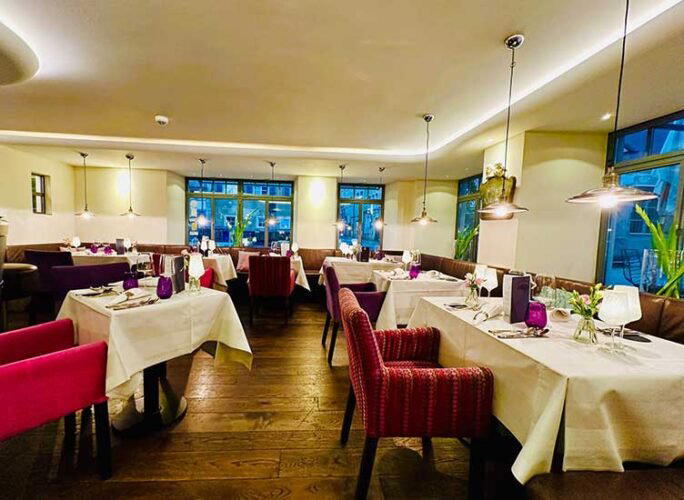
Trendy interior with relaxed atmosphere, suitable for quick meals; terrace seating available though street noise noted.