Our verdict
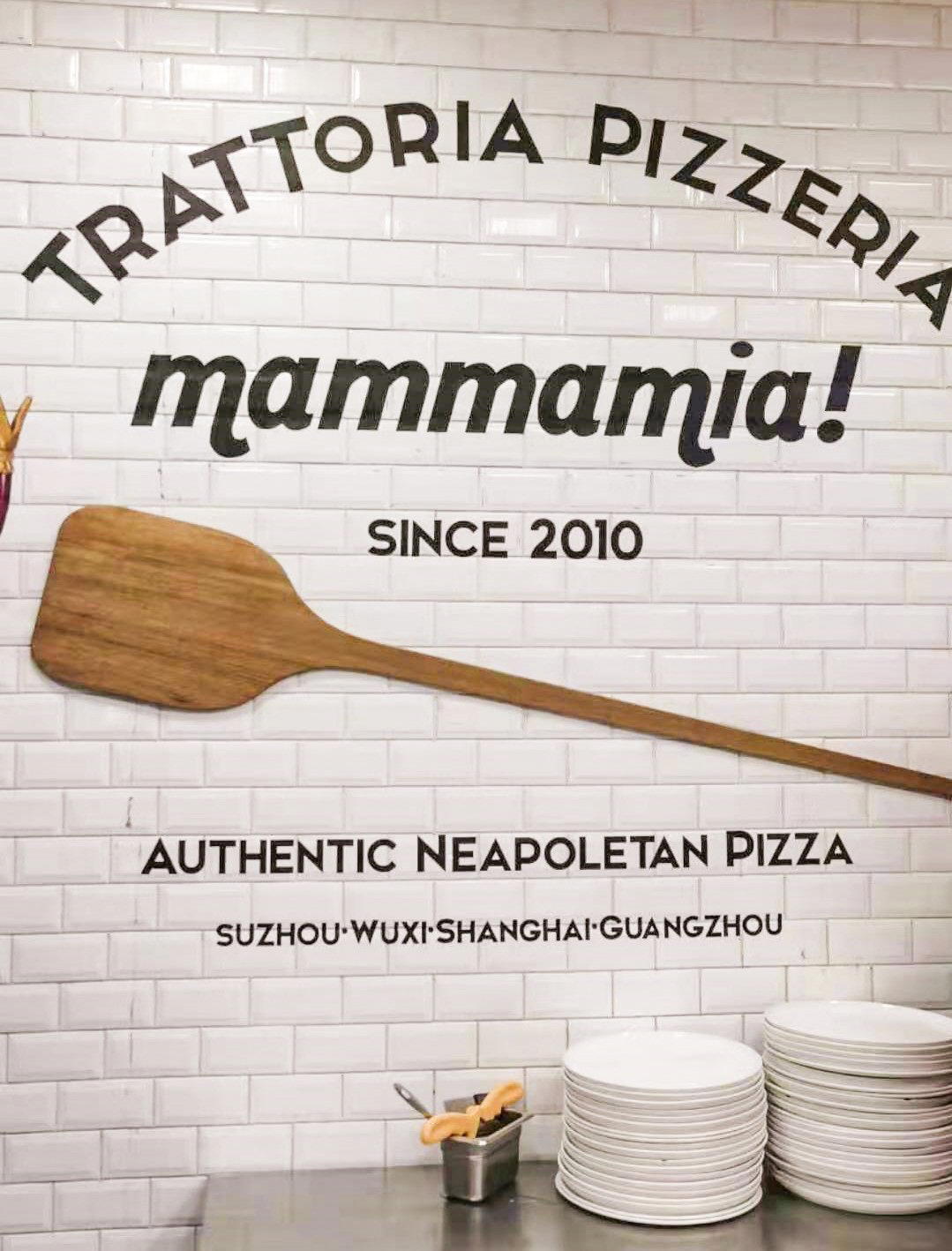
One of China's longest-running Neapolitan pizzerias, Mammamia! in Suzhou's Wuzhong District has built its reputation on wood-fired pizza made with genuine buffalo mozzarella and traditional Italian pasta. In a city defined by Jiangsu refinement, it occupies a distinct lane: a family-style trattoria format that has held its ground across multiple decades and multiple Chinese cities.

Pearl is the En Primeur Club membership app, where members save venues, book tables and use the concierge.
Italian Sourcing in a Suzhou Context
Suzhou's restaurant scene tilts heavily toward its own culinary inheritance. The city's most serious tables serve Jiangsu cuisine, delicate braised meats, freshwater fish, and seasonal vegetables treated with the restraint that defines the region's cooking tradition. Options like Pingjiangsong and Dingshan·Jiangyan (Xiangcheng) sit at the higher end of that local tradition, while spots like Bai Sheng Ren Jia (Wuzhong) occupy a more accessible price tier within the same regional frame. Against that backdrop, a Neapolitan pizzeria is a deliberate departure, and the ingredient story is where Mammamia! makes its case.
Neapolitan pizza is one of the most ingredient-dependent formats in all of Italian cooking. The Associazione Verace Pizza Napoletana, which has codified the tradition since 1984, specifies not just technique but provenance: San Marzano tomatoes from the volcanic soils south of Naples, fior di latte or genuine DOP buffalo mozzarella, flour with defined protein and elasticity characteristics, and a wood-fired oven operating at temperatures above 400°C. Any serious Neapolitan operation outside Italy is therefore first a sourcing exercise. Mammamia! centres its identity on buffalo mozzarella and wood-oven technique, two of the hardest sourcing commitments to maintain at scale in mainland China, particularly in an inland city like Suzhou where cold-chain logistics for Italian dairy require consistent, long-term supplier relationships.
That sourcing commitment becomes more significant when you consider the alternatives. Much of the Italian food served across Chinese cities in the 1990s and 2000s substituted local dairy and domestic tomato products, producing results that tracked Italian aesthetics without Italian flavour. The restaurants that built lasting audiences in that environment were, almost without exception, the ones that absorbed the higher cost of genuine imported or certified ingredients and priced accordingly. Mammamia!'s longevity as one of the longest-running Neapolitan pizzerias in China is partly an argument that the sourcing discipline held.
The Format and What It Signals
The trattoria format is worth understanding on its own terms. In Naples and throughout southern Italy, a trattoria sits below the formal ristorante but above a casual pizzeria-counter. It is a family-oriented room, generous portions, shared plates, a menu that moves between pizza and pasta rather than specialising in one, and its social logic is built around the table rather than the dish. That format travels reasonably well to China, where group dining and shared ordering are already the dominant mode. Mammamia! adopts this model across its multiple China locations, which means the Suzhou branch in Wuzhong District operates within a tested framework rather than a local experiment.
The multi-location structure also has implications for consistency. Chains that maintain wood-oven infrastructure across several Chinese cities are committing to ongoing capital investment in equipment maintenance and staff training, since wood-fire technique, managing temperature, rotation timing, and char distribution, is genuinely skilled work that cannot be replicated by a conveyor or deck oven. The wood oven is not a decorative feature; it is the mechanism by which Neapolitan dough, hydrated to 60–65% and proofed for a minimum of eight hours, achieves the leopard-spotted cornicione that defines the style.
For context on where this format sits relative to Suzhou's broader dining options: the city's Chinese restaurant tier spans everything from the refined Jiangsu cooking at Ban Ting Jia Yan (Suzhou Industrial Park) to regional alternatives like Ban Lan (Huqiu)'s Fujian menu. Mammamia! occupies a separate lane entirely, not competing with those traditions but offering a counterpoint for diners who want something outside the regional framework. You can find details on the full range of options in our full Suzhou restaurants guide.
Why Longevity Matters Here
The Chinese market for Western cuisine has cycled through multiple waves of enthusiasm and retreat. Steakhouses, French bistros, and various Italian concepts have opened, contracted, and in many cases disappeared as novelty faded or as economic conditions shifted. The restaurants that have maintained consistent audiences across more than a decade in mainland China tend to share a few characteristics: a format that is legible to a broad dining public, a price point that doesn't require special-occasion justification, and a sourcing standard that gives regulars a reason to return rather than simply try once.
Mammamia!'s position as one of China's longest-running Neapolitan operations suggests it has met at least some of those criteria. It is not operating in the fine-dining tier occupied by internationally recognised rooms, places like Le Bernardin in New York or Atomix in New York represent a different competitive set entirely. Within Chinese cities, the reference points for sustained Italian dining at this format level are different: the question is whether the kitchen has maintained its product discipline across years of operation in a market that does not always reward that discipline financially.
For Suzhou specifically, the Wuzhong District location sits outside the historic canal core that draws most international visitors. Wuzhong is predominantly residential and commercial, which means the audience is largely local, families, working professionals, and expats based in the district rather than tourists passing through. That audience is arguably more demanding than a tourist-heavy location: they return repeatedly and they notice when quality shifts.
Planning a Visit
Mammamia! operates across multiple China locations, and the Suzhou branch is in Wuzhong District (postal code 215027). Contact details and current hours are not listed centrally online, so the most reliable approach is to visit in person or check locally available platforms like Dianping or Meituan for current operating information and any reservation options. Given that the format is family-style and likely draws groups, weekend evenings and school-holiday periods tend to be the busiest windows at restaurants of this type in Chinese residential districts, weekday lunches and early weekday evenings are generally easier. For those planning a broader Suzhou trip, our full Suzhou hotels guide, bars guide, wineries guide, and experiences guide cover the wider city across categories.
For readers interested in how Italian-influenced or Western dining fits into the broader China dining picture, the contrast with purpose-built fine-dining operations is instructive: rooms like 102 House in Shanghai or the regional Chinese excellence at Xin Rong Ji (Xinyuan South Road) in Beijing, Xin Rong Ji in Chengdu, Ru Yuan in Hangzhou, Chef Tam's Seasons in Macau, and Imperial Treasure Fine Chinese Cuisine in Guangzhou occupy a fundamentally different ambition tier. Mammamia! is not making that argument. Its case rests on sustained delivery of a specific imported format, at a scale and price point that keeps it accessible to the residential audience it actually serves.
Frequently asked questions
What kind of recognition has Mammamia! received?
Mammamia! has received recognition including: Mammamia! is a family-style Italian trattoria and one of the longest-running Neapolitan pizzerias in China. It is known for its authentic Neapolitan pizza cooked in a wood oven with genuine buffalo mozzarella and traditional Italian pasta d….
What's Mammamia!'s location?
Mammamia! is located at Wuzhong District, Suzhou, China, 215027, Suzhou.
What's the signature dish at Mammamia!?
Mammamia! built its reputation on Neapolitan pizza cooked in a wood-burning oven using genuine buffalo mozzarella, the same format that defines the classic Neapolitan tradition. Traditional Italian pasta dishes round out the menu alongside the pizza programme. The kitchen's focus stays deliberately narrow, which is consistent with the trattoria model the chain has maintained across its China locations.
Do I need a reservation for Mammamia!?
As one of the longest-running Italian chains in China with multiple locations, foot traffic at peak meal times can be steady. Arriving early or contacting the branch in advance reduces the chance of a wait.
What's Mammamia! best at?
Mammamia! is strongest as a Neapolitan pizzeria: wood-oven cooking with buffalo mozzarella is the consistent thread across its China locations and the credential that distinguishes it from the broader Italian restaurant field in cities like Suzhou. For diners primarily interested in southern Italian pasta and pizza rather than northern Italian or fusion formats, the menu aligns well with that priority.
Is Mammamia! allergy-friendly?
No allergen or dietary accommodation data is published for the Suzhou location. Given that the core menu centres on Neapolitan pizza with buffalo mozzarella and traditional pasta, dairy and gluten are central to most dishes. Guests with specific allergies should contact the Wuzhong District branch directly before visiting.
How does Mammamia! compare to other Italian restaurants in Suzhou, and why has it lasted when other Western concepts have not?
Mammamia! is described as one of the longest-running Neapolitan pizzerias in China, a distinction that carries weight in a market where many Western restaurant concepts have opened and closed in successive waves. Its longevity across multiple China locations suggests a consistent product rather than a trend-dependent one. In Suzhou, where the dominant dining culture centres on Jiangsu cuisine, that kind of sustained presence from a foreign-format chain is uncommon.
At-a-Glance Comparison
A short peer table to compare basics side-by-side.
| Venue | Cuisine | Price | Awards | Notes |
|---|---|---|---|---|
| Mammamia!This venue (the venue you are viewing) | Neapolitan Pizzeria | $20–30 | Not listed | Not listed |
| Yu Mian Tang | Suzhou Heritage Noodles | $20–30 | Michelin Bib Gourmand | Noodles |
| Dingshan·Jiangyan (Xiangcheng) | Modern Jiangsu Cuisine | Not listed | 1 Michelin Star | Jiangsu Cuisine |
| Pingjiangsong | Modern Suzhou Cuisine | Not listed | 1 Michelin Star | Jiangsu Cuisine |
| Bai Sheng Ren Jia (Wuzhong) | Authentic Suzhou (Jiangsu) Cuisine | Not listed | Michelin Bib Gourmand | Jiangsu Cuisine |
| Ban Lan (Huqiu) | Modern Fujian | Not listed | Michelin Plate | Fujian |
Recognition history
Dated appearances from independent guides and award organizations, with the underlying list record or original source where available.
50 Top Pizza 50 Top World Artisan Pizza Chains #34
50 Top Pizza