
Tabelog 100 #61
Our verdict
Maeda Pan gives Yokohama’s bread culture a suburban, takeout-only expression rather than a café performance. Its Tabelog Bread EAST “Tabelog 100” selections in 2020 and 2022 place it in a serious regional bakery conversation, while the low spend bracket keeps the experience grounded in everyday buying rather than destination dining ceremony.

Pearl is the En Primeur Club membership app — saves, bookings, and concierge access live there. Same editors, same standards.
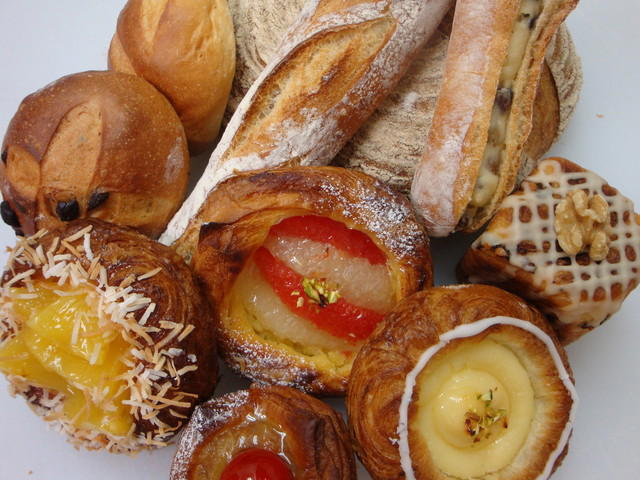
Yokohama’s bakery culture is not confined to station concourses or polished café counters. In Yokohama, the rhythm can be quieter: local errands, everyday purchases, and bread bought to carry home rather than turn into a formal meal. Maeda Pan belongs to that practical register. The point is not ceremony or elaborate service, but the discipline of a bread shop judged by what customers choose and return for.
That matters in greater Yokohama, a city often read through waterfront views, hotels, and central dining rooms. Bread sits in a different part of the city’s appetite. It is a morning and household category, shaped by repeat customers, commuters, and families rather than by long reservations or ceremony. Away from the most obvious tourist narratives, this kind of bakery carries a different pressure: it has to work as a local shop before it can mean anything as a destination.
A bakery in the serious bread bracket
Japan’s bakery scene rewards precision at small scale. Bread shops sit inside daily retail life, where the appeal depends on freshness, consistency, and a clear sense of what the shop does well. In that context, recognition from Tabelog Hyakumeiten in 2022 is a useful signal. It places Maeda Pan inside a documented bread category rather than treating it merely as another local stop.
The price band also sharpens the point. The provided listing places spending at - JPY 999 View spending breakdown, keeping the experience closer to everyday buying than special-occasion consumption. That is one reason the recognition carries weight: bread at this level has little room for distraction. A bakery cannot hide behind wine service, room design, or a tasting-menu arc. The judgment is direct, repeatable, and public.
Compared with Un Petit Paquet, Maeda Pan reads as part of Yokohama’s broader everyday food landscape rather than a formal restaurant conversation. Backerei TOKTARO Motoishikawa honten makes the local comparison more direct: Yokohama supports serious bread outside the obvious central corridors. The more useful contrast is not with fine dining, but with focused local specialists such as Ramen Garaku and Men Dokoro Akimoto, where narrow scope can still produce strong loyalty.
What the format says about the experience
A bakery asks for a different kind of attention from a restaurant. The room is not necessarily the event; selection is. The experience is built around the visual economy of trays, labels, shelves, and the short decision-making span of a customer who may be buying for later. That restraint suits bread better than over-explanation. In Japan, bakery display often functions like a menu, with categories arranged for quick comparison rather than prolonged service.
For travellers, that means Maeda Pan is better understood as part of a day in Yokohama than as a stand-alone restaurant plan. It works as a way to understand the city between larger meals, whether the purchase is for breakfast, a snack, or something to take back for later. The practical character matters: this is a bread listing, and its appeal sits in the everyday category rather than in the language of destination dining.
The Yokohama setting also changes expectations. Central Yokohama often rewards diners with density: bars, ramen, Chinese restaurants, hotel lounges, and transport links stacked together. Other parts of the city can be more dispersed. That can be inconvenient for a visitor planning only around the most visible districts, but it also explains why a bakery here needs local credibility. Shops in residential-feeling parts of a city are judged by repetition. Customers return because the category fits daily life, not because the room photographs well.
Longevity and routine matter in this sector, but the safest signal here is the documented one: Maeda Pan appears in the bread category with a Tabelog score of 3.67 and 2022 Hyakumeiten recognition. Awards may draw attention, but the more interesting editorial frame is how a modestly priced bread shop can sit inside Yokohama’s daily food map without needing the apparatus of a full restaurant.
How to place it in a Yokohama itinerary
Maeda Pan makes sense when the day is already built around Yokohama rather than around a single destination meal. It is less convincing as a substitute for a full-service restaurant, and stronger for those interested in how the city eats between restaurant bookings. That is the editorial value here: it shows Yokohama beyond its dining-room narratives, in the everyday bread culture that sits between convenience retail and artisan craft.
For a broader Yokohama table, the contrast is instructive. Other Yokohama dining rooms speak to counter eating, casual specialism, and the city’s range beyond bread. For planning across categories, use Our full Yokohama restaurants guide, Our full Yokohama hotels guide, Our full Yokohama bars guide, Our full Yokohama wineries guide, and Our full Yokohama experiences guide.
Regional context helps too. Across Japan and abroad, casual formats show how everyday Japanese food culture can travel, adapt, and still depend on clarity of purpose. Maeda Pan belongs to the quieter end of that spectrum: a Yokohama bread shop whose interest lies in category focus rather than spectacle. Read it alongside other dining in Yokohama generically, and its role becomes easier to understand.
The verdict is practical rather than grand. Maeda Pan is for readers who care about the small categories that define a city’s daily food life. Its 2022 Tabelog Hyakumeiten recognition supplies the external signal; the bread category, 3.67 score, and low listed spend supply the context. Treat it as a bakery with documented regional validation, not as a restaurant substitute, and it becomes a sharp lens on Yokohama’s quieter food culture.
Frequently asked questions
Can I bring kids to Maeda Pan?
Maeda Pan is in Yokohama. For child-specific policies, confirm directly with the shop before visiting.
What's the overall feel of Maeda Pan?
Maeda Pan is a Yokohama bread shop with 2022 Tabelog Hyakumeiten recognition and a listed Tabelog score of 3.67.
What does dinner at Maeda Pan typically cost?
Pricing at Maeda Pan is listed as - JPY 999 View spending breakdown.
What is Maeda Pan known for?
Maeda Pan is known as a Yokohama bread venue with 2022 Tabelog Hyakumeiten recognition.
Comparable Spots, Quickly
Comparable venues at a glance for context.
| Venue | Cuisine | Price | Awards | Notes |
|---|---|---|---|---|
| Maeda PanThis venue — the venue you are viewing | Japanese neighborhood bakery | $1–10 | Tabelog 100 #61 | Not listed |
| Torakichi Ya Hikaru | Yokohama-style ramen shop | $10–20 | Tabelog 100 #95 | Kanagawa |
| Mendokoro Niboshi Kaoru Asobiru ten | Niboshi Ramen | Not listed | Tabelog 100 #57 | Nishi |
| Raamen Mu | Traditional Ramen & Tsukemen Counter | $10–20 | Tabelog 100 #7 | Kanagawa |
| Yokohama Iekei Ramen Kachidoki Ya | Yokohama Iekei Ramen Shop | $10–20 | Tabelog 100 #12 | Naka |
| China Soba Ya Honten | Traditional Ramen (Shina Soba) | $10–20 | Tabelog 100 #79 | Totsuka |
Recognition history
Dated appearances from independent guides and award organizations, with the underlying list record or original source where available.
Tabelog 100 #61 · No. 61
Tabelog · Tabelog 100 - Bread - EAST - 2022
Continue exploring
More in Yokohama
Restaurants in Yokohama
All restaurants in Yokohama →


Bars in Yokohama
Browse all →


Hotels in Yokohama
All hotels in Yokohama →


Wineries in Yokohama
Browse all →
Details
- Cozy
- Quiet
- Solo
- Family
- Casual Hangout
- Standalone
- A La Carte
Current opening hours
- Monday
- 8 AM–6 PM
- Tuesday
- 8 AM–6 PM
- Wednesday
- 8 AM–6 PM
- Thursday
- 8 AM–6 PM
- Friday
- 8 AM–6 PM
- Saturday
- 8 AM–6 PM
- Sunday
- Closed
Hours can change for holidays and private events. Last verified .
Simple, no-frills local bakery atmosphere focused on takeaway bread rather than dine‑in, with a quiet, everyday neighborhood feel.