M Café Kitchen Lincoln Heights
On North Avenue 25 in Lincoln Heights, M Café Kitchen occupies a northeast Los Angeles neighborhood that has been quietly redefining its dining identity for years. The café sits at the intersection of the area's working-class roots and a newer wave of community-oriented food culture, making it a reference point for how this part of the city eats and gathers.
Pearl is the En Primeur Club membership app — saves, bookings, and concierge access live there. Same editors, same standards.
- Address
- 242 N Ave 25, Los Angeles, CA 90031
- Phone
- +1 310 990 0128
- Website
- mcafedechaya.com
- Directions
- Get directions
 Saves & bookings on Pearl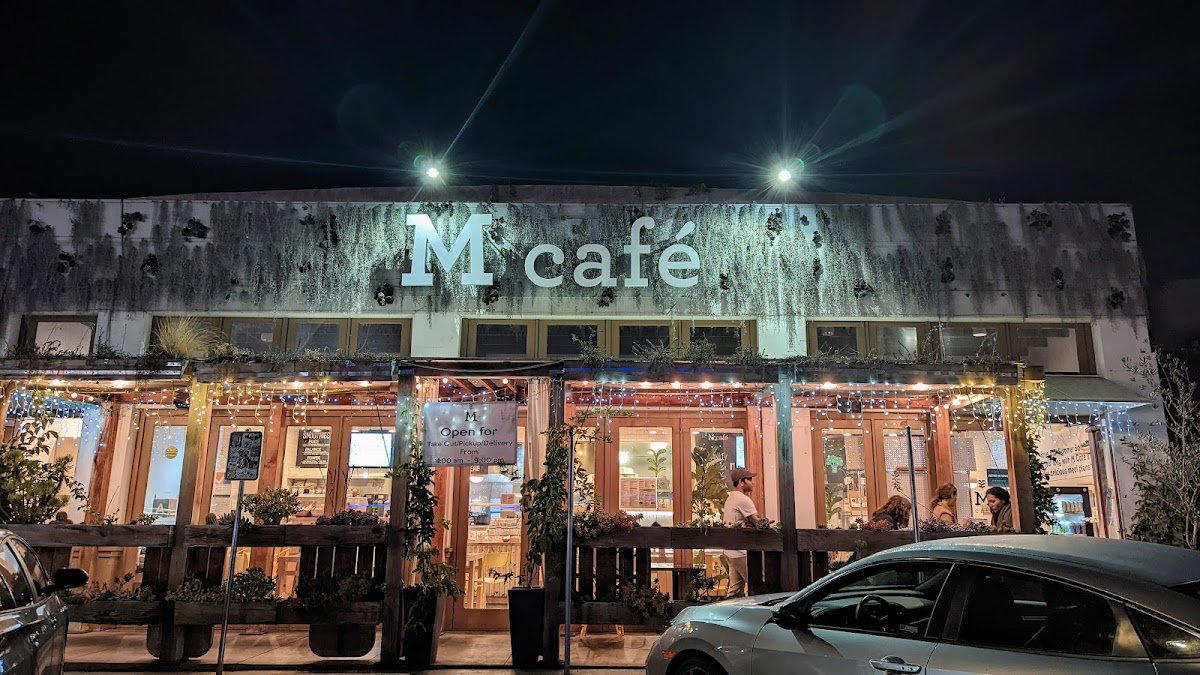
Lincoln Heights and the Architecture of the Neighborhood Café
Northeast Los Angeles has a dining character that differs markedly from the Westside or even from the more publicized corridors of Silver Lake and Echo Park. Lincoln Heights, one of the city's oldest neighborhoods, has long operated outside the mainstream food press cycle, developing its food culture through community anchors rather than destination restaurants. The café format in this context carries particular weight: it functions as a social infrastructure point, not merely a food delivery mechanism. M Café Kitchen, at 242 N Ave 25, occupies that role in Lincoln Heights.
The physical address places it in a part of Los Angeles that rewards attention. North Avenue 25 connects the neighborhood's residential grid to the LA River corridor, a zone that urban planners and local advocates have worked to reactivate. Cafés in this transitional geography often carry a dual function: serving longtime residents while absorbing newcomers drawn by lower rents and proximity to Downtown. The spatial politics of that position shape everything from seating arrangements to what ends up on the menu.
The Space as Editorial Statement
In a city where interior design can become its own form of branding, the neighborhood café operates under different rules. The spaces that hold communities together in neighborhoods like Lincoln Heights tend toward the functional and accumulated rather than the designed-from-scratch. A well-worn counter, mismatched chairs that arrived across several years, walls that have absorbed the conversations of many mornings, these are not failures of vision but evidence of continuous use. That kind of physical record is harder to manufacture than a curated Instagram aesthetic, and it tells a more honest story about a place's relationship to its surroundings.
The design logic of the community café in Northeast LA also responds to the street itself. These are not venues that turn their backs on the neighborhood with frosted glass and private parking validation. They face out, often literally, with sidewalk seating or open-front designs that fold indoor and outdoor space together. In Los Angeles, where the line between interior and exterior has always been permeable, this approach feels less like a design choice and more like a sensible adaptation to climate and social expectation.
Lincoln Heights in the Broader Los Angeles Dining Context
To understand what M Café Kitchen represents, it helps to map Lincoln Heights against the city's wider dining geography. Los Angeles has a pronounced tendency to concentrate critical attention and reservation demand in a handful of corridors: Koreatown, Downtown, the Fairfax strip, Venice. The neighborhoods east of the LA River, including Lincoln Heights, Boyle Heights, and El Sereno, have historically fed the city's population without feeding its press coverage. That asymmetry is starting to shift, and the shift is being driven not by high-concept openings but by the gradual recognition that particularly consistent, community-rooted food in Los Angeles has always been in these neighborhoods.
The comparison set for a café in Lincoln Heights is not Kato in Culver City or Hayato in the Arts District. Those venues operate in a different register entirely, with tasting menus priced in the $$$$ tier and reservation windows that extend months in advance. The Lincoln Heights café operates closer to the everyday fabric of the city, which is a different kind of authority. Providence and Somni set the technical ceiling for Los Angeles dining; places like this define its floor, and in a city this size, the floor matters enormously.
What the Café Format Signals About a City
The café occupies a particular position in American urban dining culture. It is not the quick-service counter, not the sit-down restaurant, not the bar. It holds morning and midday hours with a different tempo than dinner service, and the physical space reflects that: surfaces designed for laptops alongside coffee, tables that accommodate a single diner with a book as comfortably as a group catching up. In cities where the café has a strong tradition, Seattle, Portland, New York's outer boroughs, it functions as a third place in the sociological sense, neither home nor workplace but the informal commons between them.
Los Angeles has historically been less hospitable to that format, partly because of car dependency and the difficulty of stumbling into a neighborhood on foot. But the neighborhoods east of Downtown, with their denser street grids and more walkable blocks, have always been better suited to it. Lincoln Heights has the residential density and the street-level activity to support a café in the way that, say, a strip-mall corridor in the Valley cannot. That structural advantage is what gives neighborhood cafés in this part of the city a fighting chance at becoming genuine fixtures rather than transient operators.
Dining Beyond Lincoln Heights: Reference Points Across the Country
For readers using Los Angeles as part of a wider American food itinerary, the spectrum of what American restaurants can achieve is worth mapping. At the formal end, The French Laundry in Napa and Le Bernardin in New York City represent the country's most decorated kitchens. In the middle register, Smyth in Chicago, Lazy Bear in San Francisco, and Single Thread Farm in Healdsburg demonstrate what ambitious regional cooking looks like outside major coastal cities. Blue Hill at Stone Barns in Tarrytown, Addison in San Diego, Frasca Food & Wine in Boulder, Atomix in New York City, The Inn at Little Washington, and Emeril's in New Orleans complete a picture of American fine dining that extends well beyond either coast. Further afield, Atelier Moessmer Norbert Niederkofler in Brunico offers a European counterpoint for readers tracking the international conversation. Osteria Mozza remains the strongest Italian reference within Los Angeles itself.
Planning Your Visit
M Café Kitchen is located at 242 N Ave 25, Los Angeles, CA 90031, in the Lincoln Heights neighborhood of Northeast Los Angeles. The neighborhood sits near the LA River corridor.
| Venue | Neighborhood | Price Tier | Format |
|---|---|---|---|
| M Café Kitchen Lincoln Heights | Lincoln Heights | $$ | Café |
| Kato | Culver City | $$$$ | Tasting menu |
| Hayato | Arts District | $$$$ | Omakase |
| Holbox | Mercado La Paloma | $$ | Counter seafood |
Category Peers
Comparable venues nearby, for context on price, style, and recognition.
| Venue | Cuisine | Price | Notes |
|---|---|---|---|
| M Café Kitchen Lincoln HeightsThis venue — the venue you are viewing | Modern Macrobiotic Japanese | $$ | Not listed |
| Skewers by Morimoto | Japanese Yakitori Skewers | $$ | LAX Airport |
| HRB Experience Century City | Modern Japanese Hand Rolls | $$ | Century City |
| Tsukiyo Sushi | Handcrafted Japanese Sushi | $$ | Wilshire Center |
| Yuko Kitchen | Japanese Comfort Food | $$ | Miracle Mile |
| Hokkaido Ramen Santouka | Hokkaido-Style Tonkotsu Ramen | $$ | Mar Vista |
Continue exploring
More in Los Angeles
Restaurants in Los Angeles
Browse all →
Bars in Los Angeles
Browse all →
Hotels in Los Angeles
Browse all →
Wineries in Los Angeles
Browse all →

At a Glance
- Minimalist
- Modern
- Casual Hangout
- Solo
- Open Kitchen
- Organic
- Local Sourcing
Minimalist environs with a welcoming, health-focused atmosphere.