Hokkaido Ramen Santouka
Our verdict
Hokkaido Ramen Santouka on South Centinela Avenue brings the Asahikawa-style tonkotsu-adjacent broth tradition from Japan's northernmost island to the Mar Vista edge of Los Angeles. The chain, which originated in Hokkaido in 1988, occupies a particular niche in LA's ramen conversation: recognizable enough to draw regulars, restrained enough to avoid the hype cycles that surround newer openings. For visitors cross-referencing the city's Japanese dining spectrum, it sits well below the omakase tier but above fast-casual ramen formats on both price and intention.

Pearl is the En Primeur Club membership app, where members save venues, book tables and use the concierge.
The menu
What to order
- Shio Ramen
- Spicy Miso Ramen
- Toroniku Ramen
Where Hokkaido's Cold-Climate Broth Tradition Lands in Los Angeles
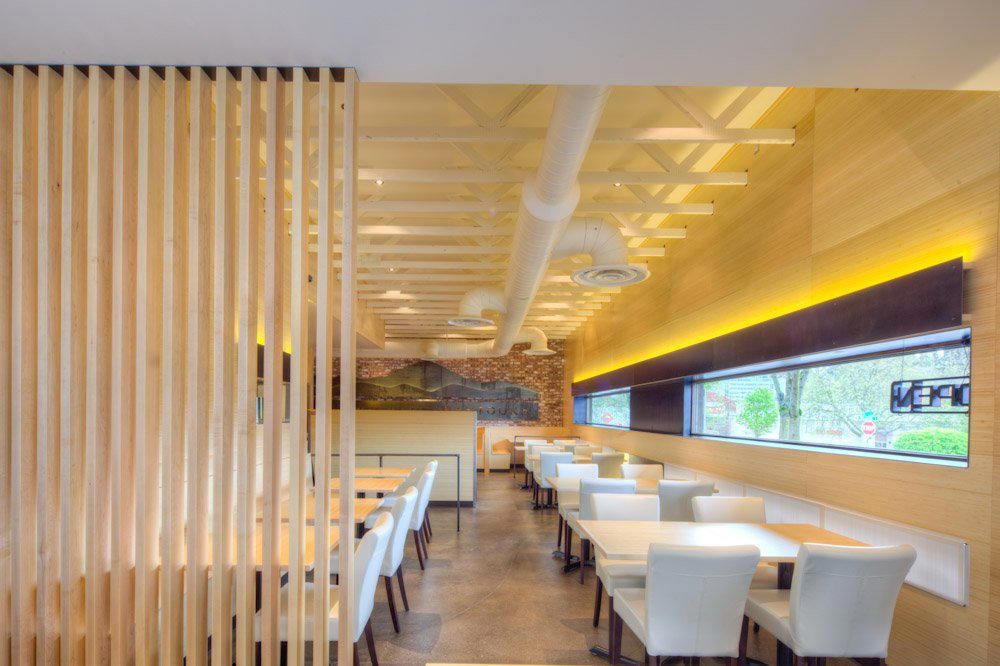
There is a particular register of Japanese restaurant that Los Angeles does better than almost any Western city outside New York: the transplanted regional specialist, operating without fanfare, serving a cuisine whose depth is invisible to the uninitiated. Hokkaido Ramen Santouka on South Centinela Avenue in Mar Vista belongs to that category. The interior runs functional rather than designed, the kind of space where the signal is the broth, not the lighting rig. You notice the queue before you notice much else, and the queue, on weekday evenings and weekend afternoons alike, tells you something about how embedded this place has become in the westside's Japanese dining geography.
Santouka's origin is Asahikawa, a city in central Hokkaido where winters push far below freezing and ramen evolved accordingly: richer, more insulating, built around pork bones cooked long enough to produce a broth that coats rather than rinses. That tradition travels with the brand. The Los Angeles location sits within a wider city conversation about what Japanese food at mid-price should look like, a conversation that also includes the omakase tier represented by Hayato and the kaiseki-adjacent ambition of Kato, but which plays out most visibly at the everyday end of the spectrum, in ramen shops, izakayas, and the kind of counter-service spots that define neighbourhood eating across the Sawtelle corridor and into Mar Vista.
The Broth as the Argument
Ramen's critical vocabulary has expanded significantly in the past decade, and Los Angeles has been part of that expansion. The city's ramen scene now encompasses multiple regional Japanese styles alongside newer California-inflected formats. Santouka's position within that scene is defined by fidelity to the Hokkaido model rather than by adaptation or fusion. The toroniku (braised pork cheek) variation, which appears on menus across Santouka's international locations, represents the brand's most discussed departure from standard chashu conventions, a cut that requires longer preparation but produces a texture noticeably different from the sliced belly found at most competitors.
The broth itself is the editorial argument here. Hokkaido-style ramen, particularly the shio (salt-based) and miso variations, tends toward a richness calibrated for cold-weather eating. In Los Angeles, where the climate offers no such justification, the broth's appeal is purely about flavour construction: the layering of pork bone stock with seasoning agents that produce a finish both clean and substantial. This is not the place for the tare experimentation or dashi-forward profiles associated with Tokyo-style ramen. It is a regional specialist doing a specific thing with consistency across decades.
Los Angeles Context: Where Santouka Fits
Any honest mapping of Los Angeles dining places Santouka in the mid-tier of a city that runs from no-reservation ramen counters through to Michelin-starred tasting menus like Somni and the two-star seafood precision of Providence. The comparison set for Santouka is not those rooms. It is the cluster of Japanese regional specialists that have established themselves on the westside and in the San Gabriel Valley, where depth of tradition rather than chef celebrity drives repeat business.
The broader American context matters too. Ramen has undergone the same legitimization arc in the United States that sushi completed two decades earlier: from novelty to mainstream to, at the upper tier, a subject of serious critical attention. Santouka arrived early in that arc. The brand's US expansion preceded the wave of chef-driven ramen openings that followed David Chang's early work in New York, which means its customer base was built before ramen became a topic of food-media discourse rather than a function of it. That early positioning explains the regulars who treat the Mar Vista location as infrastructure rather than destination.
For visitors building a broader Los Angeles itinerary that might include Osteria Mozza for Italian or extend to the California wine country restaurants like Single Thread Farm in Healdsburg or The French Laundry in Napa, Santouka represents a different register of quality: not the kind that comes with wine lists and tasting menus, but the kind that comes with institutional consistency and regional specificity. The full breadth of Los Angeles dining options appears in our Los Angeles restaurants guide.
On the Question of Wine (and Why It Doesn't Apply Here)
Santouka operates at the opposite end of that spectrum, and the honest observation is that the beverage program here is not the reason anyone shows up. What the wine-list lens does usefully illuminate, though, is the category of intentionality: the way a serious wine program signals that a kitchen is thinking about the complete table experience. At Santouka, that intentionality is expressed entirely through broth, through the precision of fat content, temperature, and seasoning that regulars return for rather than the breadth of a drinks list. The discipline is just applied to a different element.
This is worth stating clearly for anyone cross-referencing Santouka against tasting-menu rooms like Atomix in New York City, Addison in San Diego, or Blue Hill at Stone Barns in Tarrytown: the metrics are not the same, and applying one set to the other produces nothing useful. Santouka is evaluated on broth fidelity, queue management, and consistency across visits, not on cellar depth or front-of-house formality.
Planning a Visit
The Mar Vista location at 3760 S Centinela Avenue sits in a low-density commercial strip that requires a car or rideshare for most visitors coming from central Los Angeles. Parking is available in the adjacent lot. The format is counter-order with table service for the ramen itself; the experience is efficient rather than leisurely, and the turnover rate means that even a full queue typically resolves faster than it appears. Walk-ins are the standard approach, the format does not lend itself to advance reservations, and the clientele reflects that: it runs from Japanese-American families to westside professionals to food tourists who have done enough research to know that Santouka's reputation was established before the city's ramen scene became a media category. For anyone mapping a full day that includes fine dining in the evening, Santouka works as a daytime anchor: low cost, high consistency, and a useful calibration point for understanding the breadth of Los Angeles's Japanese food identity.
Frequently asked questions
What do regulars order at Hokkaido Ramen Santouka?
Do they take walk-ins at Hokkaido Ramen Santouka?
What's the signature at Hokkaido Ramen Santouka?
How does Santouka's Hokkaido style differ from the ramen styles more common in Los Angeles?
Accolades, Compared
Comparable venues nearby, for context on price, style, and recognition.
| Venue | Cuisine | Price | Notes |
|---|---|---|---|
| Hokkaido Ramen SantoukaThis venue (the venue you are viewing) | Hokkaido-Style Tonkotsu Ramen | $20–30 | Not listed |
| Yakitoriya | Traditional Yakitori | Not listed | Sawtelle |
| Tokyo Cube | Japanese Fusion | $20–30 | Hollywood Hills |
| Taberu | Japanese Izakaya | Not listed | Arts District |
| Tsujita LA Artisan Noodles | Japanese Tsukemen Ramen | $20–30 | Sawtelle |
| Hide | Traditional Japanese Sushi | $30–50 | Sawtelle |
Continue exploring
More in Los Angeles
Restaurants in Los Angeles
All restaurants in Los Angeles →
Bars in Los Angeles
All bars in Los Angeles →
Hotels in Los Angeles
All hotels in Los Angeles →
Wineries in Los Angeles
All wineries in Los Angeles →
Details
- Casual
- Cozy
- Casual Hangout
- Sake Program
- A La Carte
- Counter Dining
Current opening hours
- Monday
- 11 AM–8:30 PM
- Tuesday
- 11 AM–8:30 PM
- Wednesday
- 11 AM–8:30 PM
- Thursday
- 11 AM–8:30 PM
- Friday
- 11 AM–8:30 PM
- Saturday
- 11 AM–8:30 PM
- Sunday
- 11 AM–8:30 PM
Hours can change for holidays and private events. Hours as of .
Casual food court atmosphere with simple white tables, quick counter service, and a focus on steaming bowls of ramen.