Lost Creek Farm
Lost Creek Farm sits along Sunrise Road in Harrison County, West Virginia, where working farmland and the state's Appalachian agricultural tradition intersect. With almost no digital footprint and no publicized booking channel, it operates at the opposite end of the spectrum from credentialed urban dining rooms. What draws attention here is the sourcing premise itself: land-to-table in one of the least-covered food destinations in the American Mid-Atlantic interior.
Pearl is the En Primeur Club membership app — saves, bookings, and concierge access live there. Same editors, same standards.
- Address
- 104 Sunrise Rd, Lost Creek, WV 26385
- Phone
- +1 304 745 4718
- Website
- lostcreekfarmwv.com
 Saves & bookings on Pearl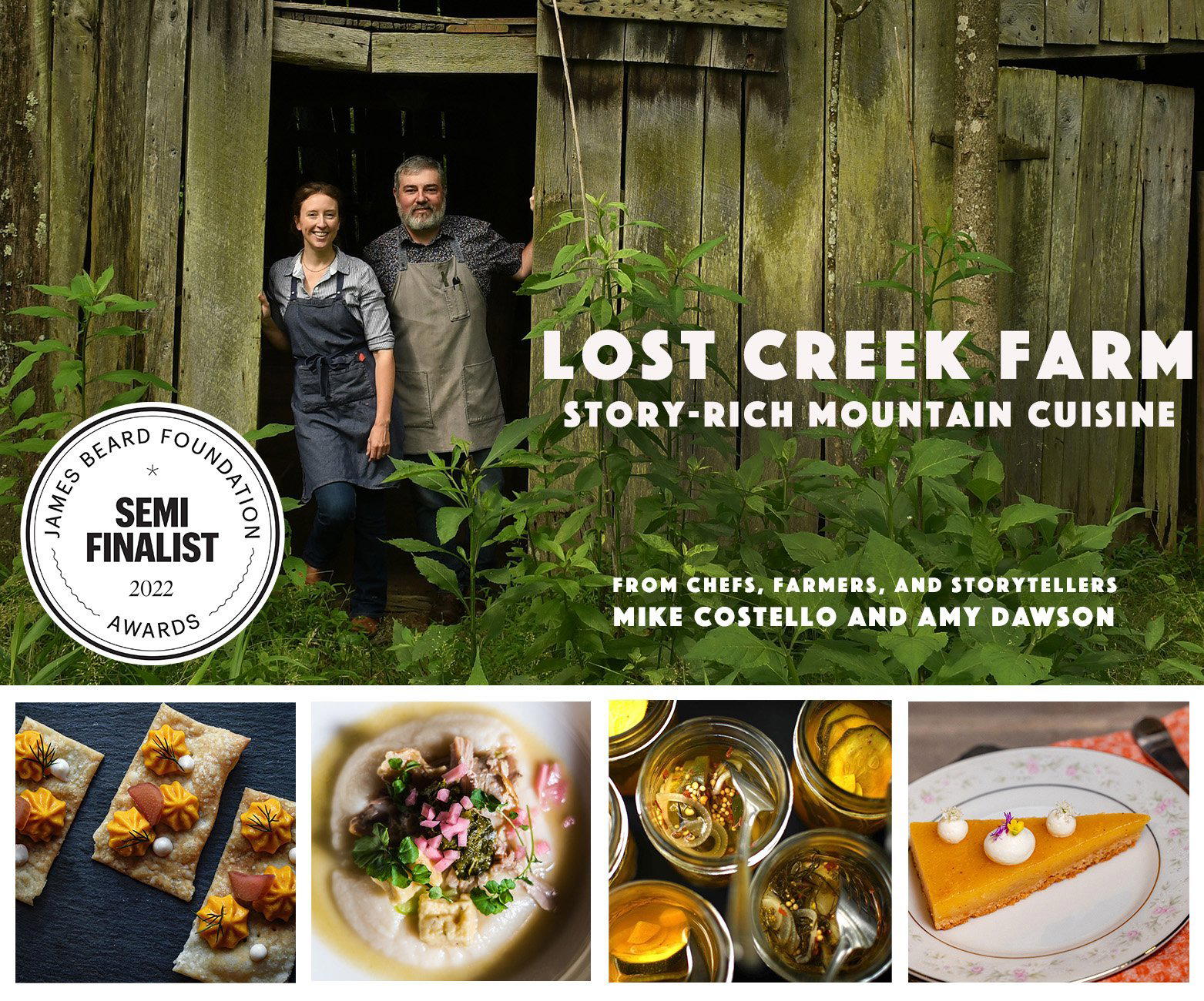
Where the Food Starts: Appalachian Agriculture and the Farm-Sourced Table
America's farm-to-table conversation has largely been conducted on the coasts. The venues that shaped its vocabulary, Blue Hill at Stone Barns in Tarrytown, Single Thread Farm in Healdsburg, Smyth in Chicago, built their reputations by making the sourcing chain visible, then building a dining experience around that transparency. The underlying argument is not new: food tastes different when you can trace it to a specific field. What is less documented is how that argument plays out in the agricultural interior of West Virginia, where the supply chain is short not by design philosophy but by geography and necessity.
Harrison County sits in north-central West Virginia, a region defined by rolling terrain, family-scale agriculture, and almost complete absence from national food media. Lost Creek Farm, addressed at 104 Sunrise Rd in the unincorporated community of Lost Creek, operates within that context. The road name is descriptive rather than romantic: Sunrise Road runs through working land, and the farm is a working property first. Whatever hospitality or dining function it serves grows from that agricultural base rather than being imposed on it.
That distinction matters when thinking about ingredient sourcing as a dining premise. At destination restaurants like The French Laundry in Napa or Addison in San Diego, sourcing partnerships are curated arrangements, relationships built between a restaurant's procurement team and external producers. The ingredient arrives at the kitchen having already traveled. At a property like Lost Creek Farm, the interval between ground and table collapses almost entirely. That compression is the defining characteristic of the format, and it is what separates genuine farm operations from restaurants that have adopted agrarian aesthetics.
West Virginia's Food Tradition and What It Produces
West Virginia's agricultural identity is shaped by terrain. The state is the most forested in the eastern United States, with arable flatland at a premium. What grows well here tends to be hardy: root vegetables, brassicas, alliums, cool-season greens, and heritage grain varieties that large commodity agriculture has mostly abandoned. The foraging culture runs parallel to cultivation, ramps, morels, pawpaws, and black walnuts are all Appalachian ingredients that have recently attracted national attention in chef-driven contexts.
Restaurants working seriously with Appalachian ingredients, Bacchanalia in Atlanta has engaged with Southern Appalachian produce, and Oyster Oyster in Washington, D.C. has built a plant-forward program with regional sourcing logic, tend to be located at the edges of the region rather than within it. The interior of West Virginia itself has very few dining establishments that translate its agricultural output into a considered food experience. That gap is what makes a property like Lost Creek Farm, whatever form its hospitality takes, worth understanding in context.
The farm-sourced format at its most coherent, as practiced at operations like Lazy Bear in San Francisco or, at a different scale, The Inn at Little Washington in Virginia, treats the agricultural calendar as the menu's actual author. What is ready to harvest determines what is served. That constraint produces a discipline that no amount of procurement budget can replicate.
The Sourcing Premise as Editorial Argument
The broader shift in American fine dining over the past fifteen years has been toward traceability. Le Bernardin in New York City built its identity around knowing the provenance of every fish. Providence in Los Angeles has maintained a similar discipline around sustainable seafood sourcing. ITAMAE in Miami applies Nikkei sourcing principles to ingredients from both South America and Florida waters. In each case, the argument is that the sourcing decision is itself a culinary decision, that where something comes from shapes what it tastes like and what it means on the plate.
At the farm-operation end of the spectrum, that argument reaches its logical endpoint. There is no intermediary making sourcing decisions. The land makes them. That level of proximity also introduces a particular kind of unpredictability: a late frost, a wet spring, or a pest pressure event changes what is available, which changes what is possible to serve. Restaurants at the credentialed end of farm-sourcing, Frasca Food and Wine in Boulder, The Wolf's Tailor in Denver, Atomix in New York City, manage that variability through multiple sourcing relationships. A single-farm operation has no such buffer. The exposure to seasonal reality is total.
That exposure is also the point. When Atelier Moessmer Norbert Niederkofler in Brunico commits to cooking only what the surrounding Alpine region produces, the constraint becomes a creative framework and a philosophical declaration simultaneously. A West Virginia farm operating on analogous principles, using what the land provides, in the season it provides it, participates in the same logic, even without the awards infrastructure that makes Niederkofler's version internationally legible.
Planning a Visit to Lost Creek Farm
Harrison County is accessible from Clarksburg, the county seat, which sits roughly two hours south of Pittsburgh and two and a half hours northwest of Washington, D.C., making it reachable as a day trip or short detour from either corridor. Lost Creek itself is a small community northeast of Clarksburg, and Sunrise Road is a rural address requiring navigation by map rather than signage. For those who do seek it out, arriving with flexibility about timing and format is advisable, given that farm operations are governed by seasonal and agricultural rhythms rather than fixed hospitality schedules.
At-a-Glance Comparison
Comparable venues nearby, for context on price, style, and recognition.
| Venue | Cuisine | Price | Awards | Notes |
|---|---|---|---|---|
| Lost Creek FarmThis venue — the venue you are viewing | Heritage-Inspired Appalachian Mountain Cuisine | $$$ | , | |
| Laury's Restaurant | Contemporary American Steakhouse with French Infusion and Seafood | $$$ | , | Downtown |
| Appalachia Kitchen | Farm-to-Table Modern American | $$$ | , | Snowshoe Mountain Resort |
| 1010 Bridge | Appalachian New Americana | $$$ | , | South Hills |
| Brooks Run Mining Co | American Mining Canteen | , | , | Cucumber |
| Best of Crete Deli | Greek Deli | $$ | , | Downtown Charleston |
Continue exploring
More in Lost Creek
Restaurants in Lost Creek
Browse all →
At a Glance
- Rustic
- Cozy
- Scenic
- Intimate
- Special Occasion
- Historic Building
- Farm To Table
- Local Sourcing
- Mountain
- Garden
Gracious warm-white 1880s farmhouse lit by setting sun and fairy lights, creating a cozy and intimate atmosphere with easy-going camaraderie.