
A Michelin Plate-recognised wonton noodle stall in Jurong West, Long Kee Wanton Noodle operates within Singapore's tradition of hawker cooking that prizes minimal waste, familiar ingredients, and generational consistency. Holding, it represents the city-state's broader commitment to preserving street food culture at the neighbourhood level.
Pearl is the En Primeur Club membership app — saves, bookings, and concierge access live there. Same editors, same standards.
- Address
- 505 Jurong West Street 52, #01-185, Singapore 640505
- Directions
- Get directions
 Saves & bookings on Pearl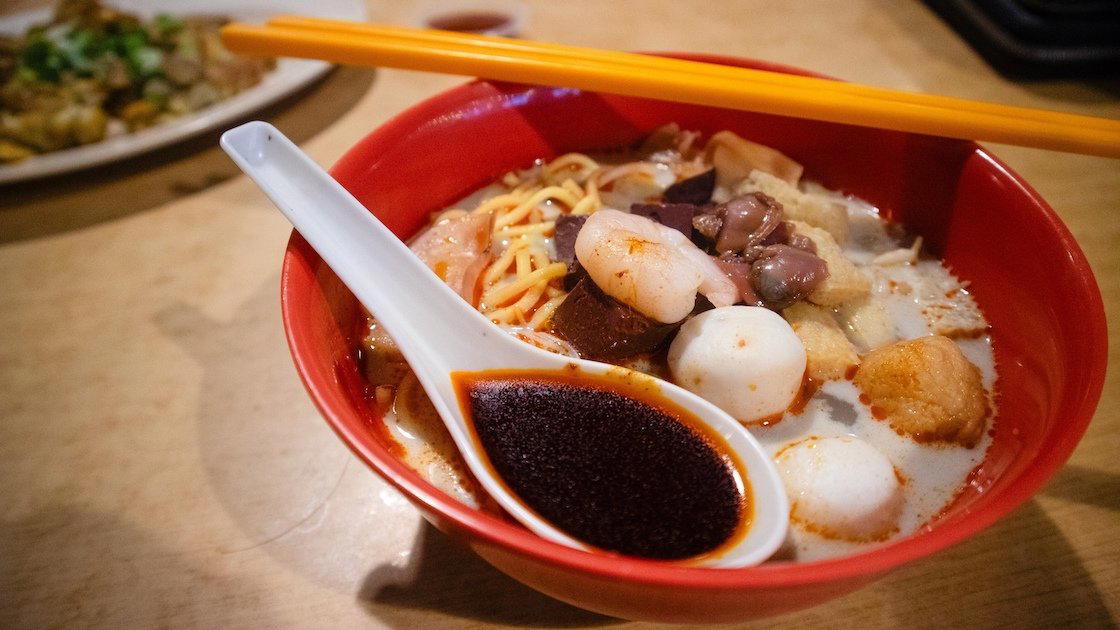
Hawker Cooking and the Logic of Nothing Wasted
A bowl of wonton noodles at a Jurong West kopitiam arrives with an economy that high-ticket kitchens spend years trying to replicate. Every element, the broth, the dumplings, the noodles dressed in sauce, has a function. Nothing is decorative. This is the operating logic of Singapore's hawker tradition, and it is a logic that has quietly anticipated many of the principles now discussed under the banner of sustainable cooking. Hawker stalls like Long Kee Wanton Noodle, located at 505 Jurong West Street 52, occupy a corner of that tradition where scale stays small, the ingredient list stays tight, and the relationship between cook and customer is direct.
Jurong West is not a neighbourhood where dining destinations are manufactured. It is a residential town where food courts and kopitiams serve the people who actually live there, day after day. That context matters when thinking about sustainability in practice rather than in principle. Stalls in this environment run on demand. There is no performance portion, no theatrical garnish, and no incentive to overproduce. The discipline is structural.
Where Long Kee Sits in Singapore's Noodle Conversation
Singapore's noodle canon is varied and well-documented. Hill Street Tai Hwa Pork Noodle holds a Michelin Star and draws queues from across the island. 545 Whampoa Prawn Noodles and Adam Rd Noo Cheng Big Prawn Noodle have built loyal followings around a single broth style. A Noodle Story represents the modernist end of the spectrum. Long Kee operates at a different register entirely: Michelin Plate recognition in 2025 signals a quality floor, not a destination status. The Plate distinction positions Long Kee among a wider category of hawker stalls in Michelin's Singapore coverage.
The price point, in the single-dollar tier, keeps Long Kee firmly within the neighborhood it serves. Where 91 Fried Kway Teow Mee has built recognition around a specific wok discipline, wonton noodle stalls operate on a different craft axis: the thinness of the egg noodles, the texture of the wonton skin, and the balance of the soy-based dry sauce or the clarity of the soup base. These are the variables that separate a competent bowl from one that earns repeat visits from locals who have many alternatives within walking distance.
The Sustainability Argument That Hawker Culture Already Makes
Discussions about sustainable food systems tend to gravitate toward fine dining innovation: fermentation programs, nose-to-tail menus, hyper-local sourcing. The hawker stall makes the same argument without the vocabulary. Wonton noodle cooking uses every part of the process. The pork-based broth is built from bones and offcuts. The wontons themselves are a study in minimalism, thin pastry, modest filling, no excess. Noodle portions are calibrated by experience rather than by a weight specification, which means a seasoned stall operator is running on intuitive efficiency that years of service have compressed into instinct.
This is not a romanticised portrait of poverty cooking. It is an observation about what happens when a food system has no margin for waste because the economics of a kopitiam stall allow none. The result is a cooking discipline that produces little refuse and relies on ingredients that travel short supply chains. That structure is worth naming, particularly when Singapore has committed to preserving its hawker culture as a form of intangible heritage, a status formalised when UNESCO inscribed Singapore's hawker culture on its Representative List in 2020.
Across Southeast Asia, similar logic applies at the street food level. The discipline of the single-dish specialist, whether at 888 Hokkien Mee in George Town, Ah Boy Koay Teow Th'ng, or A Pong Mae Sunee in Phuket, is partly the discipline of constraint. One dish, refined over time, with minimal ingredient redundancy. Long Kee belongs to that same regional pattern. For further reference points in the region's street food tradition, Air Itam Duck Rice, Air Itam Sister Curry Mee, Ali Nasi Lemak Daun Pisang, Anuwat in Phang Nga, and Banana Boy in Hong Kong each demonstrate how single-focus street cooking sustains both craft and community.
The Jurong West Context
Jurong West represents a different geography of Singapore dining than the central corridors that attract most food media attention. Estates like this one are where a significant portion of the population actually eats most of their meals. The competition is horizontal rather than vertical: nearby stalls offer alternatives at similar prices, which means quality maintenance is not optional. A stall that loses its form loses its regulars to the next counter.
For visitors to Singapore who restrict their food itinerary to the Marina Bay corridor or Tiong Bahru, Jurong West offers a different reading of the city's food culture at neighborhood scale. The infrastructure is less curated, the signage is less photogenic, and the experience is correspondingly more functional. That is, for many readers, the point.
Planning Your Visit
Address: 505 Jurong West Street 52, #01-185, Singapore 640505. Budget: Single-dollar price range consistent with kopitiam hawker stall pricing. Reservations: Not applicable at hawker stall format; arrive and order at the counter. Dress: No requirements. Getting There: Jurong West is served by the MRT network; check the transport authority's journey planner for the current fastest route from your accommodation. Timing: Tue, Wed, Thu, Sat, and Sun, 6 AM to 1 PM; closed Mon and Fri.
Category Peers
Comparable venues nearby, for context on price, style, and recognition.
| Venue | Cuisine | Price | Awards | Notes |
|---|---|---|---|---|
| Long Kee Wanton NoodleThis venue — the venue you are viewing | Traditional Chinese Wanton Noodles | $ | Michelin Plate | Not listed |
| Tiong Bahru Lien Fa Shui Jing Pau | Teochew Crystal Dumplings | $ | Michelin Plate | ALEXANDRA HILL |
| Zheng Zhi Wen Ji Pig's Organ Soup | Singaporean Pig's Organ Soup | $ | Michelin Plate | CLEMENTI CENTRAL |
| Fatty Ox HK Kitchen | Hong Kong-style Cantonese Noodles | $ | Michelin Plate | CHINATOWN |
| Ah Heng Curry Chicken Bee Hoon | Singaporean Curry Chicken Bee Hoon Mee | $ | Not listed | CHINA SQUARE |
| Wok Hei Hor Fun | Wok Hei Hor Fun | $ | Michelin Plate | REDHILL |
Recognition history
Dated appearances from independent guides and award organizations, with the underlying list record or original source where available.
Michelin Guide Plate
Michelin Guide
Michelin Plate
Michelin
Continue exploring
More in Singapore
Restaurants in Singapore
Browse all →
Bars in Singapore
Browse all →
At a Glance
- Classic
- Casual Hangout
- Standalone
Current opening hours
- Monday
- Closed
- Tuesday
- 6 AM–1 PM
- Wednesday
- 6 AM–1 PM
- Thursday
- 6 AM–1 PM
- Friday
- Closed
- Saturday
- 6 AM–1 PM
- Sunday
- 6 AM–1 PM
Hours can change for holidays and private events. Last verified .
Casual hawker centre atmosphere with queues and comforting old-school noodle stall vibe.