
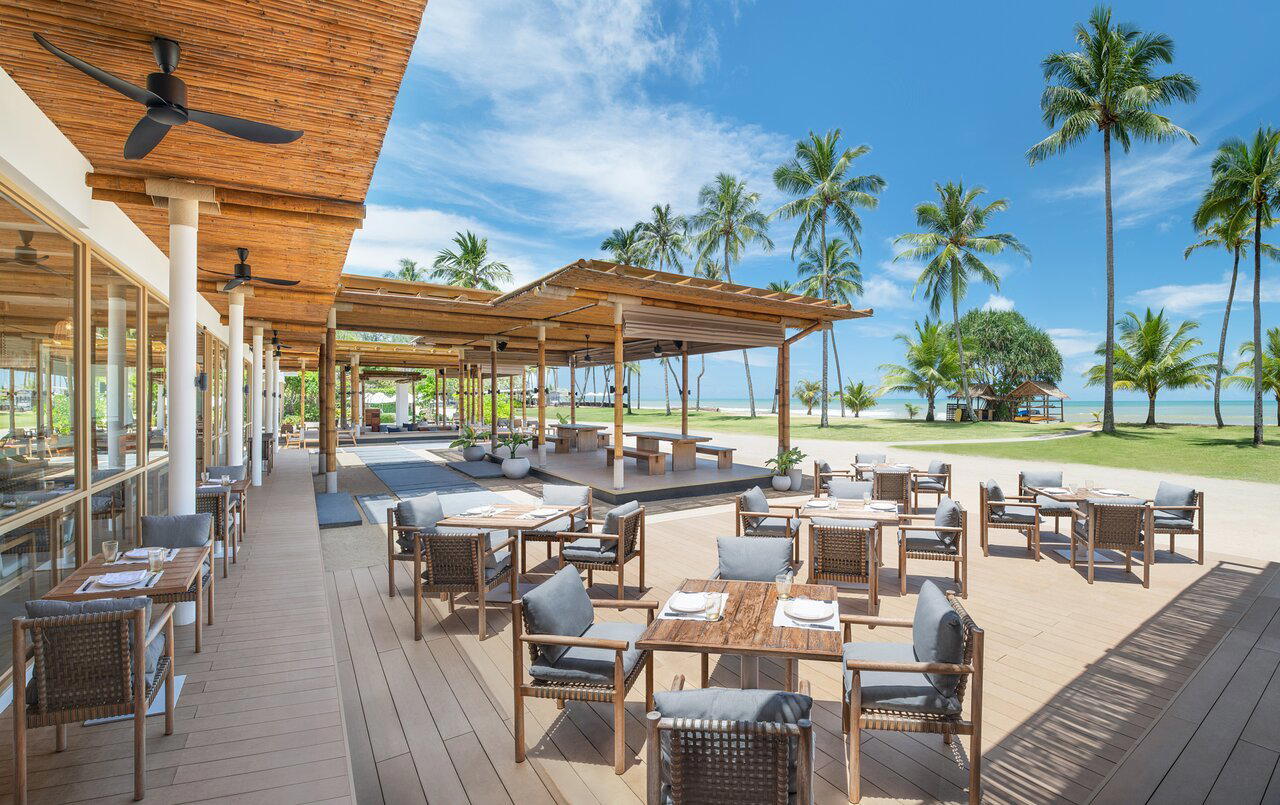
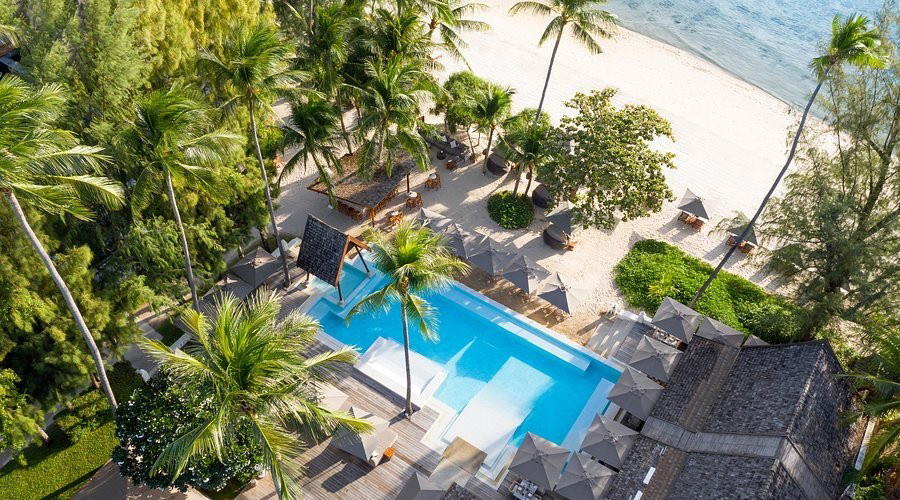
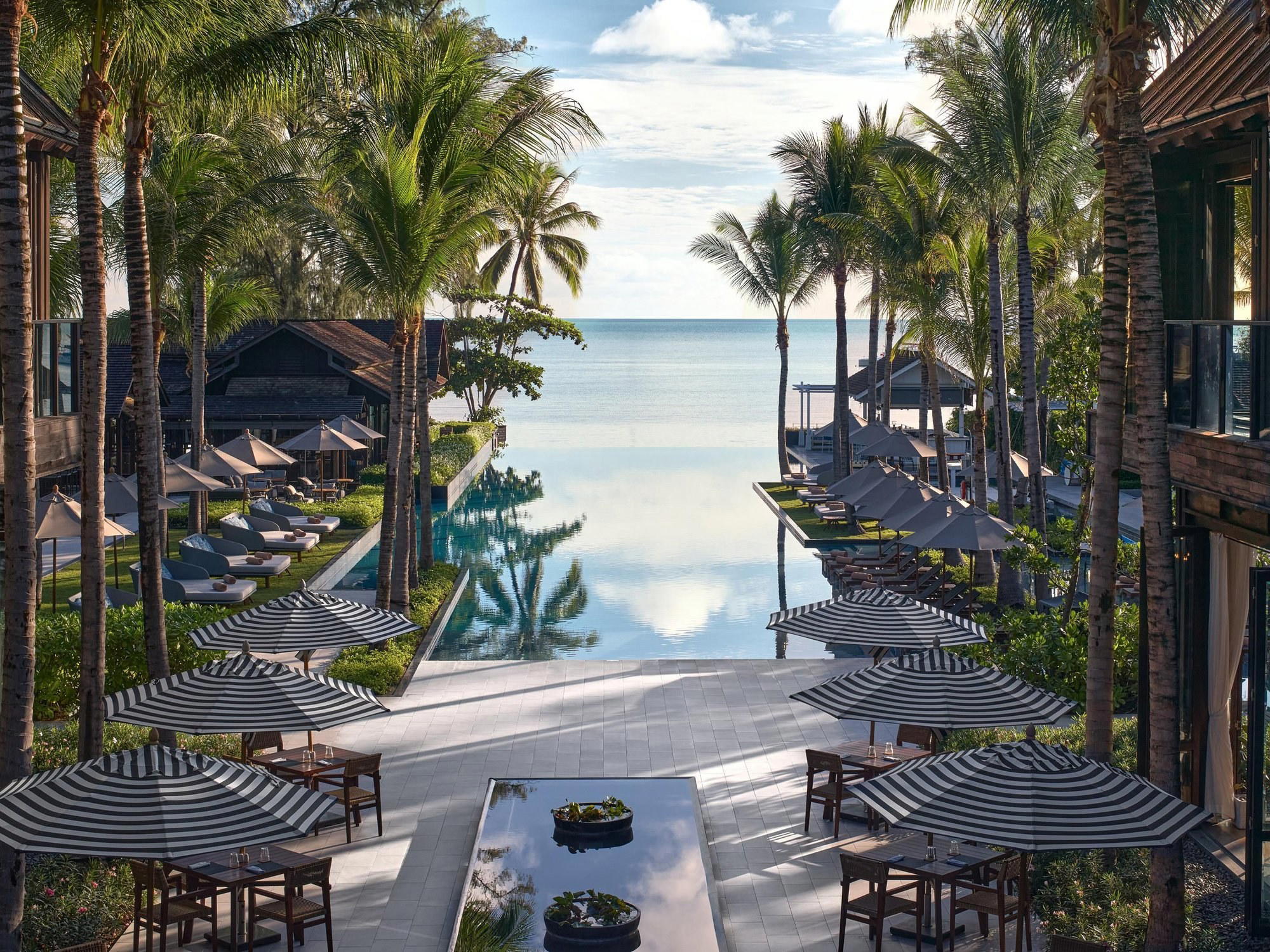
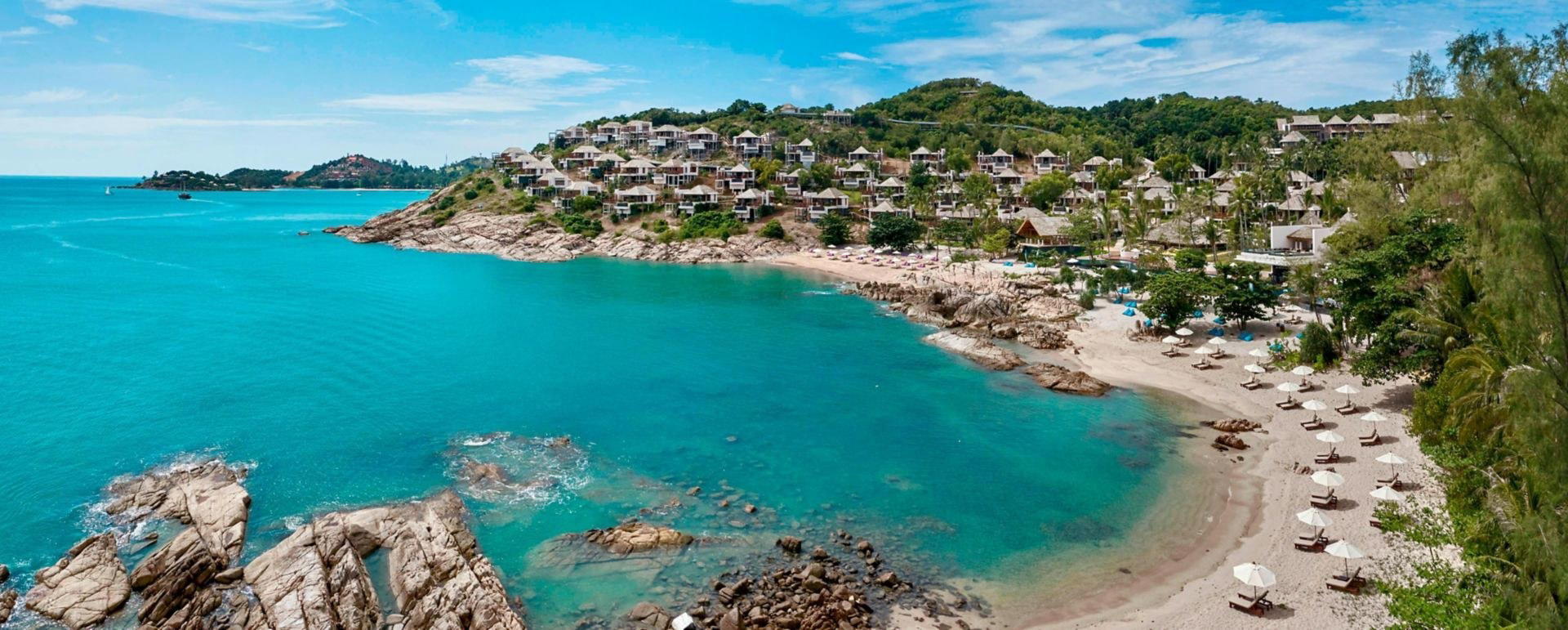
Long Dtai sits on a private island off Samui's east coast, reached by crossing shallow waters to a terrace with panoramic bay views. Chef David Thompson's Southern Thai menu earned consecutive Michelin Plates in 2024 and 2025, with a focus on marine sustainability and technically precise dishes that reference the region's deep culinary traditions. At ฿฿฿ pricing, it occupies a distinct tier among Ko Samui's restaurant options.
Pearl is the En Primeur Club membership app — saves, bookings, and concierge access live there. Same editors, same standards.
- Address
- 24/269 Moo 5 T, A. Koh Samui, Surat Thani 84320, Thailand
- Phone
- +66 77 602 301
- Website
- longdtai.com
- Directions
- Get directions
 Saves & bookings on Pearl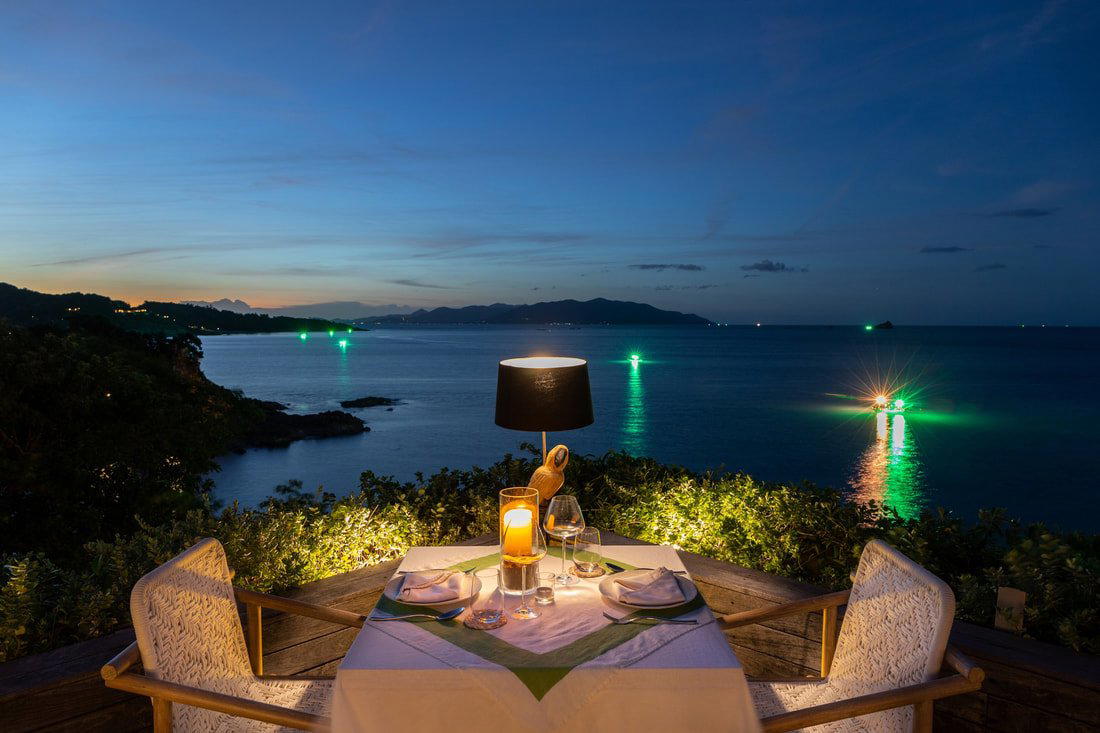
A Private Island, Southern Thai Roots, and a Particular Kind of Precision
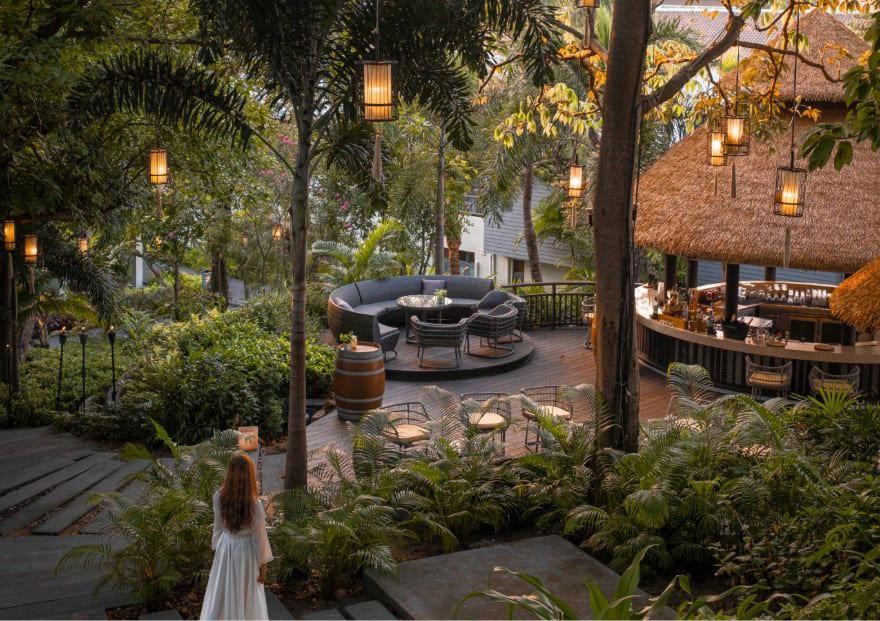
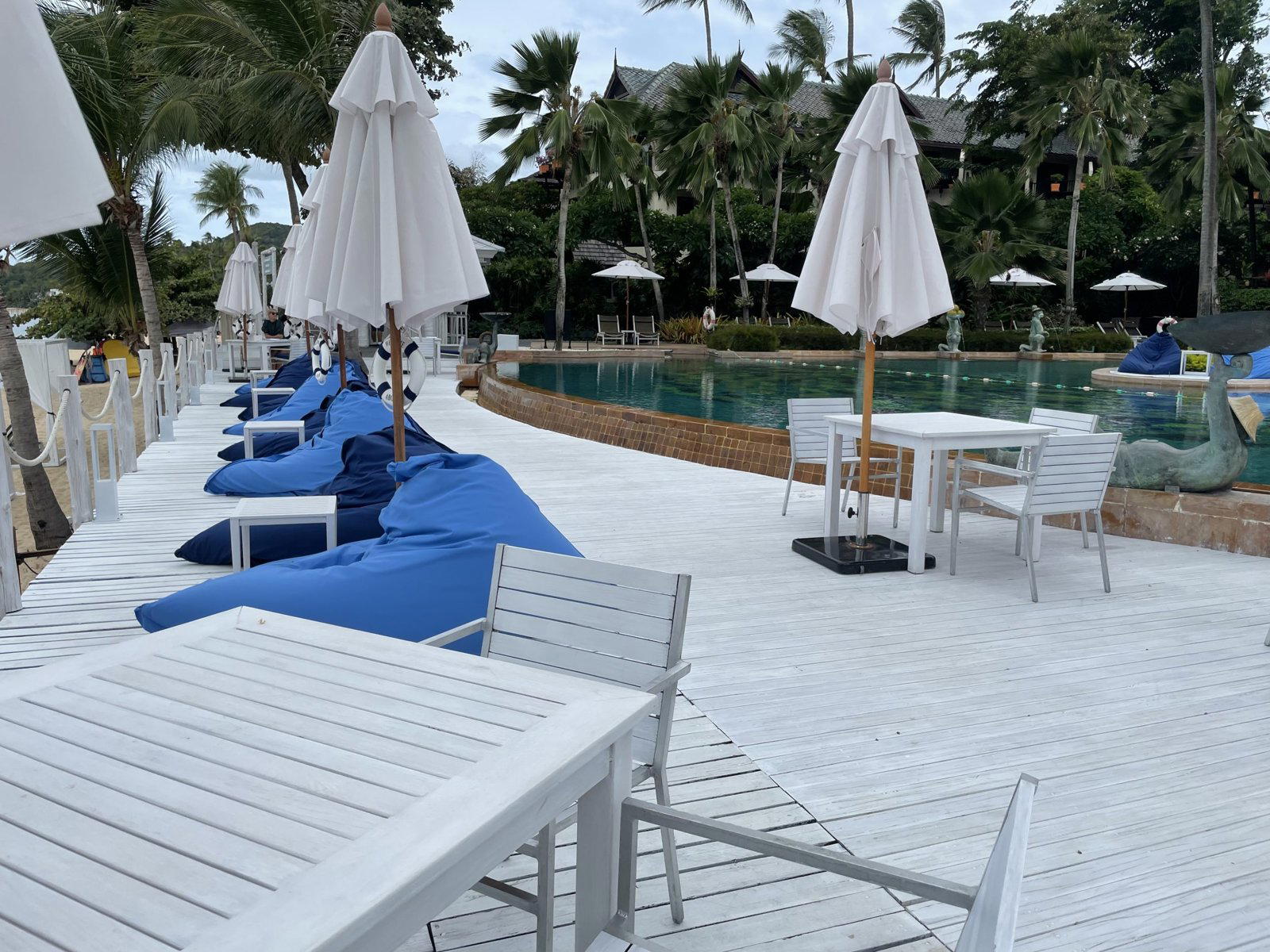
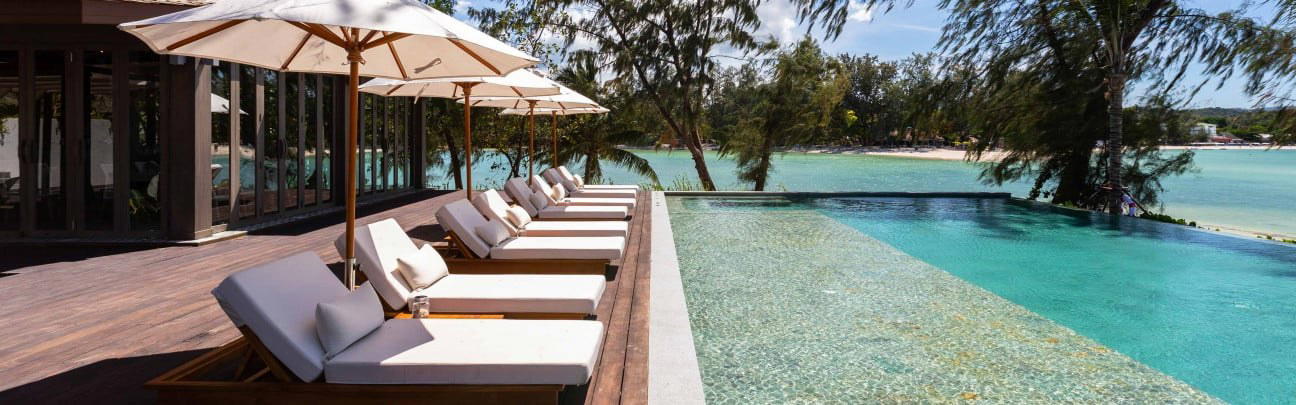
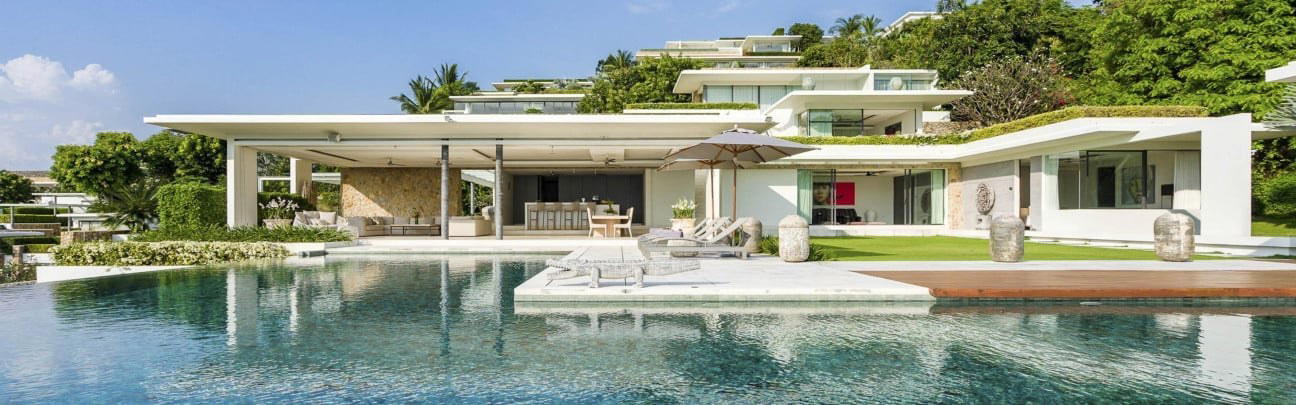
Getting to Long Dtai requires a short crossing of shallow coastal waters off Samui's east coast to a private island resort. The arrival is unhurried and deliberate, and by the time diners settle onto the restaurant's open terrace, the surrounding bay has already established the terms of the meal: wide, unobstructed, and oriented toward the sea. That physical remove from the island's busier strips is not merely atmospheric. It signals a different kind of dining contract, one where the food is expected to hold its own against the view rather than borrow from it.
Southern Thai cuisine is one of the country's most distinctive regional traditions, and also one of its most demanding. The food of Thailand's south is sharper, fiercer, and more reliant on fresh coastal produce than the central and northern styles that dominate most international Thai menus. Where central Thai cooking favours coconut-milk sweetness and balance, Southern Thai leans into heat, bitterness, fermented shrimp paste, and the acidic brightness of local citrus. The cuisine has a specificity that resists dilution, and a restaurant that takes it seriously is making a deliberate choice to serve something that not every diner will find comfortable on first encounter.
Where Long Dtai Sits in the Ko Samui Scene
Ko Samui's restaurant scene spans a wide range of formats and price points, from market-adjacent seafood at Baan Suan Lung Khai and Bang Por Seafood Takho at ฿฿, through European-leaning options like FishHouse at ฿฿฿, to the Southern Thai cooking at Kapi Sator at ฿฿. Long Dtai operates at ฿฿฿ and in a private island resort setting, which positions it toward the upper bracket of the island's dining options in terms of both price and experience architecture. Consecutive Michelin Plates in 2024 and 2025 place it among a small group of Ko Samui restaurants with formal recognition from that guide. For broader regional comparison, the Southern Thai tradition at this level is also being explored at Chom Chan in Phuket and, in Bangkok, at Beer Hima in Chatuchak, each approaching the cuisine from a different context and format.
In a market where many ฿฿฿ restaurants on resort islands compete primarily on setting, recognition tied to the food itself changes the weighting.
The Menu: Southern Thai Discipline with Marine Sustainability
Chef David Thompson is among the more documented figures in Thai cuisine internationally, with a long-standing engagement with Southern Thai cooking that predates the current wave of global interest in Thai regional food. At Long Dtai, that background produces a menu described as deceptively simple, where the complexity lives in technique and ingredient sourcing rather than in plate architecture or theatre.
Marine sustainability runs through the menu's logic. In a region where overfishing and habitat pressure are documented concerns across the Andaman and Gulf coastlines, a restaurant that builds its sourcing around that constraint is making a choice that affects what appears on the menu and when. The grilled squid marinated in turmeric and coconut milk, one of the dishes referenced in the restaurant's Michelin record, illustrates the approach: the marinade is built to amplify the squid's freshness rather than mask it, which only works when the base ingredient is genuinely fresh. That kind of discipline is more common at restaurants that source carefully and cook within the product's strengths, rather than working against them.
Southern Thai cuisine at this level shares a certain kinship with what is happening at Michelin-starred venues in Bangkok. Sorn in Bangkok, which holds two Michelin stars and applies serious archival research to Southern Thai cooking, and AKKEE in Pak Kret represent different points on the spectrum of how Southern Thai food is being treated at a formal level. The restaurant's version is less overtly academic and more rooted in the coastal context of where it operates, which suits the setting and the diner profile that a private island resort tends to attract.
The Broader Regional Picture
Ko Samui is not the obvious base for serious Thai regional cooking in the way that Bangkok or Chiang Mai might be, but the island has a stronger restaurant tier than its beach-resort reputation sometimes suggests. Beyond the restaurant and Kapi Sator, options like Khao Horm extend the Thai dining conversation in different directions on the island. For travellers moving through the region, the Southern Thai tradition appears in notably different forms at PRU in Phuket, which overlays local sourcing with a more contemporary European-inflected format, and at Aeeen in Chiang Mai, where Northern Thai cooking provides a useful counterpoint to what the south produces. Separately, Agave in Ubon Ratchathani and The Spa in Lamai Beach represent how different parts of Thailand are developing distinct dining identities at different scales.
Planning Your Visit
The restaurant's address is 24/269 Moo 5 T, A. Koh Samui, Surat Thani 84320, on the east coast of Ko Samui. Reaching the restaurant requires crossing the shallow water to the private island, so building in time for the crossing is part of the logistics. Given the resort island setting, advance planning is advisable; walk-in availability at a ฿฿฿ Michelin-recognised restaurant in a resort that manages its own access is unlikely to be consistent. A reliable booking route is through the resort directly or via your accommodation concierge if staying on Samui.
What People Order at Long Dtai
The grilled squid marinated in turmeric and coconut milk is the dish most specifically noted in the restaurant's Michelin Plate record, and it serves as a useful entry point into the menu's logic. Southern Thai cooking at this level tends to rely on a short list of ingredients treated with precision rather than complexity for its own sake. Chef David Thompson's reputation in Southern Thai cooking spans decades and multiple formats, and at the restaurant that experience is directed toward a menu that reads simply but rewards attention in the eating. Marine sustainability shapes what is available and how it is handled, which means the seafood selection reflects both seasonal availability and sourcing standards. The panoramic terrace setting and the private island access reinforce that this is a meal built around a complete experience, but the Michelin recognition over two consecutive years confirms that the food carries the weight independently of the surroundings.
A Tight Comparison
Comparable venues nearby, for context on price, style, and recognition.
| Venue | Cuisine | Price |
|---|---|---|
| Long DtaiThis venue — the venue you are viewing | Bo Phut, Authentic Southern Thai Seafood | $$$$ |
| Saffron | Maret, Modern Thai Fine Dining | $$$$ |
| Koh Thai Kitchen | Ang Thong, Modern Southern Thai | $$$ |
| Ko Seng | Mae Nam, Southern Thai Seafood | $$ |
| Krua Chao Baan | Maret, Southern Thai Beachside | $$ |
| Bang Por Seafood Takho | Bang Por, Southern Thai Seafood | $$ |
Recognition history
Dated appearances from independent guides and award organizations, with the underlying list record or original source where available.
Michelin Plate
Michelin
Michelin Plate
Michelin
Michelin Plate
Michelin
Continue exploring
More in Koh Samui
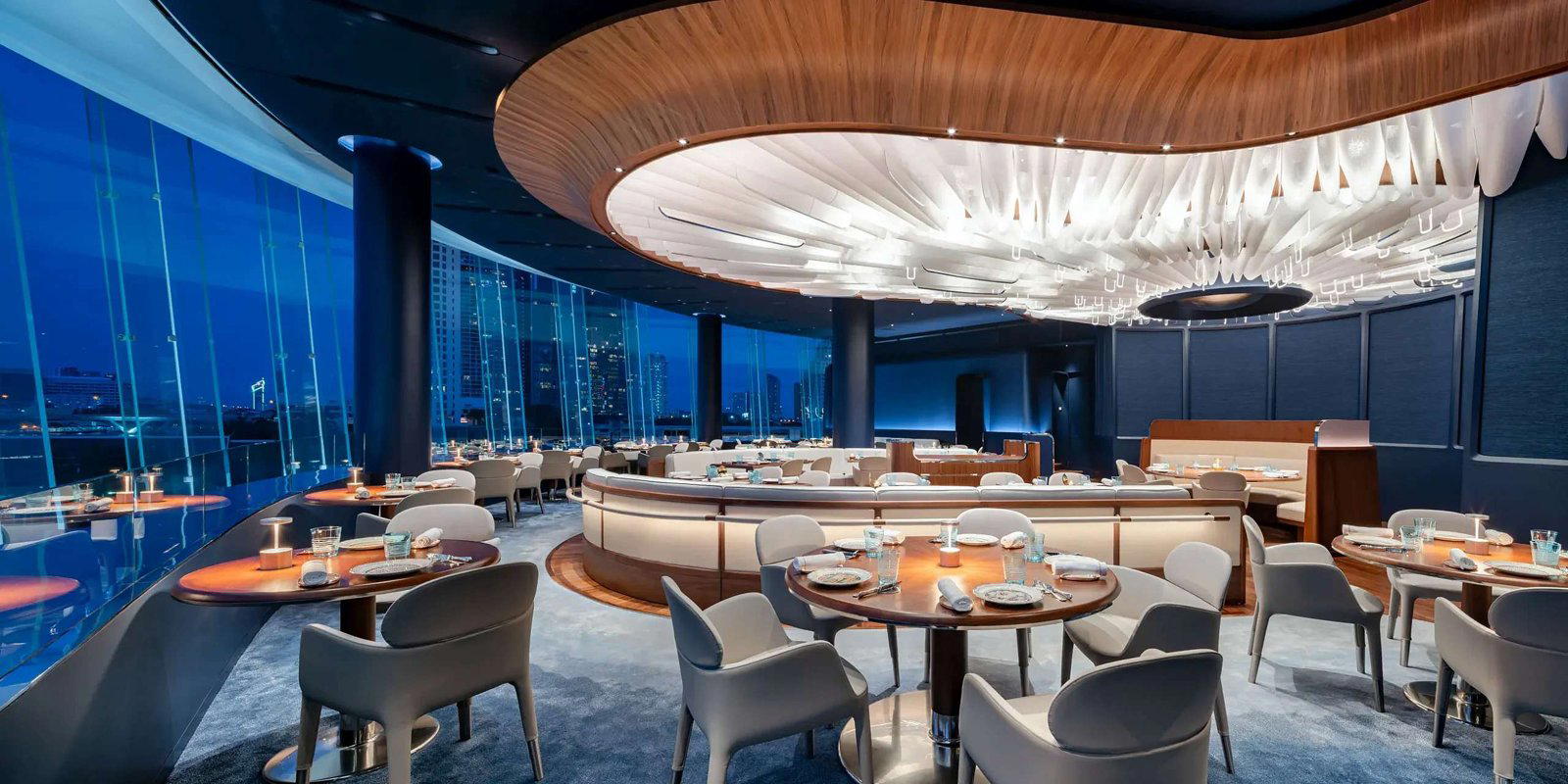
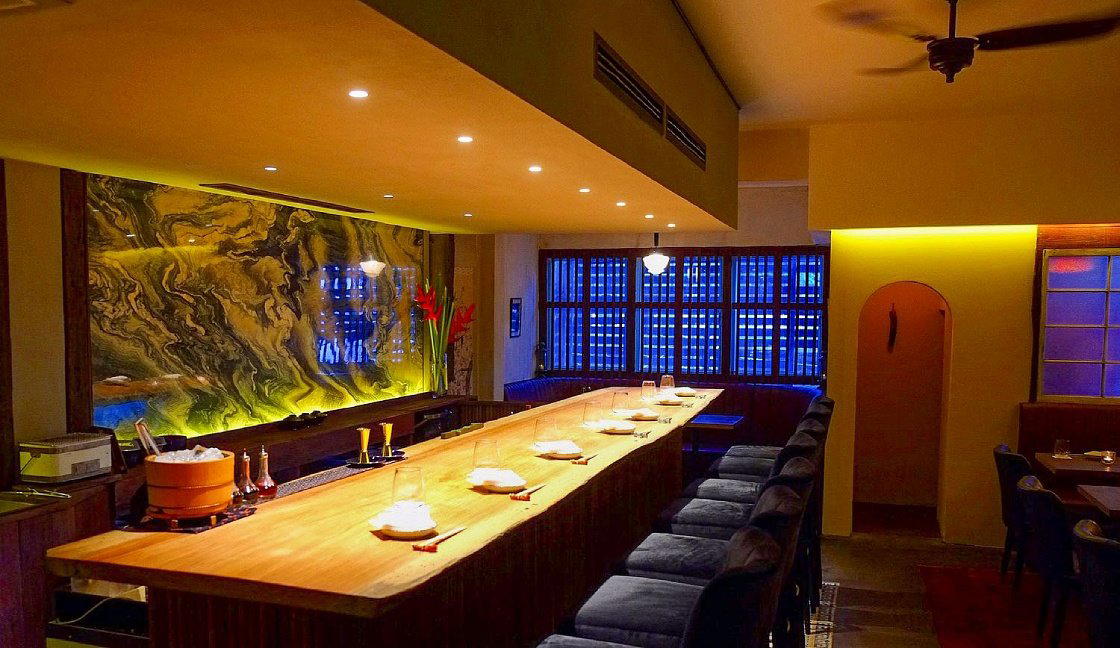
Restaurants in Koh Samui
Browse all →
Bars in Koh Samui
Browse all →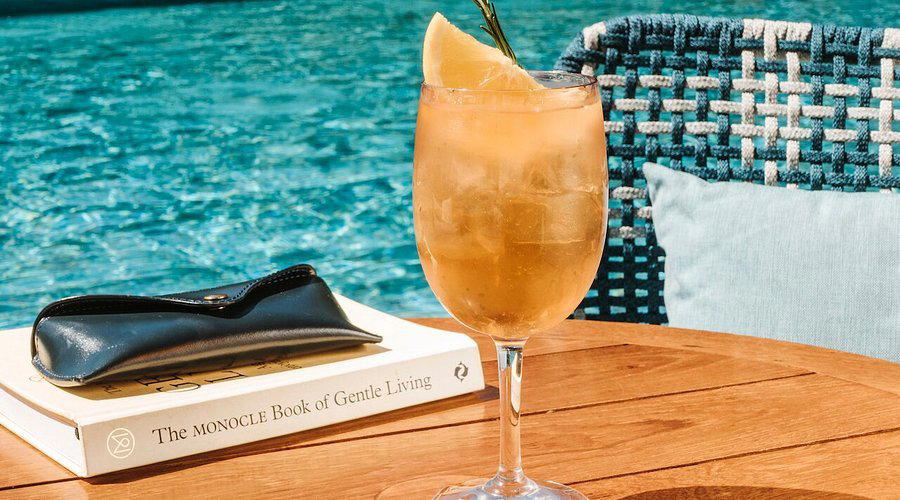
At a Glance
- Elegant
- Scenic
- Sophisticated
- Romantic
- Date Night
- Special Occasion
- Celebration
- Waterfront
- Terrace
- Panoramic View
- Hotel Restaurant
- Extensive Wine List
- Local Sourcing
- Sustainable Seafood
- Waterfront
Current opening hours
- Monday
- 5–11 PM
- Tuesday
- 5–11 PM
- Wednesday
- Closed
- Thursday
- 5–11 PM
- Friday
- 5–11 PM
- Saturday
- 5–11 PM
- Sunday
- 5–11 PM
Hours can change for holidays and private events. Last verified .
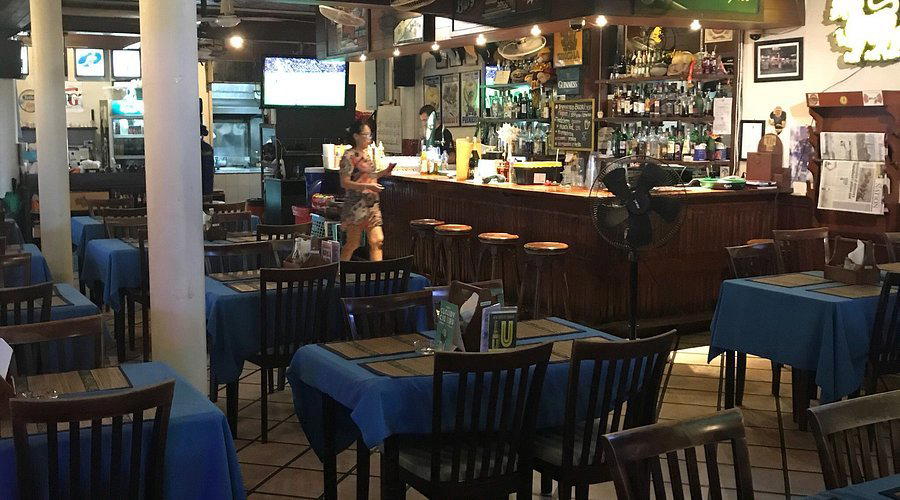
Luxury outdoor terrace seating with unobstructed ocean views, elegant yet relaxed atmosphere enhanced by live music and seaside setting.