L&L Hawaiian Barbecue
L&L Hawaiian Barbecue on Kamakee Street is Honolulu's most recognizable plate lunch counter, where the plate lunch format — two scoops of rice, macaroni salad, and a protein — functions as both daily ritual and cultural shorthand for the islands' mixed culinary heritage. The menu draws from Japanese, Korean, Filipino, and American influences folded into a single tray, and the price point keeps it accessible to residents and visitors alike.
Pearl is the En Primeur Club membership app — saves, bookings, and concierge access live there. Same editors, same standards.
- Address
- 310 Kamakee St, Honolulu, HI 96814
- Phone
- +1 808 597 9088
- Website
- hawaiianbarbecue.com
- Directions
- Get directions
 Saves & bookings on Pearl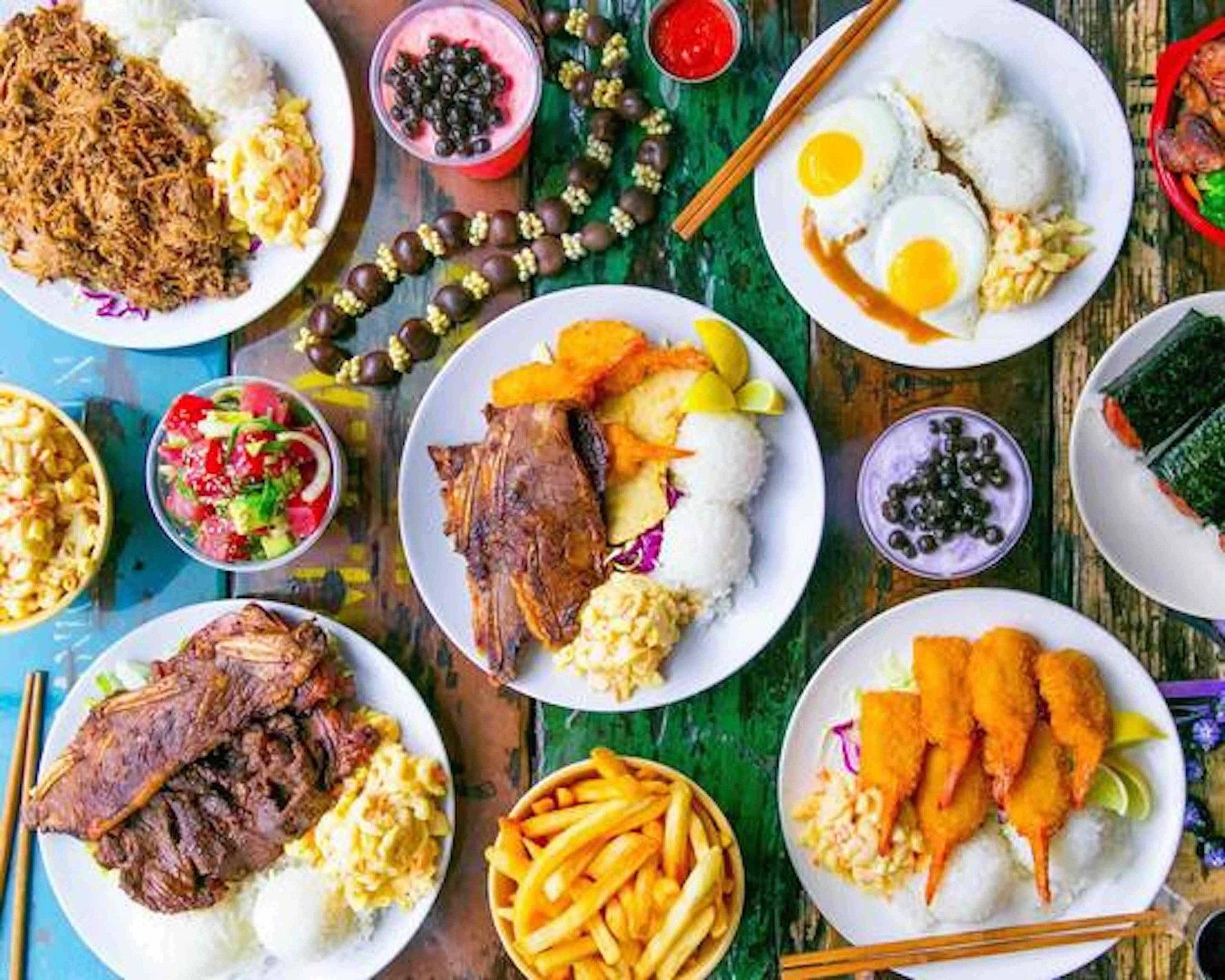
The Plate Lunch as Local Ritual
Walk into almost any L&L; Hawaiian Barbecue location in Honolulu at midday and the scene reads the same way: a queue of construction workers, office staff, and tourists moving in practiced order toward a steam-table counter, each transaction resolved in under two minutes. The physical environment is functional rather than atmospheric — laminate tables, a menu board sized for decision-making at a glance, and the faint sweet char of teriyaki sauce hitting a hot grill. None of that is accidental. The plate lunch format that L&L; helped standardize across Hawaii is designed around speed, volume, and repetition, and the space reflects those priorities honestly.
Understanding L&L; Hawaiian Barbecue means understanding the plate lunch as a dining institution rather than a restaurant category. The format traces back to plantation-era Hawaii, when workers from Japan, Korea, the Philippines, Puerto Rico, and the continental United States ate lunch side by side and the meal that emerged blended all of their traditions into a single, practical tray. Two scoops of white rice, a scoop of macaroni salad bound with mayonnaise, and a protein — the architecture has remained largely unchanged for decades. What varies is the protein selection, which at L&L; runs from chicken katsu and kalbi short ribs to loco moco and spam musubi, each representing a different strand of the islands' food history.
How the Meal Is Eaten, and Why the Order Matters
The dining ritual at a plate lunch counter like this one operates by its own logic. You order at the counter, you receive a styrofoam or paper tray, and you eat at a communal table or in your car. There is no coursing, no pacing by a server, and no narrative arc built into the meal. The plate arrives complete, and the sequence in which you address the rice, the mac salad, and the protein is a matter of personal habit rather than instruction. Regular customers tend to have strong opinions about the ratio of sauce to rice, the temperature of the kalbi, and whether the macaroni salad should be eaten first as a palate-neutral base or saved as a counterpoint to the saltier proteins.
This is worth noting because the informality of the format can obscure how seriously Honolulu residents take it. The plate lunch occupies the same cultural register in Hawaii that the po'boy holds in New Orleans or the Chicago-style hot dog holds in its city, a format with specific rules, fierce local loyalty, and a long institutional memory. Deviations from the standard are noticed. A macaroni salad that skews too sweet or a teriyaki that pulls from an overly commercial glaze will draw quiet but firm disapproval from regulars who have been eating the same meal at the same counter for years.
L&L; in the Context of Honolulu's Casual Dining Tier
Honolulu's restaurant scene spans from plate lunch counters and ramen shops like AGU Ramen - Ward Centre through mid-range neighborhood restaurants such as Bread & Butter and 1050 Ala Moana Blvd, up to destination-tier dining at places like Alan Wong's Honolulu and waterfront restaurants such as Beachhouse at the Moana. L&L; sits at the base of that stack, deliberately and without apology.
That positioning is worth taking seriously. At the level of destination restaurants, say, The French Laundry in Napa, Le Bernardin in New York City, or Blue Hill at Stone Barns in Tarrytown, the meal is an event, structured over hours with significant advance planning. At the plate lunch counter, the meal is a Tuesday. Both registers are necessary to a city's food culture, and the plate lunch counter often does more to define a place's daily eating identity than the fine-dining tier does. Honolulu residents who would never set foot in a tasting-menu room eat plate lunch several times a week. The same argument could be made about the po'boy shops that operate in the shadow of Emeril's in New Orleans or the neighborhood ramen-ya that precede a kaiseki booking in Tokyo.
Elsewhere on the U.S. casual-dining spectrum, chain formats with strong regional identities, the kind of operations that anchor a neighborhood's lunch hour, tend to get less editorial attention than their cultural weight warrants. Lazy Bear in San Francisco, Smyth in Chicago, and Atomix in New York City represent one pole of American restaurant culture; the plate lunch counter represents another, and both are real.
What to Order and When to Go
The Kamakee Street location serves the lunch-focused residential and commercial corridor between Kakaako and the Ala Moana area, making it a practical stop if you are already in that part of the city. The midday window, roughly 11 a.m. through 1 p.m. on weekdays, draws the heaviest volume from nearby offices and trades workers, so arriving before the rush or after 1:30 p.m. tends to mean shorter queues. No reservation is required or possible; this is a walk-in counter format.
The chicken katsu plate is the entry point most commonly recommended to first-timers, partly because the panko-breaded cutlet travels well across different palates and partly because it illustrates the Japanese-American fusion logic of the plate lunch more clearly than the teriyaki options. The loco moco, a hamburger patty over rice topped with a fried egg and brown gravy, is a heavier option that reads as distinctly Hawaiian in its assembly even if each component has an American or Japanese antecedent. For a fuller picture of Honolulu's dining range, the full Urban Honolulu restaurants guide maps the city's options across every tier and neighborhood.
Comparisons to fine-dining counterparts like Providence in Los Angeles, Addison in San Diego, Single Thread Farm in Healdsburg, or Atelier Moessmer Norbert Niederkofler in Brunico are beside the point, L&L; operates in an entirely different register, serving a different function in the city's food ecosystem. The more useful comparison is The Inn at Little Washington not as a peer but as a counterpoint: one format measures a meal in hours and ceremony, the other measures it in minutes and repetition. Both are serious about what they do.
How L&L Hawaiian Barbecue compares with similar nearby venues.
| Venue | Cuisine |
|---|---|
| Piggy Smalls | Asian Fusion |
Continue exploring
More in Urban Honolulu
Restaurants in Urban Honolulu
Browse all →
Bars in Urban Honolulu
Browse all →
At a Glance
- Casual Hangout
- Family
Current opening hours
- Monday
- 10 AM–8:45 PM
- Tuesday
- 10 AM–8:45 PM
- Wednesday
- 10 AM–8:45 PM
- Thursday
- 10 AM–8:45 PM
- Friday
- 10 AM–8:45 PM
- Saturday
- 10 AM–8:45 PM
- Sunday
- 10 AM–8:45 PM
Hours can change for holidays and private events. Last verified .
Casual fast-food atmosphere with bright lighting and quick-service energy typical of a bustling local eatery.
Know Before You Go
- Getting there
- 310 Kamakee St, Honolulu, HI 96814