Bread & Butter
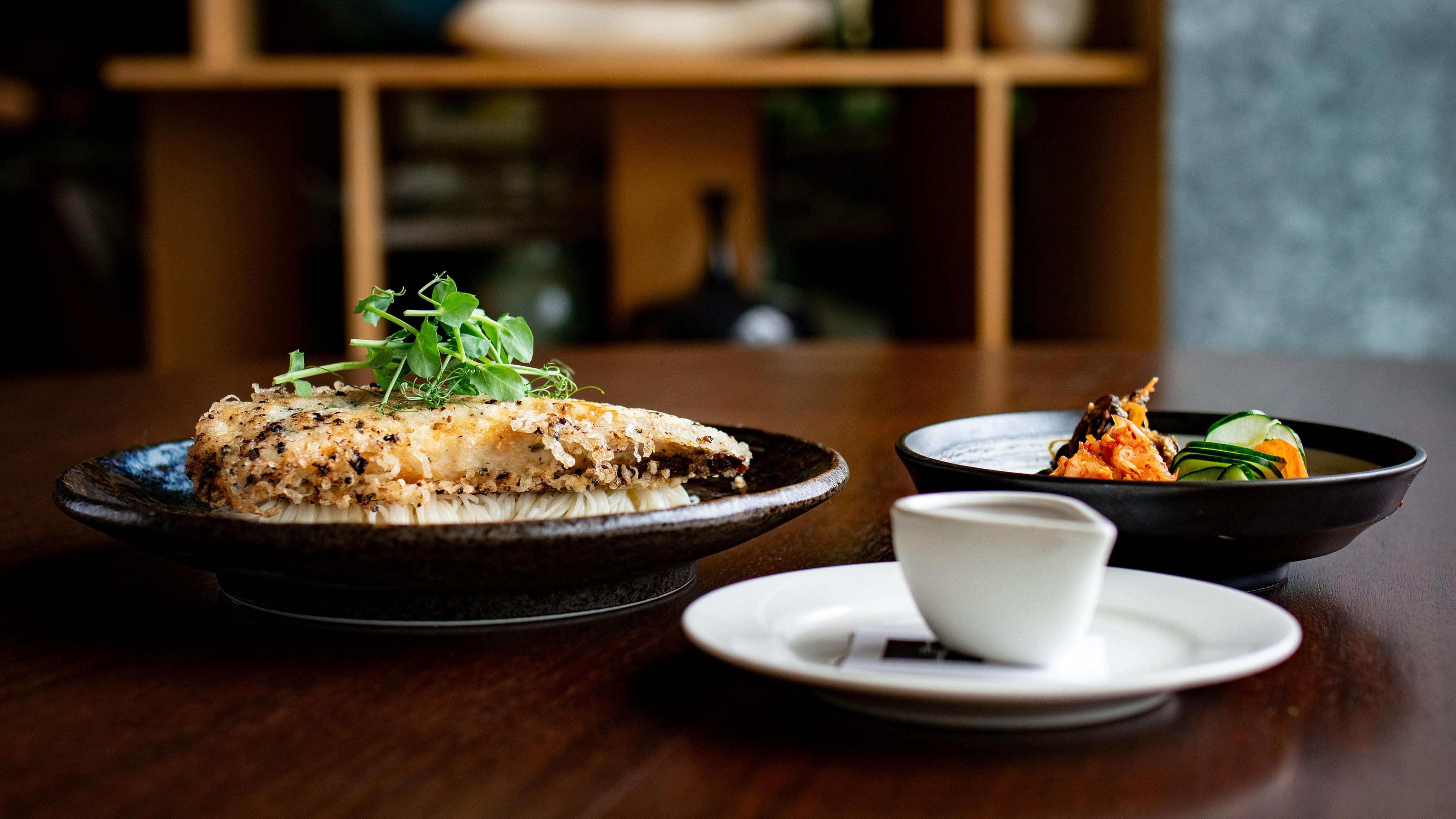
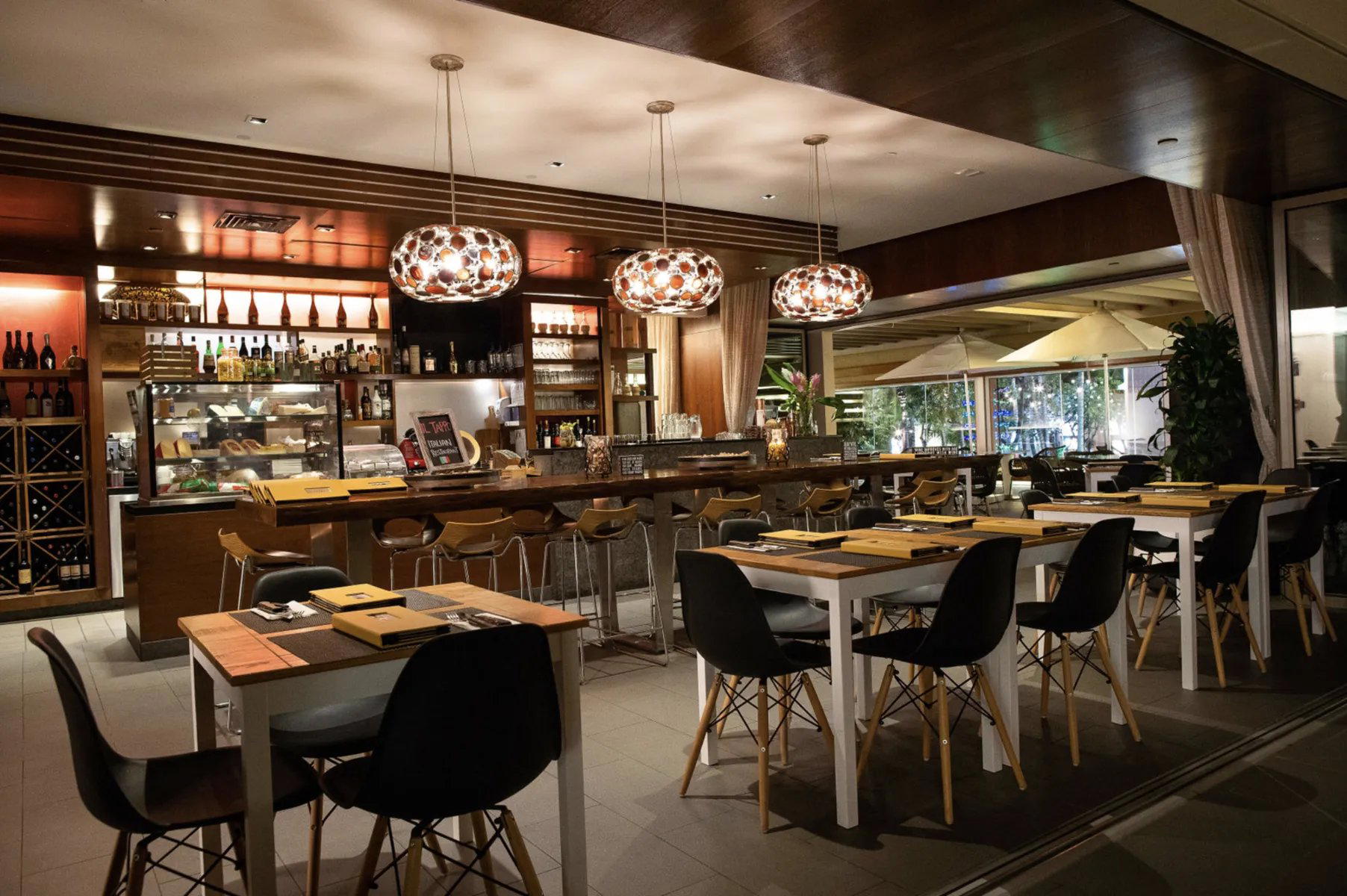
"Local restaurateur Hide Sakurai, also the force behind Shokudo next door, brings healthy grab-and-go options to the heart of Honolulu’s Ala Moana, the state's largest shopping center. An artisan café and pinot wine bar, Bread & Butter seats around 50 and serves three meals a day. Argentine chef Arnaldo "Masa" Gushiken adds hints of Spanish and Japanese cuisine to the otherwise locavore American menu. Highlights include the beet-peach-arugula salad and the house-smoked-ahi sandwich, balanced by the bright crunch of pickled vegetables in its side salad. Regulars also rave about the single servings of paella, the bell-pepper-goat-cheese dip, and the decadent truffle chicken starring an entire game hen."
- Address
- 1585 Kapiolani Blvd #110, Honolulu, HI 96814
- Phone
- +1 808 949 3430
- Directions
- Get directions
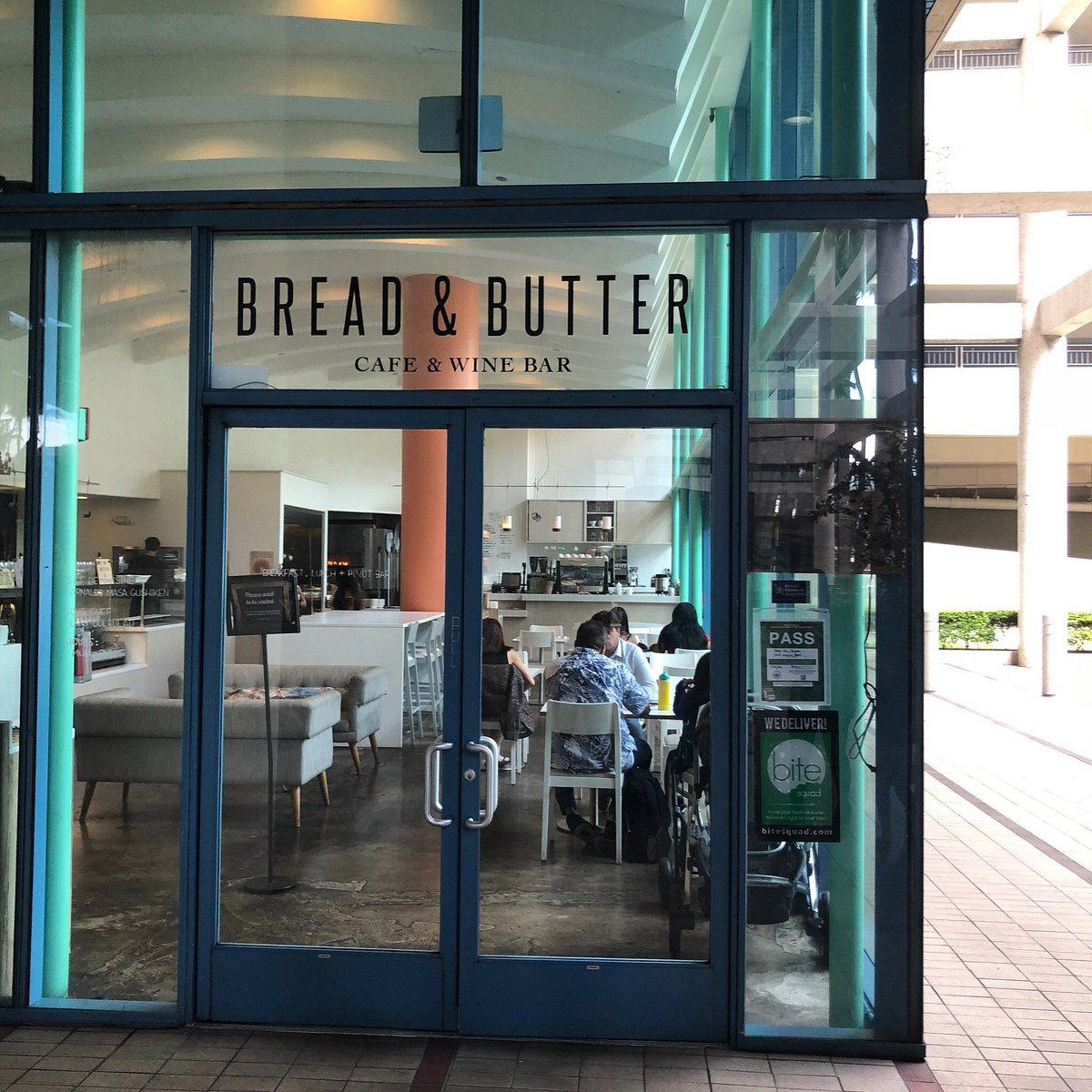
Where Kapiolani Boulevard Meets the Farm-to-Table Conversation
The stretch of Kapiolani Boulevard running through urban Honolulu does not announce itself with the oceanfront drama of Waikiki, but it is precisely where the city's more considered dining has been quietly taking shape. At 1585 Kapiolani Blvd, in a ground-floor suite that sits closer to the workaday rhythms of Honolulu's mid-town grid than to its resort corridors, Bread and Butter occupies a position that says something deliberate about its intentions. The name alone signals a certain unpretentiousness, a preference for craft over spectacle, and an interest in the foundational rather than the theatrical.
Honolulu's dining scene has always had a complicated relationship with its own geography. The islands sit at the center of one of the most biodiverse food-producing regions on earth, surrounded by Pacific waters, volcanic soil, and a polyglot culinary tradition built from Japanese, Hawaiian, Chinese, Portuguese, and Korean influences. Yet for decades, many of the city's restaurants either leaned into tourist-facing surf-and-turf formats or deferred to continental fine dining models imported wholesale from the mainland. The more interesting shift in recent years has been toward restaurants that treat Hawaiian-grown ingredients not as a marketing footnote but as a structural premise. Bread and Butter sits inside that conversation.
The Sourcing Frame: Why Provenance Matters in Honolulu
Hawaii's isolation, which adds cost and complexity to importing food, has paradoxically accelerated a local-sourcing movement that more geographically connected cities have to engineer from scratch. Farms on Oahu's North Shore, the Big Island's volcanic uplands, and Maui's upcountry have been supplying a growing cohort of Honolulu kitchens with produce that simply does not travel well enough to survive the mainland-to-island freight chain. This is the context in which an ingredient-led concept like Bread and Butter reads not as a trend adoption but as a logical response to the place it occupies.
The restaurant's address on Kapiolani puts it within the mid-town zone that functions as a kind of culinary middle ground between the high-volume hotel dining of Waikiki and the neighborhood-specific spots further toward Kaimuki or Chinatown. Nearby, AGU Ramen at Ward Centre draws a consistent crowd, and 1050 Ala Moana Blvd anchors a different end of the district's dining spectrum. Bread and Butter's slot in this geography positions it toward the resident-facing, repeat-visitor segment of the market rather than the one-night-in-Honolulu tourist circuit.
Globally, the farm-to-table framing that defined a generation of progressive restaurants has matured into something more rigorous. At places like Blue Hill at Stone Barns in Tarrytown and Single Thread Farm in Healdsburg, the sourcing relationship is not just an ethical gesture but a structural element that shapes the menu's rhythm and seasonal range. The pressure on any concept invoking this tradition is to demonstrate that provenance is doing genuine culinary work, not simply functioning as copy. That pressure applies in Honolulu as much as anywhere.
Urban Honolulu's Competitive Dining Set
To understand where Bread and Butter sits, it helps to understand the range it is placed against. At one end, long-established institutions like Alan Wong's Honolulu defined a generation of Hawaii Regional Cuisine, drawing directly on local farms and fishing grounds while applying classical technique. At the other, venues like Duke's Waikiki and Beachhouse at the Moana serve a predominantly visitor-facing model where setting carries significant weight alongside the plate. Bread and Butter occupies neither of those registers. It operates in the quieter middle tier where the food is expected to hold its own without the support of a beachfront view or a decades-long local reputation.
That is a harder position to hold in Honolulu than it might appear. The city's dining public is sophisticated and price-sensitive in roughly equal measure, and mid-market concepts that try to communicate seriousness without the anchors of a celebrity chef name or a marquee address have to earn credibility through consistency. The comparison pressure is also increasingly continental: as restaurants like Lazy Bear in San Francisco, Smyth in Chicago, and Providence in Los Angeles raise the expectations of well-traveled diners, the bar for what counts as a considered dining experience keeps moving. Honolulu restaurants at every price point feel that shift.
What the Name Signals
Restaurant names communicate intent before a single dish arrives. Bread and Butter is a name that refuses ornamentation. It points toward the elemental, the everyday-made-well, a sensibility that prizes getting the basics exactly right over layering on complexity for its own sake. In the broader American dining scene, this kind of strategic modesty has become its own form of confidence. It is the register in which places like Emeril's in New Orleans or Addison in San Diego built early credibility by mastering craft before expanding the ambition.
For a Honolulu concept, that framing resonates with a local dining culture that tends to be suspicious of pretension and loyal to places that deliver without ceremony. Hawaii's food traditions, from plate lunch counters to family-style Japanese izakayas, are built on the idea that generosity and quality are not mutually exclusive. An ingredient-forward concept that leans into that sensibility rather than against it has a clearer path to becoming a neighborhood fixture rather than a transient dining destination.
Planning a Visit
Bread and Butter is located at 1585 Kapiolani Blvd, Suite 110, in central Honolulu, accessible from most of the city's major residential and hotel districts without a lengthy commute. As with many mid-town Honolulu venues, street-level parking and the surrounding commercial parking structures on Kapiolani are the practical entry points. Honolulu's dining scene moves faster than print guides, and conditions at any given restaurant can shift between seasons. Those visiting Honolulu for more than a night and building a multi-stop itinerary will find the full range of options covered in our Urban Honolulu restaurants guide.
A Quick Peer Check
| Venue | Cuisine |
|---|---|
| Bread & ButterThis venue — the venue you are viewing | This venue |
Continue exploring
More in Urban Honolulu
Restaurants in Urban Honolulu
Browse all →

Bars in Urban Honolulu
Browse all →
At a Glance
- Modern
- Trendy
- Cozy
- Brunch
- Casual Hangout
- After Work
- Open Kitchen
- Extensive Wine List
- Local Sourcing
Lively and inviting atmosphere as a community hub with a casual, modern feel.
Know Before You Go
- Getting there
- 1585 Kapiolani Blvd #110, Honolulu, HI 96814