Alan Wong's Honolulu
Our verdict
Alan Wong's Honolulu on South King Street has anchored Honolulu's serious dining conversation since the 1990s, representing the generation that turned Hawaii Regional Cuisine from a local experiment into a nationally recognized movement. The restaurant sits in the upper tier of Honolulu fine dining, where the kitchen's relationship with local farmers and fishers defines both the menu's character and its place in the broader American culinary canon.

The menu
What to order
- Ginger Crusted Onaga
- Chopped Ahi Sashimi and Avocado Salsa Stack
The Room Before the First Bite
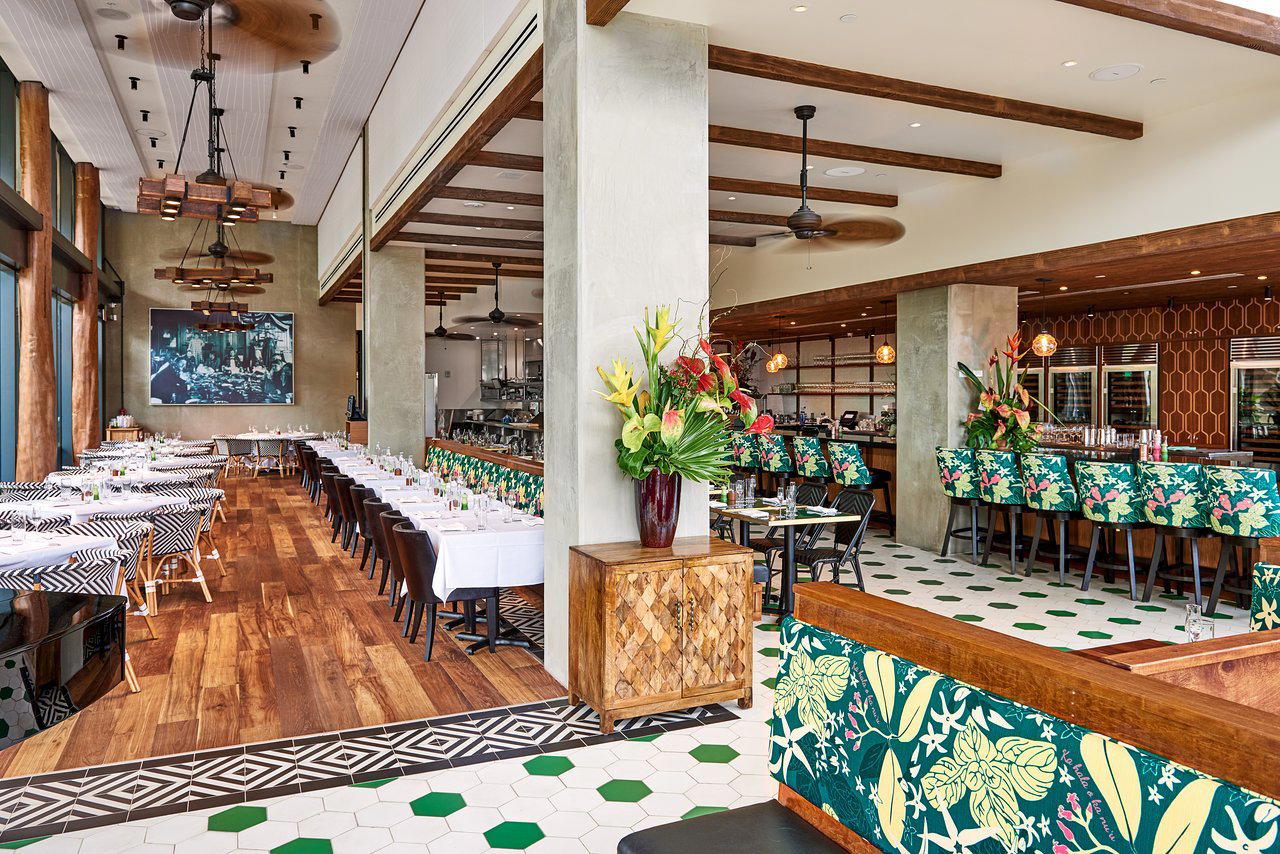
South King Street runs through a stretch of Honolulu that has nothing to prove to Waikiki's hotel strip. The building at 1857 S King St doesn't signal ambition from the outside, which is part of the point. Honolulu's most serious dining has historically operated at a remove from the resort corridor, drawing an audience that books ahead and arrives with context. Inside, the room functions as a proper dining room in the continental sense: composed, unhurried, arranged for conversation between courses rather than for spectacle.
Hawaii Regional Cuisine and What It Actually Means
The culinary movement that Alan Wong's Honolulu helped define in the early 1990s was a direct response to a specific problem: Hawaiian fine dining at the time largely imported its prestige from continental European frameworks, treating local ingredients as secondary or decorative. The Hawaii Regional Cuisine movement, which coalesced around a group of twelve chefs in 1991, inverted that logic. Local protein, local produce, and Pacific Rim technique became the primary vocabulary, with European and Japanese training serving as tool sets rather than templates.
That shift had consequences that extended well beyond Honolulu. It established a model for regionally grounded American fine dining that later movements in other cities would echo: the insistence on named farms, the integration of indigenous and immigrant food traditions, the argument that a specific place could generate a cuisine worth taking seriously on its own terms. Restaurants like Blue Hill at Stone Barns in Tarrytown and Single Thread Farm in Healdsburg operate in a tradition that Hawaii Regional Cuisine helped make legible to American diners, even if the lineage isn't always acknowledged.
Alan Wong's Honolulu sits at the center of that history, which gives the restaurant a different kind of gravity than a newer property would carry. This is not nostalgia dining. The kitchen's sourcing relationships with local farms and fishers are structural, not ornamental, connecting the menu to the same logic that drives more recently celebrated American restaurants like Smyth in Chicago or Lazy Bear in San Francisco.
The Collaborative Architecture of the Dining Room
Fine dining at this tier operates as a system rather than a solo performance, and the team dynamic at Alan Wong's reflects the format's demands. The front-of-house at a restaurant with this kind of tenure develops institutional knowledge that newer properties cannot replicate: familiarity with the sourcing calendar, the ability to speak about regional producers with authority, and the pace management that keeps a multi-course progression from feeling rushed or stalled. In Honolulu's fine dining tier, where the audience includes both local regulars and visiting diners arriving with high expectations, that balance is genuinely difficult to maintain.
The wine program at a Hawaii-focused restaurant faces a structural challenge: the state produces no significant commercial wine, so the cellar is built entirely on imported selections. That constraint pushes the sommelier role toward curation and pairing logic rather than regional advocacy. The natural counterpart to Pacific Rim cooking on a wine list tends to pull toward Burgundy, German Riesling, and aged white Burgundy for the seafood-forward courses, and toward California and Oregon Pinot for anything richer. Comparable programs at restaurants like Le Bernardin in New York City or The French Laundry in Napa illustrate how a cellar built around technique-driven, ingredient-led cooking develops its own coherent logic independent of a home region.
The kitchen collaboration at Alan Wong's extends outward to the supply chain. The relationship between the chef's team and the island's farming and fishing community represents a model that has been replicated across American fine dining but was relatively unusual when the restaurant opened. That supply chain integration shapes what appears on the plate in ways that menus from more conventionally sourced kitchens cannot match: the availability window for a specific local catch or a particular farm's harvest dictates the menu in real time.
Honolulu's Fine Dining Tier: Where This Fits
Honolulu's restaurant market is more stratified than its reputation as a leisure destination suggests. At the accessible end, places like Duke's Waikiki and AGU Ramen - Ward Centre serve large daily volumes of tourists and locals. The mid-tier includes strong neighborhood operations across the city. At the upper end, a smaller group of serious restaurants operates with the sourcing integrity and service depth that positions them against mainland fine dining benchmarks. Alan Wong's Honolulu belongs to that upper group, alongside properties like Beachhouse at the Moana and 1050 Ala Moana Blvd.
The comparison that matters for a prospective diner is less about geography than about category. Alan Wong's Honolulu competes for the same occasion as The Inn at Little Washington in Washington or Emeril's in New Orleans: American fine dining with a strong regional identity, a documented history, and a service model calibrated to a multi-hour dining commitment. That positions it differently from the newer wave of tasting-menu operations represented by Atomix in New York City or Atelier Moessmer Norbert Niederkofler in Brunico, which prioritize conceptual compression over historical depth.
For a broader look at where Alan Wong's sits within Honolulu's dining options, the full Urban Honolulu restaurants guide maps the city's range from casual plate lunch to serious tasting menus, including Bread & Butter and other neighborhood anchors worth building a longer visit around.
Planning Your Visit
Alan Wong's Honolulu is located at 1857 S King St, a direct drive or cab ride from the Waikiki hotel corridor and accessible by TheBus from multiple routes along King Street. The restaurant sits on the fifth floor of its building, separate from street-level retail, which rewards arriving a few minutes early to orient. Given the restaurant's tenure and reputation, reservations at this level of Honolulu fine dining typically require advance planning, particularly for weekend evenings or if you're coordinating around a specific occasion. Contacting the restaurant directly is the standard approach for booking at this tier. For a table with this kind of historical significance in the Hawaii Regional Cuisine movement, the advance window is worth respecting.
Frequently asked questions
Where is Alan Wong's Honolulu located?
Alan Wong's Honolulu is located at 1857 S King St, Honolulu, HI 96826, Urban Honolulu.
How does Alan Wong's Honolulu fit into the history of Hawaii's restaurant scene?
Alan Wong's is directly tied to the formation of Hawaii Regional Cuisine, the culinary movement that reoriented serious cooking in Hawaii away from imported continental templates toward local farms, fishermen, and Pacific-rim technique. The restaurant opened on South King Street in Urban Honolulu and became one of the clearest long-running demonstrations of what that movement looks like in practice at the fine dining tier. Its address at 1857 S King St, outside the Waikiki hotel corridor, is itself a statement about where the city's serious food identity actually lives.
What do people recommend at Alan Wong's Honolulu?
Alan Wong's built its reputation on dishes that draw directly from Hawaii's agricultural and fishing communities, so regulars tend to focus on whatever reflects current local sourcing rather than chasing a single signature plate. The restaurant at 1857 S King St has been a reference point for Hawaii Regional Cuisine since the early 1990s, which means the cooking is rooted in a defined culinary philosophy rather than rotating trends. First-time visitors are generally advised to go with the tasting format to understand the range of that approach across a full meal.
What's the best way to book Alan Wong's Honolulu?
Reservations at this level of Honolulu fine dining move quickly, particularly for weekend seatings and peak visitor periods around the winter holiday corridor. The restaurant's address is 1857 S King St, Honolulu, HI 96826, and bookings have historically been managed directly through the restaurant rather than third-party platforms. Calling ahead or checking the current booking channel well in advance of your dates is the most reliable approach.
What's the defining dish or idea at Alan Wong's Honolulu?
The defining idea is the founding premise of Hawaii Regional Cuisine itself: that fine dining in Hawaii should be sourced from the islands rather than imported wholesale from continental or European traditions. Alan Wong's was one of twelve chefs who formalized that movement in 1991, and the restaurant at 1857 S King St has operated as a working expression of those principles ever since. The cooking functions as an argument that local ingredients and Pacific-rim techniques are a serious fine dining framework in their own right.
Price Lens
A quick snapshot of similar venues for side-by-side context.
| Venue | Cuisine | Price | Awards |
|---|---|---|---|
| Alan Wong's HonoluluThis venue (the venue you are viewing) | Hawaii Regional Cuisine | Not listed | Not listed |
| Bread & Butter | Fusion Hawaiian Tapas & Café | Not listed | Not listed |
| Duke's Waikiki | Hawaii Regional Cuisine | $50–100 | Not listed |
| L&L Hawaiian Barbecue | Hawaiian Plate Lunch | $10–20 | Not listed |
| Lucky Belly | Asian Fusion Ramen & Small Plates | $20–30 | Not listed |
| Rainbow Drive-In | Hawaiian Plate Lunch | $10–20 | Diners, Drive-Ins and Dives Featured Restaurant |
Continue exploring
More in Honolulu
Restaurants in Honolulu
All restaurants in Honolulu →
Bars in Honolulu
All bars in Honolulu →
Details
- Elegant
- Sophisticated
- Classic
- Special Occasion
- Date Night
- Celebration
- Hotel Restaurant
- Farm To Table
- Local Sourcing
- A La Carte
Elegant dining atmosphere with sophisticated style and attentive service.