Little Sage
Our verdict
Little Sage sits on Hanover Street in Boston's North End, a neighborhood where the density of Italian-American dining culture remains as high as anywhere in the country. While the surrounding blocks lean heavily on red-sauce tradition, Little Sage operates in a quieter register, drawing guests who cross the neighborhood's dining spectrum in search of something more restrained.

Pearl is the En Primeur Club membership app, where members save venues, book tables and use the concierge.
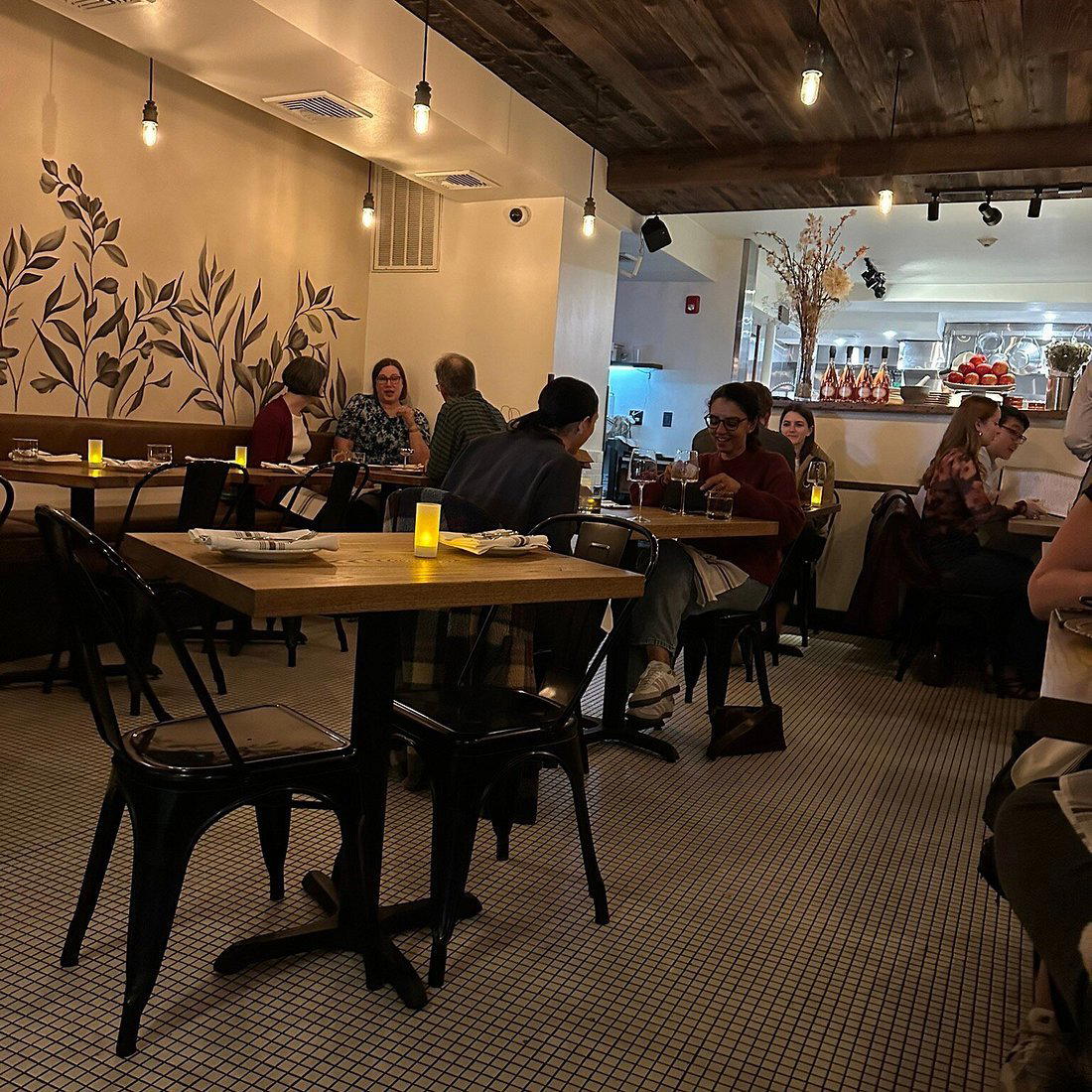
Hanover Street in Context
Boston's North End is one of the oldest continuously inhabited neighborhoods in the United States, and Hanover Street has functioned as its commercial spine for generations. The dining concentration here is among the highest per block in the city: cannoli shops, old-world trattorie, newer wine bars, and weekend sidewalks that fill by 6 p.m. regardless of season. Within that density, a given address carries weight not because of signage or press, but because of what it sits beside and what it quietly refuses to be.
Little Sage occupies 352 Hanover St, a stretch that sees foot traffic from both longtime neighborhood residents and visitors making the short walk from the waterfront. The North End's dining identity has historically centered on Italian-American tradition, long-running family restaurants, handmade pasta, old bottles behind glass, but the last decade has introduced a parallel current of smaller, format-conscious operators who read that tradition as context rather than constraint. Little Sage sits within that current, though the specifics of its offer place it in a more contained register than the high-volume establishments that dominate the surrounding blocks.
The Cultural Architecture of North End Dining
To understand what a restaurant on Hanover Street is doing, it helps to understand what Hanover Street has always been doing. The North End's Italian-American dining culture did not arrive as a transplant from a single region of Italy. It accumulated across decades of immigration from southern Italy, Sicily, and Abruzzo, filtered through the economics of mid-century Boston and the expectations of a neighborhood that was, for a long time, geographically isolated from the rest of the city by the refined highway that ran along its western edge. The result is a cuisine that is less a direct representation of any Italian regional tradition than it is its own evolved form: hearty, generous, built for communal tables, and deeply loyal to its own canon.
That canon, braised meats, red-sauce pastas, ricotta-heavy desserts, remains the dominant grammar on Hanover Street. The restaurants that have lasted longest here have done so by executing that grammar with consistency rather than by departing from it. Newer arrivals face a choice: compete inside the tradition or operate alongside it. The latter is harder to execute credibly, because the neighborhood's guests are not passive. They know what they expect, and they notice when something reads as performative rather than genuine.
Across Boston's dining scene, that tension between inherited tradition and contemporary format plays out on multiple registers. Spots like Agosto, with its Portuguese-inspired tasting-menu chef's counter, have carved out a position that treats cultural roots as a foundation for a more deliberate format. 311 Omakase takes that approach further, operating within a format so tightly controlled that the cultural specificity of the cuisine becomes inseparable from the structure of the meal. Little Sage on Hanover Street operates on different terrain, the neighborhood itself carries the cultural argument, and the restaurant's role is to find its register within it.
Where Little Sage Sits in the Boston Picture
Boston's broader restaurant scene has stratified noticeably over the past several years. At the leading end, a small tier of destination-format venues competes for the kind of attention that draws visitors from outside the city. Spots like 1928 Rowes Wharf and the waterfront-adjacent 75 on Liberty Wharf occupy a different price tier and guest expectation than the North End's traditional operators. The established steakhouse tier, anchored by places like Abe & Louie's, draws a corporate and celebrations crowd that rarely overlaps with the neighborhood dining patterns of the North End.
Within the North End itself, the competitive set is more textured. A guest choosing to eat on Hanover Street is not comparing Little Sage against Le Bernardin in New York City or The French Laundry in Napa. They are choosing between the grammar of the neighborhood and whatever sits adjacent to it. That is a more local, more intimate competition, and it rewards operators who understand the block rather than those who are simply executing a format imported from elsewhere.
American fine dining has moved, in its more ambitious tier, toward formats that foreground the provenance of ingredients and the intentionality of the dining sequence. Blue Hill at Stone Barns in Tarrytown and Single Thread Farm in Healdsburg represent one end of that spectrum. Alinea in Chicago and Atomix in New York City represent another. Neither model maps directly onto the North End's dining culture, where the evening still tends to resolve around a table of people eating well rather than a choreographed sequence of courses.
Closer to home, the Japanese dining tier in Boston, 311 Omakase, O Ya, Oishii Boston, has demonstrated that format discipline and cultural specificity can coexist with strong local demand. Across the harbor, the seafood tradition that runs from Neptune Oyster to Ostra has its own coherence. Little Sage on Hanover Street occupies a different axis entirely: a neighborhood with a strong inherited identity, a guest base that skews toward regulars and visitors with North End intent, and a street address that carries its own set of expectations before the door opens.
Know Before You Go
| Address | 352 Hanover St, Boston, MA 02113 |
|---|---|
| Neighborhood | North End, Boston |
| Getting There | Haymarket Station (Green and Orange Lines) is the nearest T stop, approximately a 5-minute walk north along Hanover Street. Street parking in the North End is limited; public garages on the waterfront side are the practical alternative. |
| Booking | Walk-in capacity varies by time and day; weekend evenings on Hanover Street fill early across the neighborhood. |
| Price Range | Not available from |
| Nearby | The North End sits adjacent to the waterfront and is a short walk from Faneuil Hall and the Rose Kennedy Greenway |
For a broader view of where Little Sage fits within the city's dining picture, see our full Boston restaurants guide.
Frequently asked questions
Where is Little Sage in Boston?
Little Sage is located at 352 Hanover St, Boston, MA 02113, Boston.
Is Little Sage a good option for dinner in Boston's North End?
Little Sage occupies a position on Hanover Street, the commercial spine of Boston's North End, a neighbourhood with one of the densest concentrations of Italian-American dining in the country.
What do people recommend at Little Sage?
A Minimal comparable set
Comparable venues nearby, for context on price, style, and recognition.
| Venue | Cuisine | Price | Notes |
|---|---|---|---|
| Little SageThis venue (the venue you are viewing) | Modern Italian Bistro | $30–50 | Not listed |
| Toscano | Traditional Tuscan Italian | $50–100 | Beacon Hill, Traditional Tuscan Italian |
| casarecce | Rustic Italian Pasta | $30–50 | North End, Rustic Italian Pasta |
| Bacco | Contemporary Italian Trattoria | $30–50 | North End, Contemporary Italian Trattoria |
| Sportello | Italian Counter Service | Not listed | Fort Point, Italian Counter Service |
| Ristorante Saraceno | Classic Italian/Napoletana | $30–50 | North End, Classic Italian/Napoletana |