Liqui Liqui Venezuelan Deli Restaurant & Artisan Cheeses
On Merton High Street in SW19, Liqui Liqui brings Venezuelan deli culture and artisan cheesemaking to a corner of London that rarely sees this kind of specificity. The format sits between neighbourhood café and specialist food shop, grounded in a tradition of Venezuelan table customs that treat cheese, charcuterie, and slow preparation as the meal itself, not its preamble.
Pearl is the En Primeur Club membership app — saves, bookings, and concierge access live there. Same editors, same standards.
- Address
- 4-6 Merton High St, London SW19 1DN, United Kingdom
- Phone
- +442084081136
- Website
- liqui-liqui.com
- Directions
- Get directions
 Saves & bookings on Pearl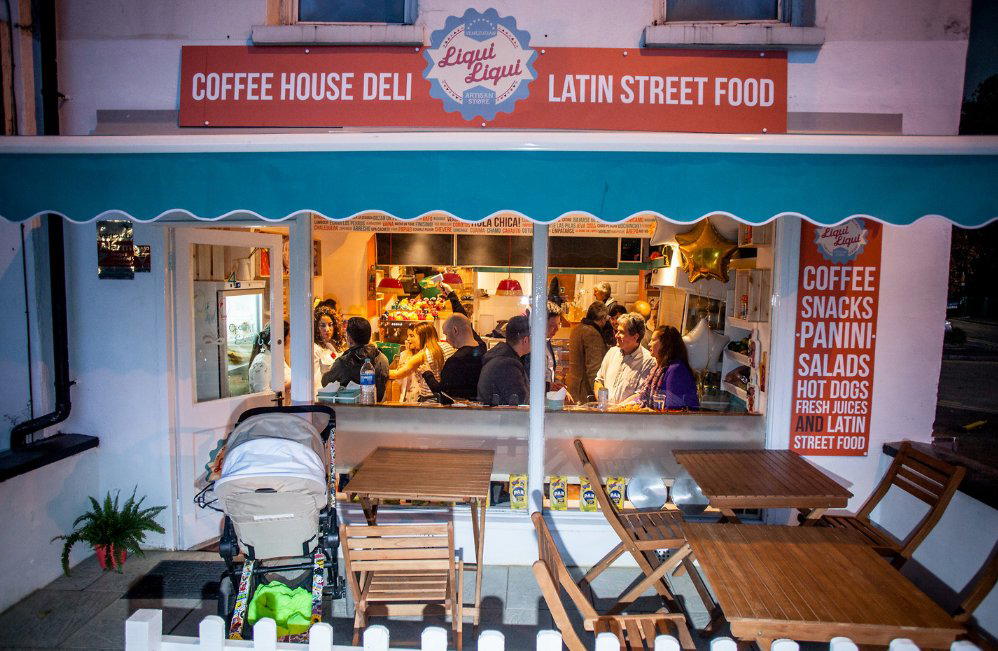
A Different Kind of Deli on Merton High Street
Merton High Street, a stretch of SW19 that most Londoners associate with the approach to Wimbledon rather than anything gastronomic, is home to Liqui Liqui Venezuelan Deli Restaurant & Artisan Cheeses, a casual Venezuelan deli at 4-6 Merton High St in London, known for authentic Venezuelan arepas and sharing plates. That geographical remove is part of what defines the experience at Liqui Liqui Venezuelan Deli Restaurant and Artisan Cheeses. Arriving at 4-6 Merton High St, you are not in a neighbourhood that signals food destination, which is precisely why the specificity inside registers so sharply against its surroundings.
London's food scene has long sorted itself into legible tiers: the Michelin-chasing tasting menu operations of Mayfair and Notting Hill, represented by rooms like CORE by Clare Smyth, The Ledbury, and Sketch, The Lecture Room and Library; the formal dining institutions like Restaurant Gordon Ramsay and Dinner by Heston Blumenthal; and then, at the other end of the prestige axis, the neighbourhood specialists that serve a community rather than a dining calendar. Liqui Liqui belongs firmly to the latter category, but the artisan cheese component and Venezuelan cultural framing give it a level of specificity that most neighbourhood spots do not attempt.
Venezuelan Deli Culture and What It Actually Means
The Venezuelan deli tradition is not well represented in London. Where other South American cuisines, Argentine grilling, Peruvian ceviche culture, have found repeated expression across the capital, Venezuelan food occupies a smaller, more fragmented space. The deli format, when practised in its home context, combines elements that British food culture tends to separate: the cheese counter, the prepared food case, the sit-down meal, and the slow social gathering are all one continuous thing. The table does not reset between courses in the way a European restaurant expects it to. Food arrives, accumulates, and conversation fills the gaps. It is a format closer to a Lebanese mezze progression or a Spanish tapeo than to a formal dining sequence.
Artisan cheese is central to Venezuelan table culture in a way that surprises many visitors unfamiliar with the tradition. Venezuela has its own strong cheesemaking heritage, producing styles like queso de mano, queso telita, and queso llanero, fresh, hand-pulled, or aged cheeses that bear no resemblance to European-style aged wheels but carry their own textural and flavour logic. A deli that treats these seriously, sourcing or producing them with care, is doing something that most Venezuelan restaurants in London do not attempt. The cheese counter, in this context, is not a supplement to the meal, it is structural to it.
The Rhythm of the Meal
Venezuelan deli eating follows a rhythm that differs from the paced tasting menu format that dominates London's reviewed dining circuit. There is no strict sequence of amuse, starter, main, and dessert. Instead, the meal tends to accumulate laterally, cheese, bread, prepared dishes, an arepa or two, and whatever the counter holds that day. The pace is set by the guest, not the kitchen, which means the experience rewards those who slow down and treat the counter as a reference point rather than a formality to get past.
This stands in useful contrast to the highly choreographed dining rituals of destination rooms in the UK, properties like Waterside Inn in Bray, Le Manoir aux Quat'Saisons in Oxford, or L'Enclume in Cartmel, where the meal's structure is fixed and the guest follows it. At a deli, the guest has editorial control. That is either liberating or disorienting depending on your dining habits. For those used to the tasting-menu format, or the structured progressions of Moor Hall in Aughton or Gidleigh Park in Chagford, the open-form deli approach requires a small recalibration of expectations.
Ask about the cheese counter first. Let that conversation shape what you order around it, rather than treating cheese as an afterthought at the end of the meal. This is how the format is meant to work, and it is how Venezuelan table customs have always positioned it.
Positioning Within the London Food Scene
London's specialist food culture has a long tradition of small, idiosyncratic operators that serve a specific community with a high degree of craft, from the Jewish delis of Golders Green to the Vietnamese kitchens of Hackney to the Sri Lankan spots of Tooting. Liqui Liqui fits this pattern: a specific cultural tradition, rendered with care, in a neighbourhood with a resident community that sustains it. The comparisons are more useful when drawn horizontally across the specialist deli category than vertically toward the Michelin tier.
That said, the artisan cheese component connects Liqui Liqui to a broader conversation happening across British food culture about provenance, craft production, and the kitchen's relationship to the producer. Rooms like Midsummer House in Cambridge, Opheem in Birmingham, Hand and Flowers in Marlow, and hide and fox in Saltwood each engage with provenance in their own registers. At the deli level, that engagement is more direct: the cheese on the counter is the product, not a component inside a composed dish.
Planning Your Visit
Liqui Liqui sits at 4-6 Merton High St, London SW19 1DN. The address places it between Wimbledon and Colliers Wood, in a stretch that sees more passing foot traffic than deliberate destination visitors. For those travelling from central London, South Wimbledon is roughly 25 minutes from Leicester Square. Given the deli format, a useful approach is to arrive without a fixed agenda, mid-morning through early afternoon tends to suit the counter-browsing rhythm better than a dinner reservation mindset. Current hours are Wednesday 5-10PM, Thursday through Saturday 12-10PM, and Sunday 12-8PM. Readers familiar with the format from comparable contexts, Restaurant Andrew Fairlie in Auchterarder operates on the opposite end of the formality scale, for reference, will understand that at this tier, flexibility is part of the offer.
For a broader view of where Liqui Liqui sits within London's eating options, the EP Club London restaurants guide covers the full range, from neighbourhood specialists to Michelin rooms. International comparisons also apply: the Venezuelan deli model shares some structural DNA with the counter formats found in cities like New York, where Le Bernardin and Atomix anchor the tasting-menu tier while a parallel world of specialist cultural operators runs underneath it.
In Context: Similar Options
Comparable venues nearby, for context on price, style, and recognition.
| Venue | Cuisine | Price | Notes |
|---|---|---|---|
| Liqui Liqui Venezuelan Deli Restaurant & Artisan CheesesThis venue — the venue you are viewing | Authentic Venezuelan Arepas & Sharing Plates | $$ | Not listed |
| Sugarcane | Caribbean Tiki Bar & Grill | $$ | Hammersmith Broadway |
| Kaieteur Kitchen Original | Authentic Guyanese Caribbean | $$ | Elephant and Castle |
| 2210 by NattyCanCook | Modern Caribbean | $$$ | Herne Hill |
| Pepper & Spice Restaurant London | Authentic Caribbean | $$ | Mildmay |
| The White Onion | Contemporary French | $$ | Wimbledon |
Continue exploring
More in London
Restaurants in London
Browse all →
Bars in London
Browse all →
Hotels in London
Browse all →
At a Glance
- Cozy
- Lively
- Casual Hangout
- Group Dining
- Standalone
- Craft Cocktails
Current opening hours
- Monday
- Closed
- Tuesday
- Closed
- Wednesday
- 5–10 PM
- Thursday
- 12–10 PM
- Friday
- 12–10 PM
- Saturday
- 12–10 PM
- Sunday
- 12–8 PM
Hours can change for holidays and private events. Last verified .
Warm and welcoming with vacation-like decor, authentic music, and a lively atmosphere.