2210 by NattyCanCook

Michelin Plate
Our verdict
A Caribbean kitchen operating out of Herne Hill, 2210 by NattyCanCook sits at the community-focused end of London's independent dining scene, where ingredient provenance and diaspora cooking traditions carry more weight than formal accolades. The address on Norwood Road places it in a south London neighbourhood with a long Caribbean heritage, and the food reflects that grounding directly on the plate.

Pearl is the En Primeur Club membership app, where members save venues, book tables and use the concierge.

The menu
What to order
- Roti
- Jerk chicken
- Oxtail
- Pork belly
- Mac and cheese balls
South London's Caribbean Cooking in Context
Herne Hill and the stretch of south London running through Brixton, Tulse Hill, and Norwood Road has sustained a Caribbean food culture for decades, rooted in the communities that settled here from the 1950s onwards. That heritage shows up in corner shops stocking scotch bonnets and saltfish, in the jerk smoke that still drifts off grills on market days, and in a handful of kitchens that treat Caribbean cooking as something to be taken seriously rather than simplified for a broader audience. 2210 by NattyCanCook, at 75 Norwood Road SE24, sits within that tradition rather than apart from it.
London's Caribbean dining scene has historically been split between large-format takeaway operations and a small number of more considered sit-down kitchens. The city has not produced the kind of high-profile Caribbean fine dining presence that exists, say, in Washington D.C. where venues like Cane and St. James have built sustained reputations, or in Toronto, where Conejo Negro operates in a different competitive register altogether. What London does have is a network of neighbourhood-level kitchens where authenticity is a function of sourcing and community connection rather than price point or format. 2210 sits in that cohort.
Where the Food Comes From
The editorial angle that matters most when writing about Caribbean cooking in a diaspora context is ingredient provenance. The cuisines of the Caribbean, whether Jamaican, Trinidadian, Barbadian, or any other island tradition, are built around specific agricultural products: allspice from Jamaica's Blue Mountains, hot peppers in varieties that vary island by island, fresh thyme used in quantities that would surprise a French cook, breadfruit, plantain at precise stages of ripeness, and proteins like oxtail and goat that require sourcing from suppliers who understand the difference between commodity and quality.
In London, the challenge for any Caribbean kitchen is closing the gap between those source ingredients and the plate. Some venues work with specialist Caribbean produce suppliers who import directly; others rely on the well-established South Asian and African-Caribbean wholesale network that supplies markets like Brixton. The Norwood Road corridor, where 2210 operates, is positioned within walking distance of the kind of neighbourhood retail infrastructure that makes this sourcing more tractable than it would be in, say, central London or the outer suburbs. That proximity to ingredient supply is not incidental to the food's character.
This matters because Caribbean cooking, more than most, is an ingredient-forward tradition rather than a technique-forward one. The slow-cooked meats rely on time and seasoning rather than intervention. The rice and peas depends on the quality of the kidney beans and coconut milk, not on any particular culinary sleight of hand. When sourcing is right, the cooking tends to be right. When it is compromised, no amount of technique recovers it. The kitchens in this neighbourhood that have endured understand this equation clearly.
The Herne Hill Setting
Approaching Norwood Road from the Herne Hill end, the neighbourhood reads as solidly residential south London, with the commercial strip carrying a mix of independent traders and long-established community businesses. The address at number 75 places 2210 within a streetscape that has little in common with the designed dining environments of, say, Fitzrovia or Mayfair, where venues like Sketch, The Lecture Room and Library operate at the extreme high end of the London restaurant market. The contrast is not a failing; it is the condition under which this kind of neighbourhood cooking makes sense.
South London's independent dining culture, particularly in the SE24 postcode and the surrounding areas, operates outside the review cycles and award structures that drive conversation about venues like CORE by Clare Smyth, The Ledbury, or Dinner by Heston Blumenthal. That distance from the formal critical apparatus is partly geographical and partly structural: the venues that serve these communities are not optimised for the kind of journalism that produces Michelin stars or 50 Best placements. They are optimised for the people who live nearby, which produces a different and often more consistent kind of food. For context on how London's broader restaurant scene is mapped.
Caribbean Cooking as Diaspora Practice
The name NattyCanCook signals something about the operation's origins. Kitchens that grow out of social media presence, community reputation, or pop-up formats before settling into a fixed address tend to carry their audience with them rather than building one from scratch through traditional hospitality marketing. In London, a number of the most interesting independent restaurants of the last decade have followed this trajectory, starting with a loyal following built outside formal dining contexts and converting that into a sustainable fixed operation.
Caribbean food as practised in the British diaspora is also a living tradition rather than a fixed one. The cooking reflects the specific island backgrounds of the cook, overlaid with whatever adaptations the British supply chain and the preferences of a south London customer base have introduced over time. The result is neither a museum piece nor a fusion exercise: it is a working cuisine that continues to evolve while keeping its structural logic intact. The jerk marinade still needs scotch bonnet heat and allspice. The curry goat still needs time. The rice still needs the coconut.
For readers interested in how Caribbean cooking translates across different contexts and price points, the comparison is instructive. At the high end of the market, venues like The Lone Star in Mount Standfast, Barbados and Sheer Rocks in St. Mary's, Antigua operate within a resort or destination dining context where the ingredient sourcing question is answered by proximity to origin. In a London neighbourhood kitchen, the answer has to be found differently, through supply relationships and the accumulated knowledge of a community that has been cooking this food in this city for two generations.
Planning a Visit
2210 by NattyCanCook is located at 75 Norwood Road, London SE24 9AA. Herne Hill station (Thameslink) sits close to the address and provides direct connections to central London. The venue operates within the independent restaurant segment of London's Caribbean dining scene, at a price point that reflects neighbourhood rather than destination dining.
For further exploration of what London offers across dining, accommodation, and nightlife, the EP Club maintains guides across categories: London hotels, London bars, London wineries, and London experiences. For restaurants at the other end of the formality spectrum, Restaurant Gordon Ramsay represents the city's classical French-trained fine dining tier, while south London's independent scene occupies a very different register. Elsewhere in Britain, neighbourhood-level independents with a strong community identity include Corner Shop in Glasgow, The Highland Laddie in Leeds, and Franc in Canterbury.
Frequently asked questions
Is 2210 by NattyCanCook a good option for someone interested in Caribbean cooking as a community practice rather than a restaurant format?
The Norwood Road address places 2210 by NattyCanCook inside one of south London's longest-established Caribbean food corridors, running through Brixton and Tulse Hill into Herne Hill. The NattyCanCook identity points to a kitchen with roots in community and social reputation rather than the fine dining or tourist-oriented versions of Caribbean cuisine found elsewhere in London. For readers whose interest is in how Caribbean cooking functions as diaspora practice in the city, this is the relevant postcode and the relevant kind of operation.
What's the best thing to order at 2210 by NattyCanCook?
Caribbean cooking in the south London diaspora tradition consistently rewards slow-cooked proteins, rice and peas, and dishes built from techniques passed through community rather than catering college. The Norwood Road address and the NattyCanCook name both point toward a kitchen grounded in that home-cooking lineage rather than a tourist-facing version of the cuisine.
Do they take walk-ins at 2210 by NattyCanCook?
Kitchens of this type operating in London's SE24 postcode often run on a flexible, community-oriented basis where walk-ins are welcomed rather than managed through a formal reservations system. Checking directly via the venue's social channels before visiting is the most reliable approach.
What is 2210 by NattyCanCook known for?
2210 by NattyCanCook is associated with Caribbean home cooking operating from 75 Norwood Road in Herne Hill, London SE24, within a neighbourhood that has sustained Caribbean food culture for decades through the Brixton, Tulse Hill, and Norwood Road corridor. The NattyCanCook name signals origins in community reputation rather than restaurant industry convention, which shapes the character of the food and the format.
At-a-Glance Comparison
Comparable venues nearby, for context on price, style, and recognition.
| Venue | Cuisine | Price | Awards | Notes |
|---|---|---|---|---|
| 2210 by NattyCanCookThis venue (the venue you are viewing) | Modern Caribbean | $50–100 | Michelin Plate | Not listed |
| Paradise cove Battersea | Authentic Caribbean (Jamaican focus) | $30–50 | Not listed | Clapham |
| RapChar | Caribbean Grill | $50–100 | Not listed | Brixton |
| Bread Street Kitchen & Bar | Modern British restaurant & bar by Gordon Ramsay | $50–100 | Not listed | City of London |
| O Ver Borough | Authentic Neapolitan Italian with Wood-Fired Pizza | $30–50 | Not listed | Bankside |
| The India | Traditional North Indian Cuisine | $30–50 | Not listed | Holborn |
Recognition history
Dated appearances from independent guides and award organizations, with the underlying list record or original source where available.
Michelin Plate
Michelin · 2026 Michelin Plate
Continue exploring
More in London
Restaurants in London
All restaurants in London →
Bars in London
All bars in London →



Details
- Trendy
- Modern
- Cozy
- Lively
- Date Night
- Group Dining
- Celebration
- Open Kitchen
- Craft Cocktails
- A La Carte
- Rum Punch
- Allergy Accommodating
Current opening hours
- Monday
- Closed
- Tuesday
- Closed
- Wednesday
- 5–9 PM
- Thursday
- 5–9 PM
- Friday
- 5–11 PM
- Saturday
- 12–11 PM
- Sunday
- 12–8 PM
Hours can change for holidays and private events. Hours as of .
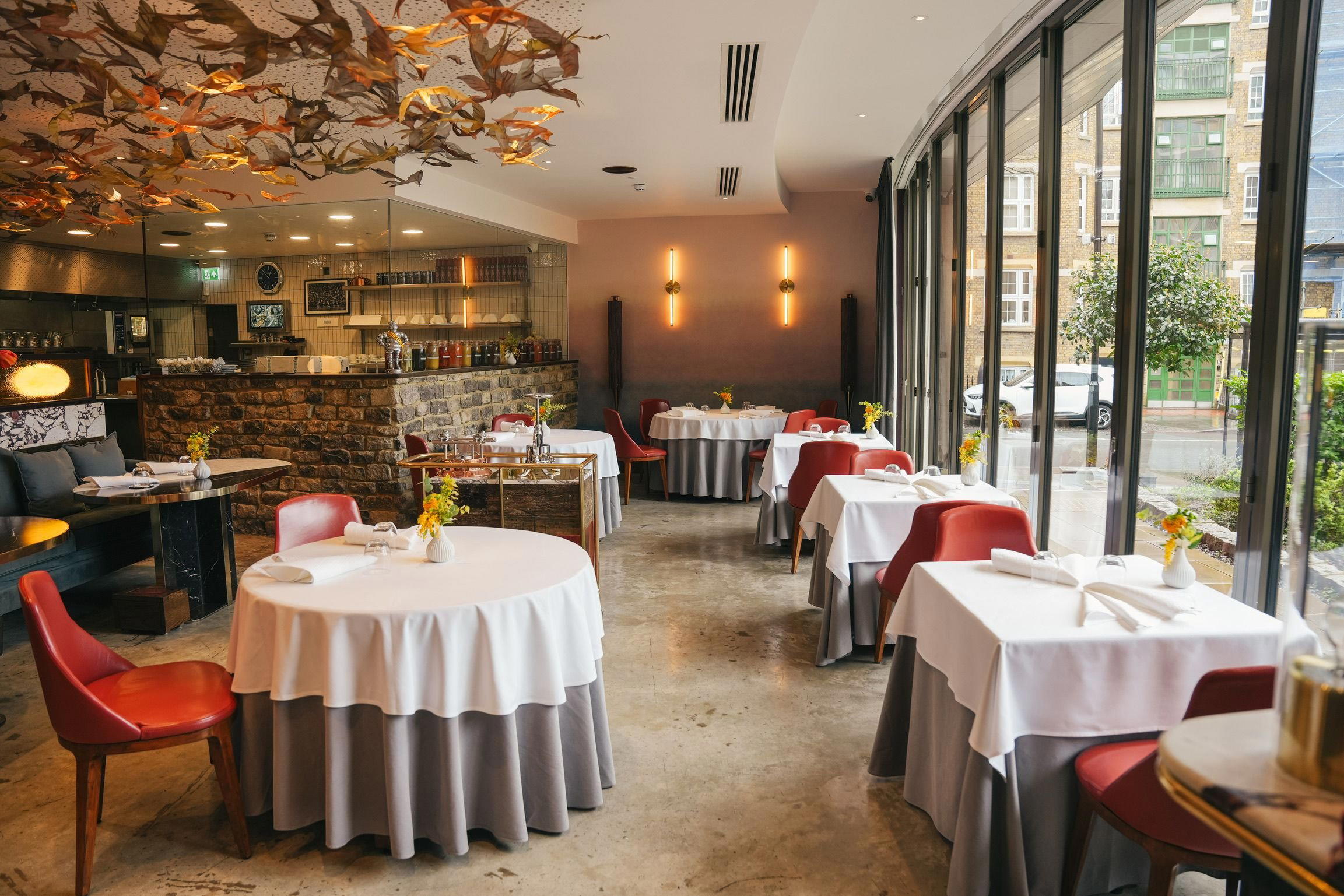
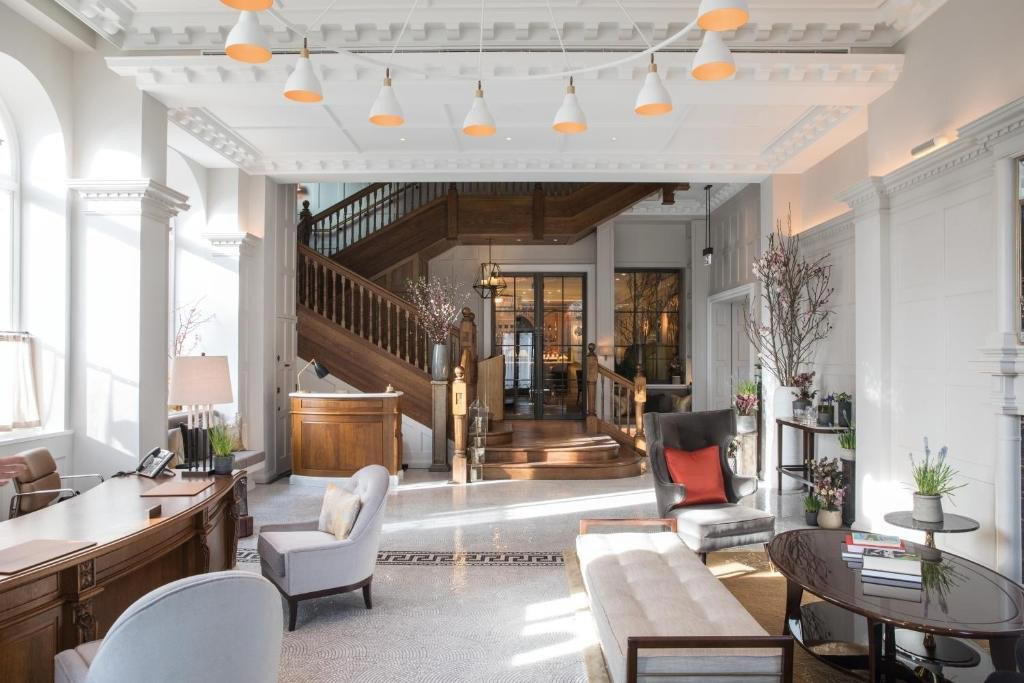
Light and airy with chic decor, well-suited lighting, relaxed atmosphere, and background reggae or R&B music.