
Our verdict
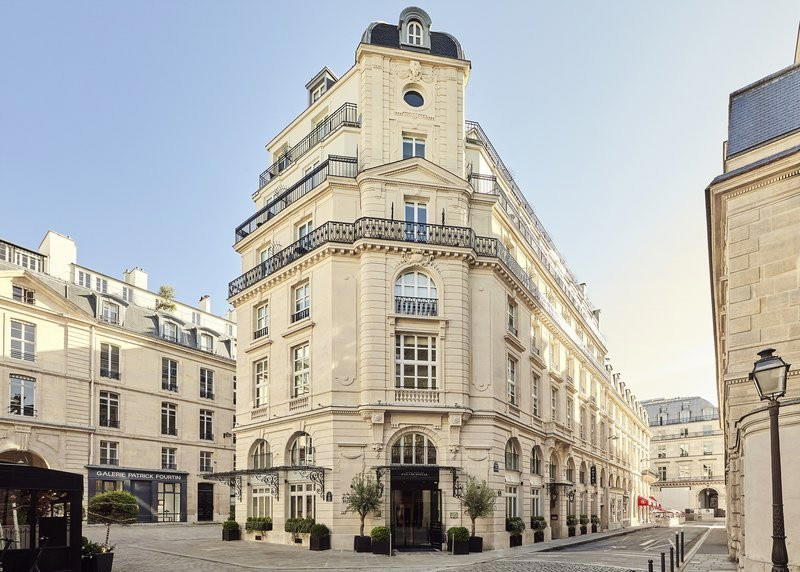
The address places it steps from the Tuileries and the Louvre, in a neighbourhood where French confectionery heritage is taken seriously. For visitors seeking a grounded, technique-led pastry experience in central Paris, this is a well-regarded stop on the city's sugar map.

Pearl is the En Primeur Club membership app, where members save venues, book tables and use the concierge.

The menu
What to order
- Merveilleux
- Mont Blanc
- Croissant jambon-comté
- Duchesse Chocolat
In that context, Sébastien Gaudard belongs. Paris has always maintained a clear hierarchy in its pâtisserie world: the houses with deep institutional lineage sit above the trend-driven boutiques, and above both sits a small tier of addresses that draw serious visitors specifically because of their commitment to technique over spectacle. Gaudard occupies a position in that mid-to-upper tier, recognised for bringing a classical sensibility to an era when the city's pastry scene has often tilted toward the photogenic.
The Sensory Register of a Classical Pâtisserie
The experience of a well-run Parisian pâtisserie is specific in ways that resist easy summary. It begins before entry: the visual arrangement of the window display, where tarts, mille-feuilles, and individual gâteaux are organised with the precision of a jeweller rather than a grocer. Inside, the smell shifts register entirely, butter and caramelised sugar, with faint traces of vanilla and dark chocolate, layered in a way that only comes from sustained, day-long production. At Gaudard, the atmosphere aligns with that classical mode. The interior does not perform modernity. Display cases carry work that is meant to be examined closely, and the staff operate with the slightly formal register that Parisian specialty retail has maintained even as adjacent sectors have loosened considerably.
The sound is quieter than a café, more purposeful than a boulangerie. Clients make considered selections. Boxes are assembled with the care that signals the product inside is meant to travel, to be given, or to be eaten slowly. This is a pâtisserie where the ritual of purchase is part of what you are paying for, not a friction to be minimised.
Where Gaudard Sits in Paris's Pastry Hierarchy
Paris's pâtisserie scene has fractured across several distinct registers in recent years. On one side, a generation of young pastry chefs has pushed strongly into architectural, high-concept work, small production runs, Instagram-first formats, and flavour combinations that owe as much to contemporary fine dining as to classical French baking. On the other, a smaller cluster of houses maintains the canon: the Paris-Brest, the Saint-Honoré, the mille-feuille, the rum baba, forms that have been in continuous production for over a century and that reward comparison across addresses rather than novelty.
Gaudard positions itself clearly in the second camp. For visitors working through Paris's pastry circuit, that makes it a useful counterpoint to the city's more experimental addresses. If you have spent time at places oriented toward contemporary technique, or if you are working outward from Paris to the broader French dining tradition at houses like Flocons de Sel in Megève, Mirazur in Menton, or Bras in Laguiole, Gaudard offers a specifically Parisian reference point for what classical French sugar work looks like at its most grounded.
Within the 1st arrondissement specifically, the competition for serious pastry attention is real. The neighbourhood draws significant foot traffic from visitors to the Louvre and the Tuileries, which means it also supports a range of pâtisserie addresses across the quality spectrum.
The Classical Canon and Why It Matters
French pâtisserie's classical repertoire was largely codified in the nineteenth century, when the grandes maisons of Paris established a formal vocabulary of pastry that spread through Europe and, eventually, through professional kitchens worldwide. The techniques behind a properly laminated puff pastry, a correctly set crème pâtissière, or a properly tempered chocolate glaze are not difficult to describe but are genuinely difficult to execute consistently.
The broader French restaurant tradition that Gaudard connects to, the classical lineage running through houses like L'Ambroisie, Paul Bocuse's Auberge du Pont de Collonges, Auberge de l'Ill in Illhaeusern, and Les Prés d'Eugénie in Eugénie-les-Bains, rests partly on a shared vocabulary of pastry technique. A Parisian pâtisserie that maintains that vocabulary is not simply selling sweets; it is participating in a continuity of craft that the broader French culinary tradition depends on for its coherence. The Palais-Royal gardens are a short walk north. The Tuileries are directly south. For visitors building a day around the 1st arrondissement's concentration of galleries, gardens, and serious restaurants, the shop functions well as a mid-morning or mid-afternoon stop rather than a destination in itself. Given the neighbourhood's draw, mornings on weekends can see queues at the more well-known counters in central Paris; arriving at opening or during the early-afternoon lull generally means shorter waits at pâtisseries of this type.
Those building a broader Paris dining itinerary should note that the 1st arrondissement's restaurant scene runs from classical (see L'Ambroisie in the nearby 4th) through to contemporary creative work at addresses like Kei and the full range covered in our full Paris restaurants guide. For those extending their French dining exploration beyond the capital, the provincial tradition is well represented by Troisgros in Ouches, Georges Blanc in Vonnas, Auberge du Vieux Puits in Fontjoncouse, and La Table du Castellet. For Paris's higher-end restaurant tier, Alléno Paris au Pavillon Ledoyen, Le Cinq at the Four Seasons George V, and Arpège represent the top tier of the city's formal dining.
Gaudard is associated with classical French pastry forms rather than a single signature creation. The house is recognised for its commitment to the foundational repertoire: Paris-Brest, mille-feuille, rum baba, and seasonal tarts executed with technical precision. In a city where many pâtisseries have shifted toward novelty-driven formats, that fidelity to the classical canon is itself the distinguishing characteristic.
Do I need a reservation for Sébastien Gaudard?
No reservation is required. Sébastien Gaudard operates as a walk-in counter pâtisserie, which places it in a different category from Paris's formal restaurant addresses like Alléno Paris au Pavillon Ledoyen or Le Cinq, where advance booking is essential. Weekend mornings at pâtisseries in central Paris can involve short queues; arriving at opening or mid-afternoon generally avoids the busiest periods. For comparable international experiences where reservations are also unnecessary, the walk-in counter format at Le Bernardin in New York operates under very different conventions, which illustrates how distinct the Parisian pâtisserie format remains globally.
What's the standout thing about Sébastien Gaudard?
The shop's position in Paris's classical pâtisserie tradition is its clearest point of difference from the city's more experimental pastry addresses. At a moment when Parisian pastry has partly fragmented into high-concept, low-production boutique formats, Gaudard maintains a commitment to the established canon. The cuisine philosophy and setting work together rather than against each other.
Is Sébastien Gaudard worth visiting in a specific season?
Classical French pâtisseries follow the culinary calendar closely, and houses in Gaudard's tradition typically shift their fruit tarts, entremet compositions, and seasonal specialties in line with what French producers are supplying at any given time. Autumn brings chestnut and pear work; winter centres on the Bûche de Noël and festive confectionery; spring opens the strawberry and rhubarb tart season. Visiting in line with the seasonal rotation gives the most accurate read of what a house of this type produces at its most considered. The Galette des Rois period in January, shared across virtually all classical Paris pâtisseries, is a particularly useful moment for comparison across addresses. For visitors planning around chef-driven seasonal programs internationally, the Parisian pâtisserie calendar offers a distinct but equally structured seasonal logic.
Frequently asked questions
What's Sébastien Gaudard's location?
Sébastien Gaudard is located at 3 Pl. des Pyramides, 75001 Paris, France, Paris.
How does Sébastien Gaudard fit into Paris's broader pâtisserie scene?
Paris's pastry world currently spans experimental modernists, heritage houses, and populist chains, Gaudard occupies the classical heritage register, prioritising the 19th-century French canon over trend-led innovation. That position near the Palais-Royal in the 1st arrondissement gives it a natural audience among visitors and Parisians seeking technical rigour over novelty. For context, this is a different proposition from addresses like Cédric Grolet Opéra a few streets away, where visual spectacle is a primary draw.
What dish is Sébastien Gaudard famous for?
Gaudard is associated with the classical French pastry repertoire rather than a single signature creation. The house is recognised for its commitment to forms codified by the grandes maisons of the 19th century, tarts, entremets, and seasonal compositions that follow the culinary calendar. That positioning, at 3 Place des Pyramides in Paris's 1st arrondissement, sets it apart from the city's more concept-driven pastry addresses.
Do I need a reservation for Sébastien Gaudard?
No reservation is required. Sébastien Gaudard operates as a walk-in counter pâtisserie at 3 Place des Pyramides, placing it in a different category from Paris's formal restaurant and tasting-menu counters. Queues can form during peak hours, particularly on weekends and around public holidays.
What's the standout thing about Sébastien Gaudard?
The shop's commitment to the classical French pastry canon is its clearest point of difference in a Paris scene that has fractured between high-concept modernists and mass-market chains. At the 1st arrondissement address near the Palais-Royal, the focus is on technique and seasonal adherence rather than visual novelty or chef-personality branding.
Similar Picks
| Venue | Cuisine | Price | Awards | Notes |
|---|---|---|---|---|
| Sébastien GaudardThis venue (the venue you are viewing) | Classic French Patisserie & Café | $30–50 | Not listed | Not listed |
| Alléno Paris au Pavillon Ledoyen | Modern French Fine Dining | $150–200 | 3 Michelin Stars · World's 50 Best #79 | Creative |
| Kei | Modern French with Japanese Influences | $300–500 | 3 Michelin Stars · World's 50 Best #93 | Contemporary French, Modern Cuisine |
| L'Ambroisie | Classic French Haute Cuisine | $300–500 | 2 Michelin Stars · World's 50 Best #23 | French, Classic Cuisine |
| Le Cinq - Four Seasons Hôtel George V | Modern French Fine Dining | $300–500 | 3 Michelin Stars · World's 50 Best #24 | French, Modern Cuisine |
| Pierre Gagnaire | Avant-Garde French Fine Dining | $200–300 | 3 Michelin Stars · World's 50 Best #17 | French, Creative |
Recognition history
Dated appearances from independent guides and award organizations, with the underlying list record or original source where available.
AD France 2026 AD France 28 Best Pâtisseries in Paris
AD France
Continue exploring
More in Paris
Restaurants in Paris
All restaurants in Paris →
Bars in Paris
All bars in Paris →
Hotels in Paris
All hotels in Paris →
Details
- Classic
- Elegant
- Cozy
- Brunch
- Casual Hangout
- Terrace
- A La Carte
Current opening hours
- Monday
- 10 AM–7 PM
- Tuesday
- 10 AM–7 PM
- Wednesday
- 10 AM–7 PM
- Thursday
- 10 AM–7 PM
- Friday
- 10 AM–7 PM
- Saturday
- 10 AM–7 PM
- Sunday
- 10 AM–7 PM
Hours can change for holidays and private events. Hours as of .
Classic Parisian café atmosphere with nostalgic yet modern charm, featuring terrace seating and elegant pastry displays.