Liban sur Seine
Renovated stone and wood ambience along riverbank
 Discover on Pearl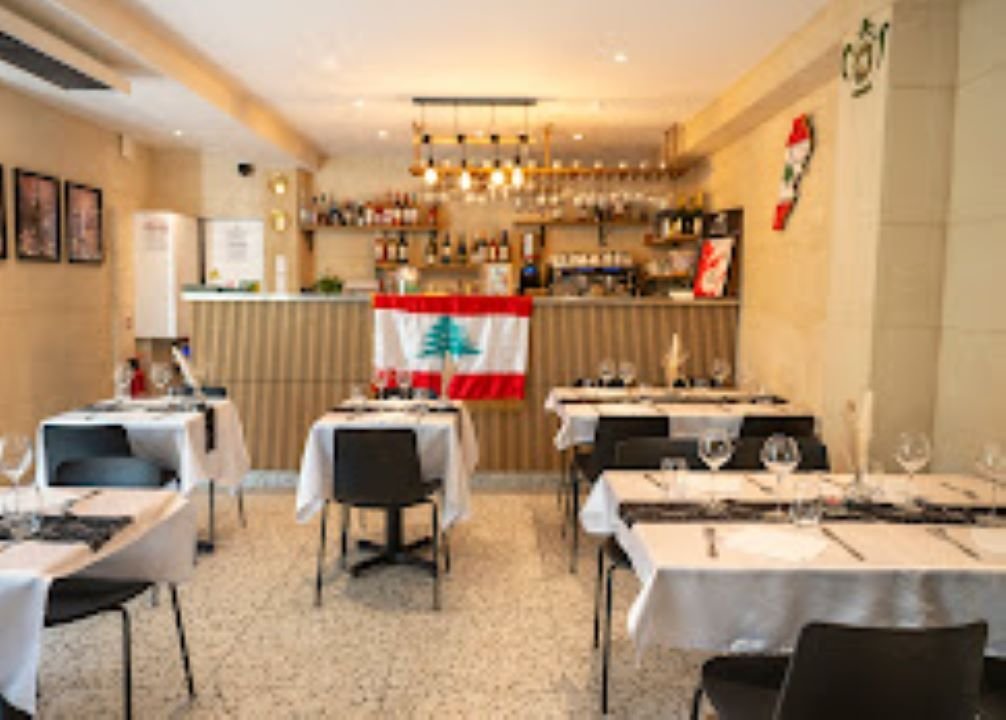
Where the Seine Bends Toward Lebanon
The Promenade des Tilleuls in Bennecourt runs close enough to the Seine that the light off the water reaches the tables before noon. This stretch of the Île-de-France riverbank, roughly 60 kilometres west of Paris, is the kind of place that exists in France's culinary margins: quiet, unhurried, far from the competitive density of the capital's dining rooms. It is precisely that distance that gives a Lebanese address here a different register than it would carry in Paris's 8th arrondissement. The air smells of linden and river silt. Whatever arrives on the plate carries the context of that setting.
Lebanese Cooking in Provincial France: An Unusual Conversation
Lebanese cuisine occupies an interesting position in the French dining tradition. France and Lebanon share a long administrative and cultural history, and that connection shows in the relative fluency with which Lebanese food is read by French diners. Za'atar, pomegranate molasses, kibbeh, labneh: these are not foreign ingredients in France the way they might be elsewhere in northern Europe. Paris has hosted serious Lebanese tables for decades, from neighbourhood spots in the 15th to more considered operations in Saint-Germain. What is less common is a Lebanese address rooted in a village setting along the Seine, where the supply chain and the pace of cooking are shaped by proximity to agricultural land rather than urban wholesale markets.
The shortlist, unlocked.
Hard-to-book tables, cellar releases, and concierge-planned trips.
Get Exclusive Access →In provincial France, the sourcing question tends to resolve differently than it does in a city. A restaurant drawing on the Île-de-France's vegetable gardens and small producers brings a different quality of produce to a Lebanese preparation than one working through central Parisian supply. Mezze traditions, which rely heavily on the freshness and flavour intensity of vegetables, herbs, and dairy, reward this kind of proximity. A labneh strained from milk sourced within the region carries different acidity than one produced at commercial scale. Herb-forward dishes like fattoush or tabbouleh shift noticeably when the parsley and mint are cut close to service.
The Sourcing Logic Behind the Setting
The ingredient argument for a Lebanese kitchen operating in the French countryside is, in some respects, stronger than it might initially appear. Lebanon's own culinary tradition is built around the idea that raw materials define the dish: the cook's role is to select and assemble rather than to transform. This philosophy aligns closely with the French provincial cooking tradition, where terroir and seasonal availability are treated as the primary creative constraints. Both traditions resist the tendency toward artifice that can accumulate in high-volume urban kitchens.
That alignment matters for how you should think about a place like Liban sur Seine. The setting along the Promenade des Tilleuls is not incidental. A restaurant in this position draws from the agricultural belt that supplies both professional and domestic kitchens across this part of the Seine valley. Seasonal rhythms in the Île-de-France run from spring asparagus and early-summer courgettes through to autumn root vegetables and winter brassicas. A Lebanese kitchen that reads those rhythms into its mezze and grills will produce food that reflects the place more directly than a restaurant operating on imported ingredients regardless of season. For comparison, destination restaurants elsewhere in France, from Mirazur in Menton to Bras in Laguiole, have built significant reputations precisely on this kind of localised sourcing logic applied to a specific cuisine tradition.
Placing It on the Map
Bennecourt is not a dining destination in the way that, say, the villages around Auberge de l'Ill in Illhaeusern or Georges Blanc in Vonnas have become. There is no award infrastructure here, no cluster of starred tables pulling food-focused travellers off the motorway. What Bennecourt offers instead is the quality of a working river town that has not been reconfigured around tourism: local in the most literal sense. For Lebanese cuisine, which at its core is communal and domestic in register, that context is more appropriate than it might be for a technically demanding tasting-menu kitchen. You do not need a brigade of 20 to produce a correct mezze spread; you need good ingredients and patience. The Seine valley, at this point in its run toward Normandy, provides the former reliably.
Visitors arriving from Paris should allow for the drive rather than attempting a rail connection. The A13 corridor puts Bennecourt within reach of a comfortable lunch return, though the village rewards an unhurried afternoon rather than a tight schedule. Those combining the visit with a broader circuit of the Île-de-France's quieter dining addresses will find it maps logically onto an exploration of the region's non-capital food culture. Our full Bennecourt restaurants guide covers the broader context.
Where Liban sur Seine Sits in the Wider Picture
France's serious restaurant circuit is heavily weighted toward classical French cooking and its modern descendants. The €€€€ addresses that dominate lists, from Alléno Paris au Pavillon Ledoyen to Assiette Champenoise in Reims and Christopher Coutanceau in La Rochelle, operate in a different register entirely. Lebanese cooking in a village setting is not in conversation with that tier. What it offers instead is a counterpoint: food that is served to be shared, priced for regulars as much as for visitors, and rooted in a culinary tradition where the quality of a single ingredient, olive oil, a dried spice, a fresh herb, carries more weight than technical performance.
That is a different kind of value proposition, and it belongs to a different kind of occasion. The tables that matter here are not the ones where you go to mark a milestone against a credential list. They are the ones where the afternoon runs longer than planned and the ordering is done again from the beginning. On the Promenade des Tilleuls, with the Seine moving past and the lindens overhead, that version of a meal is entirely plausible.
Planning Your Visit
Given the absence of published booking details for Liban sur Seine, arriving with a reservation confirmed in advance is the more reliable approach, particularly on summer weekends when the Seine valley draws day visitors from the capital. The Promenade des Tilleuls address is specific to the riverbank promenade in Bennecourt proper. For those building a longer food-focused itinerary across provincial France, this sits comfortably as a lower-key counterpoint to more formal regional destinations like L'Oustau de Baumanière in Les Baux, Auberge du Vieux Puits in Fontjoncouse, or Flocons de Sel in Megève. It also makes an interesting pair with the sourcing-forward coastal logic of La Marine in Noirmoutier-en-l'île. For those tracking globally analogous approaches to ingredient-led cooking outside France, Le Bernardin in New York City and Atomix in New York City offer useful reference points at very different price and format levels.
Frequently Asked Questions
- Does Liban sur Seine work for a family meal?
- Lebanese cuisine's mezze format, built around shared plates and sequential ordering, tends to suit mixed groups and families more comfortably than a structured tasting menu. Bennecourt is a quiet, low-key town, which keeps the overall register relaxed. Without confirmed pricing data, it is worth contacting the restaurant directly to understand current menu structure and any conditions around group bookings.
- What is the overall feel of Liban sur Seine?
- The address on the Promenade des Tilleuls places it on Bennecourt's riverbank, giving it a setting that is more village-casual than formally dining-room. Lebanese cooking, in its communal and ingredient-forward character, aligns with that register. There are no published awards attached to the address, which puts it outside the credentialled-destination tier and closer to a local neighbourhood table in character.
- What do people recommend at Liban sur Seine?
- Specific dish data is not available in the public record for this address. Lebanese kitchen traditions, however, make mezze spreads, grilled meats, and herb-driven salads the logical ordering anchors. In a riverside provincial setting, dishes relying on fresh vegetables and dairy, labneh, fattoush, herb-based preparations, tend to reflect the sourcing advantage most directly.
- Can I walk in to Liban sur Seine?
- Booking policy is not published in the available record. On summer weekends, the Seine valley around Bennecourt draws visitors from Paris, which can affect availability at smaller local addresses. Contacting the restaurant ahead of a visit is the more reliable approach regardless of season.
- What makes Liban sur Seine worth seeking out?
- The combination of a Lebanese kitchen operating in a provincial French river setting is unusual enough that the sourcing and seasonal context work differently here than they would in a Paris neighbourhood restaurant. The Promenade des Tilleuls location along the Seine gives the meal an unhurried tempo that suits Lebanese cuisine's communal structure. Without formal awards or published credentials, the case rests on the specificity of the setting and the cooking tradition it frames.
- Is Liban sur Seine the kind of place you visit specifically for the location, or primarily for the food?
- In a village like Bennecourt, 60 kilometres west of Paris on the Seine, the two are difficult to separate. Lebanese cuisine's emphasis on fresh, ingredient-driven preparations means that the agricultural proximity of the Île-de-France's river valley is a direct input into what arrives on the table, not merely a scenic backdrop. The address on the Promenade des Tilleuls, without the weight of published awards or a formal tasting-menu format, positions the visit as one where setting and food reinforce each other rather than competing for attention.
How It Stacks Up
These are the closest comparables we have in our database for quick context.
| Venue | Cuisine | Price | Awards | Notes |
|---|---|---|---|---|
| Liban sur Seine | This venue | |||
| Alléno Paris au Pavillon Ledoyen | Creative | €€€€ | Michelin 3 Star | Creative, €€€€ |
| Kei | Contemporary French, Modern Cuisine | €€€€ | Michelin 3 Star | Contemporary French, Modern Cuisine, €€€€ |
| L'Ambroisie | French, Classic Cuisine | €€€€ | Michelin 3 Star | French, Classic Cuisine, €€€€ |
| Le Cinq - Four Seasons Hôtel George V | French, Modern Cuisine | €€€€ | Michelin 3 Star | French, Modern Cuisine, €€€€ |
| Mirazur | Modern French, Creative | €€€€ | Michelin 3 Star | Modern French, Creative, €€€€ |
Need a table?
Our members enjoy priority alerts and concierge-led booking support for the world's most difficult tables.
Get Exclusive AccessThe shortlist, unlocked.
Hard-to-book tables, cellar releases, and concierge-planned trips.
Get Exclusive Access →