
Li Ji Gu Tou Tang occupies a quiet corner of Jiaojiang district, serving traditional Taizhou snacks with a focus on regional street-food formats. The venue operates within the city's broader snack-shop landscape, where small-scale family-run operations compete on ingredient sourcing and daily execution rather than formal service or ambiance.
Pearl is the En Primeur Club membership app — saves, bookings, and concierge access live there. Same editors, same standards.
- Address
- 16 Huayuan Road, Jiaojiang, Taizhou, Zhejiang, CHN
- Phone
- +86 133 0659 9917
- Website
- guide.michelin.com
- Directions
- Get directions
 Saves & bookings on Pearl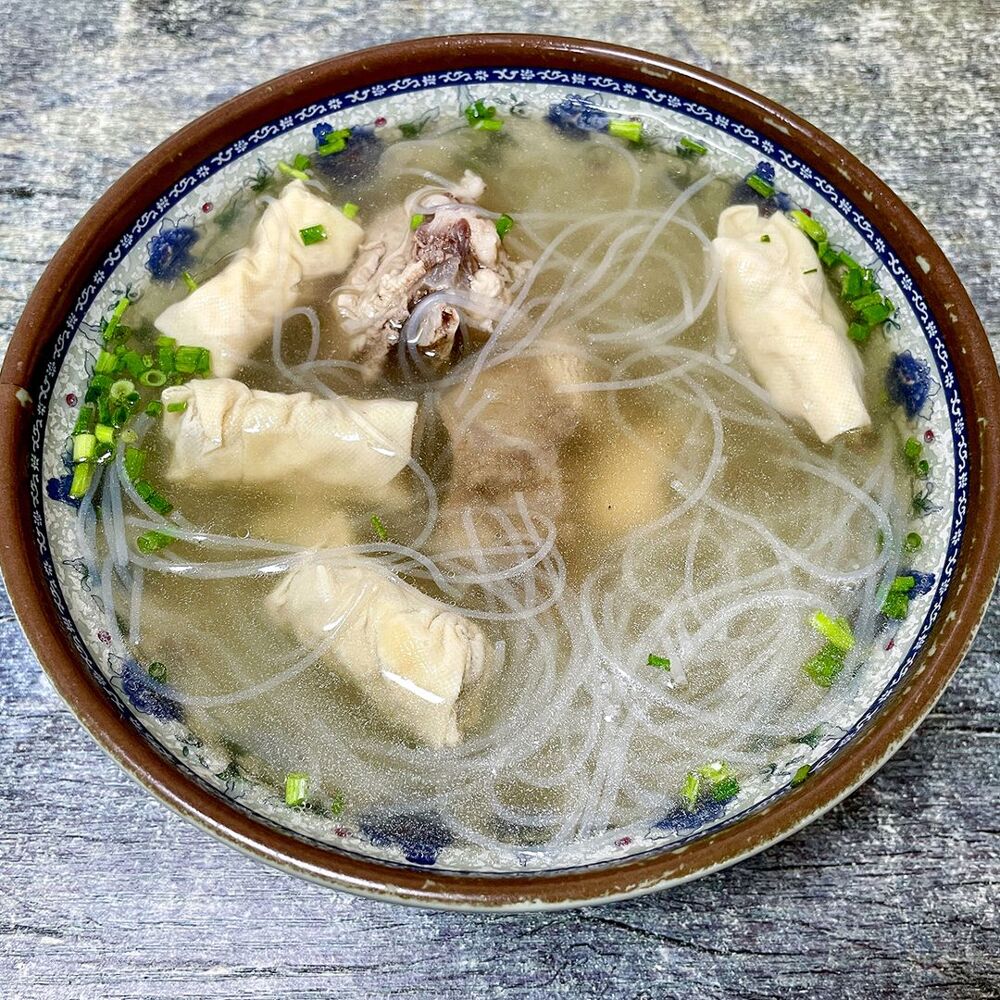
The shopfront sits on Huayuan Road in Jiaojiang, Taizhou's urban core, where residential blocks and low-rise commercial strips define the streetscape. Li Ji Gu Tou Tang belongs to a category of neighborhood snack specialists that emerged in Zhejiang's coastal cities over the past two decades, trading on hyper-local ingredient access and tight recipe discipline rather than design or hospitality infrastructure. The interior follows a functional template: tile floors, fluorescent lighting, plastic stools, and a service counter where orders are called and collected. This format prioritizes kitchen efficiency and turnover over atmosphere, a trade-off that defines the snack-shop tier across Taizhou, Guoping Seafood, KeLongYiHao, and Lao Bian Jin jia included.
Taizhou Snack Culture and Ingredient Sourcing
Taizhou's snack repertoire relies on East China Sea seafood, mountain vegetables from the inland Tiantai range, and fermented condiments rooted in centuries-old preservation techniques. Li Ji Gu Tou Tang draws from that same supply network, with daily sourcing from Jiaojiang's wet markets and direct vendor relationships for dried seafood and pickled greens. The venue's kitchen executes a rotating menu of regional classics, fish-ball soup, stir-fried rice cakes, steamed buns, and bone broth, formats that originated as street food during the Qing dynasty and evolved into coded markers of local identity. Ingredient quality determines the outcome: fish balls require fresh yellow croaker or hairtail, rice cakes need short-grain glutinous rice milled within 48 hours, and broth bases depend on pork bones simmered for six to eight hours. The snack-shop format compresses all preparation into a single small kitchen, which means ingredient selection becomes the primary lever for differentiation. Li Ji Gu Tou Tang operates within that constraint, sourcing directly from fishermen and morning-market vegetable sellers to secure first-pick product before larger restaurants enter the bidding cycle.
Taizhou's position on the Zhejiang coast grants access to species unavailable in inland cities, mud crabs, ribbon fish, sea cucumber, and mantis shrimp cycle through the market depending on season and weather. The city's snack operators compete on how quickly they can move from dock to kitchen, a race that favors small, agile shops over fine-dining operations with multi-day prep cycles. Li Ji Gu Tou Tang benefits from Jiaojiang's proximity to the harbor, a ten-minute drive that allows morning purchases to reach the stove by mid-morning. The venue's approach mirrors the broader Taizhou snack philosophy: ingredients are the protagonist, technique stays minimal, and seasoning remains restrained to let raw material quality drive the experience. This stands in contrast to formal Taizhou restaurants like Xin Rong Ji (Linhai) and Xin Rong Ji Taizhou (Ling Hu), where multi-course banquet formats and wine pairings shift the emphasis to service, presentation, and chef narrative.
Menu Execution and Daily Rhythms
The menu rotates based on what arrives at market each morning, a supply-driven model common among Zhejiang snack shops. Core items, bone broth, fish balls, rice cakes, appear daily, while seasonal additions cycle in and out depending on ingredient availability. Preparation begins before dawn, with broth pots started by 5 a.m. and fish-ball batching completed by opening. Lunchtime sees the highest volume, as office workers and construction crews from nearby sites fill the dining area between 11:30 a.m. and 1 p.m. Evening service runs quieter, drawing local residents for a light supper or takeaway orders. The kitchen operates with a skeleton crew, typically two to three staff handling all prep, cooking, and counter service. This lean structure means consistency depends on routine and repetition rather than brigade depth or sous-chef oversight. Dishes arrive within minutes of ordering, plated in ceramic bowls or styrofoam containers depending on dine-in or takeaway preference. Portions skew generous, reflecting the snack-shop convention of calorie density over plating refinement.
The bone broth, flagged in the venue's awards notation as a specialty, follows a Taizhou template: pork femur and rib bones simmered with ginger, scallions, and Shaoxing wine, then strained and served with rice cakes or noodles. The broth's clarity and fat distribution signal how well the kitchen manages heat and skimming, two variables that separate competent execution from mediocre. Fish balls, another Taizhou signature, require hand-pounding fresh fish meat with cornstarch until the paste achieves a specific elasticity, then poaching in salted water. The texture should bounce without rubbing rubbery, a narrow window that depends on fish freshness and pounding duration. The restaurant's version tracks with the city's mid-tier snack-shop standard: clean flavor, decent bounce, but not the silky refinement found in specialist fish-ball vendors or higher-end seafood houses.
For context on Taizhou's broader dining landscape, see our full Taizhou restaurants guide. Additional city coverage includes hotels, bars, wineries, and experiences.
Practical Considerations
The venue does not publish a phone number, website, or formal booking system, a common omission among small-scale Taizhou snack shops that rely on walk-in traffic and word-of-mouth rather than digital infrastructure. Service hours typically mirror local meal rhythms, breakfast from 7 a.m. lunch peak from 11:30 a.m. to 1 p.m. and evening service until around 8 p.m. but exact times vary day to day depending on ingredient availability and staff scheduling. The address, 16 Huayuan Road in Jiaojiang, places it within walking distance of the district government offices and the Jiaojiang Wanda Plaza shopping complex, making it accessible for midday meals if you're already in the area. Public transport via city bus lines 1, 5, and 12 stops within two blocks, though taxis and ride-hailing apps remain the faster option from Taizhou's main train station or airport.
The venue does not accept credit cards; cash and mobile payment apps (WeChat Pay, Alipay) are standard. English-language menus and English-speaking staff are unlikely, so familiarity with Mandarin or a translation app will ease ordering. Seating capacity is limited, and no reservations are taken, which means lunchtime waits of ten to fifteen minutes during peak hours are routine. The shop does not cater to dietary restrictions or menu modifications, ingredients are prepped in bulk each morning, and substitutions disrupt kitchen flow. Visitors seeking a polished, accommodating dining experience should look elsewhere; this tier of Taizhou snack culture values speed, consistency, and local regulars over tourist-facing service protocols.
For readers exploring regional Chinese snack formats in other cities, comparable entry points include #8 in Chengdu, 100 Century Avenue Cantonese in Shanghai, 167 Shan Hai Li in Fuzhou, 1913 in Hangzhou, 1927 Dong Yuan Si Chu in Xiamen, and 1949 - Duck de Chine in Beijing. For readers interested in ingredient-forward formats outside China, Jōdo Saké Bar in Los Angeles and Onigiri Time in Pasadena offer parallel approaches to supply-chain transparency and minimal intervention cooking.
How It Stacks Up
Comparable venues by cuisine and price in the same metro.
| Venue | Cuisine | Price |
|---|---|---|
| Li Ji Gu Tou Tang | Taizhou snacks are their speciality... | This venue |
| Xin Rong Ji Taizhou (Ling Hu ) - 新荣记(灵湖店) | Chinese Shandong | Chinese Shandong |
Recognition history
Dated appearances from independent guides and award organizations, with the underlying list record or original source where available.
Michelin Bib Gourmand
Michelin
Continue exploring
More in Taizhou
At a Glance
- Lively
- Cozy
- Classic
- Family
- Casual Hangout
- Group Dining
- Solo
- After Work
- Standalone
Casual and bustling, with a simple, no-frills setting focused on quick service and comforting local noodle dishes rather than decor, giving it the feel of a busy neighborhood favorite.