On a medieval street in the Latin Quarter, Lhassa occupies a corner of Paris that has fed students, scholars, and travellers for centuries. The address on Rue de la Montagne Sainte-Geneviève places it deep in one of the city's most historically layered quartiers, where the density of cultures and cuisines is a function of geography, not trend. A point of reference for anyone tracing the 5th arrondissement's quieter dining currents.
Pearl is the En Primeur Club membership app — saves, bookings, and concierge access live there. Same editors, same standards.
- Address
- 13 Rue de la Montagne Ste Geneviève, 75005 Paris, France
- Phone
- +33143262219
- Website
- lhassa-1.business.site
- Directions
- Get directions
 Saves & bookings on Pearl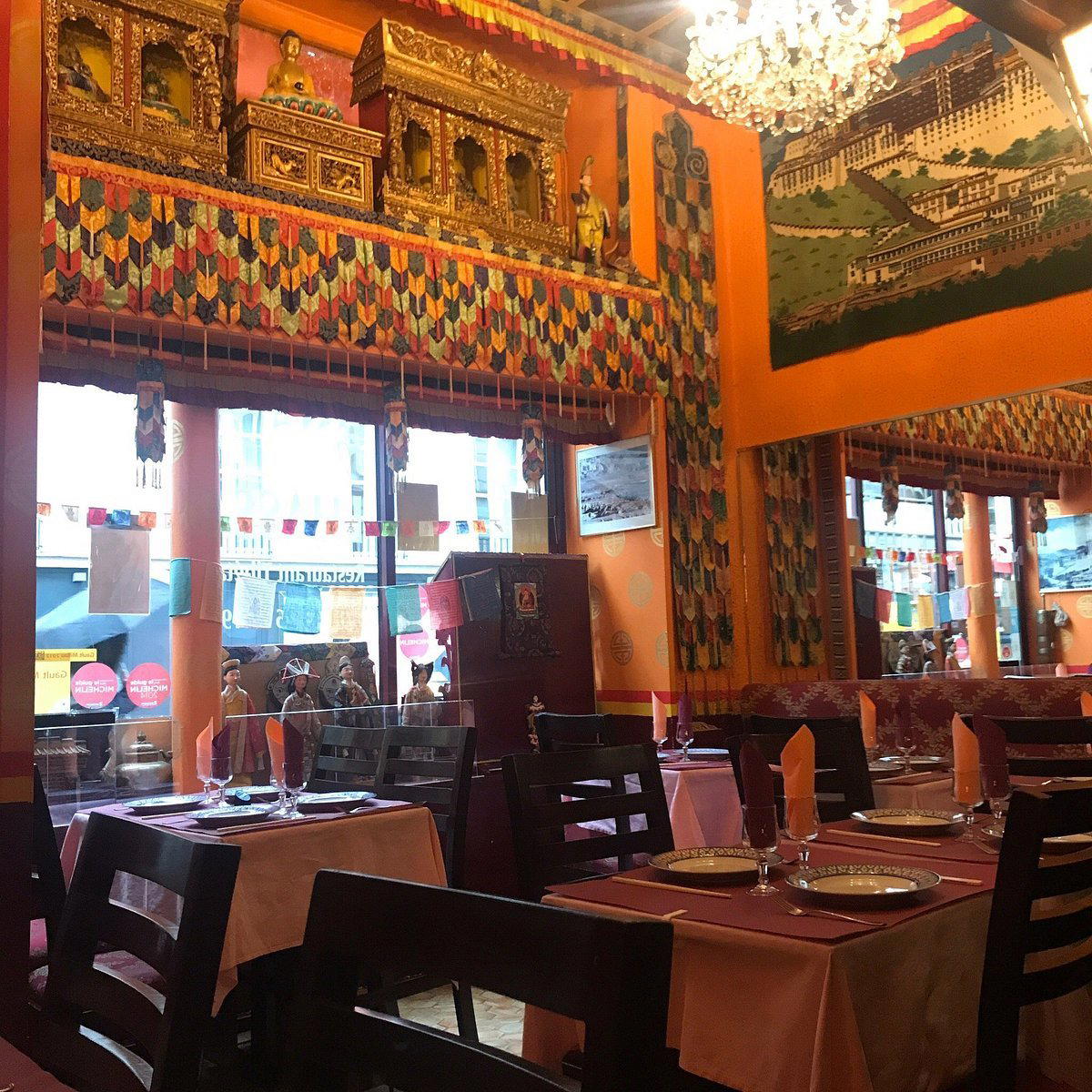
The Street Comes First
Rue de la Montagne Sainte-Geneviève is one of those Paris streets that resists easy categorisation. Running from the Place Maubert toward the Panthéon, it cuts through the older residential core of the 5th arrondissement, away from the tourist drag of Rue Mouffetard and the institutional gravity of Boulevard Saint-Michel. The buildings here are narrow and tall, the pavements uneven, the rhythm of the street closer to neighbourhood than spectacle. Lhassa sits at number 13, on a block where the scale of the city feels compressed in a way that concentrates attention rather than dispersing it.
The Latin Quarter has fed diverse populations since the medieval university district first drew scholars from across Europe and, eventually, the world. That tradition of cultural layering did not stop with French cuisine: over the past half-century, the 5th has accumulated a distinct density of Asian restaurants, North African canteens, and emigrant community kitchens that serve as genuine reference points rather than novelty addresses. Lhassa, by name and address, belongs to that longer history of the quartier absorbing cuisines from far outside the Hexagone.
What the Address Signals About Paris Dining
Within Paris's broader dining geography, the 5th arrondissement occupies a particular position. It is not where the city concentrates its formal prestige addresses: those cluster in the 8th, around the Golden Triangle, where restaurants like Le Cinq at the Four Seasons Hôtel George V and the creative ambition of Alléno Paris au Pavillon Ledoyen operate at the summit of the French formal register. Nor is the 5th primarily associated with the contemporary French cooking that defines addresses like Kei or the classic haute cuisine lineage running through L'Ambroisie and Arpège.
The Latin Quarter operates on a different logic. Its dining identity is shaped by proximity to the Sorbonne and the Grandes Écoles, by a long-established student population with international origins, and by the kind of low-rent commercial streets that allowed independent restaurants with limited capital to take root decades before food culture became a media category. The result is a quartier where cuisines coexist across a tight geographic area, with little of the curatorial self-consciousness that defines dining in the Marais or the 11th. Restaurants here tend to be evaluated on directness and value rather than concept and presentation.
That context shapes expectations for any address on a street like Rue de la Montagne Sainte-Geneviève. This is not a neighbourhood where a restaurant's competitive set includes the starred French establishments that France's regional dining circuit produces, from Mirazur in Menton to Flocons de Sel in Megève or the institutionally weighted Paul Bocuse in Collonges-au-Mont-d'Or. The comparable set is local, the logic is communal, and the metric is whether the kitchen produces food that the neighbourhood returns for.
The Latin Quarter's Relationship with Tibetan Cuisine
Paris has a small but persistent Tibetan and Himalayan restaurant presence, and it concentrates disproportionately in the 5th and adjacent arrondissements. The reasons are partly historical: Tibetan exile communities, like other diaspora groups, settled near universities and established food businesses that served both community members and the curious student population. By the time Tibetan cuisine became a recognisable category for Parisian diners, these streets already had functioning kitchens that predated the interest.
The cuisine itself sits outside the French culinary tradition in ways that make it resistant to the Franco-fusion assimilation that has shaped, for example, contemporary Japanese-French cooking at addresses like Kei or the cross-cultural experiments visible at AM par Alexandre Mazzia in Marseille. Tibetan cooking relies on a different pantry, different techniques, and a different relationship between richness and austerity than French cuisine. Momos, thukpa, tsampa-based preparations, and butter tea represent a culinary grammar that does not adapt easily to French expectations about sauce, protein cookery, or dessert. That resistance to assimilation is part of what makes these kitchens interesting to trace over time in a city otherwise so confident in absorbing and reframing foreign cuisines.
Placing Lhassa in the Neighbourhood's Dining Flow
The immediate vicinity of Rue de la Montagne Sainte-Geneviève gives visitors a useful cross-section of how the Latin Quarter actually functions as a dining neighbourhood. Greek restaurants cluster further down toward the Place de la Contrescarpe. Japanese noodle shops and Korean kitchens have established themselves along the perpendicular streets toward Rue des Écoles. Lebanese and North African addresses fill gaps across the broader quartier. Lhassa occupies its corner of this geography as one of the more geographically specific options in an area that otherwise trends toward the generically international.
For anyone mapping a day in this part of Paris, the street's position is useful. The Panthéon is a few minutes on foot uphill. The Institut du Monde Arabe and the Seine are a comparable distance in the other direction. The Musée de Cluny and its medieval collections sit nearby. The quartier rewards walking, and Lhassa's address falls naturally into a circuit that takes in both the historic institutional architecture of the hill and the denser residential streets below it.
Paris's dining geography also rewards comparison across registers. The formal French tradition visible at Assiette Champenoise in Reims, the Alsatian institutional weight of Au Crocodile in Strasbourg, or the terroir-driven approach at Auberge du Vieux Puits in Fontjoncouse and Bras in Laguiole all represent the French gastronomic canon operating at its most self-conscious. The Latin Quarter's independent kitchens operate under entirely different conditions and incentives, and addresses like Lhassa document what happens when a diaspora cuisine takes root in a neighbourhood defined by academic mobility and cultural heterogeneity rather than culinary prestige. The contrast is informative rather than hierarchical.
Addresses like Le Bernardin in New York City or Atomix, also in New York, represent diaspora cuisine operating at the formal end of its category. The Latin Quarter's Tibetan and Himalayan restaurants represent the opposite pole: cuisine retained and served at community scale, without the transformation into fine-dining format that upmarket diaspora cooking requires. Both approaches are legitimate readings of how food travels, and both tell you something different about the cities they inhabit. Lhassa's rootedness in the 5th is a different kind of institutional durability, built on neighbourhood loyalty rather than critical recognition.
Know Before You Go
- Address: 13 Rue de la Montagne Sainte-Geneviève, 75005 Paris
- Arrondissement: 5th (Latin Quarter)
- Nearest landmarks: Panthéon (5 min walk), Musée de Cluny (8 min walk), Place Maubert
- Cuisine: Tibetan / Himalayan
- Hours: Wednesday to Sunday, 12-2 PM and 7-10:30 PM; Monday and Tuesday closed
Comparison Snapshot
Comparable venues nearby, for context on price, style, and recognition.
| Venue | Cuisine | Price | Notes |
|---|---|---|---|
| LhassaThis venue — the venue you are viewing | Authentic Tibetan | $$ | Not listed |
| Saperavi | Authentic Georgian | $$ | 5e arrondissement |
| YA BAYTÉ by Hébé | Lebanese Street Food | $$ | Quartier Latin |
| Au Cœur Couronné | French Brasserie | $$ | Les Halles |
| PNY MARAIS TEMPLE | American Flame-Grilled Burgers with Asian Fusion | $$ | Le Marais |
| Bistrot de l'Oulette | Southwestern French Bistro | $$ | Le Marais |
Continue exploring
More in Paris
Restaurants in Paris
Browse all →
Bars in Paris
Browse all →
Hotels in Paris
Browse all →

At a Glance
- Cozy
- Intimate
- Casual Hangout
- Standalone
Current opening hours
- Monday
- Closed
- Tuesday
- Closed
- Wednesday
- 12–2 PM, 7–10:30 PM
- Thursday
- 12–2 PM, 7–10:30 PM
- Friday
- 12–2 PM, 7–10:30 PM
- Saturday
- 12–2 PM, 7–10:30 PM
- Sunday
- 12–2 PM, 7–10:30 PM
Hours can change for holidays and private events. Last verified .
Colorful and charming with traditional Tibetan decor, compact dining room creating an intimate atmosphere.